


Understanding the Link Between Creativity and Depression | with Dr. Edison de Mello
Learn more about the link between mental health issues and creativity, and more importantly, what can be done about it.
Let's create things that matter. Together.
Since the coronavirus global pandemic began there have been countless news stories that range anywhere from “It’s just the flu” to “They’re creating mass grave burial sites!!!!!”
As we sit quarantined inside our homes watching the world unravel from our screens…
What the hell are we supposed to believe?
What can we do to feel in control in a world spinning so rapidly out of control?
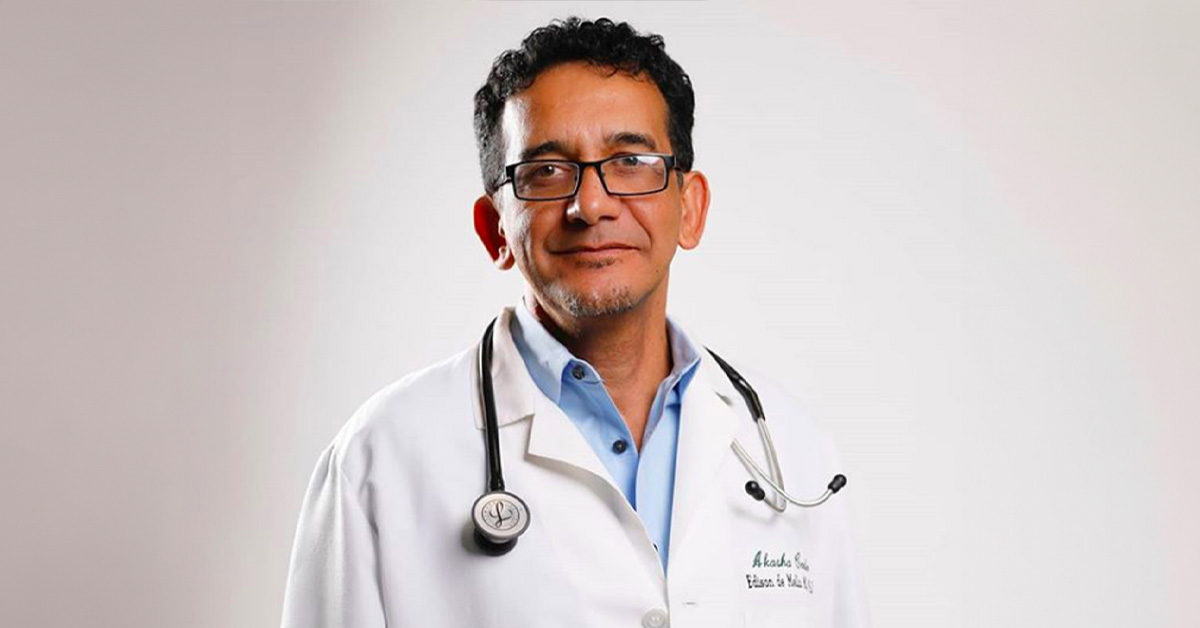
In this interview I have a very candid and honest conversation about what the coronavirus pandemic looks like on the frontlines from the perspective of one physician – Dr. Edison de Mello, the founder of The Akasha Center for Integrative Medicine (and yes, he is a “REAL Doctor”).
This story is not THE perspective on current events, this is HIS perspective. And it’s an extremely educated and unbiased perspective of how to better understand what’s happening in different parts of the world, how we can prepare ourselves and strengthen our immune systems naturally, what the timeline really looks like before we go back to “normal,” and how testing factors into the equation as well.
I can honestly say that after conducting this interview I feel more optimistic and less anxious about this whole situation since it all began. And I hope this interview has the same effect on you as well.
Edison de Mello, MD, PhD, is a board certified Integrative Physician by the American Board of Integrative Medicine and a licensed psychotherapist by the California Board of Behavioral Sciences. He practiced psychotherapy for 13 years before entering medical training and now practices and teaches evidenced- based integrative medicine.
Dr. de Mello’s PhD dissertation, entitled “Gut Feelings – A Psychosocial Approach to Gastrointestinal Illness,” inspired his conception of a center where psychology would be combined and fully integrated with Western and Eastern medicines. The de Mello Institute was formed in 1996 with the goal of employing safe and complementary approaches to healthcare while also addressing a person’s emotional and spiritual health. Fully committed to these goals, Dr. de Mello entered residency in 1999 at the prestigious Albert Einstein College of Medicine at Beth Israel Medical Center Urban Family Residency program in New York City, including training at the Manhattan-based Center for Health and Healing. His training utilized a biopsychosocial model and offered innovative experiences in the integration of complementary medicine into the practice of Family Medicine. Upon completing his medical training, Dr. de Mello expanded the de Mello Institute and founded the Akasha Center for Integrative Medicine.
Zack Arnold: I’m here today with Dr. Edison De Mello, who is the founder of the Akasha Center for Integrative Medicine in Santa Monica, California. You are also what I would consider to be a very good personal friend of mine, as well as my personal physician of 15 plus years, has saved my life countless times. I can’t even count the number of people in my family who are still alive because of you today, and it is a tremendous pleasure to have you back on the show once again. So, thank you for taking the time to be here, especially amidst what is literally a global pandemic.
Dr. Edison de Mello: Yeah, it’s always a pleasure to be in your presence, or in this case via video call, and to help your audience, and my artists as well, get as much education about what’s going on as possible. Say,
Zack Arnold: Yeah, so let’s do it. What I want to know more than anything is what is going on in the real world that you see every day, because from my perspective, and from the perspective of, frankly. Billions of people, I’m hearing one of two things. Maybe there’s a little bit somewhere in the middle, but it’s either this quarantine is just dumb. Why are we shutting down the economy for a few people here and there? It’s just the flu. And then on the flip side is we’re digging mass graves in New York City because so many people are dying and it’s this giant pandemic and the world is shut down. What does this actually look like? Boots on the ground for you as a physician that’s dealing with this with individuals on a daily basis.
Dr. Edison de Mello: Yeah, that’s a very good question. So I think we should all be concerned about what’s going on, and we should not at all pay attention to the minimalists out there talking about the fact that is this just the flu viruses, it’s not. It’s much more serious than the flu viruses. Yes, corona is a family of viruses that cause the cold, the simple cold that caused the flu. We had the avian flu, we had other epidemics, you know, SARS epidemic, but this is a different coronavirus. This is a virus that jumped from the animal kingdom into the human kingdom with no resistance whatsoever. So it’s a wildfire, and it’s destroying anything that comes in contact with a virus or any conditions sometimes will, or most of the times will, meet resistance based on our own ability to be immune to the virus. So, as more people get the disease, they become immune. That immunity then protects them from getting sick and indirectly protect other people. This is not the case with this virus. This virus has never before infected humans, so we didn’t have any resistance, and so it’s out there having a party on all of us, and so the idea here is to not at all be less concerned about this as we should be. It’s a very regional virus. It’s affecting different regions of the world differently. We know this. We see New York having this incredible, incredible sad experience with the virus. It’s been now discovered and researched that the genotype of the virus that hit New York actually came from Europe, so it was Asia, Europe, the US, and so the virus is behaving a little differently in the US than it has in other countries, and the key word here is a little different, so we don’t get very confused, and in Italy, for instance, and China, the length of the disease was anywhere between two and 14 days, with the average being about 11 and a half days, so that’s what we were seeing in Europe and in Italy, in this country, we’re seeing that people develop the symptoms within mostly five to seven days, and so it’s behaving a little differently. There are different areas of the country where we haven’t seen a lot of the outbreaks, for instance, here in California, even though we have a population that is twice that of New York, you would expect us to be as affected as people in New York have been, and yet we have not. What’s the reason for that? Well, one is that we acted very early on, so we are physically distancing, and later on, I’ll explain the difference between social distancing and physical distancing, I refer to it as physical distancing. So, here in California, we’ve been physical distancing now for roughly a month, and it’s showing incredible benefits. That this morning report from Stanford has alluded to the fact that perhaps we had been immune to this virus before in California, meaning that the virus outbreak started in roughly October of last year in China, and because of a lot of travel between California and China, specifically in the cities where the outbreak happened, this incredible commerce going on between those two cities, for Los Angeles being one of them, kind of very strong port of entering for Chinese goods and for travels. So we are now where they are at Stanford now testing several hundreds of people to determine if they were immune before the disease happened that we didn’t even know, because that would account for why we are seeing less outbreaks in California. So there are a lot of series going on out there, but the one that I believe we all need to stay really kind. Hear about is scientific evidence showing that this virus is very serious, and once it enters your lungs, its mission is to destroy the lung architecture, to destroy the alveoli, and so I am urging all of my patients to be very, very careful and not too relaxed about physically distancing from each other.
Zack Arnold: Got it. Well, there’s a lot to talk about there, and I definitely want to get to the individual side of this next, because at the end of the day, I think most people, if their most acute concern is what happens if I get it, or a family member gets it, what is it going to look like? But one of the things that I want to point out very quickly, going back to this global view of it, where you said it’s very serious. I have a dashboard that I was sent a couple of weeks ago. I don’t know who put it together, some guy that’s really good with numbers and algorithms, but it essentially is a dashboard of as close as you can get to real-time statistics, broken down by percentage of the total number of cases in either a country or an individual state, the number of fatalities, as well as the number of people recovered. So, for anybody that is listening to this or watching it, the address is N Cove, as an NCO v2 019 dot live, and it also calculates fatality rates, and I’ve noticed that this number is slowly climbing up, so for example, and again, this is one person’s site. A lot of it, I’m sure, is verified by a lot of the other data that’s out there, but in short, looking at it right now, as of recording this episode, the fatality rate worldwide it calculates 7% in the USA it has 4% in Europe it has 9% Asia is for, so, like I said, it does it by continent, it does it by country, a whole bunch of data, and it’s really, really interesting, but the reason I bring that up is not to get into the specific statistics, but it’s to show that that fatality rate is astronomically higher than just the flu, correct,
Dr. Edison de Mello: Exactly, and that’s where people are including some leaders out there that people are giving out the wrong information, they’re saying it’s just the flu, it’s just the cold in reality. Yes, the virus that causes the flu that causes the cold comes from the same family, coronaviruses, and it’s called Corona, because it resembles a crown. So, in Latin, a crown is Corona, and so with spikes, you’ve seen the pictures of the viruses everywhere, but it is much more infectious than your common cold or flu virus, and once it gets into your lungs, its ability to destroy the lung architecture and to invade all your components of your lungs is very different than your common code of flu viruses, so and that’s why we’re seeing all the deaths out there. So be careful.
Zack Arnold: So, as somebody that’s on the front lines that can help me dispel myth from truth, and all these news stories, and all the quote unquote fake news, and like it’s trying to get an idea of what this really looks like through the media is literally maddening. So, as somebody on the front lines, let’s forget that the news even exists. I want you to describe what this looks like in your world right now on a daily basis.
Dr. Edison de Mello: Okay, so it looks scary when you think about again. It’s regional, and because I’ve been doing telehealth for a number of years now, I have quite a number of people that I see in New York, for instance, through telehealth, and it’s also where I did my medical training, so some of my original patients there kind of followed me when I went into private practice, and so those people are the ones that I consult with via telehealth, and half of my patients with it are in New York with the virus. I currently have about 23 patients that I’m treating. It is very scary. It’s not to be taken lightly. People cannot breathe. There’s a sense of despair when you cannot breathe, and because you’re feeling desperate, your cortisol goes up, which interferes with your breathing even further. It’s a sense of tightness in your chest that people experience, and they relate to it as something that they have never experienced before. They lose their wind, they lose their ability to breathe in, to bring in the oxygen that they need. The fevers are high, you can go as high as 104 They have pain everywhere, and musculoskeletal pain can be very, very disabling for people. They, some people have a lot of gastrointestinal discomfort, including diarrhea and abdominal pain. There’s headaches, but most of all, there’s a sense of that they just feel like they were run over by a truck that. That they feel so bad that there’s no energy left in them to take care of themselves or those who depend on them, so and again, and it varies from the very young to the very old. You have people who are below 40, below 50, who are not having as severe effects of the virus as others, but what’s out there also sometimes defines the previous notion that we had that young people don’t get it. I have a 28 year old right now who’s in very bad shape, and then you need to think, why is that? Well, he doesn’t have any pre-existing medical conditions, but he’s a smoker, and so that you go, okay, so he, it is, even though he’s young, he’s 28 doesn’t have high blood pressure that we know of, doesn’t have diabetes that we know of, doesn’t have a history of having a lot of pneumonias, so he doesn’t meet that criteria, but yet he smokes, and that’s what we’ve seen a lot is people, men who smoke, men and women, but specifically men at a higher risk. We know that men are getting sicker more than women, and in my sample of the patients that I’m treating, that has also been proven to be true. It’s a very small sample, treating 23 people when you have 1000s and hundreds of 1000s of people get sick up there, my numbers are very small, but what I’m seeing is actually being verified or moving along with current statistics that show women are more protected than men, men get it at a higher rate than women. We believe the reason for that being twofold: one is the fact that women’s estrogen is protective, and certainly men don’t have as much estrogen as women, and the other one is lifestyle. Men tend to have a less healthy lifestyle than women, so at the end of the day, what we’re seeing is that women are accounting for roughly 30% of all cases, and men roughly about 70% of the cases, and of course in some regions that is less the case, but overall when you look at statistics, it’s about 70 to 30 men versus women.
Zack Arnold: So, of the people that you’re treating, are you doing 100% telehealth, or in California, are you going to local emergency rooms and ICUs and treating people in person as well?
Dr. Edison de Mello: I’m doing mostly through telehealth. I do volunteer my services with the homeless population, so in those cases I go into a facility and I wear protective gears, and then I do my work with them, so that’s the work that I’m doing in the forefront. I did have a couple of visits to the ER, where I saw patients, but because of a lack of gears available for everybody, I decided to let to step out of that, let the infectious disease specialists do more of that, and focus more on the patients who are in the hospital, but not dealing with COVID, and also dealing with the homeless population through the free clinics, but overall, what we’ve seen is that people for the investor or I want the audience to hear that most people are recovering. There is, yes, it’s a serious disease. Yes, it can be very debilitating. The whole country shut down, the whole world is shut down. I recently saw the cover of The Economist magazine, and it was the picture of Earth, the Earth with a sign that says closed, and I mean, in not in a million years would I ever think that I would have this experience of looking at that magazine and realizing that the picture that speaks 1000 words is really telling us the whole world is shut down, so it’s this is something that we’ve never seen before, and it’s something that hopefully moving forward we can learn, but out there I’m seeing people in the homeless community, and until recently people in DR, and even the people in the homeless community are recovering, once they are not recovering, other ones with very serious pre-existing conditions, people who are not taking this very serious and out there is still doing their lifestyle as if this is not the new normal, those people who don’t have healthy lifestyles and therefore whose immune systems are not as strong, other ones who are having more of a difficult time recovering. So far, out of the 23 patients that have had 10 of them are now almost fully recovered. So that’s a very good sign, and the other ones are on their way to a full recovery, and I’m. Very optimistic about that,
Zack Arnold: And of those 23 have any of them ended up in ICUs on ventilators, and all these horrific stories that we hear online, or are they all people at home?
Dr. Edison de Mello: Yes, three of them required hospitalization, one passed away, it was a woman who unfortunately had just recently recovered from lung cancer, and she was post chemotherapy, so she was immune compromised. And when she got it, she got it in by being exposed at a hospital. Then we knew that that was going to be probably the end of her life. So she passed. There’s a gentleman that is in a ventilator in New York again. He’s a 79 year old with a pretty bad case of diabetes, so that unfortunately the virus, like a lot of us, love sugar, and there it is, right, with diabetes, and then there’s another one who went into the house, broke, but has not required ventilation, so he hasn’t been ventilated yet, so out of the three people that were in serious condition, one was a woman and two were men. The female patient unfortunately passed away. The other ones, one is recovering as well as he can in the ventilator, and the other one is being observed at a hospital setting.
Zack Arnold: Got it. So, I have no interest in politicizing or talking politics at all. I hate doing that vehemently, so we’re not going to go there, but I want to use politics as a way to get to our next question a little bit. So, going back to this idea of we’re seeing these two extremes from the media and from the news about it’s just the flu versus mass graves, and everything is going to crap, and we’re closing the entire earth down, right. So, now talking specifically about hospitals, within the same span of me doing a scroll on my phone for 10 minutes, I found two extremes. One is, oh my god, like it piles of people, we don’t have the room anymore, we need all these ventilators, and then the other side is, well, we just built all these extra triage units, and we’re already closing them down, because we have no patients, and there is no pandemic, and everybody overreacted. So, I know you’re not necessarily in the ERs and the ICUs every single day, but you know a lot of people that I don’t know, and you hear stories. So, what in your interpretation? And again, it’s your interpretation, and there are different stories everywhere, but in general, what’s your understanding of what it actually looks like at the hospital ICU level? What does it look like in your world?
Dr. Edison de Mello: It depends on the area that we’re talking about. Like I said, it’s very regional. In California, we are in very good shape right now. I just spoke with somebody who works with me, she’s a nurse at USC, and she said they’re in very good shape. They, she has all the equipment that she needs. They have a system that is working. They’re only testing people who are really getting sick. Everyone else, they’re recommending that they stay home and try to ride their wave with the doctors until the doctor tells them that it’s time to go to the ER, so this is USC. She’s a critical care nurse, and she’s very confident of how things are being handled there. UCLA, the same thing, theaters the same thing. We are well prepared. There was initial shortage of some of things that we needed, specific than N 95 masks, so far that has been resolved. Should we have the peak of the disease happened here in the state, I think we would be in a much better position than New York was, and I don’t think we will see those peaks very high, because so far California is showing the flattening of the curve, and so I feel very confident about what we have done here, and what our governor and local fishes have done to stop the spread of the disease. New York is a different story. New York, even though it’s half of the population of California, it’s very dense, and there was a massive need to use mass transportation, and you’ve been to New York, you know it’s impossible not to run into people, rub through people in the streets because of the density of the city, and so there it’s absolutely correct disease, the disease is spread so fast that there was no time for us to spread out the number of people utilizing the medical system. The problem here, it’s not that the disease is so severe that we all have to be under quarantine for months on end. The problem is that if all people who get sick require hospitalizations. They did in New York, not all, but a great number of them. We don’t have enough badge to hold the number of people at one time, so the idea of physical distancing is to spread out the transmission of the disease to give the hospital facilities time. For us to prepare for the patients utilizing the services, so when you hear political leaders saying it’s just a flu, let’s open up the country. Unfortunately, they do not understand the epidemiology of disease. They don’t understand if you have a leader who is a bit more educated in medicine or nursing, or your basic virus or disease transmission, you can see that they wouldn’t be making those statements. The statement comes out of complete ignorance and complete lack of leadership, in that it’s not all about the economy, it’s about not overwhelming the system, so that the economy can eventually recover a bit better, and that’s what they’re not saying. We are saying that this is not a disease that is going to kill everybody, or that make everybody sick. What we’re saying is that if we don’t have a way to slow down the spread to give hospital facilities time to prepare. Then we have to come to the decision that New York has done in deciding who gets a ventilator and who doesn’t, which for those of us in medicine it’s a decision that we really have this incredible anxiety about having to make to decide who gets a ventilator versus what doesn’t. It’s just not the way the system should be operating. So, slowing down the disease is the best way that we can enforce right now to protect society, to protect our families, to protect the economy in the long term, and to give hospitals and healthcare workers a chance to be better prepared to care for people,
Zack Arnold: Right. So, really, on the individual level, anybody that feels like this is the bubonic plague, and it’s going to wipe out all of humanity, that’s clearly not what this is about. It’s more about making sure we can manage and minimize our ability to deal with this brand new disease until we’re able to either find a vaccine or develop our own antibodies and immunity, so it’s really, it’s more about management and making sure we minimize the amount of people that we wouldn’t be able to treat otherwise, but it’s not, oh my god, like there goes the human race,
Dr. Edison de Mello: It’s not. Then again, to your audience, I want you guys to really hear this. My sample is very small, but here I am with 23 people, and 10 of them are 95% better. That’s incredible, with no foreseeable complications. I’m not seeing any of that. The other ones are recovering, are on the way to recovery. Yes, it’s a disease that’s very scary, it affects your lungs severely. You’re coughing, it’s a dry cough, you have high fevers. But if you are strengthening your immune system, if you are doing everything under your power just to maintain physical distancing to strengthen your immune system, should you get the disease, the tendencies or the probability that you will recover is higher than not. The problem is that there’s a lot of websites and a lot of people out there putting out wrong, this information, very wrong permission, saying we have a cure, this is how we prevent the disease. There is no cure right now, there’s no prevention. What there is is a need for all of us to strengthen our immune system to make it even stronger than it may be right now, so that it can fight the disease better, so that if you get it, your symptoms are not going to be as pronounced as people whose immune system are not optimal, and there is also misinformation out there about using the malaria drugs and using the lupus drug to treat it, and you know pharmacies are compounding this, and I think this is adding to the confusion that those drugs are currently still being investigated, the malaria drug, the chloroquine, they are all on investigation, and they’re being used in the hospital setting for people who are severely ill, because when you come into the hospital as a patient is severely ill, we doctors have to do everything under our power, in our power, to be able to save your life, and if chloroquine, the malaria drug, is one that we’re going to use, then let’s use it, but the side effects of these drugs are really strong, and it affects your heart, so I’m telling people in my community, my patients, trying to educate people to not make the mistake of insisting on having this prophylactically meaning to prevent disease, because it may prevent you from getting the disease at a very high infectivity rate, let’s say, but then at the end of the day, you, you leave the condition with a bad heart, and so it’s not really worth it, and your best choice. Is to find a practitioner through telehealth that you trust, and to let the person be guiding you on what happened if you were to get sick.
Zack Arnold: Yeah, this is the perfect segue into the next two areas that I wanted to talk about. The first of which is I don’t want to use the word prevention, because it’s a virus and we can’t just prevent it, but being able to minimize whether or not you may or may not get it because of the strength or weakness of your immune system. What I don’t want to go into is the same advice that everybody has told us a million and a half times on the internet. I know at this point I need to wash my hands, I shouldn’t be around people, and I shouldn’t be hugging them, and I shouldn’t be going to concerts, right? All that stuff is obvious. So, assuming people are aware of the obvious things that we have all been told to prevent the transmission of this disease. Let’s go into the nuance that most people are not talking about, which is how to actually strengthen your immune system. What things do we have control over in a world where we feel like we’ve lost all control? What can I be doing from home right now to make me feel like I’m just doing the littlest bit to lessen my chances of this happening to me.
Dr. Edison de Mello: That’s a great question, Zack. Well, there’s several things I’m going to start with one that makes whole big sense to me, which is for you to calm your immune system. When you calm your immune system, when you express gratitude for your health, for the fact that you can be, you know, quarantining in your home, they, some of us have support around us, that you’re not sick. For those of us who are in California, the California, so far, is showing that we have been able to flatten the curve. When you sit with this, the feeling of gratitude, the feeling of relaxing your system. You decrease cortisol, and cortisol is the stress hormone. Cortisol is the hormone that rains, and everybody’s parades. So, no matter what you do, if you’re stressed, you’re gonna be tied up, and when you’re tied up, you cannot breathe, because you are completely constricted. Your blood flow is constricted, and your immune system suffers. So, find a way to meditate, find a way to laugh. This is a time for you to perhaps, you know, go see or watch your favorite comedies, and create games with your families, and laugh. They have laughing clubs in India. The reason for that is because laughter increases endorphins. Endorphins are incredibly helpful to strengthen your immune system. So, first and foremost is your mental health. What are you doing to improve your mental health? Then you go to the immune system. What we know is that vitamin C, it’s been around for a long time. In 1970 Linus Pauling won the Nobel Prize, showing the benefits of vitamin C to treat inflammatory conditions, specifically codes and flu viruses. It doesn’t necessarily prevent it, but it does slow the progression of the disease, and it shortens the length of the disease. So, vitamin C is extremely important, and in fact, they are now testing IV vitamins in Italy and also in China. So, I recommend two to 3000 milligrams of vitamin C a day in two to three divided dosage, so if you’re going to take 2000 1000 in the morning, 1000 in, you know, maybe with dinner, always try to have some food in your stomach, given the acidity of vitamin C. So vitamin C is highly recommended. The virus creates something called a cytokine storm. Cytokines are chemicals on the viruses that allow transmission faster, and it creates this array of inflammatory cells de duplicate in themselves. It’s called a cytokine storm, and they see and acisio cysteine has been one of the supplements that we’ve been using to help basically not fight off but to deal with the cytokine storm a little better if you were to get the disease, and the dose that I’m recommending is 600 milligrams two to three times a day, so 12 to 1800 18 is better, is what I’m recommending for vitamin C. The herb corseting is also being used with very, very good results so far. Again, it’s not being used as prevention, there’s no prevention, but it’s been used to strengthen the immune system, and quercetin is also one of the herbs that will have a positive effect on the cytokine storm, the amount of virus, it’s called viral load that we may get, so NAC is extremely important, zinc, because it fights viruses, I’m. Recommending zinc, and I’m treating my patients with zinc, and I give them anywhere from 20 to 30 milligrams a day, always with some food in your stomach, because zinc can make you really nauseated. So zinc, it’s also been something that I’ve been asking people to take to help them strengthen the immune system certainly in gargling right using a lot of something that you feel comfortable with in gargling. Why, as a virus aggregates in your throat, that’s we all know about strep throat, and when we get any viruses or bacterial infection, sometimes we have scratchy throat, and then by gargling it, you can not necessarily stop it, but again, you can decrease the length of the disease. I personally use a product that we developed, called Throat Support. It has echinacea, golden seal, it has other herbs, and I use that. I’ve been using that since we launched every cold season, or every time I feel a cold coming in, I will do that. And there is a benefit in delaying the progression of viruses and codes more readily. If you don’t have throat support, you can do with warm water, a little salt and a little vinegar. Make sure that you don’t use a lot of vinegar, but just a little bit of it, because vinegar can affect the enamel of your teeth, and so you have to be careful. But I tell people to get, you know, maybe a half a glass of water, Zack, put a teaspoon of salt, put a tablespoon of vinegar in warm water and gargoyle and spit it out. We’ve been using that because the virus also has a predilection to your nostrils, to your sinuses. I’ve been using eucalyptus oil. Eucalyptus oil has the benefit of really opening up your sinuses, and so when you put eucalyptus oil right by your nostrils and you breathe it in, you can see that it really opens up your lungs, and it’s also been helpful for people who feel a little congested in there. So eucalyptus oil has been a good thing that I’m using for them. I’m telling people to breathe, to do breathing exercise, and by that I mean to go take anywhere from three to five breath in, and you count to three or five, and it goes like this, and then you hold it, and then you hope for the count of three or five, and then you let out through your mouth, those are lung exercises, and it opens up your lungs to oxygen. If you feel a little congested, have somebody who you’re quarantining with do what’s called chest PT, chest physical therapy, and it’s basically cupping your hand and tapping people in the back, and it really making that sound kind of like you’re burping a baby after you feed the baby, that’s the idea. Pretend that for those of us who have children and we used to feed our kids and we had to burp them, so that’s what you’re doing, cupping your hands and doing what’s called chest PT, sometimes lying on your front on a couch and open your arms sideways, and breathing can also be good, standing up, doing exercises at home, stretching, all of the things that you need to do to decrease anxiety and increase oxygenation. One of the things that I’ve been doing with people who have the chest discomfort with COVID is not only to do those exercises that I’m discussing, Zack, but also to use oxygen can, and oxygen can. You can gather the internet, it’s a can that you have it available if you start feeling you’re lacking a little bit of air in your lungs, you can use the can to bring an oxygen. The virus we know is very sensitive to oxygen, and so it also opens up your lungs and your nostrils and gives you a sense of that you’re doing something to combat it, and there’s other things that you can do, eating a healthy diet. Please, I know we are all quarantining at home, there’s not a lot to do, and so eating, sleeping, exercise, some of us are working, but you can find a way. Maybe this is a time for you to try a healthy diet, your home anyway. So, why not try a healthy diet, decreasing, if not eliminating your added sugar at all costs, is highly recommended. Of course, alcohol – we all want to have a little drink to help with the stress, but alcohol is an immune suppressor. So, if you’re going to have alcohol, have a glass of wine with dinner and try. To limit that for now, until we know more about where we’re going to go with this, so those are some of the things that I’m prescribing to my patients.
Zack Arnold: All right, so there’s a lot of stuff to unpack in here, like a whole laundry list of good stuff, a few of which I want to pull out and extract, and then I want to do a very simple summary point by point for people, and I’m also going to put a detailed list in the show notes, so for anybody that, for the last 15 minutes, is like, oh my god, I’ve got a lot I need to get done. It’s I’m going to, going to organize it very succinctly, but a couple of the ones that I want to pull out, you mentioned specifically the throat support. I will tell people that, as an n equals one experiment, that stuff is magic. I have used that at your behest in the past, and as soon as you feel that little tickle in your throat, you do this for a couple of days, and for people that want to visualize it, it’s in an eyedropper, you just put it under your tongue for 15 or 20 seconds, you’re done with it for the day, but then all of a sudden you’re like, wow, that’s it’s not getting any worse, as opposed to that feeling of, yep, I’m getting sick, it’s coming on, it ends up not coming on, the one caveat, too, if you forgot to mention with the ingredients is that the additional flavoring ingredient is the bottom of a shoe, because this stuff is not very tasty, but it’s incredibly effective, but boy, does it taste like licking somebody’s shoe. Whoa, that stuff is it’s something else, man. But I can wholeheartedly recommend it. I always have a little little eyedropper bottle in my supplement cabinet, so as soon as the tickles there, bam, throat support. I don’t even think about it anymore. The other one that I wanted to mention, that doesn’t require purchasing anything, because I know that some of these, you know, if we were to do everything you recommended, or not everything, but a fair amount of them, that’s going to cost money, which is a huge concern for people right now.
Dr. Edison de Mello: Absolutely,
Zack Arnold: The cupping exercise, specifically, I want to talk about this one, because when I had my last appointment with you in person, which is before all of this, I think it was maybe two, three months ago, you actually proved to me over the course of 60 seconds how this worked, used a pulse oximeter on my finger, and for those that are unfamiliar, a pulse oximeter is that little thing that they put on here, and they can measure the oxygen saturation inside your blood. So, I had a very high oxygen saturation already, but me, I don’t want to be 97% or 98% I always want to be 100 always looking to optimize. Like, well, you’re, you’re, it looks very good right now, you’re at 97 or 98 and you did the cupping experiment for like 1520 seconds on my back, and my number went up two points. You’re like, there now you have more oxygen in your blood, and I was like, that’s fascinating. So the cupping exercise really makes a difference, and you also should mention as well that even if you have little bits of mucus or phlegm or anything on the lungs, that also is going to help clean some of that junk up, correct.
Dr. Edison de Mello: Yes. Oh, yeah. Because your lungs, that’s very good points, like your lungs are, you know, we are producing mucus all the time, which leads me to also add to the list of dietary suggestions for you to decrease dairy, anything that causes mucus, and dairy is a big one. We all have a little throw thing, some of us, when we eat cheese or drink milk, or any dairy product. Why? Because it produces mucus, and you can see that dairy, in of itself, is very creamy at times. After you, you know, you boil your milk, or whatever, you can see that stuff comes up to the surface, so imagine what that does in your lungs. So the idea is to decrease anything that you consume that could add more mucus to your lungs, and when you do the tapping, what you’re doing, you’re dislodging those mucus plugs, so to speak, from the little bags inside your lungs, called bronchioles. So, you have a big bag called the lungs. The lungs, it’s just a big balloon, and inside the balloon, that big balloon, you have little tiny balloons called your bronchioles. So, that’s where bronchitis comes from, is when the bronchioles are infected, and those bronchioles is where the part of the lungs that capture the mucus, so by doing the cupping that I did for you, Zack, what I’m doing is I’m dislodging the mucus from the bronchioles, therefore more oxygen coming in to your system.
Zack Arnold: Got it? Okay, so what I want to do next is I want to do a very, very brief summary of the list of supplements, specifically. So, if you were going to do, like, a prescription, so to speak. And once again, I want to give a very clear disclaimer that, yes, you are a licensed medical professional in the integrative medicine community. You’re frankly one of the best and one of the godfathers of this entire new system of medicine. However, I’m sure you would say the same thing. Check with your own physician and make sure you know to not take our word as gospel, so to speak. And you should always do your own research and take care of your own health. But with all those disclaimers in place, if we were going to do a bullet point summary, it was vitamin C and zinc. Like, just very, very quickly, give me a quick prescription for people that want to supplement.
Dr. Edison de Mello: Sure, sure. And I love you. Disclaimer, they’re a reminder, and contrary to what most of us think, herbs and vitamins can indeed interfere with medications that you might be taking, so it’s not to be taken lightly. So, Zack, thank you for that disclosure, and I couldn’t agree more. You must always check with your physician or your healthcare practitioner, when you’re going to add any supplements to your regimen, or if you’re taking medication, so on top of my list, however, is decreasing your anxiety. Number two is adding vitamin C is extremely important, two to 3000 a day in two to three divided dosages using throat support or anything that you can use to help you basically cleanse your throat and spill it out, do that two to three times a day, that’s extremely important. Zinc, I like 20 to 30 milligrams a day, it’s been very effective fighting viruses, so zinc is also very, very good. There’s an herb called Astralogus. It’s a Chinese herb that’s been around for 1000s of years with very good clinical evidence to fight upper respiratory infections of any kind. It’s called Astraligas. I like that, so I take that every day in a product called Immune Support. So I take that when I see something coming up, I feel like I’m dealing with an allergy. I don’t know if it’s allergy or if it’s the cold coming on. I will do Immune Support two tabs three times a day. Vitamin D. There was an incredible study that came out from the University of Italy showing the benefits of using vitamin D to help fight the virus, and I’m using vitamin d5 1000 milligrams a day for kids. I recommend 2000 and that’s a very easy way of if you’re low in vitamin D, it shows you to supplement it. Now, vitamin D has a very huge range. It’s usually 30 to 100 is the level that you want to have in your body. 30 is too low, 100 is too high. So, I always recommend that people being the middle. If you take 30 and you add 100 to it, which is the other extreme? It’s 130 The average would be 65 So your vitamin D should be anywhere between 60 and 70. That’s what I’m recommending. Make sure that you know your vitamin D levels, so that’s also very important to take, and also making sure that you stay well hydrated, now very well hydration now. Sometimes they say I’m drinking a lot of water and I’m still dehydrated. Well, sometimes when you drink water like you’re drinking right now, it’s also good to add a little tiny bit of minerals or even a little tiny bit of juice that you like, this is not throughout the day, but just maybe the one or two glasses of water. You add a little bit of juice or a little bit of your amino acids, because that will bring the water into a compartment in your body called the intracellular compartment, and the intracellular compartment is where your cells need to be well hydrated, and so they will push. If you add some minerals and a little bit of good glucose to your water, it’s going to pull the water into your intracellular space. So, drinking water, being well hydrated, drinking tea, it’s also very well recommended. Keeping your body warm, say, make sure that your body is warm. This virus hates the heat. We know that the virus dies at 56 degrees centigrade, which is about 130 degrees Fahrenheit. So, of course, you’re not going to have a house be 140 degrees if you have an infrared sauna, if you have an infrared blanket, if you have a steam shower, I recommend that you do that at least once a day, because the heat really, really protects you more against the virus, and that’s one of the reasons why I also recommend that when the sun is out and you’re socially distancing, to spend at least 20 to 30 minutes a day out in the sun. Certainly use some sunscreen in your face, but leave your arms and your legs without sunscreen, so that the UV light, which has been shown to kill the virus, can also have better penetration in your system. So, those are just some of the things that I recommend. I’m going to send an article that I just finished writing, where I describe all those recommendations, and I list the research on it, and whether or not it’s being used empirically, meaning under research studies, or if it’s being used basically in a. The elderly, many doctors are using it because they have a suspicion that it may work because you worked with other viruses. I’m going to send that list to you, so that you can post it to the audience.
Zack Arnold: Excellent. I will definitely link to that in the show notes, so somebody has a nice visual summary of everything that we’re talking about, because there’s so much good information in here. So, the next direction that I want to go, which I think is probably where most people are right now, which is the just staying sane stage, right? And I think that, unfortunately, the prescription contradicts everything you just said, because the prescription for staying sane at home is wine, mint chocolate chip, and Netflix, right? So I think that it’s easy for somebody to listen to this and say, yeah, of course, I shouldn’t be drinking, no, I shouldn’t be eating ice cream, of course I should be having a healthier diet, but I just can’t, because I just don’t care, because I’m freaked out and I’m stuck at home. So, what small behaviors or things can people do to start regaining some sense of sanity and control, so they can stop using these coping mechanisms that are, of course, doing the opposite of what they really want them to do.
Dr. Edison de Mello: Excellent question. Wow, you’re the master of excellent questions, Zack. Thank you. I think it’s for you to really count your blessings, because to what we go into despair when we think about of the worst cases, that’s the human experience. I refer to it as the human suit. We go, wow, the world’s coming to an end. I’m going to get this anyway. The economy is completely down the drain, you know. I don’t know what’s happening, so who cares? And that happens when we don’t have a sense of hope, and I’m here to tell you that there’s light in the end of the tunnel, and so just when you go into that desperation, that anxiety that I have sometimes when I need to go out there, just stop, close your eyes for a minute, and say, What are my blessings? What do I have going on for me? You know, my kids are healthy. If you have kids, my parents are healthy. If your parents are still around, I am healthy. I am trying to get as much help as I can. You list your blessings, and then you list the things that you are concerned about, and then you see which list has the bigger number, and for most people will be the list that says here are the blessings, here are the things for me to be grateful for, and so when you do that, then they need to self medicate with the chocolate chip cookie or the ice cream, which I personally love, but it’s not good for you, somewhat decreases, and I’m not saying don’t eat this at all, we’re being realistic, right? We are like you said, we are hunkered down, we are concerned, we are like, what’s gonna be next? But do it moderately. Ask yourself, do I need to use two scoops right now, or can I just satisfy myself with one scoop? You meant pints, not scoops, of course. Okay, is that? Zach’s case, fine. See if you can have a piece of fruit instead. You know, your brain wants the sugar, and so sometimes try an orange, try an apple, so you know, let me give this to my brain and see if he wants more. And so do that before you have the ice cream, and if you still need the ice cream later on, the need to have the increased amount of sugar is somewhat decreased, but the thing that I tell people that I think works really well, and some of us are not doing it, is whenever you have a sense of that you need to have sugar or you need to drink, is for you to actually drink water, right, because when you have that water in your system, your body’s need for sugar for anything else you need to do to kind of, you know, enhance your sense of feeling safe or self medicating is somewhat decreased.
Zack Arnold: The last area that I want to talk about a little bit, kind of brings us back to the very beginning, and something that you said kind of offhand, but I think is also very profound is the joke that you made about, well, I’m not calling it social distancing, I’m calling it physical distancing, and it’s funny because even though you and I haven’t talked about this at all, I’ve had a very similar outlook on this, where as somebody who is seeing social distancing happening all around me. I’ve been a social distancer at an Olympic level for like 15 years, so this is really nothing new to me. Where I like to work from home, I like to do my own thing, for the most part I’m very introverted, but now physically we have to create this distance, and what I think is so interesting about that, and also connecting it with this idea of counting our blessings. There are certain things right now that I would never wish on anybody or humanity, which is this disease or these deaths. Or I think the much larger fear that, frankly, most people have is lack of employment and lack of income. I wouldn’t wish any of these things on anybody. However, I’m going to be perfectly honest and say there are a lot. Really good things going on right now that I kind of don’t want to give up and go back to what we called normal, right. So, the fact that right now the air quality in Los Angeles has been verified to be the best air quality in the world, literally. I saw that and I’m like, you got to be kidding me. But they’re measuring the air quality, and because nobody’s driving, it is amazing to live in Los Angeles right now, where there’s no drone of traffic, there’s no noise, everybody’s walking around and taking breaks, and I’m like, if this were LA, I could live here the rest of my life. So I’m seeing a lot of things that, because of the what I’ve called physical distancing but socially connecting, I found so many people are more connected, even though it’s via Zoom. Like, I had a call with my entire family, and then my wife had the same call with her side of the family, and I’m like, we’ve never been in the same room in the last 20 years, and now we’re all in the same Zoom room, and unfortunately, took a pandemic for us to get there, but I feel like physical distancing is creating social connection, and kind of goes back to this idea of gratitude. So, are you, are you seeing some of those similar things, or are you just so inundated in the trenches that you’re not seeing any of that?
Dr. Edison de Mello: No, no, I’m seeing that a lot. Again, another great question, Zack. Yeah, I refer to physical distancing as opposed to social distancing, because we are for the most part our social beings, we gather in clusters, we want to have a partner, most of us, we want to create a family, we are connected with extended families, with neighbors, we go to clubs, we go to events, so humans are by definition social beings. So the idea of social distancing at this very scary time kind of for me it puts an extra stress on people who need to connect. So I refer to physical distancing because that’s what it is. I just got an email from a colleague of mine who’s going to have a virtual dance party tonight, where we are going to link into this website, and it’s going to show all of us, and we are going to be doing dance moves, and I’ve never done that in my life, and here I’m at 60, thinking I like dancing. How come I never thought about this before? You know that I have a day off in the future, and I’m here. What if I gather some family members and some nephews of mine and nieces love dancing? Little kids are great, and why don’t we have a dance party, right? Another family friend of us, our send an invitation to have a social distancing dinner party, where we’re going to create a menu, and we’re going to be putting the computer there, and we’re going to be eating and talking while having dinner. I have a neighbor across the street who, you know, stands on his porch that faces my porridge, and then we have a conversation. We talk, we raise our here’s what I’m taking, here’s what I’m doing, and so socially connecting right now, doing what you’re doing with your what you did with your family through Zoom, having a dance party, having a context of, you know, maybe even a singing context, you know, when it was the last time that you did karaoke, you know, so those are the things that I think has really brought to surface the need for us to connect even more. I mean, the virus cemented the idea that this is a global community. If any of us had any idea that it’s us versus them, and again, not to go into politicization of this, but you know what I’m referring to, that’s been in this country, in the world, this defied line that is us against them, us first, them first, or who is competing together first, and I’m hoping that we have learned from this lesson that we are learning that we cannot operate as one country alone, as one society better than others, because look what’s happening: one country has epidemic, and now the whole world literally is dealing with an epidemic, and again, from an epidemiological standpoint, being that I love science, I don’t believe this is the last that we’re going to see of this. I think we’re going to conquer it like we have conquered all of the other viruses that came before us, and all the other pandemics. I think this one is going to be conquered again, and there’s going to be other pandemics out there. So, let’s come together and be prepared. Let’s start talking more. Let’s start communicating differently, but most of us, let’s realize, like the economist did. Showing the picture of the earth, that it’s our home, that you cannot expect the kitchen and the living room not to be interconnected. It has to, for their, for their home to be effective, for it to have what it needs to be able to host us. The world has to connect all the points in there, and this is a perfect opportunity. I must tell you that when I heard that, when I read that the genotype, and for those of you who don’t know what that is, the genotype is the genetic component of viruses. It can be the same virus, but have different components, because it adapts to different terrain. When I heard that the virus that infected New York actually came to us via Europe, part of me was actually happy to read this, because the pushback that some of my Asian patients are having was just as ugly as it could be, as if they had control over this. So we need to stop this. We need to stop scapegoating people. We need to stop pointing fingers. We need to stop saying we are it and they are not. We need to come together, and there’s no better way to come together than to maintain our social connections everywhere.
Zack Arnold: Yeah, I couldn’t agree with all of that more. And I think that just to reinforce what you said one more time, the reason I brought up the social connection is that at the end of the day, the more you socially connect, the more you’re going to suppress your immune system, because you’re lowering your cortisol, because you’re meeting with friends, and you’re laughing with them, and you’re dancing, and it’s just another way to have a supplement, so to speak, to be able to strengthen your immune system to be able to fight this virus, and it’s a really fun way to be able to do it, and reconnect with people that maybe you haven’t connected with in weeks, years, or even decades. So, I have one last question, and I understand that nobody has the answer to this, so I’m not expecting an answer, I’m just expecting your individual opinion, you had said yes, we will conquer this, but I don’t think it’s going away right away. So, in your own personal yet professional and educated opinion, what kind of a timetable do you think we’re looking at for stage one, which is we’re all stuck in our houses and we can’t go anywhere, but then maybe we can go out, but it’s going to be limited, then it might come back again, like how do you see the next few months or maybe year going in your own personal yet educated opinion.
Dr. Edison de Mello: Testing massive testing is the only way that we can assure herd immunity, and herd immunity is when a group of people are immune, so the higher the number of immune people, the less the disease spreads. I think the way for us to know what the next step is for us as a world, and in the US, for us as a country, is for us to make massive at-home testing available. Now, what is the difference? I don’t believe it’s smart right now for people to go into all these mobile facilities the government has set up for people to be tested. If you understand what a nasal testing is, a nasal swab, it’s not easy. You have to take the nasal swab and you have to go all the way up your nostrils, not in the beginning of the line of the entrance of the nostrils, not in the middle, but all the way up. What that is doing is, in a way, if you have any viruses there, it’s not only going to be a good death sample, but it’s also dislodging more of the viruses in the environment, because a lot of people will sneeze after that. A lot of people will cough. So I personally, given the high infectivity of this virus, I am not recommending that anybody goes to a testing facility to be tested, because if they are infected, they can infect other people. If they’re not infected, they’re putting themselves at risk of being infected. What I’m promoting at the Akashic Center with my colleagues there is at home testing. What that means is that it’s about to be approved. Several companies have developed the test. They send you the test in the mail. You register online, they send you the test. It’s a little finger prick, no difference than when people need to check the blood glucose if they have diabetes. So you do that, you put in a little slide, you send that to the lab, it goes to that in a self-mailed envelope, it goes to the lab, the lab sends us the results within 48 hours, and that we know number one, yes, you were exposed, and now you have immunity, immunity is when that your system were exposed to the virus, and you either develop the disease, and now you’re immune to it, or you didn’t develop the disease in severe symptoms. You probably had a little sniffle there, little inverse temperature, but it was not very significant, but therefore you still had the disease, you’re immune. So we can separate those people, they. Immune from the people who are not immune. The people who are not immune are the people that we have to isolate even further. The people who are immune, we need to isolate, but we can relax a little bit more. We can allow them to return to work. We can have them wear masks, knowing that yes, they’re immune, they’re most likely want to reheat the disease or will get the disease, but because such a new virus, we still have to take precaution, like precaution, as opposed to somebody who hasn’t been exposed. So in home testing is the way to go. I, you know, New York is the peak of the diseases this week, and we saw that the highest number of deaths occurred yesterday. They haven’t reported death yet today, but whereas it was had the highest number of deaths, it also had the lowest number of people testing positive, and so what that means is that the peak is there, it’s peaking, and so here in California we are expecting the peak to be sometime next week, but I don’t know how that’s going to go, so I’m recommending to wait for the in-home testing to be available, but it to continue their contact via telehealth with their physicians, whoever it is that they want to talk about this, and for them to follow federal guidelines, I personally think that the physical distancing should be in place until april 30 at least, and then we can take a look at what the statistics showing, what Stanford is showing with the study that they’re doing on the herd immunity, the results are going to be back in two weeks. By the end of the month, we’ll have more data to say whether or not it’s safe for us to be out there. And having said that, I think there’s going to be a part of the world that’s going to come back to normalcy. China is already seeing some of that, they’re reporting it, South Korea is seeing some of that, they’re reporting it. Some other countries are seeing a decrease in that, but I don’t think this is the end of this virus. I think comes fall, we’re going to have another wave of the virus, because it behaves like a flu virus, even though it’s much more serious than our providers, but the behavior of the virus is like the flu, it comes out during the cold months, it infects a lot of people, and then it goes away. And so I’m hoping that when the second wave comes, which is expected to be in the fall, that will be much better prepared for that. That will have a lot more testing available, and hopefully we’ll be only a few months away from a vaccine,
Zack Arnold: Got it. So, I have a couple of quick clarifications that I want to get from you. The first of which, as you said, that you recommend don’t have anyone go and get tested, because the situation is such that even if you’re not sick, you might end up getting sick because it’s not really sanitary. I’m assuming there is a threshold where you would say, okay, based on where you are now and your symptoms, you should absolutely get tested. So, that’s not a blanket statement, correct? There is a point where you should get tested. I’m guessing.
Dr. Edison de Mello: Yeah. Oh, yeah, yeah, yeah. And the testing, that statement is only for people leaving their houses to get tested. I’m not against testing at all. In fact, I said what’s going to make a dent on this virus is massive antibody testing, which is safe, you don’t have to leave your home. It shows immunity, and it separates people in two categories: those who have had and who are immune and those who are not immune, so that we can separate them in two categories. Testing is the most important thing. Once we have the antibody testing, all of our patients are going to receive a notification. I believe we are about a week to 10 days away from having that, according to the FDA, who is looking into a couple of testings that we have signed up to receive. Once the FDA approved those testings, all of our patients will receive the testing at home for them to test, and anybody who, even people who are not our patients, will open that up for them to be tested again. My concern is only about leaving your house to go do the traditional testing of having a swab inside your nose, because that’s not having proven to be effective. Number one, it doesn’t add anything to the treatment. If you have symptoms, I’m going to treat you as if you had it, no matter what. Whether your test shows that you had it or not, the treatment is still going to be the same. We only test people when they come into the hospital with severe conditions, and we need to know, is this COVID or is there something else on board? Then we test people, but the testing is being done under very controlled environment. So, for that kind of testing, I think it should be reserved for people who are sick and not getting better. For people who are sick and getting better at home, like most of my patients are, I tell them testing. Won’t change any of my protocol if you happen to not improve and start having more severe symptoms. I will send you to the hospital, at which time you’ll be tested. But at this point, stay with the protocol, do what I’m suggesting, and because the test wouldn’t change my protocol either way,
Zack Arnold: Right? So the last thing that I want to point out very quickly before wrapping up is that obviously the numbers that we’re getting are not absolute numbers, because there are so many other people that probably have this. I mean, all you have to do is spend five minutes on Facebook, and you can see there are 510, 20 people that have actually had this. Yes, they don’t have confirmation, but all of the symptoms match up and line up, which means that in this is my estimation, I want you to prove me wrong if what I’m saying is incorrect, but as somebody that loves numbers and data, my assumption is the mortality rate is pretty accurate, because as soon as somebody passes away from this, somebody has that data and it’s going into a record at a mortuary at a hospital, but the number of people that are actually sick with it has got to be astronomically higher than the numbers that we’re seeing, which to me says that mathematically the true fatality rate is way lower than it actually is, because so many more people are getting it that are not in the database, but is my assumption correct that just about anybody who would die from it is in a database?
Dr. Edison de Mello: Yes, yes, your assumption is absolutely correct. Not everybody who dies is on a database. Most people who die are in a database. We have seen several people pass away because they haven’t been tested. Their death certificate is not listing COVID, but it’s listing a medical condition that they had, cardiac failure, right, or pulmonary failure, or liver failure. They’re listing the cause of the deaths, not what happened, what led them to have liver failure. So, and I can tell you, just recently I came across about five of those deaths that suddenly the person goes into severe symptoms and dies, and we don’t have the testing because it was not available by the time that they got sick, and so the mortuaries, or the doctors, or the families not putting down the precise cause of death, so yes, in that case a field slipped through the cracks of the system in terms of death, but most of those people are being accounted for for the reasons that you stated regarding the rate of people getting the virus. You’re right, astronomical is the right word. Of those people who are treated, 23 of them, only three of them had the test, and so therefore they were counted in this statistic. Now you’re talking about 19 patients that I treated who did not have the test and who had symptoms, and I’m pretty sure that they had the virus. So you can see my small sample, if that’s true, then you’re having over 90% of people having the symptoms, in my case, and there’s no database for me to report this. If there was a database for me to report symptoms without testing positive, I would have done it, but there’s no database. The database is only available for people who test positive. So, I think astronomical is the right word for you, but then there’s also a silver lining here. If that’s true, if astronomical, an astronomical number of people are getting infected and not come into the system because they’re dying, that means that a great number of people is developing immunity, and so therefore the immunity is indirectly contributing to the flattening of the curve, so that’s the silver lining. It’s like, oh wait a minute, in Dr. De Mello’s case, he’s saying 85 to 90% of these patients didn’t get tested, but had the symptoms. If that’s true, then if we can assume that that’s somewhat representative of the population out there that other doctors are treating telehealth wise. Then we can say, oh, what Stanford is talking about in terms of the herd immunity, even now they’re studying herd immunity, beginning let’s say in November. I’m talking about now. If that’s true, that let’s say 80% of people are recovering at home and not being reported, then we are seeing a greater number of people developing immunity, and a great number of people who could then donate their blood to then be able to inject their antibodies into people who are hospitalized, and that’s a plea that I’m making here on this platform for all anybody out there who’s tested positive or who knows they had the virus and recovered, your blood is in high demand because that blood in New York they’re using the blood of people who have tested positive and injecting people who are very ill and who. Blood shows to be compatible, and they are recovering faster, and so that’s an indirect way to vaccinate people, is to inject the autoimmunity, or the immunity that the virus has created in other people, into the sick people, and hope they will get better. So there is a silver lining here in those astronomical numbers,
Zack Arnold: Got it. Okay, so the place that I want to finish now is asking the question, have I missed anything really important that we need to talk about for people to feel prepared to have a better understanding of the reality of this versus the politicization or the way that the media is portraying? Is there anything else that we haven’t talked about that you think the average person needs to know to just feel like everything’s going to be okay?
Dr. Edison de Mello: Yes, yes, there is. And save the best for last, and that is, we all are all quarantining at home, we all have some of us have a lot of time, and so clicking on the internet, being on our cell phones or our computer is, you know, the lines or the systems are overwhelmed because of the number of us who are trying to get news. Please, if you are going to do that, I highly recommend that we limit our screen time, because it’s just not helpful. But if you’re going to do that, go to scientific information. There’s something called the ecdc.org e for European Union, European cdc.org which is an incredible source of information, and it’s, you know, they’re validating those information or updating them as we speak, daily, several times a day. There is also another website called Our World in Data. Our World in Data is a British website that I’m being following for a number of years, and very impressed with their basically transparency with their ability to say yes or no to evidence that is being out there, whether the evidence is strong or not, it’s all based on data, and at this point data is our best friend. We have to look at data, so of course the CDC is also a set of information, but even more than the CDC, I would go to the WHO, the World Health Organization, and then you can look at scientific evidence published by journals, but let go of the network sites, let go of individual sites where everybody wants to have their five minutes of fame, and they’re putting out information that is just completely meddling with the middle field, and it’s making things harder than they need to. So, my last advice, as we end this interview, is for people to limit their screen time, and if you’re like me, who wants to read, who wants to be updated, then go to scientific science, don’t look for somebody posting something that they heard somewhere, because this is what’s really complicating matters out there, is the amount of information that we have to dispel. I’m dispelling misinformation all the time, and the World Health Organization just launched an incredible website called Infodemic, so if you go in there, infodemic.com it’s also amazing because it’s showing the danger of misinformation, the danger of making statements. So infodemic.org is also very good sign, and then if there’s something that you heard and that you really want to investigate because you’re a science nerd, like I am. Then go to a website called Snopes, S, I think it’s called Snope, S N O P E S. It’s a website that basically debunks all the series if they need to be debunked, and they tell you why. No, this is not true, because blah blah blah blah blah, it tells you why, so it’s also a very good website for you to say somebody told me that you know standing on my head is going to help me fight the virus. Go in their website, enter this study in there, and they will tell you whether or not it’s a valid study.
Zack Arnold: Well, that is just a treasure trove, a cornucopia of amazing resources, many of which I didn’t even know about, and when it comes to the news cycle and screens and all that, I couldn’t agree more. And actually, the very first thing that I wrote as soon as this started to happen was how we need to be way more afraid of the pandemic of fear and how quickly all of the fear spread and the anxiety spread, and I wrote it before the country and the world completely shut down, but a lot of just the fear and anxiety created was from the fact that we are so hyper connected to our devices, and the world that we saw was not the world outside, it was the world that was on our screens, which to me is a junk food that is far more dangerous to your health than a bowl of ice cream, so I. If you’re going to choose between the two, choose the ice cream, not the news, right?
Dr. Edison de Mello: Well, I small scoop, right?
Zack Arnold: Exactly, not, not a pint or not half a gallon or anything, but I would, I would say that if you’re going to choose a form of junk food, I’m going to choose ice cream any day over, you know, going on the news,
Dr. Edison de Mello: And if you, and if you’re going to use the scoop of ice cream, put a little bit of fresh fruit in there, so that you can at least balance it out a little bit.
Zack Arnold: Spoken like a true integrative medical specialist,
Dr. Edison de Mello: That’s right. The other day I was like, oh my god, I want my chocolate ice cream with coconut paste, but I still wanted it, and I thought, how do I do to make this less guilty? A small scoop, and I added some fresh pineapples, because pineapple has quercetin, and I thought, oh, wow, pineapple has quercetin, which is one of the compounds that helps strengthen the immune system, so there you go, I can have the ice cream, you know, coconut paste, but you had ice cream with a little bit of the pineapple, and it made me feel less guilty.
Zack Arnold: Awesome. So, the official prescription from the Integrative Medical Specialist is coconut-based ice cream with pineapples and no Fox News. Got it all right. I will make sure to spread that everywhere and make sure everybody knows that is the cure, that is the absolute cure to getting over this pandemic, so that’s great. So, so well, we’re running out of time, and I want to be respectful. But the one area we didn’t even get into, which we’re not going to be able to today, but it’s just this idea of being able to use telehealth as a valuable resource that most people didn’t even know existed, and now all of a sudden it’s like telehealth is a thing again. I don’t want to get into it, because we don’t have the time, but if somebody wants to find you and they want to inquire about telehealth through your facilities, where can I send people?
Dr. Edison de Mello: Oh, thank you. Yeah, telehealth is the way to go. It’s safe. It’s your doctor can zoom in, and in the perfect world, you have a doctor’s visit once and twice a year, and then the rest of your visits can be done through telehealth, but that’s not safe just yet. So telehealth can zoom in into a rest that you have or description. So I highly recommend that you find somebody that you trust and you let that person be your source of information, or at least be the source that’s going to dispel the misinformation. For you to find us. Go to Akasha center.com and Akasha is spelled as A K A S H A, Akasha center.com And you can see, you can go search to scroll down on the top, and you’re going to see under services there’s a section for telehealth. If you don’t want to do that, if you have a hard time finding it, just email us as info i n f o info at Akasha center.com aka s h a center.com And one of our staff is going to make sure to get back with you and explain to you how it works.
Zack Arnold: Excellent. So, for anybody that wants to do an even deeper dive into learning more about you and your history, learning about what integrative medicine is in general, going down the rabbit hole of supplementation, better health, I have a whole slew of resources and past interviews with you, which, of course, we had no time to talk about today, but luckily we have the interwebs, and I will put all of those links as resources on the post for this specific episode, so people can go as deep as they want to, but on that note, I can’t thank you enough for taking time from the amazing work that you’re doing right now, literally saving people’s lives to spend 90 minutes on a Zoom call with me and my audience. So I really appreciate it. Thank you so much.
Dr. Edison de Mello: It’s my pleasure. It’s always good talking to you, Zack, and stay safe out there, everyone.
Transcribed by https://otter.ai
This episode was edited by Curtis Fritsch, and the show notes were prepared and published by Glen McNiel.
The original music in the opening and closing of the show is courtesy of Joe Trapanese (who is quite possibly one of the most talented composers on the face of the planet).
Learn more about the link between mental health issues and creativity, and more importantly, what can be done about it.
Depression and anxiety aren't things you can just "snap out of." Learn the science behind why you might be experiencing depression and anxiety.