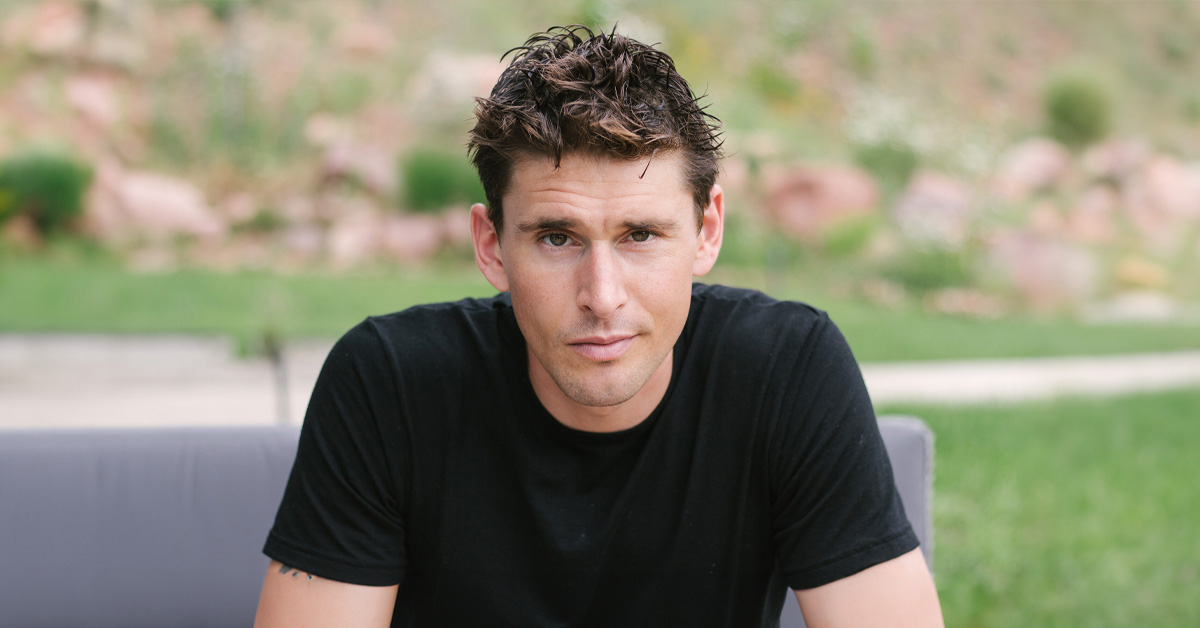
Advanced Sleep Technology and Biohacking | with Ben Greenfield


About Episode
Prioritizing sleep is absolutely essential if you want to consistently generate creative thoughts and stay focused (and no…caffeine and Red Bull are not adequate replacements). But what options do you have if you work insane hours and getting the right amount of sleep isn’t always an option? The next step is finding way to improve the quality of your sleep.
If you missed the episode with Shawn Stevenson I highly recommending giving that a listen first because it contains loads of information about why sleep is so important to your mental and physical health and it’s great for beginners who don’t know much about the basic science of sleep. It also has a lot of great suggestions to get started improving your sleep quality and quantity without a ton of effort or investment.
In this episode I have an in-depth conversation with one of my favorite health resources on the planet, biohacker and fitness expert Ben Greenfield where we dive way deeper into the sleep rabbit hole and discuss advanced sleep hacks, wearables, and other crazy tech to take your sleep and your cognitive abilities to the next level. Some of the stuff he talks about in this episode blew my mind, so if you feel like you already have basic sleep hygiene under control, give some of these next-level options a try.
Episode Highlights
- The problem with wearing your sleep deprivation badge of honor
- What does a healthy sleep cycle look like?
- Neurological, hormonal, and psychological benefits to healthy sleep
- Is it possible that you just need less sleep than everyone else?
- The relationship between sleep an weight gain
- How light and temperature can alter your hormonal levels
- Why when you sleep is as important as how long you sleep
- Ben’s guide to creating your own sleep optimizing light setup
- Learn how to track and manage your sleep
Useful Links
About Guest
Author of the New York Times Bestseller “Beyond Training“, Ben Greenfield’s balanced approach to fitness, nutrition and health comes from his extensive experience in the fitness and wellness industry as one of the country’s leading personal trainers and wellness consultants. In 2008, Ben was nominated by the NSCA as America’s top personal trainer, and in 2013 and 2014, Ben was voted as one of the top 100 most influential individuals in health and fitness.
A frequent contributor to health and wellness publications and a highly sought after speaker, Ben’s understanding of functional exercise, nutrition, and the delicate balance between performance and health has helped thousands of people around the world achieve their goals and improve their quality of life.
Transcript
Zack Arnold: So, I’m here today with Ben Greenfield. He is the New York Times best-selling author of beyond training, he’s an all-around badass human encyclopedia of better health, and most importantly, this is the guy that got me hooked on kombucha. So, Ben, it is a pleasure to have you back here for the third time.
Ben Greenfield: Are you really hooked on kombucha? Like, is it an actual addiction?
Zack Arnold: I don’t know if it’s an actual addiction, I can certainly go without it and not get, like, jitters or, you know, want to pull my hair out, but, dude, I love the stuff,
Ben Greenfield: You know, it had some alcohol in it, so you might need to start going to AA. I mean, this could be like an actual addiction.
Zack Arnold: Yes, I might need kombucha detox, so I guess that would be Kaombucha Anonymous.
Ben Greenfield: Yeah, exactly.
Zack Arnold: But anyway, as a total aside, we’re not going to go into kombucha today, but what I really want to talk about in this episode is I want to dig deep into the science of sleep. Now, recently my audience knows that I had an in-depth conversation with Sean Stevenson, who has a best-selling book that’s been going around for a while in the health community, all about better sleep.
Ben Greenfield: He doesn’t know anything about sleep.
Zack Arnold: I could, I could not agree more. It’s one of the worst
Ben Greenfield: Stupid little flat build hat.
Zack Arnold: Yes, agreed. Like one of the worst episodes I’ve done. No useful information whatsoever. I almost didn’t publish it, to be honest, but I did, just because I had it. So I’m going to put a link to the show notes to that, because that is a treasure trove of information about sleep. But he and I both universally agree that when it comes to getting deeper into really biohacking sleep, talking about technology, talking about the science of it. It’s like you’re the guy to talk to, so that’s why I wanted to have you on specifically today, is to really dig into sleep.
Ben Greenfield: Cool, thanks. I’m honored. No, now the pressure’s on.
Zack Arnold: Absolutely. Well, you’re good under pressure. I’ve seen you run Spartan Isis, so I know you’re good under pressure.
Ben Greenfield: That’s right.
Zack Arnold: So
Ben Greenfield: That involves rope climbing, not biochemistry, though.
Zack Arnold: There is true, but you’re equally as good with the biochemistry as you are with rope climbing. So, don’t sell yourself too short. So, for anybody that hasn’t listened to that episode yet, I do want to give them just a super brief primer on some of the basics of sleep, because in my industry, specifically in a lot of creative industries, and frankly, in American work culture nowadays, sleep deprivation is kind of a badge of honor. It’s kind of like a sign of toughness, like, well, I do 20 hour days and I do 18 hour days, and it’s kind of ridiculous. So, can we first just talk a little bit about why you shouldn’t be wearing your sleep deprivation badge of honor, and why lack of sleep is really, really bad for you?
Ben Greenfield: Yeah, well, it does kind of depend, I mean, there is, there is a portion of the population that actually has a genetic mutation that allows them to function with less sleep. These would be the people that are probably hardwired to be, you know, from an ancestral standpoint, the watchman at night, or, you know, whatever you want to call it, but basically, there’s a genetic mutation, this gene called DC two, and what that gene allows some folks to do is to, during a period of time when most people would go from their sleep cycles, right from from light stage one sleep down into their, their deeper stage four sleep, and then back up out of stage four sleep. Most people, that takes about 75 to 90 minutes to do that, and most people need to do that about four to five times during a 24 hour cycle, or you could also look at it as you needing to go through. That about 30 to 35 times during any given week for you to get full sleep during the week, right. So we’re talking about sleep cycles, a number of sleep cycles, and these people with this gene, this mutation, these freaks of nature, you know, they’re able to actually get by on going through those full sleep cycles in closer to 20 to 40 minutes, and what that means is that they can actually get some decent repair, memory consolidation, re-regulation of hormones, or release of growth hormones, some of those things that take the rest of us unlucky people, you know, longer period of time to do. These folks can actually do it, you know, with four to five hours of sleep now. Granted, I think there are some other issues. Most of the folks who I’ve talked to, who do pretty well in four to five hours of sleep, they have things like night terrors and these weird lucid dreams. I think there are some things that happen that could even limit memory consolidation and some of the other things that are supposed to happen during longer sleep cycles in people who have that gene mutation, but regardless, they are actually those people that you’d probably want with you if the zombie apocalypse happens and somebody needs to stay up during the night while everybody else is sleeping, right? Nice, but for the rest of us, we do need to go through anywhere from 30 to 35 of these 75 to 90 minute ish sleep cycles each week in order for memories to consolidate, in order for neural repair and recovery to occur, in order for central nervous system repair and recovery to occur, in order for growth hormone to be released, to allow for us to have an anabolic response that allows for things like soft tissue repair or nerve repair, and so that’s kind of what you’re looking at when it comes to two sleep cycles, and how much you want to get, and the importance of sleep. But yeah, there are some people who can get by in less sleep.
Zack Arnold: Now, let’s talk about that. Some people, because I know that there are – I’m sure a lot of people listening right now thinking, “Oh, see, see, I told you I don’t need a lot of sleep. Let’s talk about the percentage of people that actually have that genetic mutation, because I know that it can’t be 75% of the population, and that’s about the percentage of the population of my industry that’s not sleeping enough.
Ben Greenfield: No, it’s about 0.5 to 2%
Zack Arnold: So basically, the odds are extremely slim that if you’re listening, you actually have a genetic predisposition to being able to sleep a lot less than everybody else.
Ben Greenfield: Yeah, but when you look at things from a nature versus nurture standpoint, some people, perhaps not by nature, but by nurture, can get by in less sleep, and those would be people with lower levels of physical activity, for example, you know, like the Iron Man triathlete or the NBA basketball player, often needs, you know, in many cases, you know, some some of the better professionals who I’ve spoken with, or who I’ve seen talk about their, their sleep in terms of optimum sleep function, in addition to some of the research that’s been done on especially like NBA players and free throw percentage, etc. We’re talking nine to 11 hours of sleep for for some of these professional athletes who are really, really worked in their bodies hard during the day, you know, we’re talking like three to five hours of focused training, and then on the flip side, monks, people who do transcendental meditation, yogis, people who have certain periods of time during the day where they actually are engaged in, for example, high amounts of alpha or theta or delta brain wave production, because of specific lifestyle habits that they’ve worked in during the day. A lot of times, these folks do not lose things like executive function, cognitive function. They don’t experience the same fluctuation in, say, like satiety or appetite regulating hormones, despite not having that specific gene and sleeping five to six hours per night, and so it does depend on what it is that you’re doing during the day as well, when it comes to how much sleep you need.
Zack Arnold: Sure, and I’m glad that you brought that up, because clearly my audience is very different than yours, where you have Ironmen and CrossFitters and obstacle course racers and obstacle dominators, but I have people that are working equally as hard on a cognitive level, where they’re probably not moving much during the day, and I’m doing everything I can to get people moving more throughout their work day, but cognitively they might be doing these crazy sessions of 16 hours straight, so I’m assuming that rather than needing less sleep just because they’re not exercising or doing bench presses or running marathons, they still are going to require extra amounts because of the energy expended from those high mental activities. Correct.
Ben Greenfield: Yeah, about 20% of the people that I work with are athletes. The rest are professional poker players, CEOs, people who have high cognitive demand, hard-charging, high-achieving lifestyles, but who aren’t professional athletes, and for those people sleep is just as important, and I use just as many sleep hacking techniques, so to speak, with those folks as I do with the professional athletes who I work with.
Zack Arnold: Yeah, and I think that’s really the key that I want to hammer home today, and give a lot of cool tools and. Tips to be able to get that better quality sleep, even if you can’t get the quantity, but I just don’t want people to think, well, I don’t really exercise, and I’m not a hard-charging athlete, so I don’t really need that much sleep, because the mental athletics and the stamina and the creative focus, those will burn you out just as quickly, at least in my own experience.
Ben Greenfield: Yeah, absolutely.
Zack Arnold: So one area that I want to go to, that you touched on very briefly is this idea of appetite suppression hormones and obesity is clearly an epidemic throughout the country, and it’s something I see a lot in my industry as well. So, can you talk just a little bit about how sleep is tied to ghrelin, leptin, and just the whether or not you have, you know, like you have the munchies at night or you don’t, and how obesity and weight gain are linked specifically to sleep.
Ben Greenfield: Sure. Well, I mean, you’ve pretty much said it right there. When you do not have adequate sleep, you tend to be less sensitive to the hormone leptin, which means that, well, there’s a couple of things going on. First of all, leptin is a hormone that your body becomes more responsive to and releases in greater quantities when you have produced adequate amounts of melatonin. Okay, so leptin is going to help you to feel more satiety after consuming a meal. It is going to allow for proper partitioning of nutrients into storage tissue after you’ve eaten, you know, such as fats getting stored away in adipose tissue, and sugar is getting stored away in liver glycogen and muscle glycogen, etc. And when you are responsive to it, you also tend to have a satiety signal sent to your brain when you actually are full, or when you actually have reached a point where the adipose tissue and the sugar levels have been topped off. In the absence of that hormone, your body continues to try to conserve and store calories, despite already being full. It’s as though when you are filling the gas tank in your car at the gas station, and you hear that little click that you would normally hear when the gas tank is full, it’s as though when you are leptin sensitive or leptin resistant, that click doesn’t occur, and the gas just keeps going, going, spilling out, you know, into the street, and you know, and you know, in this case, spilling out into your fat cells, and and so you simply don’t have that normal satiety signal. Now, melatonin is something that would be released in adequate quantities, not only when you are sleeping enough, but also when you are sleeping in a cool environment, right. That’s one trigger for a large amount of melatonin to be released, keeping your bed cold, keeping your sleeping environment cold. Another key concept, when it comes to staying cold would be what research has shown is that finishing any hard workouts within about three hours of bedtime is also pretty crucial for keeping the core temperature down, and then the other thing that seems to be most crucial for melatonin release is the absence of blue light and artificial light, both leading up to the time that you are going to bed, but then also when you are in bed in your room, meaning that you know everything from the little blue light that the power button on the TV produces to your iPad plugged in to anything else that might be on in the room, any of that can interfere with melatonin production, so what you’d want to do is pay attention to temperature and pay attention to light in order to maximize melatonin production. Then, as a consequence of that, downstream maximize leptin sensitivity and leptin production, and the flip side could be said for the hormone ghrelin, which is a little bit synergistic to a leptin, in that it is going to cause increases in appetite, it’s going to cause increases in your drive to eat, and that’s great from a survival standpoint when it comes to your body releasing adequate amounts of ghrelin, so you actually go out and you eat, and you satisfy everything you need for neurotransmitters and muscle repair and recovery, etc. But once again, raging levels of ghrelin, especially in the absence of leptin, just make you hungry, and especially hungry for many calorie-dense, fat-rich, sugar-rich foods during the day, because those are the most calorie dense, those are the most satiating in many cases. Those are the ones that are going to dump the most energy into your body, so you really tend to crave, you know, the Snickers bars and the ice cream more than you do the kale salad when you are low on sleep. And a big part of that is the the large amount of ghrelin, you know, in addition to the lower amounts of leptin or the lower amount of leptin sensitivity, so that’s that’s that’s the basics when it comes to hormone. There are other, there are other hormones we could talk about, you know. For example, growth hormone pulses and surges as you are asleep, and that’s important for for recovery, that’s important for fat burning and immobilization of fatty acids from adipose tissue, and that’s another one that tends to. Get down regulated when you’re, when you’re low on sleep, or when you’re low on melatonin, so you know that that’s one. Testosterone tends to drop when you’re low on sleep, cortisol tends to rise when you’re low on sleep, so other hormones, but that’s kind of the deal with leptin and ghrelin. And then the only other thing I should mention is that it appears that with melatonin release and core body temperature. You actually should be asleep, and this is going to be a little bit variable from person to person, depending on your unique chronobiology. Some people are morning people, some people are night people, and there is some science behind that. There’s a really good book called The Power of When by Dr. Michael Bruce about this, but the idea here is that if you are not asleep for approximately four hours, by the time two to 3am rolls around, you’re usually limiting the amount of melatonin that you’re able to produce, and also your leptin sensitivity, and this means that for the majority of people, a bedtime much later than about 11pm is not going to do you any favors from a hormonal standpoint. Now, granted, like I mentioned, this is based off of people’s unique chronobiology, and there are some people that, from a biomechanical or biochemical rather standpoint, they really are night people. They really do operate a little better at night, and those people are able to have, like, say a midnight to 8am sleep cycle, and just stay perfectly normalized when it comes to hormones, but for most people, you know, when it comes to, and this is all based off the interaction of light and circadian rhythm, right? So, let’s say the sun sets at seven, it’s dark by 730 you need to be in bed by 10 in order to get optimum leptin and melatonin production between about two and 3am and so the actual time of bed is going to influence this just as much as the amount of sleep in many cases.
Zack Arnold: Yeah, and I’m really glad you brought that up, because everybody’s always looking for the magic number. I’m sure you’re asked that all the time. Well, how many hours do I need? Just tell me, how many hours? And it just seems to me there’s so many other components that go into it, other than just the amount of time that your body is laying in your bed continuously, right. So that having been said, where I want to go next is the idea of light, and go a little bit deeper into this, because one of the huge revelations that I’ve had in my study of sleep, and I certainly haven’t gone even a 10th as deep as you have, but it’s understanding how much light actually affects my circadian rhythms and my hormonal production and the quality of my sleep. So we talked about a little bit with Sean, where you know he has a saying where the good night’s sleep starts as soon as you wake up in the morning, and we talked about sunlight exposure, but now I want to go deeper into the biohacking world, because I know you’ve discovered some amazing ways to get artificial light exposure, if you’re either in a climate where you can’t be exposed to light early in the morning, or where your schedule doesn’t allow it. So, let’s go a little bit deeper into how to use light to improve the quality of your sleep.
Ben Greenfield: Yeah, light is a zeitgeber, which means that there are certain elements of life that can move your circadian rhythm forward or move your circadian rhythm backwards. What I mean by that is that let’s say you’ve been traveling from the eastern time zone to the Pacific time zone. This means that at 7am in the morning, Pacific time zone, your body thinks that it is, it is 10am in eastern time zone, and vice versa, right? Let’s say you’re in the eastern time zone, and it’s 7am your body thinks that it is 4am Well, in a situation like that, it would behoove you to figure out a way to send your body a signal that it actually is not, let’s say 10am or 4am and it is in fact time for you to get up and do what it is that you want to do. Well, the three cues that appear to be the most effective as zeitgebers to send this message to your body that it is actually morning, or in some cases is evening, it’s light movement and food, and so what this means is that one of the best things to do, if you’re out of your time zone, you’ve traveled across the world, it’s morning, you’re groggy, because it’s not morning, wherever you came from, the best things you could do would be to present your body with adequate amounts of sunlight, or something that really simulates all the different rays of light that come from sunlight to get some food into your system, and by the way, protein, about 20 to 30 grams of protein, appear to be something that is somewhat crucial to include with that food, with that meal, and then finally, movement, you know, whether to swim or hitting the weight room or yoga, or or whatever else, so the idea here, when it comes to light, is let’s face it, in some cases light is not readily available, in some cases you cannot get out into the sunlight to send your body that cue that signal that it is morning, right? So let’s say I am back east, it. Is 7am I’m groggy because I’m used to living in Washington state, but I’m in New York City, where 7am and back in Washington state it is 4am Let’s say it’s dark and gray and rainy in New York. Well, how the hell am I going to send my body that light based signal? Sure, I could go eat breakfast, and I could include some eggs with breakfast to get the protein feeding and nail that component, and I could hit the gym perhaps a little bit before breakfast to get the movement-based component, but when it comes to light, what I found is that, as you’ve alluded to, Zack, there are certain biohacks that can assist with this, so one idea is that you have photo receptors on the surface of your brain that are very similar to the photo receptors that are found in the back of your eyes, and by targeting light specifically through the ear canals, you can send that message of light to your brain, and so for example, there is an LED headset called the human charger, that is basically a lighting device. You put, like, earbuds that would play audio, except it’s producing light instead of playing audio. You put those into your ears, and for 12 minutes it shines bright light into your ears to send your body a message that it is, it is daytime, it is light time. There is another. There’s a set of glasses, and I use both of these quite frequently. They work for things like seasonal affective disorder, jet lag, kind of a pick-me-up in the morning, and also for, you know, for re-timing of the circadian rhythm. These glasses, appropriately enough, called the re-timers, and these are glasses that produce a greenish blue wavelength of light, very similar to the greenish blue wavelengths of light we would get from the sun in the morning, except you put them on your on your face, you wear them like glasses while you’re working in your computer, or making coffee, or making breakfast, or working out, or whatever it is that you’re doing, and you’d wear these from 20 to 30 minutes or so, and frankly, they’re far more portable than these big, like blue light boxes that often you often see indicated for seasonal affective disorder, or for circadian rhythm, they also produce a more natural wavelength of light closer to to that of the sun. So those are just a couple examples, if you aren’t able to get out into the sunshine, of ways to kind of jump start the circadian rhythm to set it forwards or set it backwards, depending on what part of the world that you’re in, and that’s what you would use something like light, and of course, the key part of this is that not only is that going to jump start your circadian rhythm and help you to sleep better when night arrives, you know, eight or 10 or 12 hours later, but the other thing you’d, of course, want to do is the complete opposite at night. You wouldn’t want these big blue light sources. You wouldn’t want to wear the suppose if you’re going to go out and go to a rave and party in Vegas for a few hours and stay out till 2am You could actually do this at 9pm or 10pm for a big surge in wakefulness, even if you didn’t want to drink a cup of coffee. But ideally, if you’re trying to sleep, which is what we’re talking about. You would limit blue light exposure, right? So, for example, I didn’t just talk about these, but in my office right now, while I’m talking to you, I have installed in my office a special kind of light bulb made by a company called Lighting Science, and they are called Awake and Alert bulbs. These bulbs up on the ceiling of my office produce an intense amount of blue light, more blue light than the average bulb would produce. So, they’re great when I’m working in the morning, especially when I’m not out in the sunshine. If I were to walk into my office in the evening, however, these would really f up my ability to sleep later on at night. So, what I do in the evenings, is not only do I wear, you know, the blue light blocking glasses that you see a lot of folks wearing these days to limit the amount of blue light that I’m getting from screens and iPhones and artificial lighting, and you know, especially like brake lights of cars and street lights are notorious for this, but then I also have red light in my office, so I have a desk lamp with a I use a light bulb called a Ruby lux R U B Y L U X, and it’s just a kind of like a near infrared form of light with a little bit of red light mixed in, and that’s how my office is lit at night, you know, it’s almost very similar to if I’d lit a candle at night without the mess of the wax, etc. I just kind of flipped the light on, that’s got the got this Ruby Lux lamp in my office for night work. Similarly, in my bedroom, my children’s bedroom, I don’t have any light bulbs that produce light from the blue light wave spectrum. In this case, I also use bulbs from a company called Lighting Science, and these are called nighttime bulbs, or how they make one called a sleepy baby bulb, as well, for like a baby’s bedroom, but these have the absence of blue light. So, essentially, long answer to your question, it comes down to intense amounts of blue light in the morning, whether that be from sunshine or any of these biohacks that I just talked about, like light bulbs, or glasses, or in ear. Therapy type of devices, and then in the evening, the absence of blue light and the presence of things like red light, whether that’s candles or whether that’s, you know, red light producing lamps or bulbs or or infrared or anything along those lines, and so it’s kind of that one two combo that allows you to use light to maintain your circadian rhythms adequately,
Zack Arnold: Right, and one thing that I talk about on the show in the past as well, I tell people that after about six or 7o’clock at night, when my kids go to bed, it basically looks like a dark room in my office, where it’s only red lights. I use Flux on my computer, so it’s a really deep red color on my computer monitors, so it either looks like I’m in, you know, a photo processing lab, or I’m shooting porn, it’s one or the other, just, and
Ben Greenfield: By the way, the there’s a better piece of software than Flux. Now, not only kind of decreases some of the brightness of the screen, reduces the blue light, but it reduces what is called the temperature, which is also important, and also reduces the flicker, which is also important, and that piece of software is called Iris. Iris, I, I interviewed this pretty, pretty brilliant European fellow who created it, and there’s a podcast I’ve done somewhere. It’s called, like, is your computer monitor slowly destroying your eyes? It’s somewhere at Ben Greenfield fitness.com If you wanted to listen in, and I think he even has a discount code for the software on there, but that one’s called Iris, or Iris Tech. It’s also known as, and it works even better than Flux.
Zack Arnold: Okay, that’s interesting. That’s a new one for me. And this is just a testament to anybody listening, that just by default, if you have Ben Greenfield in your earbuds once a day, you’re just by default going to be healthier. It’s just the way that it works, because you learn all this cool stuff,
Ben Greenfield: So might not imagine that someone could prove, prove you wrong with a Snickers and a bowl of popcorn and a few good movies, and my podcast in their ears.
Zack Arnold: I think that if you watch Netflix for four hours and ate nothing but ice cream, but you also were listening to the Ben Greenfield podcast, it probably canceled itself out. It really would. But anyway, one other area that I want to go with light, really, really quickly. I very much understand now the idea of getting light exposure in the morning, but to go one layer deeper, let’s say that somebody is doing that light exposure in the morning, whether it’s natural sunlight and taking a walk, or if they’re in, let’s say, they’re in Alaska, let’s go really extreme, they do the human charger, or another one of these light panels, but then they’re still going to be in a dark room for 12 to 14 hours straight, which is pretty much anybody listening to this show. Do you still need to be conscious of getting light exposure throughout your day if we’re talking about sleep?
Ben Greenfield: Yes, especially between the hours of about 10am and 2pm when the sunlight would normally be brightest, and when our hunter, gatherer, gardener, forager, ancestors would have experienced a large amount of light out in the sun. That’s also a time of day when light exposure is still pretty important. Whether you could be in the dark room and still be doing something like, you know, every hour wearing like that human charger and flipping on those earbuds for about 12 minutes, you know, or or throwing on those glasses for 20 minutes or so, so, so, yeah, it is important during the day, and especially between about 10am and 2pm in the afternoon as well. And by the way, that’s when the sun is producing its largest amounts of UVA and UVB rays, and tends to be at its brightest in terms of, well, it’s measured, believe it’s measured in kelvins, the actual temperature, so the temperature of the sun, you know, is well above, I think, what’s what would be about 3,000k in a situation like that, and so that would be a time from an ancestral standpoint to also prioritize light.
Zack Arnold: Got it? I just wanted to make sure people didn’t think that, oh, if I get the human charger and I do 15 minutes in the morning, I’m good until night time, because I know that you need to be exposed throughout the day, but most people that I know in my industry and other creative industries, they do spend 14 hours a day, and they never see the sunlight, because they work in basements, so it’s a very real reality. The next area that I want to go to is supplementation, because this is certainly one of your fortes, is understanding the deep science of supplements, and I don’t want people to think they need supplementation to sleep, and they need drugs to sleep, but I do want to talk about some of the really cool hacks that you have found in the world of supplementation, and we’re not talking about Tylenol PM, we’re talking about much cooler stuff.
Ben Greenfield: Yeah, you mean supplements for sleep?
Zack Arnold: Yeah, supplements that can specifically help you get better sleep, get you deeper, high-quality sleep.
Ben Greenfield: Sure, there are several, but a few that I would consider to be higher up on the Prairie list. Of course, we already discussed melatonin. Now, large amounts of melatonin, when you are jet-lagged, can be very good for pushing the reboot button on your circadian rhythm. To put that into context for you, my naturopathic medical physician once informed me that he would give about 50 to 70 milligrams of melatonin to cancer patients at and that would allow them to sleep at night and eliminate pain, you know, it essentially kind of similar to Valium or Ambien takes a sledgehammer to. Your head in terms of shoving you into deep sleep with, but unlike those drugs, does not inhibit your ability to achieve deep sleep, which is incredibly important for some of those things like memory consolidation and dreaming and cognitive repair and recovery. You know, Valium and Ammian don’t allow you to do that, which is why a lot of people who take that and sleep eight hours a night still have brain fog and still have cognitive issues because their nervous system is not repairing well. One of the things that I’ll do, assuming that I don’t need to be on hyper alert mode that night, when I, when I’m far, far out of my time zone, and I’ve traveled to Asia, or something, is I’ll take, you know, a pretty hefty dose, 40 to 60 milligrams of melatonin, just for the first couple of days that I’m there, and again, it’s that’s a lot of melatonin. Most melatonin supplements, to put this into context, are three to five milligrams, but then, in addition to using hefty, hefty doses of melatonin, when I’m in a situation where I’ve traveled a lot, I just about every night use micro doses closer to about 0.3 milligrams, which is not enough to really shut down your own endogenous production, but is enough to give your body just a little bit of a cue, because let’s face it, despite using blue light blockers, and despite using the red light producing bulbs, and in my bedroom, etc. I’m still getting exposed to more artificial light than my ancestors would have just because I’m still driving in my car back from tennis practice, or picking up my kids from somewhere, or I’m still, you know, talking on my phone and looking at my phone, and frankly, there’s some nights where, you know, we have like when Master Chef is on, like the kids and I make some cool meal and gather around and watch Master Chef while we eat, well, that’s blue light, and so those micro doses of melatonin can help to mitigate just this fact that we do live in a modern society, and we can’t deny that, unless we’re complete social outcasts, I suppose, living in some pristine Himalayan mountain top, or simulating a unabomb, or rescue existence in a forest somewhere, but ultimately micro doses of melatonin, and then mega doses of it when you’re really out of your time zone can be helpful. Another one that I like that I’ve played around with a little bit is his pH GABA. GABA is gamma amino butyric acid. It is an inhibitory neurotransmitter that normally would only interact with receptors in tissues of your body, aside from your brain, because it’s too large of a molecule to really cross the blood brain barrier to much extent, but pH GABA is a smaller version of it that can cross the blood brain barrier. I interviewed a guy who developed a supplement called Sleep Remedy that has not only micro doses of melatonin in some of this pH GABA in it, but that also has a little bit of omega three fatty acid, a little bit of vitamin D, a little bit of magnesium, and some of these can can also assist with sleep, especially if you’re deficient in those specific compounds. So pH GABA and micro dosing with melatonin, I’m a big fan of those. I also really like the, you know, one of the most studied effects of cannabidiol, or CBD, the non-psychoactive extract from the hemp plant, which is still legal in most countries and in all states to purchase and to ship to. This is something that most of the studies on it have been done on depression, on anxiety, on stress, and on sleep, and in a range of about 10 to 60 milligrams, it’s extremely efficacious, for especially for hard-charging busy people, to shut down their brains at night and assist with sleep without getting any of the psycho activity or the paranoia from something like say THC or marijuana, so you’d want to look for CBD from from hemp, for example, so it’s not laced with THC, so you’re not having to like fail a urine test or something like that. That is, that’s another one that I’m a big fan of, would be CBD dosages vary based on delivery mechanism, you know, there are some mechanisms that are what would be called lipophilic or water soluble, typically all you would need is about anywhere from 10 to 30 milligrams of that to fall asleep. For other delivery mechanisms, sometimes 50 to 100 milligrams are necessary, but CBD would be another that I’ll use quite often at night to assist with sleep, and it also helps with inflammation and repair and recovery. So it has some additional benefits. In the world of herbs, there are some herbs that help out quite a bit. Some of the bigger ones that specifically work by helping to decrease salivary cortisol and stress levels would be holy basil, lemon balm. It’s not really an herb as much as it is a molecule, but phosphatidylserine. Phosphatidylserine, the company Thorne, makes a pretty good phosphatidylserine that you could take that, especially if your lack of sleep is due to stress levels, can be pretty helpful. Now, there are, of course, we could go on and on. There are all sorts of things that can assist with sleep, but I would say, if you wanted to get the 8020 80% of results from 20% of what is out there, if I could recommend anything. It would be to do as I do, and what I do is I use CBD. Admittedly, my company produces a CBD called Nature CBD that is blended with lemon balm, with ashwagandha, another thing that can help to decrease cortisol, and with magnesium. Right, so, so I’ll take typically about three to four capsules of that before bed, and combine it with one packet of sleep remedy, which is that other supplement I mentioned, that is a combination of pH GABA and micro doses of melatonin. I’ve found that one two combo to work really well for me in just about any situation without producing excessive grogginess the next morning, or anything along those lines. Now you know there are other situations where you might want to completely knock yourself out, or you’re completely stressed, or your lack of sleep is due to to pain or relationship issues, or things like that. And the last one I would mention to you would be kratom, K R A T O M. Some varieties are more energetic and uplifting and mood enhancing, some are a little bit more euphoric, and can really shove you into a very relaxed state, and kratom, you can still purchase it online. The federal government in the United States tried to classify it as a Schedule One controlled substance, but at this time it’s still not, and there are certain strains of kratom that when mixing a tea and taking about 40 to 60 minutes prior to bed or in the evening at some point even before dinner tend to really really help with relaxation and the strain that I’ve found to be most efficacious when it comes to kratom especially in people who are like really beat up they’ve had a hard workout low back pain, you know, knee injuries, things like that would be a red, red variety. There’s one called Red Vein. It’s kind of like marijuana, where different strains do different things, but Red Kratom appears to be, and has, at least for me, been very, very good for those situations where lack of sleep might be due to some type of physical issues, such as having strained or spraying something. The reason for that is because it acts very, very similarly in the same way as like an opioid-based painkiller works without the actual addictive property. So, kratom would be another one to kind of like potentially having your medicine cabinet is something you could turn to in a situation like that.
Zack Arnold: Well, this is definitely some pretty awesome next level stuff. I’m still pretty, you know, pretty much on the beginner level with my evening supplementation, but for me the staples are magnesium glycinate every evening, as well as EPA, DHA, and then I’ll also throw in some probiotics if I want to do the, you know, just kind of clean up the gut flora during the evening, but I definitely, I definitely think I want to test out the CBD, because that sounds interesting, it doesn’t sound nearly as fun without the THC, but you know, what are you going to do?
Ben Greenfield: Yeah, some, some people actually do get high off CBD. Yeah, you have to take a lot of, though. Usually, have to take about 100 milligrams or so to get high, so about double the dose of what I would usually use prior to, prior to bed.
Zack Arnold: All right. Well, now that I want to go real quickly to the last thing, because I want to be very respectful of your time, and this is going to be the antithesis of crazy biohacks and technology, in my opinion, one of the most important parts of getting good, high-quality sleep is routines, and I know that you’re big on an evening routine. So, can you very briefly walk me through what are some of the key components that anybody should have as part of an evening routine if they want to sleep better?
Ben Greenfield: Sure. In brief, it would be number one, as you’ve just learned, to get your body cold, decrease the core temperature. Hot cold contrast shower can be very effective, especially if you have an evening workout. This would mean that you put the water in the shower on cold for 20 seconds and then hot for 10 seconds, and you go through several cycles of that, right? So you take like a five minutes hot cold contrast shower of 20 seconds cold to 10 seconds hot. You can also decrease the temperature in your home to about 60 to 65 degrees at night, which might be a little cool for you for during the day, but that can really help with sleep at night. And then the last thing you could experiment with would be something like a chili pad, which is a special cooling mattress you can get off of, for example, Amazon, that will circulate cold water underneath your mattress while you are asleep. So, that would be that would be one evening routine. And I, frankly, do all three of those myself. Another one, you know, we kind of exhausted the light dark part of things quite a bit, so that’s another one that’s important. Finishing up your workout about three hours before bedtime is important, more important actually than working out in the morning. Working out in the morning hard can actually inhibit sleep later on in the day. Working out hard in the afternoon or early evening and finishing up within three hours prior to bedtime actually enhances sleep. So, it’s kind of interesting. Lots of interesting research out there on exercise and sleep, of course. You know, shut off work and everything, you know, close to about 9pm for a 10pm bedtime, but I also keep paper books, like fiction books or history books, or books that aren’t anything to do with business, or wouldn’t get my mind humming about business, I keep those in the bedroom, rather than a Kindle, or a computer, or a phone, for example. Cool, those would be the biggies. The last thing I would throw in there is, I do track all of this. I do like sleep tracking, and a lot of these devices, like the Fitbit or the Jawbone, they constantly bombard your body with radiation, specifically a Class One Bluetooth signal while you’re asleep. And this has been shown to do things like affect blood brain barrier leakage in rodent models, and to affect things like the what would be called the micro DNA circulating your blood, and I’m reticent to use many of these devices. I use a ring, it’s called an aura, o u r a, and I can place it in airplane mode, but it has a built-in internal computer that will allow me to collect things like, you know, how much time I spent in rapid eye movement sleep, how long it took to fall asleep, you know, how my heart rate fluctuated while I was asleep, which is indicative of my core temperature while I sleep, etc. And you know, that’s kind of cool, where you could see, like, okay, well, I started taking, let’s say, CBD, but for some reason, for me, like, it shoved my REM cycles down from being like 15% down to 2% so maybe that’s not like the supplement for me, or you know, maybe I found that it actually increased those sleep cycles, and you know, and decreased my sleep latency, or how long it took me to fall asleep, so that’s a keeper, but I’m a fan of quantifying a lot of this stuff too. Those are just a few of the little sleep habits that I’d recommend.
Zack Arnold: Yeah, that was going to be the last quick question was actually going to be about sleep tracking, and it’s interesting you mentioned the Fitbit and the Bluetooth, because I have my phone in airplane mode, but I’ve used the sleep cycle alarm clock app for God, I don’t know, almost two years now, but I didn’t realize that I needed to go even further, and just being in airplane mode wasn’t enough, so that’s that, that’s a new one for me, so you’re saying
Ben Greenfield: I want to make sure Bluetooth is off in addition to airplane mode.
Zack Arnold: Got it, but it’s, but it’s okay if I wanted to have the Fitbit, like I have the Fitbit Blaze, so it has the heart rate monitor on it. But if it’s not transmitting Bluetooth, I’m okay to keep the device on, as long as Bluetooth is off and I’m in airplane mode, that’s okay,
Ben Greenfield: Right?
Zack Arnold: Okay, got it. All right, well, that being the case, I’m going to be looking into the Aura tracker, because I want to go to the next level of sleep tracking, and I’m glad you answered that one for me already. So, I want to be respectful of your time. I myself have learned so much just in the last 45 minutes, and I’m sure that my audience has as well. So, I want to thank you once again for being a three time guest on the podcast, and I guarantee I’m going to keep bothering you to come back for more, because everybody loves these episodes. So, thank you so much.
Ben Greenfield: Well, thanks for having me on, Zack. I’m honored.
Transcribed by https://otter.ai
Episode Credits
This episode was edited by Curtis Fritsch, and the show notes were prepared and published by Jakin Rintelman. Special thanks to Krystle Penhall and Sarah Furie for helping to spread the love!
The original music in the opening and closing of the show is courtesy of Joe Trapanese (who is quite possibly one of the most talented composers on the face of the planet).