


AI Just Exposed Your Creative Identity. Now What? | with Ian Clawson & Chris Deaver
Chris Deaver and Ian Clawson explore co-creation, “brave together” work, and why adaptability and trust are essential for creatives in constant change.
Let's create things that matter. Together.
How do you stay creative when everything about your industry is changing at once?
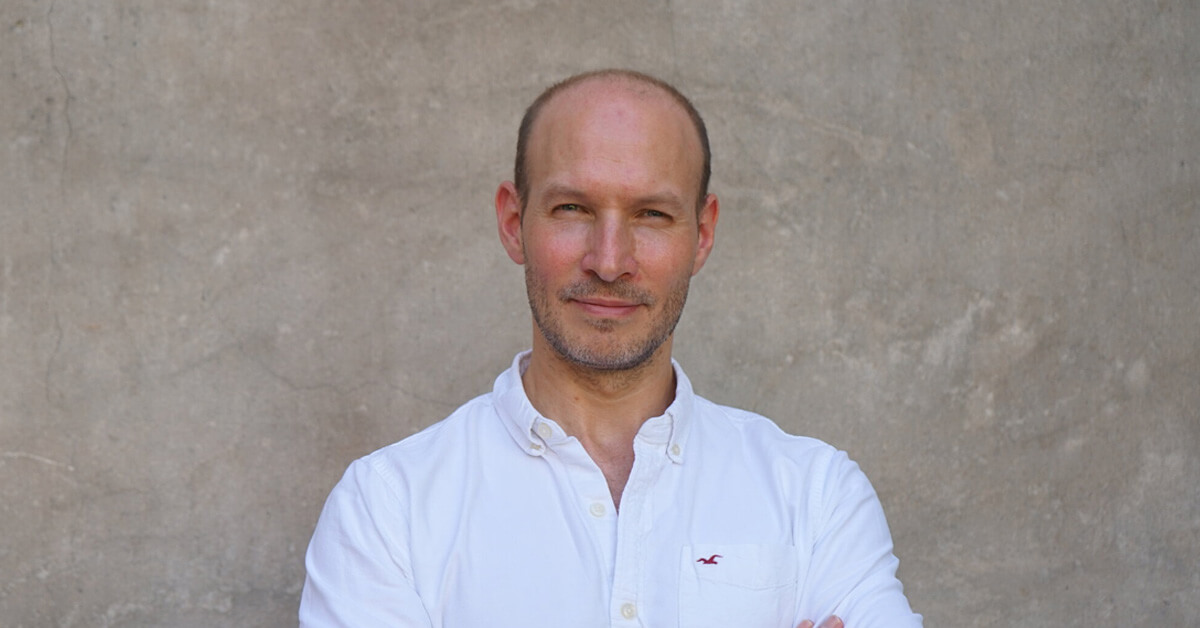
In this episode, I’m joined by Maxim Jago, futurist and creative technology expert, to discuss the impact of AI on creative careers. We dive into this moment of uncertainty and what it means for the future of our work. Maxim shares a grounded, hopeful perspective on embracing co-creation, deepening human creativity, and finding new opportunities for meaning and impact in our craft.
Maxim Jago speaks on wide-ranging subjects exploring lessons learns from his work as a filmmaker, futurist, author, and media technology expert.
He proposes an optimistic-realist attitude to future technologies and opportunities for growth in society, and in ourselves. As an award winning filmmaker and screenwriter, Maxim is currently engaged in three feature film projects that include true VR storytelling elements.
As an Author, Maxim writes the official Adobe Premiere Pro Classroom in a Book – the standard text used by film schools all around the world.
Zack Arnold: Hello everybody, and welcome to yet another in our series of engaging conversations this week that are all about navigating the future of creative work. We are here right now with none other than Maxim Jago, who, by the way, has one of the coolest names on the planet. Seriously, if you decided that you wanted to pivot away from being a filmmaker, storyteller, director, bestselling author, media technology expert and instructor, or a futurist, I would say that between your name and your really cool accent, you have a future as the next James Bond.
Maxim Jago: Well, bless you. If you were here, I would buy you another drink, probably a martini.
Zack Arnold: I was gonna say, shaken, not stirred, right? You and I have this really interesting habit where we connect maybe every three to five years, and we have these really deep conversations about life. I always come away thinking I’m smarter because of it, then we disconnect. As you had said beforehand, we need to start doing this like every three to five weeks instead of three to five years. But I’m going to take what I’ve got right now so we can share all of your wisdom about the future of technology and creativity.
Where I actually want to get started is that I had a bit of a challenge thinking, “Where do I fit you into this five-day series?” You’re a multi-hyphenate that kind of does a little bit of everything, and there isn’t a day in this series where you probably wouldn’t fit. But I think the one where you’re going to fit the best is helping us better understand creativity and what creativity looks like in the face of artificial intelligence. Here’s where I want to start. This was an offhand comment that you made to me in one of the emails when we reconnected, and you said, and I quote, “I think there’s a great future for creatives, perhaps better than there has been for a long time.” What? That is the opposite of what everybody is saying right now. Tell me more.
Maxim Jago: Well, I was raised by intellectual hippies, and I always joke, it’s like being raised by wolves, but with better tea. What’s great about that upbringing is that there’s a lot that you just don’t take for granted. A good example is when you walk into a crowded room. Some people walk in with this attitude of, “Here I am,” and some people walk in with an attitude of, “There you are.” The two energies have completely different impacts, but most people just walk into a room not thinking about the way they’re going to be perceived.
One of the things that I learned growing up is to lean into fear. I’ve fairly recently finished work on my first philosophy book, and there’s a chapter on love and a chapter on fear. I think our choices are always essentially rooted in love or fear. Being concerned with the way you’re going to be judged in terms of approval or disapproval, that’s fear-based thinking, and it almost never works out. I was raised to lean into fear. Anytime I encounter something that I think, “Oh, that’s kind of scary,”… Last year, I gave a big speech for the United Nations about our future relationship with artificial intelligence and artificial superintelligence, and I was explaining that I felt we ought to be a lot more terrified and a lot more excited all at the same time.
When we look at the development of these technologies, they represent enormous power for change. Some of that change could be pretty painful, and some of it could be just amazing. To my mind, it’s like the discovery of the control of fire. Fire is neither good nor bad; it just makes things hot. Learning to control fire has meant the development of complex civilization. What I see coming, and this is a bit daunting, is that autonomous decision-making systems like AI—it’s really algorithmic imitation right now, but when real AI arrives—will be superior to human reasoning. There’s no way. The AI will do better in three seconds. It’ll be better at designing things, creating things. In fact, AI already beats humans in all the creativity metrics.
So why the optimism? I have two reasons. One is that the current movement towards autonomous robotics and autonomous AI systems, I think where that leads to is free outcomes, and that means that our entire economic system is in trouble. We have to find another way that, I think, will commoditize reputation, but our basic living costs must ultimately become free. Where that leads us to as a species, fairly soon, could be returning to a way of life before we were defined by our occupations. I think that way of life is focused on community, self-expression, self-realization, personal development, and a much more natural integration into the natural environment.
In terms of creatives, we want human creativity. If you’re producing content, it’s human emotional stakes that drive audiences, so much so that we anthropomorphize machines to make them feel human in order to care about them. The opposite of that is, during the Second World War, one of the propagandists said that you cannot convince people to do inhumane things to human beings; you must first dehumanize them. The opposite end of that scale is the recognition that the human condition is universal, that we’re all family, that we’re all in it together on this little blue marble floating through eons of space.
Where I see us going is human-generated, authenticated, certified human creativity taking on a higher value. The example I’ve been giving is, if you imagine a musician that created an album which they wrote the songs, and people love it, you could train an AI on that content and have an effectively infinite amount of songs created that are indistinguishable from the original. But if you know that they’re copies, the value is lower. Now, when that musician comes out with a second album, it’s authenticated, certified human creativity. I think that takes on a premium value.
What’s critical is that we look at the distinction between small ‘a’ art, the craft of creating art that leaves the experiencer unmoved, and capital ‘A’ Art. Capital ‘A’ Art changes the person who experiences it. I think the latter form of creativity is lined up quite neatly to explode in value, recognition, and appreciation. But the small ‘a’ art, like designing a menu in a restaurant, an AI will do it in five seconds and it’ll be great. That type of craft skill, I think, is threatened.
Zack Arnold: One of the trends that I’ve been noticing is the move back to vinyl. There’s a warmth and an authenticity to listening to a vinyl that you don’t get when you listen to the exact same thing on Spotify. I’ve been talking about how AI is this move towards perfection and creativity—all the right words, no spelling errors, no grammar issues. I think the real value is going to be in the imperfections. The imperfections are what make something human, where they do make a mistake. We’re fallible, we’re vulnerable, we relate to that. As AI becomes more prominent, what’s going to become more scarce is human connection, and those that can tap into that in their creative work, I think those are the ones that are going to rise to the top.
That’s the big-picture vision, but let’s bring it down to what things look like for the next two to five years, because that’s where a lot of the real fear is. I’ve been saying for years that when you do one thing and have mastery in one highly specialized craft, you’re in trouble because AI is very good at replicating things. It’s in the diversification and the generalization of your abilities and being a multi-hyphenate like you are that I see the real value. So while we’re navigating this really dark, murky transition, how do we navigate the value that we bring as creatives and humans? What do we start learning? What do we surround ourselves with so we can survive this transition?
Maxim Jago: Oh, goodness, there’s so much to say about that. Let’s talk about one, two years, and then two to five. I read in a fantastic book that if somebody’s serving you a glass of water in a restaurant and your finger touches their finger, you’re something like 30% more likely to tip well because the reality of their existence is brought home through physical touch. I think the creativity that expresses the human presence of an artist is just not going to go away.
If Ray Kurzweil was right—he wrote a sequel to The Singularity is Near, I think it’s The Singularity is Nearer—our merging with technology will reshape consciousness in such a way that we can’t forecast what it will feel like to be human. If Musk is right and using things like Neuralink to give direct access to our brains, we may experience reality itself in a different way. But until that day comes, we are sensual beings. We want human contact. Nobody likes talking to an answerphone. I feel mild indignation that I have to talk to a toaster.
I think we are going to continue to see this demand for flawed, imperfect, but authentic human creativity. For the next one to two years, my advice for anybody working in any creative field is that they lean hard into learning ways to use artificial intelligence to support their creative work. I would liken it to the establishment of Photoshop. It doesn’t take that long to research and find out about two or three AI systems that you can focus on, learn how to prompt them, and learn how to get the best quality from them.
I would say for the next year or two, you can viably improve your productivity and produce more and better-quality work. Ben Koszegi, who runs FMC, was saying that Microsoft Copilot, if you’re using Adobe After Effects and you’re stuck, you can ask Copilot to look at your screen, tell it what you want to do, and it’ll tell you how to do it. How big a leap is it from that to it just doing it for you? I think in one to two years, I would look at utilizing AI systems for your own education and for getting you 80% of the way there in a design, but you’re still going to want to do the fine finishing yourself.
Two to five years becomes rockier because, to my mind, within two years, we’re going to see AI systems that can viably deliver, for example, a ProRes 422 HQ UHD media file. The quality is right up there, the consistency is right up there. So where’s the artist in the loop? Where I see us as creatives retaining our value is in steering those AI systems. To do that, you still need to understand composition, the rule of thirds, the golden ratio. You need to understand pace and rhythm, the breadth of the scene, the art of editing.
AI is likely to struggle for a little while with producing performances that resonate with the audience. But bear in mind that a team of researchers trained an AI on a relatively small amount of data to be able to interpret sentiment in people, and the AI was better able to interpret sentiment than a team of professional therapists. If the AI can interpret it, it can produce it. Add to that, Nvidia announced mirror neurons for AIs. Whereas at the moment, robotics are learning how to do things by having remote operators repeat a task, the new system from Nvidia can watch a human do something, virtualize that, and then learn through the virtualization. If 1,000 robots watch people do things 100 times, that’s 100,000 instances for them to train on. They’re going to get amazing.
I would say in the two-to-five-year region, the creatives, the artists, will be steering AI. And in the five-years-plus region—let’s call it six years—we’re in that territory where work itself has changed meaning. I don’t think this is an unrealistic timeline. The science curve is almost vertical. It’s an exponential curve. I think we’re at that inflection point now where it’s just impossible for even an expert to stay on top of the field of their expertise.
I think for commercials, children’s animation, this sort of fast-turnaround content, we’re likely to see AI just dominating the field. But I want to see what an actor does on set with a film. I want to see what a human cinematographer does. I’ll watch anything Roger Deakins does. My goodness, what a skill, what a mind. I want to hear the music that a human composer generates. I want to know what the editor does with their material.
I believe, just as theater has gone from strength to strength in the last few decades, that human-made film productions will continue to be powerful and in demand. Where I think we’ve been a bit hoodwinked is that there’s this expectation that unless you produce something that billions of people want and you become at least a multi-millionaire, it counts as a failure. Not true. If you are able to do what you love, to keep a roof over your house, to avoid doing the work you don’t want to do, that’s a good life. If the work that you produce changes the people who experience it, and if it changes them in such a way that they feel like better people, that’s a good life.
Zack Arnold: Creating a life that is enough, giving people purpose and meaning in their work, that’s very much at the epicenter of all that I’m doing. It’s so daunting to predict what the future holds, but the part that I want to zoom in on is this idea of being the ones that steer AI. I’ve been saying for at least two years now that creatives are not going to be replaced by AI; creatives will be replaced by creatives using AI. You can replace “creative” with just about any job title. People were like, “No, we must stop it. We must have regulations.” The genie is so far out of the bottle that that’s not even a conversation.
It’s all about embracing this idea that I’m going to first learn the tools to enhance my workflows. I want to talk about two things. The first would be getting a little bit deeper into what it means to become the steward of the AI. But then here’s the second part. Right now, we’re saying, “How can I be better at this creative work that I’m doing, for example, making television?” But then there’s a much bigger question. This goes to something that you had said about five years ago during the pandemic. You said, “Television shows still need to be made.” And my argument will become, “Do they?” Are we even going to be making the things that we’re trying to make sure that we’re still making?
Maxim Jago: Well, here we are, five years later, and lo and behold, television shows are still being made. As you get further into the future, it gets harder to forecast outcomes. But at the same time, the larger forces at work, the larger patterns, I think, become clearer and clearer. I think Netflix was exploring a while back procedurally generated TV content that is generated as you watch the show based on your biofeedback devices—pupil dilation, heart rate. It’s watching your interaction with the characters and letting the show roll out with just the right amount of drama for you. Yeah, I can see that happening for sure.
I was forecasting years ago that we would have virtual humans with procedurally generated behaviors, and we’ll interact with those virtual humans, and stories will unfold in ways that are engaging for audiences. I was just watching a video with Jacksepticeye, and he’s playing some game, and he is the subject. He’s just entertaining and great to listen to. I said years ago that I think we’ll have scenarios that will generate scenarios, and those scenarios will merge procedurally. We’ll have invisible audiences, just like we have on Twitch today.
It’s a ways off. I would estimate, if I was to put a finger in the air, I’d say within about three years, you might see something like a procedurally generated cartoon because it’s quite a lot of processing to produce photorealistic content. Is TV still needed? Yeah, because people love stories. One of those fundamental principles that hasn’t changed for us as a species in probably one or two hundred thousand years is that stories are critically important to us. In many ways, our relationship with ourselves is one of a story.
In Zen philosophy, there’s this strong emphasis on being present in the moment, really experiencing what you’re experiencing right now. It’s so critical because that is what will become the memory of the moment. Going back to your first question, though, interaction with AI. I was speaking this year for the first time in Davos at the World Economic Forum. I went to a Deepak Chopra talk, and then I had an intuition to leave early. I saw a slightly older gentleman standing next to me and thought, “Great, I’ll make a friend.” This new friend turned out to be Sir Tim Berners-Lee, the inventor of the internet.
Zack Arnold: You mean it wasn’t Al Gore? Just to clarify.
Maxim Jago: The actual guy. I said, “So what are you doing now? You kind of peaked, right? You gave us the internet.” I said, “What are you working on now?” And he said, “Yeah, we’ve made an AI.” The way the AI works is you train it on everything you’ve ever written, everything you’ve ever said or done, every email, every text message. The AI becomes a digital twin for you, not in order to pretend to be you, but in order to be an incredible assistant.
The idea of a PPA, a Private Personal Assistant AI, that ultimately drives an autonomous robot, is that the AI knows you completely. So if you say, “I’m going to this conference, can you book me a hotel?” the AI knows exactly the hotel you would probably choose after two hours of research and says, “How about this one?” And you say, “Yeah, that’d be great,” and it books it for you. He said it’s built, it’s done. It’s edge computing, so it doesn’t need to work in the cloud, so there’s no security issues. He said now they’re just working on the security because, naturally, it’s got all your data. Once the security is ready, it’s going to be released, and I think he said it’s open source.
So we’re very quickly moving towards having functional artificial intelligence assistants that will run our lives for us. The interaction is easy because it’s natural language interaction. I felt years ago that natural language interaction with computers is one of the most important turning point technologies in the history of our species. It’s up there with the discovery of the control of fire and the wheel. I had a chat with ChatGPT the other night about consciousness, quantum mechanics, and decision-making in AI, and ChatGPT started encouraging me to go to sleep because it was late. It was saying, “It was really fascinating talking to you, but good night, my friend. You should get some rest.” ChatGPT called me its friend, and it felt like a friend saying a warm good night. That’s 2025.
So the interaction with AI is getting easier and easier. I’m not worried about that part. What I’m concerned with is this idea of human value. We’ve got to get away from the concept of a meritocracy and instead look at an individual’s potential and stop seeing a person’s value being rooted in the work that they do. Your value is intrinsic. You exist, therefore you’re worthy of your place under the sun. We do need to respond to these issues right now because these things are going to be upon us much faster than we’ll be ready for them.
Zack Arnold: I could not agree with all that more. The place that I want to leave us is just to emphasize something that you said one more time, and then I want to help everybody walk away with something actionable. We have needed storytelling since the beginning of human civilization. We need stories to make sense of our place in this world. How we’re telling the stories is changing exponentially fast, but we need stories, and I believe we need humans to tell those stories.
What I believe is probably one of the most universal skills that we need to continue emphasizing, even with this transition—and I want to see if you agree—is communication, our ability to communicate both with humans but, like you said, with this transition to natural language. Your output is as good as the quality of your input. If you learn how to communicate with the technology, you learn how to become a better storyteller. Am I totally far off the map here?
Maxim Jago: I think you’re absolutely right. This idea that we’re somehow like cogs in a machine that interact but are unchanged by our interaction is false. I believe that we’re all one, we’re all intrinsically connected. Our ability for communication, which is not self-expression but about being understood, is enormously important for collective action, collaboration, cooperation, and conflict management. Noam Chomsky said every major achievement in the history of our species was the product of cooperation and collaboration. Now, some of our collaborators are going to be synthetic intelligence, but it’s the same demand.
I want to give a warning, though. We are seeing a trend, for example, in the UK, away from freedom of expression to avoid the emotional harm that might come from, for example, being offended. Our freedom of speech laws specifically protect adult language and offensive language, but they are overridden by anti-terrorism laws that are being used as justification for quelling that self-expression. Not everybody is a professional communicator, and I think it’s critical for our species that people are free to communicate badly. Very often, that means they might offend people.
There is an important distinction between hate speech and offensive language. There are good reasons for hate speech not to be permitted, but the argument that you have a right never to feel offended, I can’t emphasize enough how utterly poisonous and corrosive that is to a peaceful society. I think it’s very important to be offended often, provided that that’s the start of a dialogue, and that dialogue is only possible if people are free to safely express themselves poorly. Now, AI will help with that. You could say a bunch of stuff that’s really offensive and say to AI, “Please reframe that in a way that won’t get me into trouble,” to get the essential kernel of the point across without upsetting people. But I think it’s really unhealthy for us as a society to hold up as a right that we should be protected from that kind of discomfort.
Zack Arnold: Given all that, I want to be very respectful of your time and leave everybody with one last, very actionable takeaway. Somebody listening, watching this right now, is asking, “What do I do next?” Like, by Friday. How do I prepare myself to be valuable in this new future? Where do I start right now?
Maxim Jago: This is great. This is so simple. It’s impossible to stay on top of the complexity of day-to-day life. It’s impossible to know if you’ve done everything right. Just ask yourself with every in-breath and every out-breath, “Is this me? Am I being myself? Does this feel like who I really am?” Get into the habit of recognizing the feeling of being authentically you. You’re unique in the universe. The universe needs you to be you and contribute what it is that only you can contribute. So do that. You can’t know about outcomes. It’s impossible. What you can do is ask yourself with each moment, “Is this the authentic way for me to take a sip of coffee? Is this the authentic way for me to send that email?” Authenticity is a superpower, and that flows into all of your creative work, all of your use of technology, all of your applications of these new mediums and new developments.
Zack Arnold: I don’t think that we could have a simpler takeaway from today than take a breath in, take a breath out, and be authentic. I’ll just add one last thing, which is to really emphasize one more time the part that I’m the most excited about: the decoupling of our identities from our job titles. The more that we can emphasize that we can have that intrinsic value in who we are authentically, and it’s not about our employment status or the level of prestige. So yeah, I couldn’t agree with you more.
You’re nearly impossible to grab, like trying to grab smoke, because you’re everywhere all at the same time. But if somebody listening to this is inspired, they want to see the work that you’re doing, where do we send people?
Maxim Jago: Super easy. I’m super easy to find. Just look for Maxim Jago. There’s only one of me. LinkedIn, Instagram, Facebook, you name it. Check out creativityconference.is. That’s the conference I run. Have a look at thepj.party if you’re going to the Cannes Film Festival.
Zack Arnold: Well, Maxim, I can’t thank you enough for enduring jet lag and all of the jet-setting and the many multi-hyphenate things you are involved with. The fact that you gave us an hour of your time, your energy, your attention, and your presence, I very, very much wanted to thank you for that today.
Maxim Jago: Well, thank you so much for the invitation, Zack. We must do this much more often.
Zack Arnold: I couldn’t agree more.
Edited by: Curtis Fritsch
Produced by: Debby Germino
Published by: Vim Pangantihon
Music by: Thomas Cepeda
Chris Deaver and Ian Clawson explore co-creation, “brave together” work, and why adaptability and trust are essential for creatives in constant change.