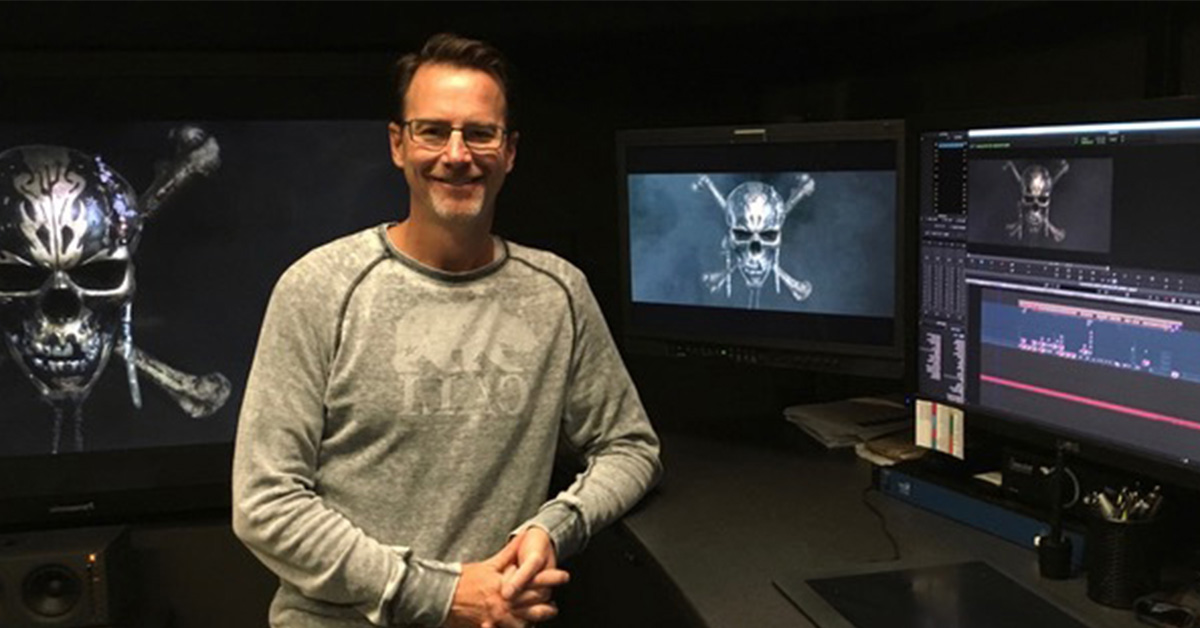
Balancing Health, Happiness, & Hollywood (and the Consequences When You Don’t) | with Roger Barton


About Episode
Roger Barton has edited and worked on some of the most iconic films of a generation such as Armageddon, Pearl Harbor, Titanic, World War Z, Terminator: Genesis, and the last five ‘Transformers’ films (this is just the ‘short’ list). He has lived many long days in the cutting room with directors such as James Cameron, Michael Bay, George Lucas, Joe Carnahan, and more.
And that’s what this episode is all about today: “Living” in the cutting room and what that can do to your mental health, your physical health, your relationships, and your well-being. Roger is no stranger to burnout on the job, and in this interview he was extremely candid, open, and honest about how his exploding career as a young up-and-coming feature editor cost him dearly in his personal life as well as with his health. If you’re curious about what it’s really like working with the biggest directors on the biggest film imaginable, Roger gives you a peek inside his cutting room.
Because of Roger’s love for both his craft but also his family, he spent years wondering if there was a better way to collaborate with directors & producers whereby he wouldn’t have to disappear for months at a time and sacrifice time with his family. And luckily for every editor around the world who has desperately wished and prayed for a technical solution that would allow you to work from home while not inhibiting the collaborative process, Roger has not only found the solution…he’s helping to build it and make it better.
And that solution is Evercast.
Episode Highlights
- How Roger’s initial exposure to the editing process totally re-routed his life
- The common misconception that bigger movies are always more demanding
- How Roger made it from That Darn Cat to Titanic
- The lifestyle choices and sacrifices that come with working on the biggest movies ever made
- What it’s like to work with Michael Bay
- The importance of having a director that understands the danger of burnout in post-production
- The dark personal toll that climbing the career ladder had on Roger’s family
- Striving for work/life presence rather than balance
Useful Links
About Guest
Roger Barton began working in editorial on documentaries and made-for-TV movies including the Emmy award-winning “Indictment: The McMartin Trial.” He soon made the transition to motion pictures and in 1997 was an Associate Editor on the decade’s biggest blockbuster, “Titanic.”
He quickly moved up the ladder, honing his skills at Jerry Bruckheimer Films on “Armageddon” and “Gone in 60 Seconds.” Since then, Barton has worked with Michael Bay on “Pearl Harbor,” “Bad Boys 2,” the Platinum Dunes release, “Amityville Horror,” “The Island,” and the last five “Transformers” films.
During his career, Roger has cut for Hollywood’s leading filmmakers such as George Lucas on “Star Wars: Episode III”, the Wachowski Brothers’ “Speed Racer”, Jim Sheridan’s “Get Rich or Die Tryin’” and two films for Director Joe Carnahan, “The Grey” and “The A-Team.”
Beginning in 2013, Roger edited three films for Skydance Entertainment, “G.I. Joe: Retaliation,” “World War Z,” and “Terminator: Genesis.” In 2016 Roger returned to with Jerry Bruckheimer on “Pirates of the Caribbean, Dead Men Tell No Tales,” after which he joined the team cutting “Transformers, The Last Knight” which is his ninth collaboration with Michael Bay.
In the summer of 2017, Roger began editing “Godzilla: King of Monsters” for Legendary Pictures but left when he became Co-Founder of Evercast — a live streaming creative collaboration platform. As more and more productions shoot out of town, Evercast is becoming widely adopted by Hollywood because keeping filmmakers connected maintains creative momentum, saves time, money and removes the need to travel post-production crews around the world for months at a time. While Roger was pitching Evercast to the Hollywood Studios, he also helped John Krasinski turn his 17 million dollar genre thriller “A Quiet Place” into a 334 million summer blockbuster.
With Evercast gaining momentum of its own, Roger has returned to his passion of editing and is currently cutting “Six-Underground”, the most expensive Netflix project to date being directed by Michael Bay and starring Ryan Reynolds.
Transcript
Zack Arnold: I’m here today with Roger Barton, and you may or may not be familiar with Roger Barton. He is listed for his work in 2014 as himself in the world’s greatest food markets, and he was also the judge on a TV series called Package Deal. Oh, wait, hold on a second. I’m getting some further information. Roger also happens to be a film editor. He’s worked on things like all the Transformer movies, Pirates of the Caribbean, Terminator Genesis, World War Z, the A-Team. He happened to work on a little movie called Titan, Titanic, another one, Armageddon. All right, so clearly I have not done my research, because I was really excited to talk to you today about your 2014 documentary, and it looks like there are other things we’re going to need to talk about. So, Roger, it is an immense pleasure to have you on this call today.
Roger Barton: Really happy to be here, Zack. Thank you. Yeah, there’s this guy in the UK who has some role in a fish market, his name is Roger Barton, and he emailed me once and said, “Hey, can I buy your Roger Barton email address? I really need it for my self-promotion.
Zack Arnold: That’s awesome. I love it. I didn’t think that that joke was actually going to lead to anything, but geez, maybe that could be a podcast topic. Who knows? But obviously, the reason that we’re here today, and I know that you are, you like to kind of keep a low profile and just do really great work, and not kind of put yourself out there. So, I’m going to do my best to not do that too much, but I mean, come on, if we look at the work that you’ve done over the course of your career, it is really nothing short of astounding. You’ve worked on some of the most iconic films in the history of our industry, yet your name is not one that’s put out there everywhere, where it’s like the list of, oh, there’s, you know, the Walter Murch is in the Michael Khans, and whether or not you feel like you’re in that conversation, you’re kind of in that conversation, because you’ve done some really, really amazing work, but what we’re not going to talk about is the work or the creative side of things, what everybody that listens to this podcast knows that I obsess about is the lifestyle, and there are so many different ways to slice the pie when it comes to being an editor. There’s TV, there’s film, there’s commercials, there’s trailers, there’s working in reality, there’s working in documentary, and for me personally, my path was always going to be getting the resume that you basically have now, so I saw myself, you know, even as a teenager, saying this is the kind of stuff that I want to do someday, but as I started to get deeper and deeper into the industry, and all of a sudden I realized, you know what, this might actually happen if I really put myself in the position where this is where all of my focus goes, I’m starting to believe that this might actually not be a dream, but in 10 or 15 years this could be my reality. The more that I started to talk to editors that were doing this kind of work, I realized, you know what, this lifestyle doesn’t necessarily mesh with the lifestyle that I’m interested in. I just had kids at the time, and I realized I really want to see my kids grow up, and I want to be a big part of that. So, that was where I started to transition to TV, because TV’s not that it’s easy, not that I’m not working long hours or commuting, but it’s there’s a little bit more room, a little bit more stability to kind of know that you have your weekends off for the most part. So, what I want people to understand is what the lifestyle has looked like for you for most of your career, working on not only these giant films, but with some of the most demanding directors in the industry.
Roger Barton: Oh boy, yeah, that’s a pretty broad topic, and I’m happy to dive into it. You know, I think my career is marked by sort of quantum leaps at times, and I’ve always tried to put myself in situations that I’m uncomfortable in, because I think that’s, you know, as creatives, that’s where we can do our best work, because we’re, you know, in that uncomfortable zone. So early in my career, I was exposed to editing when I was actually a segment producer on a TV show, and my favorite part of that process was going the editing room, because this guy who was in there building my segment for the show always made me look way better than I thought I had any right to look, because I really did not know what I was doing. The show sent me out on location, and I would shoot behind the scenes material, interview the actors or the director, or this or that, and I’d, you know, come back home, and I look at the footage, which was all kind of mediocre footage, and I’d try to write my mediocre script. I didn’t go to film school. Okay, I fell into this because I knew I did not want a nine to five job. Be careful what you wish for, you know. Where I had to, you know, don a uniform every day, and you know, so I really didn’t know where my place was, and so I kind of meandered around and did this and that. Production assisted for this and that, and it was in this opportunity where I was exposed to. Someone actually in a room constructing footage that I had shot based on a script that I had wrote, where I was like, “Oh my god, this is not – it’s no longer an abstraction on a piece of paper or in a raw piece of footage. I’m actually seeing what happens when you put two pieces of film together, and what the impact of that has, and then you layer it with music or sound effects, and you know, just watching this person build this little, I don’t know, probably eight or 10 minute sequence, I just absolutely fell in love, and after that experience, I let it be known with the few contacts that I had that that’s what I wanted to pursue, so as luck would have it, the post super on that film was about to start this new show, which was sort of a 10 hour, it was a 10 hour documentary on the Wild West, and it was being told in sort of like Ken Burns style, you know, slideshow with voiceover and music, and it was being cut on this brand new system called the Avid. Not to date myself, but yeah, that’s when I got started, just as the industry was moving out of film and into digital, so it was a really good time for someone to jump in who had, you know, some type of technical proclivity, because I really kind of latched on to that for some reason, you know, this kind of left brain right brain thing between the creative and the technical side just really appealed to me, that started me down this path, and to answer your question, sorry it took so long to get to the answer, but you know it’s, I guess, in the time since then I have learned a lot of lessons about this whole topic of lifestyle, and it’s been some pretty hard lessons, because I’ve gone through some really tough patches, you know, working for big demanding directors, but also, you know, when you work on the smaller projects that have less resources, you’re asked to do more. So, I think the perception out there is that, oh, you know, this is a big movie, you must be killing yourself, when actually, at least in my own personal experience, that’s not always the case. I mean, it can be based on a lot of different factors, but I have been on, you know, independent movies or low-budget movies where you’re the only one in the editing room, and as I was coming up the ladder, working for different editors, and I was a bit of a whore, jumping from editor to editor. I, you know, there was a paradigm with a lot of editor-assisted relationships where you kind of latch on to each other and you stay with each other for a number of years, and because of, I don’t know, my personality, or I, the fact that I always wanted to work and also get different perspectives from different types of editors, I did a lot of jumping around and I think it really benefited me in the, in the long term, but along that way, like I said earlier, I have, I’ve, I’ve learned a lot of hard lessons, so I guess the first jump would have been coming off of a small Disney film, which I was credited for editing, which I did very little editing for, because the editor who actually cut it could not take the credit, so I was really assisting him, and he was someone who had worked for Jim Cameron on some of his other, you know, big movies like True Lies and, you know, Terminator Two, and Jim reached out to him and said, “Hey, I’m looking for someone to run my cutting room on my next film. Do you have anyone in mind? And so Richard Harris, who was the editor I was working for at the time, said, ‘Oh my god, you’ve got to, you know, meet Roger. He’s great. He’s, you know, a total geek. He’s just what you need, Jim. So I met Jim and got the gig, and suddenly went from working on that darn cat to Titanic and it wasn’t long before Jim was gone. He was off shooting the movie because they had made the decision to bring me on fairly late, so the ramp up time was very short, and I had to kind of learn as I went, and it was, it was a very, very difficult experience for me personally.
Zack Arnold: Not to interrupt, but how old were you at the time when you had this transition working on Titanic?
Roger Barton: I was in my early 30s, I think.
Zack Arnold: Got it. Okay, so just to give it a little context,
Roger Barton: Yeah, and I had been married at that point for probably two to three years. Years and some of the projects that I worked with before making that leap had sent me out of town repeatedly for three to four months at a time, so you know, I had a wife who was sort of asking herself, hey, is this really what I signed up for, and you know, but yet here I was stuck in this position where I, I felt trapped. If you were to ask me when I was in college, you know, what I wanted to do, I knew it was something creative, but if you were to tell me that my lifestyle would be working in a dark room for 12 to 16 hours a day, I would have said, “You’re freaking crazy. That’s not what I want out of my life. I want freedom, I want a family, I want to be present with my friends and my family. And yet, there have been times in my career when that simply wasn’t possible as much as I tried to create that balance, and balance is something that I talk a lot about with my son, and I try to demonstrate to him now that I have a little bit more control over my life. I try to demonstrate that work-life balance with him by the decisions that I make, but back then, when I was trying to make a name for myself, as I was assisting, it’s especially hard on the assistants because we’re often there, we’re first boots on the ground every day, and we’re the last boots to leave, and so the editor kind of comes in, does their work, takes off, and says, “see you in the morning, and then often they leave you with anywhere between one to four hours of work to do when they go, and it’s a really, or it was, still is a really hard lifestyle. I’m not telling you anything you don’t know, it can be a really tough lifestyle, and at times impossible.
Zack Arnold: Well, the important thing here is not that you don’t need to tell me, but there are a lot of people that I think need to hear it.
Roger Barton: Yeah,
Zack Arnold: And I don’t want to interrupt you, and I want to make sure you keep going, because this is great. But I do want to stop and point out one really interesting thing, really quickly, which is that you were in your early 30s, you were working on Titanic, which maybe at the time you didn’t know that it was going to be the number one grossing film of all time until Avatar came along, and now, of course, Endgame, but you’re in your early 30s working on Titanic with James Cameron, who had done Terminator Two, and your response to that is, I felt stuck, and here’s the reason that’s so important, because when everybody stands on the outside and they say, ‘Wow, how unbelievably amazing is that? I want that to happen to me, but all people are looking at is the outcome, they don’t think about the process, and I’m obsessed with the process, which is the part that I want to go into further, is what does it actually look like to work on a Titanic or an Armageddon or Transformers or a Godzilla, because people say, ‘God, I would love to have Roger’s resume, but they don’t understand the lifestyle and what it takes to build that resume.
Roger Barton: Yeah, I, when I was younger, and you know, suffering through these choices of being given great opportunities and deciding, here’s the thing, I always, my choices were often based on what is going to propel me to the hot seat, that’s where I wanted to get to, if for no other reason that I could wrestle a little more control out of my life, because the editors were coming in, they did their work, and then they left as assistants. That’s not always the case. You’re at the whim of problems that come up in the cutting room that often require you to be there literally all day and all night, and often longer than that. I mean, I’ve literally been at work for 32 hours at a time I don’t do that anymore, but as I was climbing, you know, the rungs of the editorial ladder, certainly there were times when people expect you to step up when it’s required, and you know, at times that’s the gig, and it’s really tough, and the way maybe I would just talk myself into it, but I always said, listen, it’s all for the greater good. If I can get to that place where I’m the editor, where I’m the one who’s coming in, and you know, I’m the one who’s leaving, not at 11 or 2am or 6am where I’m leaving at 7pm that’s then I can, then I can manage my life a little bit better, and that’s kind of where I’ve settled for the last, I don’t know, 10 years. Of course, there are always going to be exceptions where a problem comes up, you’re heading towards a. Review, or you know, there’s some other, you know, you have a bad screening and you’ve got to scramble and come up with new ideas to, to re-engage the audience, so there’s always going to be times where we need to step up, but I’m looking at the broader picture, and although it’s counterintuitive, that is why I’ve done so many movies with Michael Bay, because number one, he never has me travel to chase him around the globe. The only exception to that would have been Pearl Harbor, and how bad was that? I mean, you know, I got to spend three months in Hawaii, but aside from that, when I sign on for him, it means I am home for a whole calendar year, and Michael, having done this for so long, is very well aware of the effect that burnout has on the crew, especially post production. I mean, when he’s shooting, it’s throw the rule book out, you know, it’s whatever it takes, because they have such a finite time to get what he needs, but when you’re in post and you know he knows that the process is going to be long and arduous, he doesn’t want to burn the crew out, he’s well aware of the effect that has, so you know, my typical day as an editor with Michael Bay is, you show up around nine, you roll up your sleeves, and you, you’re, you have to be prepared, because he’s incredibly demanding, opinionated, and not afraid to share his opinion about what you’ve done. So, you’ve got to check your ego at the door, remind yourself you’re not making a movie for you, you’re making a movie for someone who has a well-established brand, and that who has made billions of dollars for many different studios. So, so I’ll come in at nine, roll my sleeves up, be prepared for whatever comes my way, and at times it’s not much fun, you know, but you get through the day, and at seven 730 I’m done, and that’s not the perception that people have when you say Michael Bay. I think the perception is, oh, you must be there around the clock, this and that, this and that. It’s really not been my experience at all, and of course you know, Zack, there’s always going to be those times where you do need to step up for a short amount of time because you have, you know, some pending screening or something, but you know, I’ve probably done, I don’t know, 15 more movies for Michael now, and that’s one of the big reasons why I think another reason is the loyalty factor, you know, it’s really hard to find a director who is as loyal as Michael, because once he knows you’re willing to step up for him, he’s going to bring you back, and to find that relationship with someone is incredibly important to me, and so, yeah, is it? Is it difficult? Is it demanding? Yes, and yes, but I tell people that, you know, I’ll take that bullet all day long if it means that I can tuck my kid in at night, or I can have dinner with friends, or I can have my weekends free, because in the year that I’ve been cutting Michael’s current movie, which is called Six Underground for Netflix, I think I’ve put in maybe one Saturday over the entire project, and so that’s hugely important to me, but I don’t think that’s the perception people have about working with him, so if you were to go back and look at Titanic, that was completely different, and the reason it was different is at the time I signed on, Jim was, he basically wanted to cut the movie himself, and so there was no editor on the movie, it was just me, so it was all shot on film, and so we had a film cutting room at Light Storm in Santa Monica, but all the avids were set up at Jim’s house, which is where I worked, so I would ingest all the footage, I would get it organized, I would bring in all those sound effects, and just basically run the cutting room from a digital perspective, but the footage was piling up and no one was cutting it, and so I, I called John Landau, the producer, and said, “John, you know, I really don’t think Jim is going to be able to catch up in time to make your release date if he has to start from scratch on every, on every scene in the movie. There’s just, there’s just no way. There’s too much to do, and I said, if you want, you know, I can start rough assembling. Seeing in quotes scenes for Jim, so that at least he has something from which to work on, and of course it’s all going to change, and you know, but if it’s of some use to Jim to know what he has, then I’m that I’m happy to do it, and there was this silence on the other end as John Landau, producer of Titanic, is like mulling this over, and he goes, “All right, kid, you know, let me talk it over, Jim, or I’ll get back to you. So I hung up the phone with him, and I was just like, “What have you done? But he called me, you know, a couple days later, and, and he said, ‘You got the green light kid, just, you know, go, go start cutting it. And I said I had pitched him that I would find someone to do my job, you know, to have someone come in and kind of run the room while all I did was cut. So here I was, had no business being in that position. I really didn’t know what the I was doing. I was leaning on the experiences that I had been exposed to with other editors, but aside from that, had no formal school training, but just found an opportunity and decided to jump into that opportunity, at least open the door and hope that someone said yes, and I was incredibly fortunate that Jim, you know, was open to that, and so that’s what I did for the next, probably I don’t know, probably two months. I was up at his house, just cutting all by myself, and I’d often look behind me and just, like, you know, say, How did I get here? This doesn’t make any sense, you know, that I’m in this position. And ultimately, and by the, by the way, thank God, you know, the decision was to bring on Conrad Buff and Richard Harris to come in and cut the movie afterwards, along with Jim, so the three credited editors were Conrad, Jim, and Richard, and then at the end of the process they had given me an associate editor credit, which I was thrilled with. I mean, that was a huge leap for me, and more importantly, it introduced me to Mark Goldblatt, because Jim has these Christmas parties every year, and you know, he invites, you know, just who you might think, like, all the who’s who of, you know, Hollywood would be at his house, and so he was shooting Titanic, brought all these people into his editing room, and I was standing sort of in the background as Jim was playing scene that I had cut for all these people, and it was just one of those moments, I’m like, oh my god, maybe I can actually do this, you know, because of the scenes, were, you know, of course, they were rough, but I mean, they were playing, and at the end someone said to Jim, “Hey, that’s really good, Jim, did you cut that yourself? and Jim begrudgingly, you know, kind of like tilted his head in my direction, and you know, the 20 or so heads in the room all turned to me. I was just like, “Oh my god, oh my god, oh my god, oh my god. And one of those people happened to happen to be Mark Goldblatt, and Mark Goldblatt really made the difference in my career, because he took notice of what I had done, and as I was finishing up Titanic, he asked me if I would come work with him on Armageddon. Now, all those things, it sounds great, right? Just as you said in the intro, it’s like, you know, to be in that seat, to be in that position, you know, who wouldn’t want that opportunity. What I’m leaving out in that story is that I became separated with my wife, had a hard time looking at myself in the mirror because I was making these decisions that led to that, you know, and it wasn’t all about Titanic. It was about the travel I had done prior to that, and Titanic just made it even worse, because for all the benefits of it, it was almost worse than being away, because when you’re away on location, there’s really not much you can do about it. You’re on one side of the continent, and home is on the other side, and you just kind of deal with it when you are in town and you’re not home. I think that has a really big impact on the people you’re leaving at home, and that would. Hard for me, it was just, you know, it was a very, very difficult time, because, you know, I was working on that show six or seven days a week to make our release date, which got pushed and then pushed again and then pushed again, because Jim was convinced that that film was going to be the end of his career, having made a $200 million chick flick, and so, because of all that fear and anxiety, it was all hands on deck, and Jim is incredibly demanding, the most demanding intelligent filmmaker I’ve ever worked with, and it was just one of those occasions where you just had to, you just had to be there, and in my position of running the cutting room, because once Conrad and Richard came back, I fell back to that position of running the room, which means I was there day and night, any problems in the workflow was on my shoulders, that’s what was required, and so a casualty of that was my relationship with my wife. It was hard, I mean, you know, luckily we got back together a couple, I’d say 18 months later, but when I went on to Armageddon with Mark Goldblatt, I was single, so there’s, there’s definitely a dark side to, you know, all of the glamor that people think about when they look at people like, you know, Chris Levin’s on, or Mark Goldblatt, or Paul Rubel, or Billy Goldenberg, or, you know, fill in the, you know, there’s there’s a long list of people I could name who are in these very enviable positions who share the same struggles that you and I do, you know, Armageddon was not any easier, but I, at the same time, it was an incredibly valuable experience for me that has informed the way I approach editing ever since. So, do I take it back? It’s a tough call, you know, because ultimately I got to where I needed to be to have more control over my life, but the road to get there was it worth it? I’m not sure, because here I am 15 years after Armageddon, and when I got back together with my wife, we were able to have a son, you know, and raise him, but here he is, three years ago, 12 years old, and once again the marriage falls apart, in part because of the lifestyle, and of course there are other, you know, factors involved, but it, you know, it took its toll because trying to raise a kid while you’re doing this is just another, it’s another piece of the pie in terms of where your time goes, so you know, I’ve had varying degrees of success in trying to find that balance, it’s something I continue to strive for, but you know it’s I don’t, I don’t know, I don’t know if it’s to get to where I am, I’ve had to make some tough decisions, and I ultimately thought that, you know, my marriage would be able to withstand that, and I was wrong, but going back to Armageddon, which was in 97 working with Mark Goldblatt, who is the most generous human being I’ve ever met, took me in as his apprentice and I was literally chained by his side while he cut that movie. That’s just the way he works. Whoever is assisting him sits next to him all day long. He starts at 11am he ends at 11pm You’re to be there before he arrives, and you’re expected to be there after he leaves, and often when he leaves, he leaves you with hours of sound work that he expects to have done the next morning. You know, here I was again in this position where I was getting this incredible once in a lifetime film school experience, but how could I do that and have balance him in my life at the same time? I couldn’t, but again, my focus was always it’s for the greater good. It’s for the greater good, you know. At some, at some point, I’m going to have the opportunity to be in Mark’s position and. Years later, when I was cutting with Mark Bad Boys, where I was an editor alongside him, obviously under him, he turned to me one day. I’ll never forget this. I had cut this 12 minute sequence, and I showed it to him on the Avid, and he turned to me and he said, Roger, you’re no longer my assistant, you’re my competition, and those words just meant so much to me. I’ve had this amazing opportunity to work with people like that my entire career, who are so generous to share their experience, but it has not been an easy path.
Zack Arnold: Well, the two words, and first of all, before even going any further, I really, really admire you, and thank you for being so open and honest about this, because clearly these are not things that are easy to talk about. It is really simple to go on a podcast and talk about the tech and the workflow on how you approach a scene, and oh, it’s a difficult project, but we really got the job done right. So you can go and talk about the credits on IMDB, but what you don’t see in between the credits is everything else, the separation or the divorce, or whatever it is, and very few people are willing to go to this place, especially publicly. So the fact that you’re willing to talk about this on the record in this conversation means the world to me, and I really hope that this is helpful to my audience.
Roger Barton: You mean that’s on the record?
Zack Arnold: Oh, wait, I forgot to tell you, I hit the record button. Yes, we may have to start all over, and you’re going to tell me how wonderful it’s been when this whole your career, James is fantastic and so creative and collaborative, and Michael Bay, like, you know that they have their reputations, of course, and I’ve heard many a story, and I think I really appreciate the fact that you’re painting a different picture of Michael Bay than a lot of people paint, so that’s great, but the two words that I think are so important to extract out of this conversation are balance and presence, because I, too, have been in a position, and certainly not at the level that you are, but where I would just keep saying, why is it that I can’t find balance, and I realized that really work-life balance doesn’t exist. So, what I started to go after instead was work-life presence, where I can be present at work, but then when I’m home, I can be home, and how can I find enough time where I feel like I’m managing both well, and both sides feel like I’m giving them everything that they need, even though mathematically I may not have balance in both areas, and the criteria that I use above any other criteria at this point in my career, which is something that you had mentioned earlier, and I’ve written entire blog posts about this, and I’ve talked about it quite a bit, but if somebody comes to me with a job, and I think since February I was on Cobra Kai season two, I’m going to be going back to Cobra Kai season three, but this entire span for the rest of the year I’ve made the choice to not edit because I really want to work on growing the podcast and the coaching program and helping other people find some form of work life presence and build a more fulfilling career, but I was getting multiple offers, and the criteria that I always had in my mind was not how good is the script, what’s the budget, who’s the director, who are the producers. It was always can I put my kids to bed at night, and if I can’t, it’s not worth it. And that was something that you alluded to, which is going to transition us to a much lighter version of our conversation, which is really the big reason that I have you here, is to talk about the discovery that you had that has now not only changed everything for you, but my belief is it’s going to change the way all of us work in this industry. So, let’s talk about the big discovery and the reason why you’re here today.
Roger Barton: So, a couple years ago I was given an opportunity to cut the next Godzilla movie, which you know I could check that off my list now, and it just sounded so fun. I mean, I have, you know, at the time I had a 12 year old son, and so you know, to be able to cut a Godzilla movie was like right up his alley, and you know that’s kind of been the fun part of doing these big blockbuster movies, because you know it’s so fun. Well, first of all, I mean it’s incredibly fun to cut them, but you know to have a son who can appreciate what it is you’re doing has has certainly, you know, been a component of that, so it’s kind of fed my decisions, and in some ways, so it’s something I really wanted to do, and so Legendary approached me, said, “Listen, you know, here’s the script, here’s who’s directing it, we want you to meet, you know, the person. So I came in, I met, I decided I wanted to do the movie, and then they dropped the bomb on me, which is okay. Well, listen, we’re shooting in Atlanta. We’ll send you out there from this day to this day, which basically encompassed four months, and at that time I was newly separated, not yet divorced, which meant that. But you know, my 12 year old kids, his life was just rocked, and I could not fathom going on location right now, like the days of, for me, going on location at the expense of my family, like that’s over, so I was, I still desperately wanted to do the movie, and so I started to do some research and look at all the various technologies that are out there, which would enable me to do what I do and collaborate with a director remotely, and I’ve been exposed to, you know, a lot of the different solutions along the way. Michael Bay uses some, Jim uses, I mean, there’s a lot of directors who clue together different solutions to ultimately get to something where they can work remotely, but it’s in my experience either really expensive or really cumbersome. I was in what I call my starter separation house, which is this little kind of like bungalow that I rented, and as it turns, turns out there was a guy across the street who I became friends with one day. Dan comes to my house, he’s like, ‘Dude, I looked you up last night, I can’t believe you’ve done all these movies. And so we had that conversation, right? And he’s like, oh, wait, oh my god, you have to meet my two friends who are developing this platform to, you know, work remotely, and I’m like, kidding me, that was exactly the time I was looking at all these other solutions, it literally dropped into my lap when he came to my front door, and so he made the introduction. The very next day, I was doing a live demo. The platform is called Evercast, and the demo blew my socks off. I was on my laptop in my house. The laptop was wireless, and I was connected to the two co-founders of Evercast, Alex Sorrell and Brad Thomas, who both are in Arizona. So, from Arizona, they streamed to me content that they had locally on their systems on a platform that lives on Google Chrome, where at its most basic it’s a video teleconference system, so say up to eight or 10 people from different locations all over the world can connect, so we could have one from Arizona, me from LA, someone in New York, London, Singapore, New Zealand, all coming into this platform at once, simply by responding to an email invite, which leads them right into the room on Google Chrome, and so they stream to me, and what blew me away instantly was the lack of latency, so that was a big concern of mine, if I’m going to be working with a director editing a sequence remotely, I have to know that if he says stop, that when I hit stop, the stream is actually going to stop rather than continuing for anywhere between 246, seconds, which some of the other platforms experience because of the latency, so as I put them through the paces, when I said stop, it actually stopped, and when I said go, it actually went, and the image, you know, this is two and a half, two years ago, we’ve come a long way since then, but even back then it was, you know, certainly good enough for what I wanted to do, which is share my Avid content with a director remotely, right? So we weren’t judging final visual effects reviews at that point. Now we can do that because we have just introduced VP nine, our new codec, and literally you could be judging final visual effects shots on the platform, but back then all I wanted to do was stay home, as you said, tuck my kids in at night, and share my cut with a director remotely. So the first obstacle was getting it approved from the studio from a content security perspective, and so I walked, and I made that, I made that known to the guys, and so they had done a little, they had done, they’re almost there, but they did additional security work on the platform before we approached legendary, so by that time it was pretty buttoned down, and so they took a look at it, kicked the tires, you know, tried to break it, break in, and they couldn’t. They have a head of content security there named Dan Meacham, and they gave us provisional approval to use it on Godzilla, so that was one big, big, big obstacle, but I still had to pitch it to the director and. It, so on a Sunday afternoon, by the time this happened, by the way, we were three weeks deep into the movie. I was committed to doing it and was still desperately trying to avoid going to location. So on a Sunday afternoon, he and I connected. He was in his apartment wirelessly. I was, you know, on my Avid workstation, and what started out as a test seamlessly just turned into a working session, where I was showing him cuts, he was giving me notes, many of the notes I was doing live with him while he watched, literally as if he was sitting right behind me, I was recording the entire session as it happened, so that afterwards I could make sure all the notes were done accurately, and at the end of that three hours I said to Mike, who directed the movie, I said, How do you feel about this? Is this something you think we could use? He’s like, Oh my god, why would you want to come out here for three months? Let’s just continue using this platform, and I thought to myself, oh my god, it works, and so we went about using it over the course of the entire production, and my biggest takeaway in using it, I mean, there’s several, but the biggest one is that even though I started down this path from a selfish reason, you know, trying to create that balance, we’re talking about what I didn’t expect is that it created way more face time with a director than I’ve ever had, even when they sent me on location, because now all the collaboration time is really whenever the director has time, so whether that’s at lunch, in between lighting setups, when he’s in his trailer, or on a weekend when he’s at home, he can simply text me and say, “Hey, can we jump in the room? and seamlessly we just both hit our bookmarks that take us into the room and I can literally just start streaming to him right away on whatever it is he wants to see and often he would just say hey what are you working on I’m just you know have some downtime what are you doing and I would just show him cuts and then he would just immediately give me his thoughts, you know, depending on how much time he had. Sometimes I would do the notes in front of him, sometimes I would do them later, but if he was giving me more complex notes, having that recording was key, because it meant that whether it’s the day after or several days after, I could rerun the sequence exactly as it appeared when it happened, and I could have my Avid on my right, Evercast on the left. I would rerun the session and make sure that every note was done accurately, rather than having to rely on my yellow pad of paper, which in the past was full of like sentence fragments and cryptic notes that I couldn’t understand because my attention was so divided when I was in the session and that was game changing for me because once I knew it was being captured I could actually be present in the meeting with a director, focus on what he was saying, and you know it just made me look like a rock star, because when I showed him the sequence the next time all the notes were done accurately, because there was no interpretation or guesswork, and often what I would do is have my assistant from down the hall in the session, as well as a participant, and inside the platform, he would be making notes, their timestamped notes to the recording of things that I still needed to accomplish. So, anything that still needed to be done, Rob Molina, who is my assistant, would make note of it when I revisited that recording the next day. All I had to do was click on those timestamp notes. It takes me to that place in the recording where I could literally watch the director giving the note or the content that was being streamed, so you know it was very clear on what needed to be done, so I could do it more efficiently. So it’s that efficiency that, like, caught me by surprise that translated to a lot less anxiety when he returned to the cutting room after shooting, because normally you know a director comes back and they don’t know what they have, and they’re full of anxiety about, you know, I only have 10 weeks to get the directors cut up before the studio sees it, and you know, and so it can be a very tense few weeks while they kind of resettle into post production and work with you, but by using Evercast on the entire shoot, he had already seen the whole cut, he had already made a pass on many of the sequences using Evercast, so he knew what he had by the time he came back. So, when he came back, it was like, okay, so let’s pick it up where we left off, and we were just in a much better place because we had so much collaboration time during the shoot, you know, like I said, whether it was five minutes, 10 minutes, two hours, or three hours, all those moments add up, and they were occurring almost every single day, whereas when I’m sent a location, often I’m like pulling and kicking, you know, pulling the director and kicking and screaming, because you know they’re spread so thin when they’re shooting, you know, they’ve got hundreds of people on set asking them questions all day long, they’re just absolutely fried by the time they get to you in editorial, and it’s like that’s not the time you want to be showing your first cut, so yeah, it had a pretty profound impact on me, and afterwards, you know, I thought, you know, if I can be a part of something that has a positive impact on my friends, my peers, my colleagues, I mean, what a great thing to be a part of. So I approached Brad and Alex, and I said, “Listen, I really feel like I can be a benefit to you guys. I really believe in this. I really believe that it can have a, you know, positive impact on our lifestyles and make things less expensive by reducing travel and by making things more efficient. I mean, it has – it’s a win-win, no matter what lens you look at it. So, I said, you know, I can – I can really, I really believe I can help you out. So, I took a nine month sabbatical from cutting, and all I did during those nine months was bring Evercast into all of the different studios around Hollywood, big and small, and introduce them to the platform, and got it through their content security departments, which is no, no small feat, and so now we’re approved by all the major studios, although basically everyone we’ve approached from Disney on down, you know, we have an ever-expanding, you know, series of use cases. Just today we had a big demo at a big agency, you know, because it’s their clients who will benefit from this, so I mean clearly I’ve drank the Kool-Aid, but I really do believe I can. I’ve always wanted, I’ve been a member of the Academy forever, I’ve always wanted to participate, participating, whether it’s in ACE, American Cinema Editors, or The Academy, or The Guild, it’s another piece of the pie. And when you know, when you’re working on these movies, it’s like, okay, well, the pie is only so big, and one of the reasons that I have been reluctant to participate in many of these things is because, you know, in whatever time I have left in my day, I want to spend it with my family to try to, you know, create that balance. So, yeah, that’s that’s that’s been my journey. So now I am the third co-founder of the company. Full disclosure, I’ve invested some money in the company, that’s how strongly I believe it can make a big impact on how we do things.
Zack Arnold: Well, you are the third, or not third investor, but the third co-founder and investor in the product, and you now have an evangelist on the other end of the microphone here, because I did a demo this afternoon, and I had the same experience, and all I kept thinking was game changer, and the reason is that everything that’s been out there in the past, whether it’s these breakout boxes or streaming the HDMI feed from my computer to somebody’s TV monitor in Atlanta, like I’ve literally done that whole thing where you have the two to three to five seconds of latency, everybody hates it, including the directors and the producers and the showrunners, and I was watching this demo, and the first thing that I thought was the picture quality is actually better than what I see in the room on my own monitor, so that barrier was gone, but then the next thing that I did was the annoying director test, which is so funny, because that’s exactly what you did, I said, all right, Brad, I’m going to snap my fingers and tell you what I want you to cut, and you need to stop it. And I snapped, and it was like I hit the space bar myself. I was like, whoa, this is a complete game changer, right here. But then here’s the other thing that I think is so interesting to take away from this is that all of these measures to try and get the directors or the producers in some little booth or room that has a breakout box connected to the edit bay that’s always just kind of been the stop gap measure. Well, if we can’t get them here in person, this is the best that we can do, right? But the amazing thing about this, as you’ve expressed some, is that this is better than you being there in person because. They can do it whenever they want, which you can’t even do if they need to go across the lot to jump in your trailer to watch something. They can pull out a phone or a tablet while they’re waiting for a shot to be set up for 10 minutes. So this beats being there in person, which to me was the difference between well, there are all these iterations of all these new cars coming out, and then there’s this thing called a Tesla, and everybody thought, well, electric cars are not that great in the Volt and the Leaf, and yeah, they’re, you know, they’re sure they’re fuel efficient and they’re electric, but whatever. But then you get in a Tesla and you’re like, I am never driving a, you know, gas-fueled car again, I’m never going to use something with a combustion engine. It is that much of a game changer to drive a Tesla. It’s the same thing with Evercast. I had the same experience, saying I’m never doing any of these breakout boxes again. And by the way, we’re setting up a demo with the showrunners of Cobra Kai, because I have to do this.
Roger Barton: Yeah, well, thank you, Zack. I mean, that means a lot to hear that, and it really reinforces what my experience was when I was exposed to it initially, and again, we’ve come a long way since then, both in terms of the picture quality. So, what you saw today was probably our brand new codec, which is VP nine,
Zack Arnold: And it was astounding. It looked better than, like, the finished media that you see on Apple’s website. I mean, it was so crisp, and you see every single frame, like the playback was as if I was watching a finished QuickTime locally on my computer, it was that good.
Roger Barton: Yeah, people give us the same test, only they do it from London or New Zealand, thinking, okay, we got you. And then, for don’t ask me how these guys coded this in such a way that creates such low latency, but each time it happens, they’re blown away for whatever reason, and maybe it’s because of all the encoding and encrypting, is all software only, so we don’t require any hardware to do any of that. It’s all software driven. Maybe that has something to do with it. I don’t know. I mean, I’m an editor, not a coder, or, you know,
Zack Arnold: Yeah, it’s all it’s all Greek to me. I have no idea about any of this.
Roger Barton: All I know is it works, and it works well enough where I’m willing to step into the spotlight, which I’m thus far not really been willing to do, but I’m willing to do it now. You know, because I really do believe it can have a positive impact. So, it was really great to hear you kind of reinforced that.
Zack Arnold: Yeah, I’m going to do everything I can to introduce this to the television department in Sony, because this to me is going to be a game changer. And one of the conversations that I had with the showrunners of the show is they said, listen, you know, we love working with you, but we also know that your commute is a nightmare. Is there anything we can do for you, because we want you to enjoy the process. We want you to be fresh, and I live in Woodland Hills, and I’m going to the Sony lot every day, and it’s murder. And the only reason I do it is because I love working on the show, otherwise it would be a deal breaker. There are multiple shows that my agent has called me and said, ‘Hey, they’re interested in you, do you want to take this job? And I say, ‘Where is it? And then they say, well, it’s a Fox versus in Beverly Hills, and I’m saying I’m gonna have to pass. Like, do you want to take the interview? Do you want to know if they’re paying? No, don’t care, because there’s no way I’m making that drive. And when it came to Cobra Kai, I was like, oh man, it’s like right on the line between I can’t take it because of commute, but I really, really want to do it, so I suffer through it. But now with something like this, knowing it can be studio approved, I can have my cake and eat it too. But the most important thing to sell it, and this is so important for somebody else that’s listening, thinking, “Oh, maybe this can help in my life. It’s actually going to make the directors and the producers’ lives on set in Atlanta better and easier. So it’s not about you, it’s about them. If you can provide value to them and the quality of the show and the quality of their lives, they’re going to push it to the studios to the end of the earth.
Roger Barton: Yeah, and for the line producers who are saving the money and traveling, you know, whole editorial crews, you know, business class with first class accommodations and per diem and cars and the whole thing, you know, so that’s what I mean by no matter what lens you look at this, it’s a win for production, and also the people who work on the production, it’s pretty, pretty exciting, and it, you know, for me personally, it exercises a different part of my brain than I work with, you know, than when I’m cutting, you know, all day long, so it’s been really exciting for me to kind of exercise that and sort of come out of my shell in order to do this, like doing this podcast. It’s like, you know, being stuck in a dark room every day. You know, there’s not even though I’m surrounded by, you know, my team, often my door is shut, and I’m just, you know, how immersive editing is. You shut the door and six hours fly by, just like that. So to step out into the spotlight, and you know, try to promote this thing, not only does it make me feel good about the benefits to, to, you know, my peers. But for me personally, it’s it’s it’s really been fun and exciting, and so it’s it’s a win all the way around so far.
Zack Arnold: Well, we could easily dive down the rabbit hole of all the tech and all the features and everything else, and to, to be honest, that’s something that I’m not even remotely interested in, because I’m kind of like you, where it’s like, oh, I click this button, and it works. That’s the part that I care about. But I know there are a lot of people that are thinking, well, tell me about the bandwidth and the compressor and this button and that. It’s like, alright, so there’s a really, really good article that you did recently with Steve Hallfish of Pro Video Coalition. I’m going to link to that, that has all of those answers and more. But for me, all I cared about is, will the software allow me to put my children to bed at night? If it does, game changer, I’m done. The rest of it, I will let everybody else take care of. So, I’m going to, and if there are any other resources that you’re thinking, hey, they’re going to have questions about this or that or the other thing, I want to provide those answers, but it’s not necessarily something that we need to talk about here, because my guess is that in these other interviews that is kind of the focus, and I wanted the focus to be the reason why the why was so much more important to me, and hearing your story and being so honest about it, I think really is going to hit home for so many of the people that listen to this show. So that having been said, I cannot thank you enough for taking the time to do this interview, but more importantly, for discovering this product and now evangelizing it around our industry, because this is actually going to bring a little bit more work-life presence into many people’s lives, which aligns your mission and my mission perfectly. I really, really appreciate you taking the time to do this tonight.
Roger Barton: Well, having, having just listened to that, I have a huge smile on my face. That means a lot to hear that from you, Zack. And you know, I can’t thank you enough for bringing me on here so that I could talk about it.
Transcribed by https://otter.ai
Episode Credits
This episode was edited by Curtis Fritsch, and the show notes were prepared and published by Elyse Rintelman. The original music in the opening and closing of the show is courtesy of Joe Trapanese (who is quite possibly one of the most talented composers on the face of the planet).