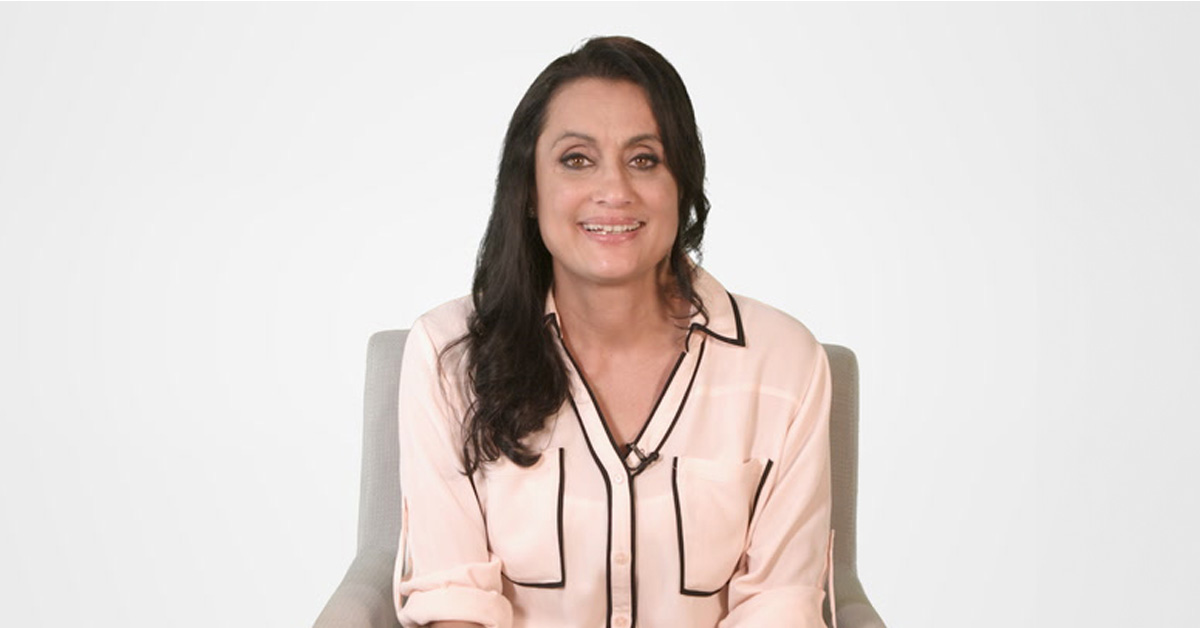
The Power of a ‘Mindfulness’ Practice | with Dr. Swati Desai


About Episode
“Mindfulness” is a buzz word you see on the Internet all the time nowadays, but what does the term mindfulness actually mean? And do I need to wear sandals, eat organic hemp granola, and chant to the stars while somebody balances my chakras to authentically practice mindfulness?
Luckily mindfulness requires nothing more than a willingness to hit the pause button on your life for just a few minutes a day and focus on the present moment. And in doing so it is scientifically proven to help you enhance focus and concentration, decrease anxiety, better manage stress, and improve cognitive function. Not bad for literally doing next to nothing for just a few minutes a day, right?
In this episode (one of my favorite early interviews from my Fitness In Post days) I dive deep into the topic of mindfulness with Dr. Swati Desai, a psychotherapist and mindfulness and meditation expert. We discuss the benefits of developing a regular practice and how to easily apply it to your daily life, and for those who might be skeptical, we even chat a bit about the neuroscience behind mindfulness and meditation so you understand how it’s literally reshaping your brain and your neural pathways to help you become a happier, more relaxed, and more focused human being.
Episode Highlights
- Swati’s background in mindfulness, meditation, and Buddhism
- The definition of “mindfulness” and how to apply it to your daily life
- Practicing mindful eating and reshaping neural networks
- Using mindfulness to reduce cravings for unhealthy foods
- Mindfulness for psychological eating disorders
- How practicing mindfulness can improve business ethics
- How the prefrontal cortex thickens with regular meditation practice
- The epidemic of burnout in the post-production industry
- Using biofeedback and acupuncture mats for better sleep
- An example of a quick yet effective meditation technique
- Concentration, Relaxation, Equanimity, Self-awareness, Taming your mind (CREST)
Useful Links
About Guest
Dr. Swati Desai: I immersed myself in many worlds, the East and the West, the academics and the practical, the logical world of computer information systems and the non-linear world of human psyche, the rational world of scientific theories and the emotionally intense world of the Art and the psychology. Switching worlds, making personal mistakes, and helping clients led me to a way to make sense of the human predicament and to move towards strength and enjoyment in life.
I call this method C-APT (See apt), Contemplate, Accept, Push a little, and Transition to a better place. It is a combination of psychological tools EMDR and Cognitive Methods with heavy emphasis on contemplative practice of Mindfulness Meditation.
Transcript
Zack Arnold: Thank you for being on the show, Swati. I really, really appreciate it.
Dr. Swati Desai: Thank you.
Zack Arnold: So, just a little bit of background, so people understand how you and I know each other. I’ve been very candid about my history, just with different forms of mental illness and the struggles that I’ve gone through in this industry for the last 10 or 12 years. And you are actually the very first person that I found off of Google of all places about 10 years ago when I was at my deepest and darkest point, and I said that I need to find a way out of this, or I’m not going to survive. And I just went online and tried to find solutions, and that was where I’d found the Akasha Center and specifically found you. So you, you were the beginning for me. Like my when I look at the the deep dark hole, when I was at the bottom of the deep dark hole, you were the very first person that I saw. So, um, you were where it all started for me.
Dr. Swati Desai: Wow.
Zack Arnold: Yeah. So it’s it’s it’s been a long journey to to get out of that deep dark hole, and you know I can continue to to fight it every single day, as do many of the people in our industry, and I’m sure you see a lot of people in the the film industry because you’re out in Santa Monica, so I would guess that’s a fair portion of your business, and you understand how stressful this industry is. Absolutely. What I really want to focus on today is the idea of mindfulness and the practice of meditation, because there were a lot of different things that you taught me, but the one that really stuck was the idea of mindfulness and the different forms of meditation. So, just walk me through a little bit of your background in general, and then also specifically in meditation.
Dr. Swati Desai: Okay, I, as you know, I have been working at Akasha Center as a psychotherapist for over 10 years, and my practice has always been around the practice of mindfulness and meditations. My background: I come from India. I came to this country about 30 years ago, and where I grew up, meditation was part of the teachings or the philosophy of meditation, and non-attachment was part of my upbringing. But then I was very attracted to the Buddhist form of meditation, which is mindfulness, and I did trainings in that. And eventually, I started using it in my psychotherapy practice. And I did workshops, and I also ran ongoing two weekly groups in Akasha for people such as yourself and others who wanted to deal with their stress, anxiety, and other difficult emotions that we all deal with in life. So that is my personal background in meditation. The way, in fact, I really found the power of meditation was through my own personal experience of when I was going through a crisis, and when I attended certain retreats in India and did certain types of meditations, I found it to be so powerful that I decided I wanted to use it in my psychotherapy practice. That’s how it started for me. Since that time, I have been involved in meditation and other meditation communities that I belong to, as well as eventually, then for last few months I have been developing an app and website to create a global community of meditators to connect people virtually with each other. Because in meditation, doing it together has a different kind of a power, and that’s that’s what I’ve been working on for last almost one year or so.
Zack Arnold: Well, I can tell you that I definitely want to learn more about that, and we’ll talk about that later in the show because that idea I think is fascinating. Because the the only hurdle that I would always be up against when I wanted to go to your groups as well, I’m gonna have to be stuck on the 405 for an hour, and that’s gonna pretty much negate any effect that I’m gonna have from doing mindful meditation. But know knowing that this is something that can be done worldwide, kind of the way that all these fitness programs are cropping up online and yoga programs to to bring meditation into that world, I think is brilliant. We’ll we’ll go into that a little bit more later into the specifics,
Dr. Swati Desai: okay.
Zack Arnold: But what I want to do is really start from square one because this program, Fitness and Post, everybody hears the word fitness and they think exercise. They think, oh, I’m jumping up and down and I’m doing push-ups and pull-ups and doing this crazy P90X stuff. But what I’m really trying to show is that I take a very well-rounded approach to wellness and meditation and mindfulness meditation are a big part of that. So just pretend that the people listening right now have no idea what mindfulness meditation is, and just kind of walk me through the basics.
Dr. Swati Desai: Okay, so when you talk about mindfulness, there are two aspects to mindfulness practice. One aspect is to actually formally learn to do the meditations. You sit formally. There are ways to meditate, and you actually learn that. That’s one aspect of mindfulness. The second aspect of mindfulness is the daily habit of being mindful. So let me first describe what. The word mindfulness means just like it means awareness in English. Does it just mean awareness? It’s a special type of awareness. It’s an awareness where it’s moment by moment you are totally and completely aware of whatever is going on without judgment and simply observing. So what you are doing is you are learning to observe your body as well as your mind. You are becoming a non-judgment observer of yourself. When I say the daily practice of mindfulness. What it would mean is take any couple of activities you do on a daily level and think about do you pay total non-judgmental observation type of attention to it or not? And my guess is probably not. For example, we take a shower every day. But when we are taking a shower, we are also doing all the lists, to-do lists, and these kinds of things. Every day we eat. When we eat, a lot of times we also multitask. A lot of times we don’t even know what we are eating. Sometimes we eat because we are stressed out and we just want to feel good, so we don’t really pay attention to what we are eating or the experience of shower. I’m taking these two examples because these are daily activities where it’s really easy to spend just a minute or two doing it completely mindfully.
Zack Arnold: If somebody says, “All right, well, I want to try this. I don’t really understand what it is. How do I do? How do I practice mindfulness meditation while I’m taking a shower?
Dr. Swati Desai: Yeah. So when you’re taking a shower, I wouldn’t really call it a meditation. As I said, meditation would be a formal practice of sitting and doing certain types of meditation. So let’s leave the meditation part out for the time being. The second aspect, as I said, is to do activities mindfully. So, for example, let’s say you are taking a shower. Think about the five senses we all have. We have our eyesight. We have our touch. We have the smell, we have the taste, and if you pay attention to all these different senses while you are taking a shower, that would be a mindfulness exercise. For example, when the water comes, you pay attention to the way the water drops look like. The fifth sense, I think I forgot to say. The fifth sense is the sound. So you pay attention to the sound of the shower. You pay attention to the way it feels like on your shoulders or on your back. You pay attention to how it smells like and taste. I I don’t mean to say that actually taste the shower, but while you are taking the shower, how your taste buds are working. If you pay attention to all these five senses without judgment, whenever a judgment comes, such as oh my god it’s too hot, or oh my god I just want to get out, or it’s taking too long, or it feels good. I wish it wasn’t ending. Whatever judgments come, you just observe those judgments. You don’t have to immediately act out, but you learn to simply observe moment by moment whatever is going on with your body and with your mind. If you do it in the shower, just for a few minutes every day, that will be a mindfulness exercise.
Zack Arnold: So then, the the big question that I know I’m thinking and that my audience is thinking is why? Why would I do that? And what what can it help develop? And what what are the benefits of developing mindfulness?
Dr. Swati Desai: Okay, that that’s a that’s a great question. It’s actually quite amazing. It’s a very simple idea. Be mindful, meaning be there with that thing totally and completely. Okay. So what’s the advantage? Why would I want to do do that? Why would I want to develop this practice? First of all, how many times in your life, are you with something totally and completely? The way our lives go with technology and with our schedules, we are not with whatever we are doing or whatever we are experiencing. We are not there completely and fully. There may be one activity that you really love doing, and that may be the one activity where you are completely present, but most of the time we are not completely present with the things. As a result, we miss out on a lot of different things. So, for example, a Korean master once said that you know if you meditate mindfully or if you. The practice of mindfulness, you will get everything. And there were some college students; they were thinking everything. Oh, maybe it’s the spiritual way of getting car, a car, and the house, and all that. But eventually, they realize it’s not that. The life comes to you in a much more richer way. Complete experience is different. That’s number one, but number two, and that’s probably more relevant, is you are simply observing what happens to us. Is there are a lot of times when we are not completely present and we don’t have this habit of developing, we act impulsively. For example, it could be your relationship with food. It could be your relationship with exercise, or just simply your relationship with your spouse, with your children. We act impulsively. We act out. But when you become mindful, impulsiveness is what gets reduced, and you get more insights into your own mind and body, you are developing a better relationship with your mind and body, and as a result, your impulsiveness is what gets reduced. And when you get insights, then the action you take is more thoughtful, and that’s what makes a big difference. Now there is neuroscience now to support all these claims that I’m making, but just to summarize, I summarize the advantages of mindfulness. I can say, remember the word crest, C R E S T. Okay, these are the benefits of developing a mindfulness habit. C is for concentration. You develop better concentration and focus. That’s number 1r. is relaxation. For example, when you’re stressed out or anxious, there are certain meditations that help you to reduce whatever stress you’re experiencing. So R is for relaxation. E is for equanimity, evenness of mind. If you have a habit of exploding with anger or getting extremely depressed by what seems to be not such a big deal to most people, those kinds of ups and downs can be reduced. And because of the insights you get into your own mind, you can be more even-minded, so that’s for E, and then S. Basically, what happens is you develop a spiritual attitude. That if you want to go there, you can develop a spiritual attitude towards different things, and your short-term impulsive actions can be reduced, and T, the last one, is taming your mind, taming as in self-regulation, taming your actions. So these are the benefits of mindfulness, and the amazing part is that it’s a simple habit that you develop, and you can develop a practice of mindfulness. It’s a very simple idea, but if you actually implement it, what advantages you get are quite amazing. So these are the reasons for paying attention to when you take a shower.
Zack Arnold: Okay. Well, sorry, I was I was paying attention to other things. I wasn’t present in the moment, so we’re gonna have to start over. Kidding. Okay. No, I think that’s a really great way to kind of walk people through why this is helpful. So another aspect of mindfulness that I really want to talk about has to do with a blog article that I recently wrote, and I will put a link to it in the show notes for people that are listening. And it’s about the idea of practicing mindful eating. This is something that you helped me with a long time ago, and through more reading and just more experimentation, what I’ve done to really help change my diet because my diet was pretty atrocious for the vast majority of my life, and it didn’t matter how much I exercised or how much I meditated or whatever, food was always the component that was really driving my lack of energy and my lack of focus, and I started developing this practice where rather than looking at something and judging it and saying, “Ooh, that looks good, or “Ooh, that looks bad, or you know, “That’s not going to taste good, I would think about, “Let’s not worry about what it tastes like when I put it in my mouth. Let’s think about what is this going to make me feel like in an hour, in two hours, or three hours, and once I started making that judgment, that really started making an impact on the foods that I eat. And I don’t do it 100% of the time because sometimes I do want to indulge and I just want to enjoy my food, and that’s fine. I’m I’m human. I don’t want to be a robot. But for the most part, when I look at something, I’ll think, “Oh wow, that cake doesn’t even look good. Not because it’s not going to taste good, but because I know how it’s going to make me feel for the next three hours afterwards. So walk my audience through the idea of practicing mindfulness with eating, because eating and diet are a big component of what I’m trying to do. So walk them through that, and then how it can apply to actually. Because you talked about neuroscience, and I’m really glad you brought that up. Because I just I don’t want people to think this is all airy fairy and oh all this new age stuff like there’s a lot of hard science that backs up the immense benefits of meditative practices and mindfulness. But what what I want is some kind of a concrete example where somebody can say, well, that blog article is great, but how do I actually do it? How do I teach my brain and rewire my neurons to actually get myself to not want to eat something because I’ll feel like crap.
Dr. Swati Desai: So when it comes to eating, Zack, if you remember, we first what we did was I think we had a cup of tea mindfully together. Is that what we did?
Zack Arnold: I don’t remember what it was, but it was a very simple piece of food like a cracker or a piece of bread, whatever it was, I just remember having a small bite, and then you walk me through the whole process from there.
Dr. Swati Desai: Yeah. Okay. So I would ask your audience right now to either go and get simple cup of tea, or pick some food that’s simple-not a very complex food, but some food that is simple-and take that food in mindfully. Let let me take the example of a cup of tea. When you have the cup of tea in your hand, instead of just gulping the tea down, first look at the cup. And as I said, the five senses we have, we are going to make use of all five senses first. Look at it. Look at the way the light may be playing on top of the tea. So the eyesight-that’s the first sense. Then smell it. The tea is going to smell something. It may be good or bad. It may be pleasing. So you pay attention to that. Then after smelling, listen to the tea. If you are going to take a gulp, listen to the tea. When you are touching the cup, it could be warm, and pay attention to the touch-the way your hand feels like on the cup-and then the taste, the sound, and the taste both. Very slowly, very deliberately, pay attention to all five senses, and record what these senses are telling you. And if you drink your tea just a few gulps in this mindful way, I would be very curious to know if your experience of drinking the tea changes or not. First of all, the experience will be much richer, and the second thing is it slows you down. Start with simple foods such as tea or a cracker or a grape or a raisin, and develop this practice of paying attention to each and every bite. I don’t mean you have to eat your total meal like this every time, but just to develop the habit, just do a few bites like this. Then move on to complex foods, where when you are having lunch or dinner, instead of multitasking, stay with the food and pay attention to how that food tastes like. The five senses. Once you develop this habit of actually paying attention to your food, sometimes that in itself helps people to stop before they actually become too full. What happens with food? People who are either binge eating or people who are just eating because they are stressed out or because something is just available. Let me just keep eating without thinking. It’s partly because they don’t have a strong sensors for am I full or not, or like you said, thinking about what the food is food means to me. So before you start eating, if you can actually look at the food and think about why I mean, am I hungry? That’s number one. Number two is am I too stressed out? Is that the reason why I am eating this food? So think about the food and the act of eating. And in your case, Zack, you describe that now you think about how I’m going to feel like two hours from now, three hours from now. So what it has done is it has stopped your impulses of eating junk food or eating too much. Is that right?
Zack Arnold: Yeah, very much so. Now what what it hasn’t done is stop me from eating junk food ever, because I’m I’m just I’ve had a horrible diet my entire life and I’m still fighting it. And I’ve made it very clear to everybody that you know is interested in this program that I am far from an expert and I’m just a guy trying to figure all this out. But I found that every single time, probably 100% of the time that I make a choice about the food I’m going to eat now, I think about why I’m making that choice. And even if I’m making the wrong choice, I’ll be thinking, all right. Well, I’m gonna have a handful of Doritos. I know I’m gonna feel like garbage, and I know that I don’t need them. But I’m gonna make the choice anyway, just because it’s Friday night and I want to relax or I want to wind down. But I’m always making a choice out of awareness rather than impulsivity, which is a huge shift because when you don’t make those impulsive choices, then I make the bad choices a lot less, and it’s usually making that choice knowing it’s a bad one, and I want to make the bad choice anyway, just because I want to enjoy myself. But I’m never impulsively just grabbing something and not thinking about the implications.
Dr. Swati Desai: And you know that is actually such a good point, and that’s the difference between eating mindfully and controlling your impulses versus just going through a diet diet program because what happens is it is hard to keep these things on forever, just like you described. We are human beings, and mindfulness is about non-judgmental observing. So if you slip, sometimes when you are dieting, and if you slip, and you feel so guilty that you just give up that diet, or you just said, you know what the heck, I’ll just eat whatever I want. But that’s not what the mindfulness practice is. It’s also about allowing your humanness or allowing your follies, so to speak, as part of what you are doing, and it’s a lifelong process. So that is one thing that comes up in mindfulness that’s different than other programs. You don’t beat yourself up, and I I like Jack Confilus, one of the meditation masters. He said that I’m perfect the way I am, but there is always room for improvement.
Zack Arnold: Yeah, it’s great.
Dr. Swati Desai: Yeah, and I really like that sentence. I also want to tell you one other thing, Zack. There is a really good book by Titnath Han, who is a Vietnamese monk, and he has a lot of centers actually in the U.S. as well as in Europe, and he teaches mindfulness, and he has a book called Savor S A V O R, and it is about mindful eating. And his co-author in that book, she is a scientist, and they actually did experiments on mindful eating, and the book summarizes those as well. So that will be a really good book for your audience to read, I believe. Yeah, and so that would be a good book. Also, you know, in the area of food, sometimes it can be eating disorders. Not all eating disorders are really severe, but sometimes you know they can be in the range of eating disorder like binge eating or anorexia. Anorexia is a very serious eating disorder. I would say for anorexia, mindful eating may not be that useful for various reasons. But when it comes to binge eating, mindful eating has actually been proven to be quite effective, and like you said, it doesn’t mean your binges go away completely, but they get greatly reduced. And in fact, there are programs called MB Eat, MB as in mindfulness based, and Eat is just eat. My MB Eat. which is an eight-week program that one can do. Again, it’s a program that was experimented with, and that is another way in which mindful eating has been quite well established as a form of stopping to binge. And like you said, in health and fitness, especially food and exercise, which are two big things about health and fitness. When you do it with the awareness, even when you are not eating properly or even when you don’t exercise properly, do it with awareness that this is what’s happening, not with judgment, but awareness, because that awareness itself changes your relationship with whatever it is-food or exercise-and that is again, as I said, it’s a neuroscience-based statement I’m making. Basically, there has been a lot of research with this idea of mindfulness, not just in in the area of eating, but a lot of different areas like stress reduction, as well as increased attention, increased willpower, and all these things are relevant for your relationship with food as well.
Zack Arnold: Absolutely.
Dr. Swati Desai: Yeah, and just to give you an example, in UCLA, in Los Angeles itself, they have a research center called Mark Mindful Awareness Research Center, where they offer mindful classes and they do research on mindfulness. Most major universities and major medical centers these days have mindfulness groups or some kind of mind. Research and some form of groups where patients can actually join these mindfulness groups in order to reduce stress, as well as some universities are now requiring doctors to do training in mindfulness. So mindfulness has become a really big deal in the medical community, as well as believe it or not, in the business community because of the focus, attention, and all these different aspects of mindfulness, as well as in the community of health and fitness, and that’s where probably your podcast comes comes in the picture.
Zack Arnold: Well, it’s funny because actually the podcast comes into the picture on the business side more than anything. Because because my my sales pitch, and I’m sure everybody that has listened to the show before, they already know my pitch. But basically, what I’m trying to do is provide a tool set that people can use to become better at what they do for a living. Because there there are all kinds of resources everywhere online. I mean, Google is a really big place, and you can learn everything you want about diet and exercise and all this other stuff. But for people specifically in our industry, I mean, as you know, we work in dark rooms for long days on end, high amounts of stress. We’re very sedentary, and to go online and say I want to get healthier is incredibly overwhelming because everywhere you look, you think, “Yeah, but these people don’t live my life. They don’t understand what it’s like to be sedentary for 14 hours a day with no sunlight. That really has an immense effect on your health negatively. So I just decided that after I’ve spent the last 10 years trying to figure it out, I want to try and share what I’ve learned, and I’m still learning. I’m still trying to figure it out. I’m not a Zen master at, you know, the health of being an editor. I’m still figuring it out every day. But I’m just trying to bring together all the different resources that I have to show people that it can be done, and you can live a much healthier, more active lifestyle, even in our industry. And mindfulness is a big part of it. So it’s really about the cognitive function that I’m trying to to sell, and the side effect is you feel better and get fitter and eat better and all those other things. But really, if if I’m going to put a pin on the wall and say this is the end goal, it’s better cognitive function for everybody that’s in front of their computer, so they can do a better job and get better jobs and make more money and you know have a better career. So that’s really where I’m coming from. It is the business aspect of really making us focus better and have better concentration and just be, you know, generally better people in the the edit suite. So that’s the idea.
Dr. Swati Desai: So everything you talked about, these are all effects of mindfulness. For example, focus and concentration, but also cognitive functioning. There have been studies that have proven that the cognitive functioning, as in memory as well as certain kinds of spatial recognition and all these kinds of things, get better when you have a regular practice of mindfulness meditations. And the other thing that it’s interesting, you should say this: that ethics. When you are mindful, it is really hard to do things in a completely game playing and unethical way. Because part of being mindful is being aware, and believe it or not, that creates connections with other people. As in, you realize that whatever you are going through, in a way, it’s universal, or we are all connected. That is the part of your brain that becomes more active, and as a result, to do unethical things becomes really difficult when you are mindful. But that may sound a little bit abstract. I would suggest for people in your profession and the lifestyle you suggested. I think that the two things that I would suggest to do is before you start your day, if you can just sit for few minutes, like five minutes, close your eyes. Now, this particular part is a little bit more formal practice of meditation. Okay, so far I was describing: be mindful when you’re eating. Be mindful when you’re taking a shower. That’s just mindfulness practice. But if you want to develop a way to be mindful, the other way to do is to actually do meditations. And you don’t have to do big 20-minute meditations or two-hour meditations. Just for five minutes, sit on your chair with your feet firmly planted on the ground, your eyes closed, and in your mind, pay attention to your breathing. When your mind wanders around, bring it back to the breathing. Once you breathe a few times, then just say what I’m going to tell you. Just say it in your mind. Repeat it in your mind a few times. Breathe in, I smile. Breathe out, I am okay. Breathe in, I smile. Breathe out, I am okay. If you say this to yourself a few times, and pay attention to what you are saying, okay, you have. To be mindful of what you’re saying, you have to be totally present with whatever you are saying. Just do that for a few minutes. Maybe on that particular day, you may be feeling very anxious, or you may may be very stressed out. Okay, then add a sentence to whatever you are saying. May I let go of my anxiety, or may I achieve certain peace of mind, or may may I live in peace? Repeat this to yourself. May I let go of my anxiety and pay attention to your breathing. Just do this for a few minutes before you start your work, and you don’t have to be outside in the sunlight, you may be inside the dark room for 14 hours. Every two three hours, when you get a little bit of a time for two minutes, just sit, close your eyes, and say a message or a sentence to yourself that makes sense to you. That’s what, like you know, may some peace come to me, or may I do my job completely and totally? You pay attention what attention to whatever you are saying in a fully present way. Just do it a few times. That way, your stress will be reduced, and you feel a little more centered. When you start your work, you will see that it will make a difference.
Zack Arnold: I mean, I can speak from personal experience, and as soon as you brought this up, it brought a smile to my face because I remembered going through and doing this session after session years ago. And at first, you’re like, “Well, this is kind of goofy, right? Like, what is this? Like, I smile, I’m okay. But to go through this process is one of the most powerful drugs I have ever experienced, because you you start doing like I would come into a session and I would be anxious or dealing with depression or whatever it is, and we would go through and do this practice amongst other meditation practices as well. And I would walk out at the end of the session and I would be like, “Wow, I feel like I’ve lost like 10 pounds. Right, I just feel lighter. But then that that transfers into your entire day is you continue to do that practice more. It almost becomes second nature, and you just develop the sense of compassion and awareness, like you said. And it’s interesting that you’d brought up the part about ethics because I have found that I’m not even capable as a human being of doing something anymore that I know is going to intentionally hurt somebody or trick them or like I mean you know we’re all human and we make mistakes. My intention is never to do something to hurt somebody or bring them down. It’s always just about trying to improve myself, and it’s almost to the point where if I do inadvertently do something to somebody else like that. I feel horrible about it, and a lot of that came from mindfulness meditation and just learning to to be compassionate with yourself. Because you once you start developing that, you you do develop more of a connection to other human beings, and you just you realize that we’re all just kind of one and the same. And again, like some people are going to be like, “Oh, that sounds all you know, airy fairy, new age, but
Dr. Swati Desai: It’s not. It really isn’t. I mean, it’s
Zack Arnold: It’s really amazing how how this works and changes your brain.
Dr. Swati Desai: Yeah, in fact, now by now it is quite well established. I mean, I just want to throw a little bit of a jargon, but neuroscience wise, that the prefrontal cortex, which is the area behind the third eye on our forehead, that is the area of our brain that is called prefrontal cortex, and the thickness of that prefrontal cortex increases. And prefrontal cortex is basically instrumental in executive functioning, and right behind the prefrontal cortex is the part of the brain that’s a highly emotional part of the brain. That’s where emotions gets processed. So they see that prefrontal cortex thickness increases, especially for people who are long term meditators. For them, it is quite a bit thicker, and the they think, meaning the neuroscientists think that because of that there is better integration between the emotional part and the thinking part of our brain. But the good news is that it doesn’t take 30 years of daily two hours of meditation practice to have that change in your brain. They have done experiments on college students where they ask them to do meditation practice just for eight weeks, 20 minutes each day, and five days a week. Even then, they found that the brain structure actually changes, and the way it changes is first of all stress reduction, meaning the way you deal with your stress changes, and second thing is also this thing you talked about the compassion, the connectedness with the world, and once you start feeling that, that in itself makes you feel less stressed out about whatever is going on in your life. And second thing is it’s hard to be unethical, so. Now, by the way, businesses such as Google and Apple, all these high-tech businesses now have mindfulness classes as part of their whatever they offer, and even Fortune 500 companies have started offering mindfulness classes. Their goal is, of course, not the spirituality and compassion per se, but their goal is self-regulation, like what I was talking about. The impulsivity reduces, the focus and concentration becomes better, and you learn to self-regulate or train your mind from going and getting tempted with other things, or just going and do you know doing self-destructive things. You stop doing that, and you come back to whatever you have decided to do. You come back to it quicker and faster. So that self-regulation is part of the reason why businesses have started teaching mindfulness. So focus and concentration, self-regulation, and business ethics and stress reduction, which is relevant for all of us, especially in your profession, and health of fitness partly comes from self reduction, from reduced impulsivity, basically from focus and concentration.
Zack Arnold: Well, and I think the other thing that they’re definitely trying to do. You’re talking about all the positive benefits. What they’re trying to avoid is employee burnout, because when employees burn out, they’re not useful, and therefore the company makes less money. And I feel like burnout is something that is so rampant in the filmmaking industry right now, and it’s because nobody cares. Nobody’s looking at whether or not somebody’s burning out, and I think a lot of that is because when you look at a company like Apple or Google or these big Fortune 500 companies, they have full-time employees. When you look at the filmmaking industry, I don’t have a full-time job. I get hired onto a specific show for 4567, months at a time, so I’m just like a temporary employee. So there are no programs in place for anybody to learn how to avoid burnout because they just think, well, you just need to push through and get through the stress and do the late nights, and then in seven months you’re going to be on hiatus and you’re going to get better. But what what the producers and the you know the post producers and all these people that are running these programs don’t realize is that when people are done with the seven months, they’re so burned out they can’t recover so they just sit on the couch and stare at the television for a month or two months they can’t do anything and then they’re like well I have to work so I’m going to go back to the next job but guess what I still feel like crap and I’m still burned out I can’t speak for everybody else that’s out there I’m speaking from my own experience that’s exactly the way that I lived my life for years is I just think to myself I just have to make it through. I just need to get through this job. I’ve got one month left. Then I’ll get sleep. Then I’ll eat better. And then as soon as that wall hits, and it’s literally it’s like a this giant 100 foot tidal wave hits you as soon as that job is done because now all the stress is removed, all of the tension is gone, but you don’t know how how to recover because your sympathetic nerve system is just completely in overdrive, and you’ve been totally burned out, so that you waste your hiatus. I’ve wasted entire two month hiatuses on the couch in front of the TV, where I literally was not capable of standing up and taking the trash out to the curb. I could not do it because I was so exhausted, and that was the point that I was at when I found you, and obviously, you know, that’s completely changed my life because now I don’t have those issues anymore. But I’ve been there; I’ve lived that life for years, and nobody’s paying attention in this industry because they feel they don’t have to.
Dr. Swati Desai: Yeah. So, Zack, then your experience in your experience now, how have you used mindfulness to get over this burnt-out feeling, or to stop from being on this unhealthy hiatus for two months.
Zack Arnold: Basically, I mean, there’s a lot of different things that I’ve done, and that’s what the website is all about and the program is all about. It’s not just one thing. If I were to say, “Well, the reason that I can do this is because of mindfulness or because of meditation, that’s a component of the entire process, but as far as this specific topic is concerned, I’ve basically gotten myself to the point where I cannot go to sleep until I spent at least 15 to 30 minutes doing some form of winding down. Whether it’s doing a full meditation practice, I’m also doing heart math biofeedback now, which is you know assuming that’s something that you’re familiar with, where I’m actually getting feedback about my heart rate variability, which is telling me whether I have high anxiety, low anxiety, and you’re getting feedback telling you, oh, well, I need to slow down my breathing more, or I need to focus more, and I do something like that, or I also have something that’s called the bulletproof sleep mat, which is basically an acupuncture mat that you lay on for 15 to 20 minutes, or even longer than that if you want, and it’s actually helping you release endorphins so you can sleep better. So I’m now at the point where I just cannot turn off my computer or put my book down or whatever it is and just go to sleep. The reason that I get such high quality deep sleep is because. I spend at least 15 to 30 minutes right before my head hits the pillow doing some form of meditation every single day. There’s a day or two here and there where I’m like, ah, I’m just too tired. I’m going to be fine. I’m just going to lay down and go to sleep. And my sleep is horrible, and I have the numbers to prove it. Like I have two different ways that I track my sleep every night with a Fitbit and with the Sleep cycle alarm clock app, and I wake up in the morning, and my sleep patterns are awful. And I’m like, all right, well, that just tells me that that’s because I skipped my meditation for the night. So that’s how I’ve applied It.
Dr. Swati Desai: Okay, so you said some form of meditation, and one thing that people in your industry could do is just exactly what you said before sleeping. Just leave 10 to 15 minutes to sit, maybe by your bedside. I would suggest not actually sitting sitting in the bed itself, but maybe if possible, sit on the side of the bed. Close your eyes and just pay attention to your breathing, and then pay attention to your different body sensations just for a few minutes, like 1015, minutes, you can start paying attention to your fingertips, and then you can start paying attention to your toes, and then slowly start paying attention to your shoulders and your back, and just pay attention to all the muscular movements or temperature changes that you’re feeling there, and breathe in and breathe out, and then end the meditation by again saying, “Breathe in, I smile. Breathe out, I’m okay. And then, if you go to bed, you will see that the quality of your sleep immensely improves. And sleep, as you know, is such a big part of recovery of any sort, you know, like mentally as well as physically. Sleep is a very important component, but also all throughout the day, take just two minutes. Maybe when you take a cup of coffee, or maybe when you are doing some chore, pay attention to it totally and mindfully, and breathe in and breathe out, and say something to yourself that you totally pay attention to. Just keep doing it because your system needs a break in the whole day. If your system doesn’t get any break, and if you just sleep like that, you are going to get affected. Like you said, your sympathetic nervous system is going to go haywire, and so you have to train yourself to just let go of all the tension. And being mindful at that time has a long-term benefit of reduce impulsivity. And again, coming back to eating, because part of what you were wondering about is how to stop eating junk food or how to have more healthy food. It’s also about impulsivity or not having insights into your own body and mind. I am going to suggest a book, Zack. If people are interested in mindfulness itself, there is a book called Mindfulness in Plain English. I’ll give you the link to this book. So that’s the other book if people are interested in mindfulness. And I also want to say I have very short, like two three minute tutorials, nine tutorials on mindfulness that I have put on YouTube. I’ll give you a link to that also for those who want to learn everything they want to know about mindfulness in just a few minutes, like 15 minutes total. They can go and listen to those tutorials. And in terms of doing mindfulness meditations, these YouTube tutorials also have four mindfulness meditations included. And I also have a suggested few weeks of mindfulness practice if somebody is serious about actually developing a practice of mindfulness, so all these different resources are available, and I’ll give you links to all these different resources so your audience can be all well prepared in terms of using mindfulness. But even before reading or listening or anything, as I suggested, just in your daily life, pay attention to your shower for a few minutes, two three minutes. Pay attention to what you are eating, a few bites at a time. Pay attention to why you are eating or how it is going before you actually start eating. Get insights into your own body and mind before you eat. Slow down, and then all throughout the day, just take two three minutes, just two three times when you sit, attend to your breathing, and say a sentence to yourself as you breathe in and breathe out. If you do just that, you will see a big difference.
Zack Arnold: One thing that I wanted to add, this is kind of going backwards a little bit, but you brought up the idea of mindful eating again. Yeah, and I kind of I decided to experiment with this a little bit, and I did exactly the opposite of what you had mentioned because you had said try something very simple like a cracker or a grape or a raisin, right? Decided to try it with chocolate cake and Coca Cola and just the worst things I possibly could, and what I found is that was one of the most profound experiences because once I was mindful eating something that was just absolutely horrible for me, I didn’t want it anymore. So the the biggest thing that I get from people a lot when I go out to dinner or lunch with friends or something, and they’re you know they’ll order a coke or fries or whatever, and they’ll see me order something pretty healthy. And like for example, a couple of months ago, I went out to lunch with all my colleagues, and my meal just came with fries. I didn’t even know it, so I just grabbed the fries, the whole handful, and I just put it on like another small plate and pushed it away. And they’re like, “Wow, you’ve got really strong willpower, and what they don’t understand is that it has nothing to do with willpower. I’ve literally trained my brain to the point where I don’t even want it. So I’m not telling myself, “Oh, I really want that Coca-Cola, but I’m I’m not going to order it today, or “I really don’t want that cake or those fries. I just I need to be strong through the process of mindfulness. I’ve basically rewired my brain to the point where just the mere thought of having a Coca Cola in fries kind of makes me want to vomit. I mean, literally, it does. Like it makes it makes me sick to even think about it. And like one time, it must have been maybe five six months ago. My wife or somebody had had ordered a Coke, and there’s a little bit left, and I was like, “All right, I’m just gonna try this. I’m gonna see, you know, does this still taste good? And I had to spit it out. It was that disgusting to me. I spit it out, and I couldn’t swallow it. People are going to think, “Oh, well, you’re that’s because you’re a health person. I was addicted to Mountain Dew for almost a decade, and I don’t think there’s anything worse for the human body than Mountain Dew. And I was literally having at least five or six of them a day. So this is not coming from a place of always being healthy, but I’ve literally transformed myself to the point where just the mere thought of putting that into my system, I have to spit it out because it’s so disgusting.
Dr. Swati Desai: No, that’s a great example. I said start with simple foods and move on to complex food, but what you just described actually is a great way to get insights. You got insights into when you eat something bad, what it means to you mentally. Generally speaking, we don’t even pay attention, right? We just focus on the pleasant experience of that moment, and that’s it. So we just put it in our body. But if you do it mindfully, like when you are eating a chocolate cake or coke or whatever it is that you don’t want to eat, one time just eat it mindfully and pay attention to how you actually find it repulsive. As in, how in fact it’s not a good thing for your body. How does your body feel in the beginning, in the middle, and then when you’re too full, pay attention to it. It’s about awareness. Again, observing awareness is not just being aware, but it also you get used to observing yourself. And I think that’s a very big shift in terms of changing any type of habit. That you become aware and you start observing yourself. You get insights into why it is bad for you, and that’s the process you described. So yes, I would say if that works for you, it probably would work for a lot of people too. And what you said about willpower, by the way, it’s also they also have done experiments. There is a book, in fact, I don’t remember the name of the book, but there is a book about willpower and mindfulness. How the willpower increases in the neurological way. They have done neuroimaging studies. Anything you can think of, they have done studies of neuroimaging type of studies of that using mindfulness technique. It’s not a new age kind of idea anymore. Just to give you one example, I think one of the big ways in which mindfulness came to the U.S. was about 3040, years ago when a few people in the Peace Corps who went to Thailand and India, and they studied meditations, and they actually lived there in the forests and monasteries for two three years, and when they came back, one of them, John Cabot Zinn, he in fact came up with an eight week secular mindfulness program for stress reduction. First thing he did was he implemented it in the University of Massachusetts Hospital, and he did studies or experiments on if it really reduced the stress or not, and he had great success. And that’s how all the medical centers slowly started doing these studies, and they implemented mindfulness-based stress reduction programs. And then after that, the Dalai Lama, Tibetan Guru, once he started coming to the West, his big thing was everything that came through religion, through Tibetan Buddhism. He wanted to test it scientifically, so he started. Having these conferences of monks and scientists, really big name neuroscientists, psychologists, and all different kinds of scientists together to test all these claims of mindfulness meditations. So every year, or now every couple of years, there is still a big conference where all these claims are tested scientifically speaking, so that’s the reason why most universities and hospitals have been using mindfulness as part of their practice. So it is not a new age airy fairy stuff at all. It’s actually quite well established in the scientific community.
Zack Arnold: Well, what I find funny all the time when people talk about oh that’s hippy stuff or it’s new age or whatnot, the vast majority of information that people are actually living off of and taking as far as diet or exercise, all that stuff has only existed for 40 or 50 years, and frankly, most of it is really unhealthy and it’s bad information. And the quote unquote new age stuff has existed for 1000s of years, so I think it’s very interesting when people will say, “Oh, that’s the new age stuff. It’s like, well, actually, the stuff I’m practicing has been around for at least 5000 years, and the stuff that you’re doing has been around for like 30 years. So, which one is really new age?
Dr. Swati Desai: Yeah, but I think yes, no, you are right. But 5000 years-that’s true, but I think it is also important to actually perform studies and to find some evidence because then you know that there was a reason why it has stayed for 5000 years, and having scientific evidence does satisfy some type of people because sometimes you know there could be some myths that have existed for all these years, but so I really believe in scientific studies that prove old wisdom. I think that’s the best combination, and mindfulness is one of those where both these things have come together. Science and ancient practices have come together, and it has been quite a movement. I would say these days.
Zack Arnold: Yeah, that I mean that’s probably the biggest reason that I’ve been such a proponent of the Akasha Center and have gone back all these years is that if it were just Eastern medicine and it were all holistic, and they were saying, “Well, you just need to take rosemary and thyme to cure your depression, I’d be a little skeptical, but I’m equally as skeptical of the Western medical system that says, “Well, you’re having all these problems. Take this pill, and you’ll be fine. But I find that when you combine the two, you have the Eastern medicine, the Western medicine, and you’re combining all these ideas that have been around for 1000s of years, but combining them with the Western science that’s all very modern. That I feel is just kind of an unbeatable combination. That’s the way that my brain works too. Where I want to do all of the established things that have been around for 1000s of years, but I like having all of the data and the Western scientific knowledge to just back it up, so I know that it’s actually working and it’s not just some crazy idea.
Dr. Swati Desai: Yes.
Zack Arnold: So before we go, we’re running out of time, but I want you to talk a little bit about the specifics of your app, how it can work for people in my industry, and where they can go to find out more about your practice and the app as well.
Dr. Swati Desai: Okay. So the app is called Two Meditate, number two and Meditate. It will be launched soon on all different devices, and there’ll be a website also. The thing about this app is, it’s two minutes from any time, anywhere. That is basically the idea. Two minutes. There are two minute meditations as well as 20 minute meditations, and all these meditations are global meditations. What that means is, when you go on the app, you can see a globe, and you will see all other people who are meditating all over the world. And then you start listening to the meditation. Everybody is listening to the same meditation at the same time. And the two-minute meditations is something that may be useful for people who are wannabe meditators, but do not have enough time to spend 20 minutes or 40 minutes or whatever for meditating. So I suggest they can actually meditate just for two minutes by get on their iPhone, get on the app, and immediately anytime anywhere, either two minute or 20 minute, 20 minute meditation will be available. Guided meditation to listen to. You can also form your friendship groups if you don’t want to do it a global group. You can form your own groups of five six people the way you form groups on Facebook or where you can form a friendship group and then you can choose a meditation, and you can all listen to the same meditation from your own house or offices or wherever it is. And then there is a chatting facility that you can chat with each other about your experience of the meditation. So that’s basically what the app is. It’s global meditations, but available anytime, any. As well as forming your own body circles, and I will give you the link. There is a launching page. If any of your audience, if they’re interested, they can go on this page and give their email, and I will send them updates when it is ready to be launched. The launching page is to meditate together.com two as in number two meditate together.com
Zack Arnold: I can assure you that this will instantly become a required portion of the fitness and post challenge groups because there are so many excuses for why people can’t do things, but there is no excuse on the planet for why you cannot hit a button on your iPhone and meditate for two minutes. There’s just nothing. There’s just nothing. So yeah, this is going to be a required part of of my program once it’s out because I do an entire two week unit in my challenge groups about meditation and yoga and mindfulness and breathing techniques and heart math and all these different techniques that you can use to lower stress levels, but having this component is great because then I can just say to people every day for two weeks, just go on your app and do two minutes a day and see what a difference it can make. So I’m this is an instant classic for the Fitness Impose program.
Dr. Swati Desai: That’s great. It will be another month, and you will all have access. It’s a free app, by the way. I believe that I would like to create a meditation global meditation community free of charge, and that that’s my labor of love. So I hope you all benefit from it. And Crest, remember the benefits of mindfulness is Crest, C R E S T.
Zack Arnold: Absolutely. Well, thank you so much for being on the show, and thank you for you know all the benefits that I’ve derived from knowing you over the the last decade or so. And I’m hoping that more people can find your practices and your teachings, and it can help them as well. So thank you very much.
Episode Credits
This episode was edited by Curtis Fritsch, and the show notes were prepared and published by Jakin Rintelman. Special thanks to Krystle Penhall and Sarah Furie for helping to spread the love!
The original music in the opening and closing of the show is courtesy of Joe Trapanese (who is quite possibly one of the most talented composers on the face of the planet).