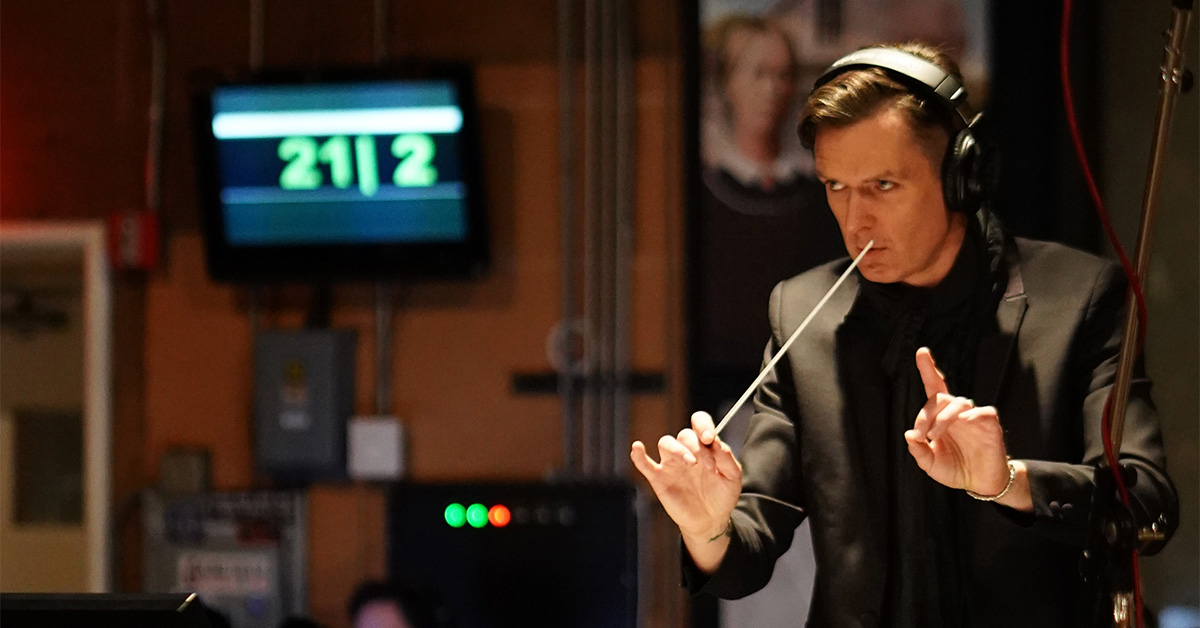
“I’m Not Going to Let the Business Kill Me” | with Fil Eisler


About Episode
Fil Eisler, one of today’s busiest and most diverse award-winning composers, has projects that range from big studio action pieces and comedies to gritty independent films and hit TV shows. I know Fil from working with him on the first two seasons of ‘Empire,’ and he has since exploded onto the scene working on multiple big studio productions.
In this episode Fil and I talk a bit about his slow and steady rise to being an “overnight success” as a top composer, but more importantly we dive into his personal journey as an overworked composer with a young kid who decided enough was enough. He wasn’t going to let the entertainment business slowly kill him…and he decided to fight back.
Fil’s story is a true inspiration and testament to what can be accomplished no matter how busy you think you might be. He’s the hardest working person I know, yet he figured out how to introduce better health into his routine not only for his child’s sake, but for his own as well.
If you want to learn what finally compelled Fil to change his priorities, his routines, and his life and how to apply these strategies to do the same for yourself, this episode won’t disappoint.
Episode Highlights
- How Fil finds all the time to keep himself healthy and productive
- The trials of breaking into the composing game
- The project that put Fil on the map, and the twenty years it took him to get there
- Being able to master tradition musical composition as well work in an entirely digital workspace
- The unique difficulties of dealing with producers and directors while composing music
- Trusting yourself and learning when it’s okay to improvise
- Not getting overwhelmed by the big picture and distilling your tasks to whatever you have to do next
- Living productively in Hollywood with children
Useful Links
Transcript
Zack Arnold: I’m here today with Fil Eisler, who is an award-winning composer. He’s worked on big studio action pieces, comedies, gritty indie films. He’s done hit TV shows, including Empire, which is where you and I got to know each other. There’s a whole lot of stuff that we’re going to talk about today, but, dude, I am so excited that we are finally able to make this happen. And you’re on the mic with me today?
Fil Eisler: Yeah, and I’m excited to be here.
Zack Arnold: Well, if anybody were to go on your. Instagram page, and spend about 10 minutes there. They’d say, Dear Lord, where does the man find the hours in the day? Because you, sir, work your ass off. You are, you’ve got to be one of the hardest working people I know in this business. So, kudos to you.
Fil Eisler: Thank you, man. I mean, you could say that, but then at the same time, I have a feeling this is just the life of a composer, you know. I think to survive these days, you have to just keep working. I don’t think the seeds are what they used to be. I don’t think the schedule were what they used to be. I mean, that might be, you know, I wasn’t around before, so it may have been just as bad, but from what I hear, it takes a little more hustle to kind of survive in that industry now.
Zack Arnold: Well, I’m glad that you brought up this idea of survival, because the reason, the thing that kind of spurred all this is, you and I worked together a few years ago, and
Fil Eisler: Right,
Zack Arnold: I never had this seed in my mind of, oh, he’d be great for the podcast, which has nothing to do with you personally, but there was this Instagram post that you had way back in august 29 of 2018 and it’s, and it’s a picture of you with the blender bottle. Well, like you just sweat your ass off at something, and it says, I seem to have finally made a firm decision that I’m not going to let the business kill me. So, into the right,
Fil Eisler: Right,
Zack Arnold: That’s kind of where I wanted to go today, but before really digging into all the nuances of how you’re, you know, have gone from going to boot camp to running marathons and all this other stuff, or running a marathon, because I know it’s your first slash last
Fil Eisler: minute about that, but yeah,
Zack Arnold: Exactly. So I definitely want to go into all that, but I think it’s important first for anybody listening just to understand a little bit of your basic background. I’m always a big fan of origin stories, I love to know what the path is that people got to where they are, so I just want to start with a little bit of an introduction. For here’s where I started. Here’s our how I got where I am. Then we’re going to talk about this idea of survival,
Fil Eisler: Right? Well, I was born in Prague, in what was then Czechoslovakia. We immigrated to London when I was, I think, around about nine years old, so I’m a double immigrant. I went to England, you know, not speaking English. Czech was my first language, and then we, you know, I grew up there. I grew up loving music, you know, made music from as early as I can remember, and I think around about that age when we moved around eight or nine, I just remember making that decision that I was going to be musician, that was it, that’s all I ever wanted to do. And fortunately, it’s all I’ve ever done. I mean, I’ve been very fortunate not to have ever really had to do anything else. That makes it sound awfully easy, which I kind of hate, because there were lots of periods where I wasn’t working. There was even a period where I was homeless for a second, then there was, but you know, all sorts of things, but I played with a guy called Robbie Williams, who is a huge star pretty much everywhere but here in the States, but he wasn’t one I, when I started playing with him, he had just come out of this boy band called Take That, which was huge, but he was kind of not taking that seriously, and he managed to really turn his career around, and he sort of, you know, he became one of the biggest artists in the world. So I was in the middle of all of that, which was an incredible ride, and probably 10 other podcasts worth of story, but I left his van when I was about 27 I think, and moved to New York, and decided it’s going to be an artist. I signed with EMI. It was right around that time when record labels were still signing lots of artists, but it was sort of post Napster, like the industry was just beginning to sort of eat itself alive, and needless to say, the artist creep didn’t go the way I’d, the way I’d planned, and it’s funny because I know so many people now, composers, you know, musicians, whatever, who basically had a very similar story, who got signed in the 90s or got signed in the early 2000s and you know, and then it didn’t work out, and it’s so funny because when we were kids, we would go, you just signed, you got a record deal, your problems are over, and it’s really kind of when your problems are just beginning, you know. So I went through all of that, and I met my now wife, Lisa, who lived – who’s English, but lived out in LA, and gradually I moved out here, and that’s kind of how I ended up in a very roundabout way, getting into film, you know, I’ve always loved movies as much as I love music, and it was sort of.. I was at the right point in my life for that to click, and you know, the two things just kind of came together, and I’ve been doing it for around about 12 years now, so that I think that brings us up to now,
Zack Arnold: So if you could kind of distill down the if there is one defining moment, or a couple of defining moments, or the big break, so to speak, where it went from I’m kind of a struggling composer or artist to now being the person that you are today. Is there a specific story or moment you kind of think, oh yeah, this would be,
Fil Eisler: I’m not struggling,
Zack Arnold: Well, maybe. Maybe, in you know, compared to where it is that you want to get, but certainly you have quote unquote made it at least at a certain level in this industry.
Fil Eisler: The struggle is real, mate. I love that cliche, because it’s, it’s sort of, in a way, it’s what drives you for the rest of your life. And should you know, I mean, I’m kidding, you know, I’m doing just fine. Thank you very much, but at the same time you always sort of want to do better, and I think that’s what stops you from stagnating, and things like this, and there wasn’t like a moment, you know, where it’s like I’ve made it now, you know, it was, it was a series of things, and I can definitely point to things that were sort of okay, I got my foot on the next rung of the ladder, like getting my first, well, first of all, getting, you know, my way into film in any shape or form was actually writing songs and having songs licensed on TV shows and things like that, you know. I remember very specific moments, like getting my first, getting my first short film, somebody asked me to do the thing, you know, invariably for free, and I went, yeah, that seems like a good idea. And then not long after that, I got my first genuine movie as an indie movie, you know, it’s very little money, but it was a cool little film. And then I remember getting into the Sundance Composers Lab, that was big, because it really introduced me to the community, and there really is a community, I’m sure you know, in your world, in editing, there is too, that there’s not that many people doing that job, you know, at a high level, and and making a living from it, because it’s, it’s a pretty small pond, so in fairly short order, I got to know, you know, a lot of the people in the industry, and, and you know, the big thing about that was to get into the Sundance Labs. It was a huge deal for me, because they, I think, they only accept like six people a year, and they get, I don’t know, how many 1000s of entries. They’re still doing it, and this was what, 11 years ago now, 12 years ago, and they really make you feel number one to be part of the, you know, the sort of the Sundance family, and it really is like a family. They really take care of each other and nurture art and artists, and, and you know, find people with a voice, but they encourage you to have that voice, and it’s a kind of a, I know, it’s a pretty incredible environment, so that will be one thing I think. The thing that really ended up putting me on the map was not the very first TV show I did, but there was a network show I did called an ABC show I did called Revenge, and that was the first time I remember really feeling like I was part of the not just the community, but I was working consistently. Well, I guess that’s not entirely accurate. I’ve been working before that, but that was the first one. First of all, the show was a big hit, so that was the first, but it did suddenly, suddenly people knew who I was, and I wasn’t walking in the meetings and people going, “So, tell me about yourself. You know, people talking about work I’d done, so I think that was the thing that really sort of put me on the map.
Zack Arnold: Well, and it’s funny when you think about these opportunities, when you’re saying, like, you know, quote unquote, putting you on the map. It’s kind of that idea of like, oh, you’re an overnight success, and you’re like, yeah, it took me 20 years to get there, but it’s, but it’s when you, when you have a conversation with somebody and they say, oh, what are you working on, and you say a show name, like, oh yeah, that show, right? That’s when you feel like you’ve quote unquote made it, even though you’re not working any less hard than you’ve been for decades. But it’s like, oh yeah, you’re the revenge guy, you’re the empire guy, that’s totally different than I’ve been working consistently, but nobody’s heard of the things that I’ve worked on,
Fil Eisler: And it’s funny because you know eventually those are the things that end up like a bit of an albatross around your neck when you’re trying to get the next gig, because people either love or hate what you did, or they love or hate that, and a lot of the times they love or hate the show, they don’t even know what you necessarily did. They formed an opinion about the show, maybe from seeing an episode, or, you know, they with movies, it’s slightly different, they either saw the movie and loved it, or they didn’t, you know, but with TV shows, it’s kind of interesting, there’s so much, especially a show like Empire, that made this sudden leap into the zeitgeist for a minute there, and everybody was talking about it, and so everyone had an opinion on it, even people who’d never seen it, and then you were the Empire guy, right? I’m sure you went through some of that too, I mean, it was, you know, at the time you were on the show, it was, it was massive, and it was, I mean, it’s still a massive show, but it was, you know, at that point it was just all that was being talked about in the media for a while, wouldn’t it?
Zack Arnold: Yeah, no, it was, it was definitely insane, for sure. And it’s funny that you talk about this idea of like people love or hate the show, and we associate it with what our contribution was to it, but like you said, they’re not even saying, “Oh, I, you know, I loved or hated that one cue you did in that one scene. Oh, I hated that show, or I hated when, you know, like this character did that to that character, like, yeah, but that has nothing to do with the work that I did. But people, you know, disassociate the two,
Fil Eisler: Absolutely, or they love or hate an actor, or the director, or whatever, you know, it’s just like some. Preconceived notion, and at the same time, the show had, you know, an insane amount of fans, and still does, and it’s, you know, it’s mind-boggling, and again it was sort of like that time when I started playing with Robbie, when, when I was sort of part of something that kind of no one knew anything about, and very, very quickly went sort of seemingly stratospheric in five seconds, and you just, you’re just sort of in the eye of the storm, and everybody’s talking about it, but in the middle of all of it, there’s just the work, you know, there’s just the love of doing it, and what you physically have to do to get the show done, you know, to get it across the finish line.
Zack Arnold: Yeah, and that what you need to do to get it across the finish line is definitely where I want to go next. And I kind of want to start with a story here, and the story is going to be both tooting your own horn, but also kind of digging into this process. I’m sure we both remember season one of Empire, and I’ve tried to forget a lot of it, much of it is very much a blur, as I’m sure it is to you, but there’s a moment that really, really sticks out to me, and it was during the season one finale. I’m sure you remember how much fun the season one finale was.
Fil Eisler: Oh yeah,
Zack Arnold: At that point the show was already out, the expectations were through the roof. I think it ended up getting like upwards of 25 million viewers, which in the world of television nowadays, is like nobody gets those kinds of numbers, so there was a tremendous amount of pressure on everybody, and I had to go through an extensive, extensive re-edit of the entire first act teaser before, you know, the title card came up, like basically rewriting it in the edit room from the ground up, and I had to just tie together all this random score and all these like little pieces and bridges, and it was this huge centerpiece for the opening of the show. And then I remember going to the mix and just thinking to myself, oh my god, Phil has to knock this out of the park, because this is one of the biggest moments of the season. Everybody has high expectations, and I think you had like four minutes to put it together, maybe that I remember you’d been up the entire night before and I was sitting on the mix stage completely exhausted and I remember listening to this music and being like holy this guy is at a completely different level because up until that point I had worked with really good composers but a lot of it was done with Pro Tools and synths, and all this electronic stuff. And what you did was, you’re clearly you’re a classically trained composer, because you composed a beautiful classical symphonic piece of music with a real orchestra, and I was like, I didn’t even know that work at this level was a possibility in network television. So you completely blew my mind with that piece, and it’s still one of my favorite pieces of music that I’ve ever heard composed. I absolutely love it. I was actually doing a presentation a few months ago where I showed you before and after that sequence, and I was like, “Damn, that music is good.
Fil Eisler: Thank you, man.
Zack Arnold: But, but to get it to that point requires everything you’ve got, so I want to kind of use that as a segue to helping me and my audience understand what does it take to actually deliver the volume of material and the quality that you have to deliver in the world of both TV streaming features nowadays, because, like I said, you go on Instagram and it’s like, where do you fit sleep in?
Fil Eisler: Yeah, well, I mean, and that’s a really interesting sequence, because I remember it being recut a number of times, and I remember seeing lots of different versions, and, and then by the time, you know, it was ready to go, and I could do my thing on it, we were super, super close to the deadline, and I was kind of glad that wasn’t my first rodeo in network TV, because that’s really not unusual in network TV. It’s just very typical, you know. There’s compressed deadlines, and when people are trying to do something over and above the bar, like, you know, you and Lee were doing at the time, and I think, you know, the fact that Lee came from film and came from indie film, where it was just do or die, and it would do something brilliant, and you, you know, stand or fall on your work. Not everybody in network TV has that attitude, as I think you sort of pointed out about working with other composers, sort of same same kind of thing. It can become a very rote kind of job, and that wasn’t what we were trying to do. There it was great having had done a show like Revenge, which also had a live orchestra. I mean, I’ve done plenty of shows that haven’t, and I’ve done plenty of shows that have involved, you know, me in a room with a Pro Tools Reagan, you know, a bunch of instruments, and creating something, and that can be great too, but to write something symphonic like that, when you’ve got the resources to do it, there’s actually some advantages to it, because you know, you, you do put a mock up together, you put a demo together, but you know what the palette is to start with, the palette is the orchestra, right? There may be other elements to it, but essentially, you know what you’re writing for, you know the medium you’re writing for. And at the end of the day, you have a recording date, and that’s when you really shape the music demos, the demo, right? It’s like the equivalent of a table read for actors, basically. It’s like, well, here’s the sketch, this is what it’s gonna, you know, sound like, and you can get fairly realistic with those demos, but especially when there’s so little time like that, you really, you’re really presenting somewhat of a sketch and going all right now. You guys are going to trust me, we’re going to go on the scoring stage with, you know, 50 musicians, and we’re going to make something, and I find that incredibly exciting, because, and it’s one of the reasons why I conduct the orchestra, as opposed to just sit in the booth, and a lot of composers choose not to. There are lots of pros and cons to both, but for me, especially in a situation like that, I can very quickly shape things on the stage by giving directions to the musicians from take to take and affect how it’s going to affect the scene, the picture just by their performance, how loud they play, how stridently they play, how much they lay back, how much you know stuff like that, and yeah, that’s what I remember about that piece of music, but the in terms of the physical, like getting it done, it’s not like I could give you a ballpark amount of time, but it’s the sad thing is the time it takes is basically the time they give you, that’s the real answer. Well, and I would guess that the other benefit of doing stuff on the stage is it’s much harder for people to give you notes and be able to execute them. It’s like, what do you want me to do? Record it,
Fil Eisler: You’d be surprised,
Zack Arnold: I suppose
Fil Eisler: I have, you know, there are directors that case in point, being Danny Strong, actually, and Danny is somebody who likes to shape things, you know, up until the very last minute, and he may change his mind, and that, as well, he should, as the director, if you get to the stage, you know, you, it’s, it can be a little overwhelming for some directors, you get to a scoring session, and, like you said, a lot of people, even directors, they don’t get to spend a lot of time interacting with us at that level, because if you think about it, you’re scoring a movie, you spend, you know, three months, six months out, however long you’ve got in the writing process, and then the scoring happens in, in the space of, you know, a week or less, and how many movies do you make a year, right? So, on TV, you’re doing that kind of thing weekly, and you, it becomes like another, it’s, it’s, it’s, it is to use that analogy, like working out another set of muscles, but you have to sort of train to be able to do that stuff quickly, but for a director or a producer, they’re very rarely in that situation. So, you can walk into a scoring stage, there’s 50 musicians, there’s producers, there’s a huge team in the booth, you know, there’s a load of people, and it can be a little overwhelming, and you can just sort of sit there and go, oh, this is great, and maybe not quite have the courage to say when something doesn’t feel 100% right. I would fully encourage, listen, I’m not trying to, you know, get people to give me notes on purpose, but I would fully encourage, you know, any director or producer who’s in that situation to not be scared to get on the talk back and say, hey, let’s look at this, I’m not sure about this, and I try to sort of make myself, my team as approachable as possible in that situation. So, Danny, in, I think both the episodes he directed, and out, was it season one, or maybe season two, I forget now, it’s all kind of a blur, but in both situations, he would get to the stage, and there were cues that he had heard demos for, but you know, when you hear the orchestra, things change a little bit, and obviously a demo is a sketch, and the orchestra is the real thing. And there were situations where he not only wanted to make changes, but there was, there were one or two times where he would hear a cue and go, “You know what, I was feeling this before, but this just isn’t working for me. What do we do? And you’re on the scoring stage, right? Like I said, there’s, you know, anywhere upwards of, you know, 30 to 50 people in the recording room alone, and then you’ve got a team and a clock ticking, and on TV shows budgets are tight, there’s no overtime, there’s no, you know, very rarely, anyway, there’s, you know, there’s no reviews, there’s just you have three hours of union mandated time to knock out almost sometimes almost a movie’s worth of music, which seems impossible, and you know, as realistic as you have to be about what you can get done in that time, you also have to just jam and get stuff out, so in that situation, when a director says, “Okay, I don’t like this key, what do we do? Pretty much the only thing you can do is go, “All right, walk over at the piano with some manuscripts, sit down, and write something else on the spot. Fortunately, I’ve got a great enough team around me that when I do some. Like that, when I have to do something like that, you know, it takes an orchestrator and a copyist to put that stuff down on paper and get it in front of the orchestra, so they can play it. So there’s a couple of times with Danny that we did that. We literally sat down at the piano, once was, I think, at Fox, once was it Warner Brothers, and I just wrote a new cue in front of him in the 10 minute break, you know, in between sessions, and got together a quick sketch. The team took it, they blew it out into a, into a school, they put it on paper, and an hour later we were playing it. So it’s, it’s a, you know, it’s a little hairy when those things come up, but you have to not be afraid of that happening on the audit. I mean, obviously, there’s limits to what you can do, but
Zack Arnold: Well, one of the things that I’m really interested in, and fairly fascinated by, because it’s something I don’t understand that well, is actually kind of the week in the life of a composer, because when you look at a lot of the people on my end, I get on one show at a time, I’m on that show for seven or eight months, and I put in long hours, but I show up at the same computer every day, I edit the same show, I balance multiple episodes, but I’m in one head space. So, can you explain to me how things actually work for a composer? Because you’ll actually be on 123, different things simultaneously, which means that you might be writing for a comedy film, but then on the scoring stage for Empire, like, help, help me and other people that are in the post world understand how it actually works for a composer, where you can do more than one thing at once, and how you kind of balance all those different head spaces.
Fil Eisler: Yeah, well, honestly, you have to survive these days, you know, financially and just in terms of, you know, shows end, and then you need to be working, and you kind of have to think, have things overlap, and I try to minimize that, but invariably schedules change, and you know, things overlaps, you have to be ready. So one of the things about that is having a great team around you that can manage the time and can basically boil it down to, okay. Here’s what filled up. He walks in the studio in the morning, he turns the phone off, and you write, you know, at lunch I might take some phone calls and send a couple of emails, and then phone off and back to writing, and that’s it. They will literally, you know, after, obviously, we have spotting sessions, you know, for let’s say, for a show like Empire, that’s weekly, so you got the spotting session with my music editor and my assistant. We get a literally have a chart together of, okay, here’s what’s going to, here’s what I got to knock down this week, these cues, right? This amount of minutes of music that’s going to take me this amount of time. You kind of put that in the system. If anything overlaps with it, we put that in there, and you just manage it in terms of, you know, okay? Which deadline comes first, deal with that. Which deadline comes second, deal with that. Keep going, just put one foot in front of the other, and keep going. And it’s, it’s really like anything else. It’s like, you know, do I get up in the morning and want to work like that always? No, I want to go write music, but at the end of the day, if I can distill it down to just put one foot in front the other, just keep going, and you knock down one queue, and then the next, and then the next, and then the next, and you know it works out. The team part is really crucial. If, in terms of, like, you know what you were saying about headspace and working on different things, I try and separate them somewhat, you know, if I’m working on one thing, I’ll sort of stay in that head space, and then it meet that hit that deadline, and then put that aside, go take a walk, go get a cup of coffee, and you know, get my head into something different, because it’s really important to me to be fully focused on whatever I’m doing, even if there’s more than one project happening, you have to be in the right head space to do it, and so you know one thing for me that’s interesting. You know, when I was in bands and stuff, obviously everything happens at night, right? You play at night, you travel at night, you know, you do other things at night, and basically, you know, you don’t see much of the day in this world, particularly. You know, I have two young kids that just doesn’t work, because aside from the fact that the kids are going to get you up at whatever time in the morning, if you get up at 10, and that would have been early for me back in the day, but if I get up at 10, you know, and don’t get into the studio until one, and then by then the phones ringing, and people are asking you questions, and all the rest of it. It just doesn’t work. So, for me, the answer has been a lot of the time you get up at four or five in the morning, and you go to the gym, or whatever, if you’ve got time, and then you get in the studio, and that way I will get more writing done by, you know, midday one, then I would put it the entire day if I got there at 12.
Zack Arnold: Well, and that’s the perfect segue for where I wanted to go next, which is you talking about the fact that you have to have this intense focus for hours at a time, where you shut the phone off and you write, or you revise, or you conduct, or whatever it is, and. And there’s nothing more detrimental to focus than being sedentary and not moving around and not exercising and not eating well, and I want to talk a little bit more about kind of when, obviously I know when the moment was, because it’s on Instagram and it has a timestamp, but really kind of when it was, you realize I don’t want this business to kill me and I’ve got to do something about, was that kind of a general thing? Have you always been into health, or was it more, man, I’ve got all these choices that I’m making now, and I need to make a big shift. So, was it kind of an aha moment, or was it a gradual thing, or it’s always been a part of who you are?
Fil Eisler: Not quite an aha moment, because it’s something I’ve always known. Right? We all know the facts. We all know if you sit on your ass for all your life, it’s going to kill you. Full stop. End of end of story. That’s not news. Applying that to your life is a whole other thing, and you know, particularly in what we do, where 18 hour days of, you know, happen very often. And when I.. it’s funny to this day, and you know, when you’re saying, I don’t know much about what a composer’s day, or a week, or a year looks like people are horrified when I tell them stuff like that, 100 hour week, you know, 18 hour days non stop. I mean, that is the sort of stuff that will kill you, undoubtedly. And it’s very, very common in this industry, and it happens all the time, doesn’t happen all year round, but you know, when there are crunches, and there are crunches often. That’s just what it is. It is what it is. So, yeah, I’ve had a lot of conversations with myself about, well, I do want to stay in this industry. I do want to do this. This is what I love, but I do want to live a long life. I don’t, you know, and listen, you and I both know people who passed away, you know, just during the time that we’ve known each other in this industry, and you know, certainly I would say the industry played their played its part in an end in their lives, and so, as far as fitness goes, I mean, look, you know, when I was in bands, it was a different concern, but also you’re 22 and you don’t much give a, you think you can take anything at that age, and all the partying, and everything that goes with being in a touring band, you know, you just sort of take it on the chin, and it’s fine. And then, as you get older, it’s like maybe not so good. And even when I was out on the road, I mean, you know, I was, I would have flirtations with working out, let’s put it that way. I’ve always been in martial arts ever since I was very young, but I never, because Music always came first and work always came first. I never dedicated as much time to it as I should have. So I’m like the guy that spent, you know, 20, actually probably 30 years doing martial arts, but always doing the basics over and over again, because I would do it and then leave to go on tour or something, and then come back to it, or I would just drop it for a while, because I was working and come back to it. So that was that for me, that was the thing I like. I enjoyed doing that. I hated going to the gym, still not a big fan of it, you know. I would do that, and then when I was on the road with Robbie, I would, he was surrounded by security guys, and I started pestering them to train with me, because they obviously ordered all sorts of martial arts, so you know, I would do it with them on the road, and then, but then I would keep dropping it, you know, and when I started doing this, I looked around for what I could, when I got to LA, I looked around for what I could do here, I got into Crab McGarr for a while, and I loved it, but again, you know, I would keep dropping it, because you get busy and it all falls off, plus doing particularly that, you know, I would constantly get injured because one thing I didn’t do, and this is I’m finally getting it through my thick skull that is necessary, but I would never do the stretching, I would never do the warm-ups, I would never do the physical therapy, the maintenance, you know, going to yoga, I would, I would never do that stuff, and so over the years, you know, my body took a took a battering because I would go in, start sparring, get hurt, and then I’d be off for three months, because you, you know, you hurt your knee or your shoulder or whatever, and to be honest, I still do that a little bit, but that’s the thing I’m trying to change, and the thing that changed with Barry’s boot camp, and that whole, you know, the Instagram post, talking about.. I’m not really sure what it was. I think part of it was my kids, part of it was, you know, you have kids, especially you have kids later on in life. Like, I was nearly 40 when I had my first daughter. You start thinking, Jesus, how much time have I got with these kids on this planet, and they’re the most important thing to me in the world, you know. How do I get to spend more time with them? How do I get to spend more time with my wife? You start realizing the clock’s ticking, right? So, my answer to that is, and I think my answer to that was, you know, at that point the clock’s ticking, I have to attack harder, I have to make every second count somehow, and so you know, my wife, who’s been in fitness for years. My wife runs what, 12 marathons now. She was going to Barry Bootcamp, so I said, okay, I’ll go with you. The hardest thing was making that first step. The hardest thing was, I’m going to go to the gym, and Josh, I hate going. Gym, the gym is far away. It’s cold. It’s early. I’m tired. I’m not gonna go. Lisa would go. She would go. So I was like, okay, I’ll go with you. So I went to Barry’s boot camp. First month was mostly me lying on the floor throwing up, pretty miserable. But because she was going, I kept going, and then there was a.. there was.. if there was a light bulb moment, it was this sack. It was.. it was really weird. It was.. it was a Disneyland with my kids, right? Living in LA, I take them all the time. The baby was crying and needed milk, and we’d run out milk, so I had to run back to the car. So, you know the baby’s crying, everybody’s stressed out. Like, okay, I’m just going to sprint back to the car, get milk. So sprint back to the car, and on the way back I suddenly went, “Hang on, I’m not tired, or more the point, like, hey, this doesn’t hurt, like running would normally hurt, you know what I mean? Like sprinting all the way to the car, parking back, it’d be murder. Hang on, I don’t feel terrible. This is weird. So I kept sort of running, and then that was the thing that was the moment that made me go, you know what, I’m going to keep doing this, because when you stop and you drop all the way back to zero, you have to go through all that pain again and start again, and it sucks. You keep going and you start seeing results, like I feel better, like I don’t want to feel again, so I think that’s the biggest motivation, is wanting to feel crap.
Zack Arnold: Well, and I think that the big thing here that I want to emphasize, you’ve already said, and I just want to really hit this point home, is that obviously one of the biggest turning points for you was, you know, introducing children into your life, and for me it was the same thing, but it wasn’t just the realization, and I’ve had this one as well, like, wow, the clock is actually ticking, and I’m on the tail side, closer to being old than being young. When did that happen? So, it’s all about, wow, so the clock is ticking, but then the bigger realization for me was not, I want to get as much time as possible, it’s what do I want the quality of that time to actually look like
Fil Eisler: Right,
Zack Arnold: And for me, because I’m so obsessive about getting everything out of every experience, every job, every interaction with people, whatever it is, I want to get the most out of it. There, you could say I want to optimize that experience. I realized that it isn’t just about I want to have as much time with my kids, therefore I want to be alive longer. To me, was what does the quality of the time look like now, and I’m on the, you know, right near 40. I’m starting to gain some weight in places I hadn’t gained it before, and I’ve talked, you know, ad nauseam with this audience before about all the issues that I’ve had with depression in the past and anxiety, and all these things caused by lack of good health and lack of moving around enough and exercising, I just decided I want the quality to be better. I want to have more energy with them, and I want to wear my kids out, not the other way around, right? So that was that was one of the big things, was you know, like being on American Ninja Warrior. Sure, that’s cool, that’s an end result that’ll be fun, that’s the icing on the cake, but for me, I use that as the motivation to get me to show up at the gym or go do parkour or whatever it might be, but the real reason is I want to be able to run around with my kids and have them say, ‘We’re tired, and be like, ‘Hey, man, I feel great. Right, that’s an awesome feeling. I love wearing my kids out and not the other way around.
Fil Eisler: Yeah, absolutely. I think that’s the other part of it, is you know, I’ve always had back problems my whole life. Obviously, sitting on my ass, you know, in front of a piano or a desk doesn’t help, as you well know. And you know, you can get into the whys and where fools of standing desks and all that kind of stuff. But basically, you, you’re either standing or sitting still, and you know, back problems, unfortunately, was something I inherited from the family. I mean, one motivating factor was, you know, when I had my eldest daughter, you know, I just carried her everywhere, and that starts to hurt very quickly, especially as I get bigger, you know, and if you got back problems, then it’s like, oh, this is painful, and I was just in pain all the time, and it’s something I suddenly looked back and realized that really, for the best part of the last 10 years, I have in some way just either been in pain or just felt for some reason, you know, whether that’s a fitness thing or not eating right, or any of that, I’ve just always felt crap, and about two years ago I went to my doctor and said, “You know what, I just.. I never feel good. I mean, got to the point where I was actually worried that there was something seriously wrong with me, because I just never felt good, and it’s sort of thing you hear people saying right before they found out, you know, they had terminal cancer or something, and so you know, did lots and lots of tests, and I was fine, but basically he said, “Look, you know you need to change the way you live. Said, “Look, the hours that you keep will kill you unless you do this, this, and this, and it still took me a long time to get into it, Zack. It wasn’t like you. Know it wasn’t like that was the light bulb, like, oh God, I better change my life, and I just went and did it. It still wasn’t as simple as that, but eventually, you know, I got into it, and again, you know, the thing we have to talk about, the thing that’s really difficult, no one addresses in our line of work, is that when that light bulb goes off and you go start doing this, that’s not the end of the problem, like you’re going to have times, especially if you do what we do, where a crunch comes and you’re required to work 24/7 basically. You get, I mean, literally, if there’s a crunch like that, if you work an 18 hour day, think about it, you basically, you get up, go work, you finish work, you go home, you go to sleep, and you and rinse and repeat, that’s it. There is no time for anything else, and at that point my time is budgeted down to the minute, like if I go to the bathroom, I have to sprint, you know what I mean, in order to get back and take this phone call, or you know, finish this queue in time for it to be an editorial, or blah blah blah, whatever, and then those times it’s not only difficult to keep up exercising, you also stop eating right, because honestly I’m that tired that my assistant comes in and goes, “What do you want for lunch? And I go, “I’ll have whatever I had yesterday, and you just.. it all starts gradually, bit by bit, the regime you’ve built up starts falling apart. You know what I mean? And then comes a time where you just end up dropping it all together, because they’re just isn’t the time, and that’s kind of where I am now, actually, is you know, I ran this marathon, which is a whole other story, and lots of injuries, and in the middle of that, there’s endless deadlines. So now I’m resolving today, when we’re done here, I’m going to go to the bloody gym, and you know, start again. But there’s a lot of starting again. I’m curious, what your experience of that is, actually, because I’ve been watching you doing this ninja warrior training and all this amazing, but you must have had times in the middle of all of that where there’s been a crunch and you had to, you just physically had to stop, right?
Zack Arnold: Oh, yeah, absolutely. I mean, there’s there’s no question about that. Like, when I was on Cobra Kai, I had to drastically reduce my training regimen and gained a few pounds that I didn’t want, and I didn’t have quite as much energy, and it was a little bit harder to fire on all cylinders mentally, but the important thing was, and this is kind of, you know, coming back to the foundation of all this, is when people think about exercise or diet or all these other things, they think that it’s it’s a short term journey. Well, I just, I need to quote, unquote, get back in shape, or I need to go on a diet, and it’s a short term thing, but that never works, and if it did, then there wouldn’t be multi billion dollar industries around selling new exercise programs and diet books every January, because if they worked, then nobody would need to continue buying more, right? But what I really found is that this stuff needs to be attached to an identity, it’s not I’m on a diet, it’s I’m a person that eats healthy foods, right?
Fil Eisler: Right,
Zack Arnold: And I made, and part of the reason that I wanted to do Ninja Warrior is, I said, if I just said to myself, I want to be healthier and lose five or 10 pounds, that’s not going to motivate me, that’s not exciting, but I set a goal that’s so ridiculously out of my comfort zone that it forced me to build habits that I have to maintain consistently, and it took a while, and I’m still working on this to this day, but it was a matter of my identity as I am now somebody that moves and exercises on a regular basis and makes healthier food choices, and yes, for the five months I was on Cobra Kai, I didn’t get to exercise or train as much as I wanted to, but I was maintaining the baseline habits and making sure that at least on the weekends or one or two mornings a week, I was still seeing my trainer, or I was going to Tony’s house to do ninja training, whatever it was. So, was it ideal? No, but I was maintaining the identity of somebody who has these habits, and I did the best that I could, given my current circumstances. But what I love is this analogy of the marathon. I want to go back to that and not lose that thread, because America running a marathon is not a healthy thing.
Fil Eisler: It’s really
Zack Arnold: Putting your body through that is not good for the human body. However, somebody who trains for marathons and lives that lifestyle, that’s healthy, and I think that’s the difference when you’re talking about the fact that I’ve got 18 hour days where I have to work down to the minute in my schedule, and I have to sprint to pee. Guess what, that’s a marathon, that’s not good for you. However, in order to get to the point where you can maintain the level of focus that you need, and make sure that you can be a decent person through all that, and maybe not make all the best food choices, but I bet you still, across the board, in general, made better choices than you would have 234, years ago. It’s about getting yourself to a place where you can survive those 18 hour stints. So, I was able to get through Cobra Kai pretty effortlessly because of all the training that I was doing, and I think that so many people say, well, you’ve mentioned several times, well, it’s about putting your career first, and they say, well, I don’t exercise because I put my career first, and I say I do exercise because I put my career first, and my career has moved forwards faster, better, and higher because I prioritize my health, not despite the fact that I do it, and it sounds like you’re talking. About the same idea.
Fil Eisler: Yeah, I mean, you can’t physically put your career first if you’re dead, so it’s pretty simple. It’s, you know, this career involves grueling hours at the end of it, so if you want to survive that, you’re going to have to put in some leg work. And, God, you’re right. I mean, a marathon totally isn’t a healthy thing to do, it’s rough on your body, and all the rest of it, but also, you know, it’s like you were the ninja stuff, it has to be fun. I have a really hard time getting to the gym, but I’ll get to the gym if it means I can do jiu jitsu for it, or I can run a marathon, because that’s that motivates me, because that’s fun, right? And, but the other thing about the marathon is, and see the interesting thing about the marathon was, I started training, you know, a few months back. Lisa’s been trying to get me to run one for years. I hated running until I started doing Barry boot camp, and then, you know, in an average Barry class, you do two to three miles, depending on how fast you are, and all the interval training, right? So I never run three miles before, never like three miles, I’ll get an Uber, you know, so it was, it was sort of a revelation that I even could do that, so then it becomes, huh, I wonder if I could run six, and so then it became interesting to do a marathon, and also, you know, the other thing is, we talk about kids, but relationships in this business are tough, because the amount of time you put in, you know, as a musician, either you’re doing what I’m doing as a composer, you’re doing crazy hours, so you’re away for legislative purposes, or you’re a musician and you’re touring, in which case you’re away, so you know the other thing about working out with Lisa became, you know, the time we spent together because I want to be around her, because I like being around her, you know, that was another reason to start training for the marathon, I was like, yeah, this would be a cool thing for us to do together, the thing with me was, so I should preface this by saying, round about 2002 when I first moved to New York, I had a fairly bad car accident, where I was actually hit by a car as a pedestrian, I was hit by a yellow cab in New York, and that pretty much took my knees out. Didn’t have surgery at the time, because they told me surgery wasn’t actually likely to help much, but you know, there’s a lot of, like, you know, ACL meniscus cares, and all the stuff you expect, and you know, over the years of not really taking care of that, and then just jumping into, you know, my periods of, like, doing Krav Maga, doing Jiu Jitsu, doing whatever, and not taking care of it, playing football, or whatever, I pretty much just wore my knee down, so as I start training for the marathon, by the time I got to running, you know, seven miles, 10 miles, it started to hurt, and then it would kind of go away, you know, I’d have to drop it for a week, and I’d stretch, and you know, whatever, and it would kind of get bearable again, and then I tried again, and same thing, like seven to 10 miles. This is getting really painful. And around, I want to say three weeks before the mountain, maybe Lisa and I have a friend who’s actually had dog walker. He has a this guy’s amazing, this guy John, he was actually Manny Pacquiao’s running trainer for a while, and he now has a business where he doesn’t, he doesn’t walk dogs, he runs the crit shout out to John. His company is called Shaka Paws, I think, and he runs literally runs marathons almost every day with the amount of dogs that he runs, and you know, obviously our dogs love him today. So, so I would get kind of marathon advice from him, because he’s run I don’t know how many, and about three weeks out he said training going. I said, yeah, you know, like he said, how, how much you running? I said, I’ve made like seven miles, even said mile mate, you should be running half marathon by an hour. The race is three weeks away. He said, you should just forget it. Just, just don’t do it this year. You’re gonna hurt yourself. Just don’t do it. And, of course, you know, I know you and I don’t know each other that well, but you probably know I’m a little pig headed.
Zack Arnold: I definitely sense the competitive nature, just via social media alone, so that doesn’t surprise me. We’re similar in that sense, for sure.
Fil Eisler: Right? Right. So, so that pissed me right off, and that night, you know, my assistant runs a lot, so we would, we would take off around, you know, my, my studio was on the Warner Brothers lot, and we would run around the lot quite a bit, so we ran, we ran about, whatever, seven miles, whatever it was, you know, I was starting to, starting to get tired and starting to hurt, and he was like, “Okay, we’re packing it in there, and I said, “No, we’re running, we’re running a half tonight, running a half marathon. Just out of the blue, I said, “We’re running a half marathon. He went, “What are you talking about? I said, “We’re going to run a half tonight. He goes, “All right. And by the way, to him, it’s nothing. First of all, these three. 15 years younger than I am, and second of all, he’s a born runner, like he runs marathons all the time, and he.. it was just no sweat. Then they were like, all right, but you know, he was looking at me like, not sure about how this.. how well this is going to go for you, but all right. So we ran a half marathon that night, and I was in so much pain at the end of it, but I’d never run whatever that was, like we ran, think we ran 14 miles, just a little over half an hour. I’ve never run 14 miles in my life, and there was the sense that, okay, well, I’ve done that now, I know I can do it. Unfortunately, what side happened to them was it took longer and longer for the injuries to heal and to start hurting in between runs. So basically my training fell off, so for that last month or so I really wasn’t training at all, and then maybe two weeks out I tried to do a 10 mile run just on a treadmill, and at the end of it I was in so much pain I basically thought, okay, well, either I’m gonna blow my knees out doing this, either I can do it now trying to train, or I can get as well as I can before the race, and then run the race, and then probably a week out I was still in so much pain, I was like, this isn’t gonna happen, I’m just gonna hurt myself here, and you know, everybody was telling me, including doctors, were saying, don’t, don’t do it, just gonna bust your knees up, and I think two days before the race, I think it was actually Spotting Empire or something. I was, I was in Hollywood anyway, and the, the, you have to pick up your race packet at the convention center in downtown LA. So, I went, you know what, I’m halfway there. Why don’t I just go pick it up, just in case I want to run? And, of course, I got there, and it’s a circus, and it’s like everyone’s cheering you, as though the race is already going on, like, whoa, yeah, you made it here, you made it to pick up, you know, your piece of paper that says you gotta run, and I got caught up in the whole thing, and I call, called up my wife, and when I’m doing the race, and this is one of the things I love about it, she didn’t say, are you crazy, you know, like everybody else did, she was like, “All right, I’ll run it with you. So I knew that realistically I wasn’t going to be able to run the whole race. My knee just weren’t going to hold out, and she, and bless her, she ran beside me the whole way by far the slowest marathon she’d ever run, because it became about finishing it. Didn’t become about how quickly can I run it? It’s, it’s finishing it. It wasn’t even, can I finish it? Because there was no way, no way. I was not going to finish it. It was just, how am I going to finish this? Like, are my knees going to give out completely? Am I going to have to crawl over the finish line? What’s going to happen? You know, there’s genuinely curious to see what’s going to happen. So, I did everything I could, I got my knees taped up, I did, you know, whatever, and we ran it, and for the, for the half marathon was actually loads of fun, it was great, I really enjoyed it, it was a beautiful day, the atmosphere is amazing, and the pain was creeping up, and by sort of the halfway mark it was really starting to hurt, and then we got to like mile 18, which is the classic, where everyone says that’s where everyone hits the wall, right? So not only did I hit the wall, sort of in terms of fatigue, and I was, it was like you still got, you know, eight miles or whatever to go, but by now is like in really extreme amounts of pain, and I was, I was just a mess, and from then, for the next, I would say four miles or so, I don’t remember much, I just remember having my head down and sort of chanting something to myself over and over and over again, and just looking at the pavement, and roughly three or four miles, kind of passed like that. The end of the marathon in LA, anyway, is like a gradual incline. It’s almost like a sort of a huge joke to the runners. It’s not a hill, but it’s a, it’s like a slow incline for the last four miles or so, until you get to Ocean Boulevard, and then it’s home straight, and it’s murder when you’re that tired, you know, and in that much pain, it’s.. it sucks, and at that point I couldn’t run anymore, I couldn’t even actually bend my legs anymore, my knees were just shot, so I was kind of just waddling from one leg to the other at that point, and then I just said to Lisa, when we get to the, you know, I want to run across the finish, yeah, don’t care how painful it is, like I didn’t come in to walk this, so you get the real joke is you get down to Ocean Boulevard and you think the finish line’s right there and you turn the corner and it’s miles away, or it’s, you know, still maybe half mile away or something, so we ran that last bit, and that last bit was just, it sucked, but it was also brilliant, you know. So, did that really help my level of fitness, or, or anything? No, I’m sure it was very detrimental, but it was, but I think the motivation to get me there was huge, you know. So, I guess I’ll have to find someone else to destroy my. Joints now to be interested in to keep training. I don’t know what it’s going to be.
Zack Arnold: Well, I think that the biggest takeaway that I’ve had, both from this, but also from my own training, because I’ve been through just regular training days where I’m like, how am I going to get through this, where it’s like a five hour day of push and pull and salmon ladders and back, you know, like handstand push-ups and all this crap that I could never do before, but what, as I started to go, what’s that?
Fil Eisler: I don’t know how you do that, that’s incredible.
Zack Arnold: Well, I see, I didn’t think I could either, and that’s the whole point of this, is that I think that if I could pull one realization or one like absolutely life transformational thing, and I don’t say that lightly, it’s that as I started to progress very slowly, one little tiny improvement every single day, every single week, but I started to ask myself the question, What else have I been telling myself that I can’t do, because for years I believed about myself, I can’t do this, I can’t do that, I’m not good at this, but as I started pushing myself past points where I really didn’t think I could go, I’m like, you, what else do you think you can’t do? Like, and then this transformation happened, where it’s like, oh, there’s nothing I can’t do, and I’m building the confidence and the level of commitment to take on things now, where I’ll just jump right in. When I say jump in, I mean literally I’m jumping right into walls, and like from bar to bar, and like a year and a half ago, it had been like, oh yeah, I don’t do that stuff, but I’ve been telling myself my whole life I can’t do certain things, and now it’s just the opposite, where I embrace things that I feel like I can’t do, and it sounds like you’ve kind of crossed that threshold as well.
Fil Eisler: Yeah, man, that’s that’s so part of it. It’s, you know, as you get older, and obviously your body starts to deteriorate, and you can, you know, if you’ve done fight against that, it deteriorates a hell of a lot quicker. That’s one of the things. Look, I, one of my main motivations, for better or for worse, is when things piss me off like that, like someone says you can’t do that, that pisses me off. And you know, the thing is, you also, I think the caveat to that is, you have to get smart about how you do it, if all you do is jump in, which is what I’ve done for most of my life. That’s how you get injured, and as you get older, those injuries take longer to heal, and they happen more often, and that’s just a fact, right? There’s nothing you can do about that. So, but this is part of the real question of what drives you to, you know, exercise and get fit. Is that it’s not all fun, you know, going to yoga for me, at least that’s not fun. I’m bored with going to the gym, lifting weights. I don’t like doing that. It hurts, it sucks, it’s boring, you know. I don’t like doing it. Do I like doing jiu jitsu? I love it. Do I like doing crab magar? I love it. Do I like running now? Shockingly enough, I love it. But all of these things will damage you. Yes, you’re going to learn something. Yes, you, you’ll continue to get fit, but you’re going to take damage too. And I’m not talking about from sparring and getting hit or anything. I’m just talking about physically, from, you know, you’re getting older, you’re trying to put your body through all these contortions, like you are trying to do all this American Ninja stuff, and Falco, and whatever, like, you know, this is not something I was doing at 20, this is something I’m doing, you know, in my 40s, and it’s.. and your body does not like that. So, basically, the other thing you have to put time into, you know, obviously eating right, but the maintenance and stretching and going to yoga and all of that stuff. Do you know, you know, you heard of a guy called David Goggins?
Zack Arnold: Oh, sure, yeah, he’s..
Fil Eisler: I heard, so you know, heard about him on Rogan’s podcast, and he, whilst that, you know, his lifestyle and his solution is most definitely not for everybody, I found, like, his story pretty inspiring, because he was, he was just all about now. I need to get through that next bit of pain. I don’t care. I’m going to get to this next stage, you know, no matter what. And there’s a few people out there like that, that you know, that are talking about this stuff in their 30s, in their 40s, in their 50s and 60s, about just it’s going to get harder. Just accept that it’s going to get harder, but you can counteract that by doing this more aggressively and smarter and more consistently, and keep doing it, and you know, in some senses they kind of cancel each other out, you know, within a reasonable point, I suppose that you know you can keep doing this for longer, and that’s basically my goal, it’s like he said, I want to spend more time with my kids, more time that I can do, you know, quality – I hate that phrase, quality time, but the quality of time is important. It’s being able to run around with your kids, being able to pick them up, being able to, you know, do whatever I want to do, jiu jitsu with my kids. I want, I want my kids to grow up with jiu jitsu and with martial arts. If I’m going to do that, there’s a lot of maintenance and training that goes into, you know, not blowing out my knees or my back or whatever, so it’s not.. it’s like the exercising is one thing, but it’s the stuff I almost find harder. I’m curious to see what, where you are on this, but is the maintenance, you know, the going to yoga and stretching and all that. I mean, I hate doing that stuff, but I. I think part of it is getting to a point where you don’t hate it. That’s where I got to with exercise, is it will be a chore, and I, and you can’t keep doing a chore for the rest of your life, because you won’t, you know, the most dogged, pigheaded person in the world is not going to keep doing a chore for the rest of the world. You have to find a way to like it.
Zack Arnold: Yeah, that’s been the key for me, and I mean, clearly I’m literally months away from being on the other edge of 40, and the joke that I’ve always made with people since I started Ninja Warrior is that every single day since I set this goal I have been sore, I have been tired, and I have been starving every single day since all this started, and the biggest one is the soreness, where recovery in mobility has now become my new number one focus, because the training is actually not that hard. I mean, yet some things are hard in swinging from this to that, or doing the push up like that can be hard, but it’s never the training, it’s the 48 hours after the training is over. It’s like, what am I doing? I can’t even bend over right now, and I’m not saying that’s when it started a year and a half ago, and I was out of shape. Two days ago, I couldn’t bend over and pick a pencil off the floor because I was so tired from a plyo workout that I did at Tony’s house on Monday night. I couldn’t move, like, what am I doing? But then, when I realize how much stronger I’m getting because of that, that’s the motivator, and it’s also because the training is so fun, if somebody had said the only way you’re going to be able to become an American Ninja Warrior is getting on the elliptical five days a week for 90 minutes a day, I’d say that’s boring as hell, that’s not fun. But I found a goal that allows my lifestyle to become fun, and now I can share this stuff with my kids, like we love going to the the ninja gyms and swing me off of stuff, and they go to the obstacle course races with me, and like those are memories that I like, you can’t pay for that stuff. I mean, that’s so important to have those relationships, and I think kind of the one way to cap it off, because we’ll have to have to go quick, because I want to make sure I am respectful of your time, but after they shot American Ninja Warrior the season in LA, and for anybody that’s listening that doesn’t know, I wasn’t called by the casting department at the end of the day, it’s a reality show, not an athletic competition, so I have no control over that part of it. But my wife was like, “All right, well, you know, so that’s over. So, what now? And I’m like, “What do you mean that’s over? Like, no, this, this, this wasn’t a one year goal, like, oh, I ran a marathon, and now I’m done, and I go back to what I was doing before. This was designing an entirely new lifestyle, so I’m going to continue doing this. The goals might change, but it’s about the lifestyle that I’ve created, and I don’t want to lose all the benefits of the lifestyle, even if it means I can’t bend over for something for a couple of days, right?
Fil Eisler: Yeah, no, absolutely, I mean, it, that’s the real challenge of this, is making it a lifestyle and keeping it up for the rest of your life, that’s the challenge, but I, for the first time, I think in my life, going, you’re talking about going back to that Instagram post, when I said, Ray, I’m not going to let this kill me, I think that was around the time that I’ve maybe been in that good shape once before in my life, like in my late 20s. At some point I was like, I’m going to work out, I’m going to get into good shape. I think at that point it was just, you know, I want to look better or whatever. Yeah, I mean, who cares what to actually do if it’s vanity? Great, if that gets your arson gym, fine. You know, whereas, you know, now I’m in my 40s, it’s much more about the other things we talked about, but I think back around the time that I posted that, that was the first time, you know, I’d been in that kind of shape in my life consistently for more than five minutes, you know, I’d kept going, and it felt good, and I felt good about myself, and you know, I was eating better, and everything was better. I remember, you know, a year between annual physicals, right, going for a checkup, and one year being told right now your spine looks like something that belongs to a 60 year old man, to the following year going, and all the numbers had gone completely the other direction. The needle have moved completely in the other direction, to you know, bone density. He was better, muscle mass obviously, everything else, you know, everything, blood work, everything was just like so much better. My doctor was going, “Wow, what the hell have you been doing? You know, and that wasn’t a whole year, that was less than six months, so I think the motivate for me is not to ever go back to what it was before. That seems to be enough right now, because I remember very clearly how bad I felt. You know, I don’t ever want to feel like that again. I don’t want to live my life like that.
Zack Arnold: Yeah, the thought of going back to how I felt before I started all this is motivation enough to not skip the gym more than one or two days, or you know, like, I’ll have a cheat meal, or even a cheat day every once in a while, but then I think, like, do I really want to start over and go through that again? Hell no, I go back to eating well and exercising, because it’s now that’s the habit, and that’s the habit that’s hard to break, and it’s a much, much better habit to not want. To break than all the bad habits that I used to have, so I mean we could definitely go much deeper down the rabbit hole, but I’ve already gone over the time that I told you that we’d be on, but I mean, my God, this was such a fascinating conversation, and I was on the edge of my proverbial standing desk seat as you were telling the story with Marathon, this was really awesome. I’m glad that we were able to finally make this happen, and I really, really appreciate you being on here. So, somebody wanted to learn more about you, or see all the cool work that you’re doing. You’ve got like so many big films and TV series that haven’t even come out yet that you’re talking about. So, somebody wants to jump in and learn more, where can they go?
Fil Eisler: I, you know, what, go on my Instagram, you’ll find out everything, every movie I’m working on, every, you know, it all comes out eventually, but I have, you know, there’s a bunch of things that are that are around, obviously. Empire is still around. I just did a show on Netflix called What If. I did listen to McCarthy’s new movie, which is coming out end of this year, called Super Intelligence. You know, it never stops, man,
Zack Arnold: Never stops. But if you don’t want the business to kill you, you’re going to continue to take care of yourself.
Fil Eisler: Correct.
Zack Arnold: Awesome. Well, anybody wants to find you on Instagram, it’s Fil Eisler Music, which is F I L E I S L E R, and I’ll put a link to that in the show notes, and anything else as well. But this has been a tremendous pleasure. I’m glad that you and I were able to catch up again, and I very much hope that our paths cross on the professional side sometime soon, or maybe, who knows, on a Spartan race course. You never know,
Fil Eisler: That would be that would be pretty amazing, man. Yeah, let’s do It.
Transcribed by https://otter.ai
Episode Credits
This episode was edited by Curtis Fritsch, and the show notes were prepared and published by Elyse Rintelman. The original music in the opening and closing of the show is courtesy of Joe Trapanese (who is quite possibly one of the most talented composers on the face of the planet).