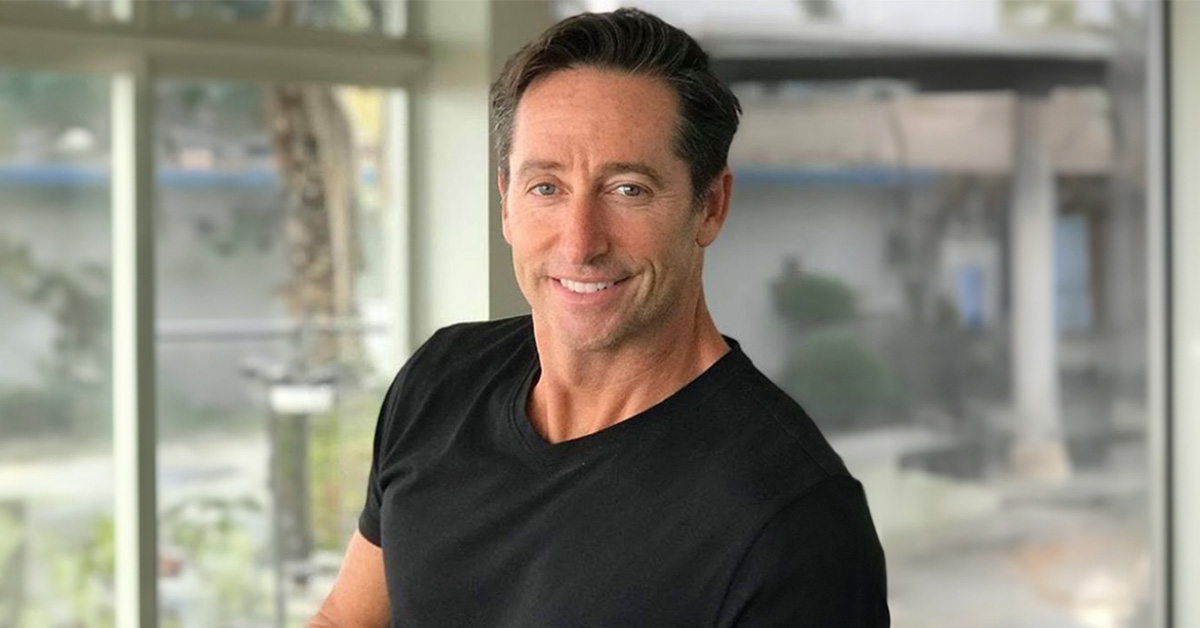
Winning at The Ultimate Game of Life | with Jim Bunch


About Episode
I can’t believe I’m about to say this…but 2017 is just about to end (which seriously doesn’t even seem possible), which means it’s time to start setting some goals for 2018. If you missed my previous episode with high performance coach Jeanette Goodrich I highly recommend checking that out first because in that interview we talk a lot about setting high level goals and the steps that most people miss when setting their goals.
As I mentioned in that episode, over 92% of people fail to achieve the resolutions and goals they set for themselves, and I want to do everything I can to help you become a member of the “8% club.” And that means not only setting high level goals but also getting dirty in the trenches and taking the right actions every single day to achieve your goals.
Today’s interview is with Jim Bunch who is known as “The Ultimate Life Entrepreneur” and spent years working side-by-side with none other than the Tony Robbins. Jim’s mission is to inspire happiness, health, and wealth worldwide. He is the founder of The Ultimate Game of Life, and in our chat today we dive deep into the topic of how to properly set daily habits that will help you achieve your goals as well as take control of the environments holding you back. Because the only way to achieve the change you desire is approaching your goals the same way you would eat an elephant: One bite at a time.
As a bonus, this interview basically turns into a private coaching session for me personally to help me understand what beliefs and behaviors have held me back from achieving my own goals, so if you’d like a private glimpse into what the process of one-on-one coaching looks like, this is a great (and very intimate) example.
Episode Highlights
- Jim’s background and how he became a lifestyle entrepreneur
- Grinding vs. Growth (Are you trapped in repetition?)
- What it’s like to be a part of a personal development seminar SWAT team
- Subverting the saddening 90+% failure rate for goal achievement
- Changing your environments rather than relying on willpower alone
- Determining which daily habits will help you reach your goals
- Anchor one-habit a month to your environment
- How to single-out the obstacles that are keeping you from improving
- Avoiding the Five Hindrances
- The key to changing is changing gradually
Useful Links
About Guest
Jim Bunch is known as “The Ultimate Life Entrepreneur” whose mission is to inspire happiness, health, and wealth worldwide. As Founder of The Ultimate Game of Life Programs, he and his coaches have helped hundreds of thousands of people in 50 countries achieve major life and business results.
His 2 passions are Technology and Transformation, so whether it’s launching a new business venture or helping an entrepreneur upgrade their life, there’s a common thread you’ll find in whatever Jim Bunch does – and that’s inspiring and bringing out the best in people.
Most recently, Jim launched a social mobile technology company to transform the way people interact on the planet and gained 1Million users in 250+ countries in 79 days. He has over 19 years of professional speaking experience, and has given more than a thousand presentations on Business and Life transformation. Today he writes, lectures and serves as the Chairman of the Board with The US Green Chamber of Commerce.
Transcript
Zack Arnold: I’m here today with Jim Bunch, who is the founder of the Ultimate Game of Life programs. Jim, it is an absolute pleasure to have you on the show today.
Jim Bunch: Thanks, Zack. It’s awesome to connect with you, and looking forward to creating some value for our listeners.
Zack Arnold: Yes. So as I was saying, kind of off the record before we started, I’ve spent years really focusing in on what it takes to learn the the science and the art of setting goals and helping people overcome their obstacles, and I spent eight years directing and producing a documentary film about a former national poster child that had muscular dystrophy for the Muscular Dystrophy Association, was the first quadriplegic to become a scuba diver, and I’ve really been trying to figure out how do I put all that together and help people achieve their goals. And I’m a big believer that the universe brings people into your life at the right time for the right reason. And I was randomly introduced to you and your work, and I saw it, and I said, “Wow, this is a guy that I have to get to know. So I just cannot express enough how excited I am to actually have the opportunity to pick your brain and record it and share it with people.
Jim Bunch: Awesome. Well, that’s what we’re all here for-is to create more value for more people. So I’m happy to help.
Zack Arnold: Now, you call yourself-you’re kind of known as the ultimate life entrepreneur. So, give me a little bit of sense of what that means and kind of your background to to how you got to be where you are.
Jim Bunch: Well, you know, I think when you look at entrepreneurs overall, there’s two schools of thought. One school of thought is, is you know, you’ve got the entrepreneurs that just grind and grind and grind and and do whatever it takes to win at all costs. And then on the flip side, you’re seeing a lot of these lifestyle entrepreneurs where you know it’s have a laptop, travel the world, build an online business, have passive income, da da da. And I’ve done both. I mean, we have built some companies that we did the grind, and you know, we grew from six employees to 1,500 employees in one year. We took our company public, and we changed the way that that real estate operates forever by introducing you know this technology called 360 degree virtual tours. So I’ve done I’ve done that, and I’ve also been, you know, fortunate enough to to start up some other tech businesses that are more lifestyle driven. And I think that depending on who you are and your personality and this kind of thing, you really want to start to do life by design instead of life by default. And I’ve noticed that in building different companies, you know, sometimes they are a grind, and sometimes you know it’s it just magically appears and happens. So when you talk about being an ultimate lifestyle entrepreneur, I believe that if you if you put your life first and then architect or design the business to fit according to your lifestyle, it has a tendency to work out better than you know people who put the business first, and then you know hopefully they get some life out of it.
Zack Arnold: Well, and it’s once again, it’s just one of those weird timings of the universe where that’s exactly the struggle that I’m going through as a fairly new online entrepreneur because I’ve spent 15 years working in Hollywood as a successful film editor, but I realized that I couldn’t keep up with not that I couldn’t keep up with the lifestyle. I didn’t want to keep up with that. I didn’t want to keep up with the grind, the 70, the 80-hour weeks, not seeing my kids. So I started building this Optimize Yourself program, and that’s the paradox that I’m dealing with right now. Is that I’m asking myself, is it worth it to grind to teach people how not to grind? Does that make sense?
Jim Bunch: Yeah, yeah, and it comes down to systems and leverage. You know, I’m I’m building another company right now where we’re shifting the world from burning fossil fuels to clean energy. We want to accelerate the adoption of clean energy in every country across the world, and we’ve raised capital. We’ve got a core staff. We’ve got 10s of 1000s of people that are involved in in our mission right now, and you know I’m working 16 plus hours a day, and it is what it is. Now there’s a difference when you’re passionate about it, when you’re driven by the vision and mission, and you’re growing and scaling something as an entrepreneur, you are going to put in a lot of time. But when it feels like a grind, when it feels like you’re not innovating, you’re not winning. You’ve got a repetitive business doing the same thing over. Or what I often tell entrepreneurs is, if you’ve got the same problem this month that you had last month, whether it’s a cash flow issue, whether it’s a staffing issue, whether it’s a business model issue, if you have the same problems this month that you had last month that you had the month before, then you’re you’re grinding. But if you’re going through growth and you’re innovating and you’re constantly overcoming hurdles and challenges every single month, then you’re in you’re in the right space.
Zack Arnold: Well, yeah, and I like that a lot. And I could go much deeper into that world, but I want to keep it more focused on goals and obstacles, and definitely want to get to the the ultimate game of life. But before we do that, I think it’s important that people understand your background in the world of personal development because your story as to how you got where you are now was really what inspired me more than anything. Because I’ve I’ve seen that personal development world. You were in, so I would like to know a little bit more about that side of your history and why you kind of transformed to doing things the way that you do now.
Jim Bunch: Well, you know, my my first introduction to personal development was actually by a dentist who was a mentor of mine. My mom was a dental hygienist, and so she she had a couple of bosses over you know my childhood. One of which was a gentleman by the name of Dr. Torres, and he’s the one who I found who was passionate about his business. He loved the art of dentistry, and and ultimately, you know, kind of steered me towards becoming a doctor. And so I went to school for pre med. While I was in college, I was introduced to a nutrition product that you know was supposedly going to change all these people’s lives. It had 70-two vitamins, minerals, all this kind of stuff. And what happened is, I realized very quickly that you know, wait a second, I can I can sell this to older people for their health, or it had a really high vitamin B complex. And as a marketer, I figured out, wait a second, this actually will cure hangovers. So I ended up selling 1000s of dollars of this every month on my college campus as a hangover cure instead of a get healthy thing. I built a little bit of a business in college, but that business led me and introduced me to in my second phase someone by the name of Tony Robbins. Let me back up to the dentist and why this is relevant. The dentist had given me a copy of Tony Robbins’ personal power tapes, and if you’ve listened to those tapes, it says in the first or second or third tape, you know he gives you these great ideas, inspiring ideas, and then he says, “Go take action, right? And if you don’t, you know he kind of pauses. He says, “If you didn’t do the action, turn the tape off, right? Come on, this is about action. It’s not just about information. Da da da. Well, I was in integrity, but I didn’t take the action. In other words, I turned the tapes off, and I never listened past tape three. However, in that business, a few years later, the nutrition business, I ended up running into somebody who worked for Tony Robbins, and I go, “Gosh, that name sounds familiar. Oh my gosh, that’s the tapes I was given 678, years ago, I never listened to them. Well, the long and the short is, I ended up going to work with this division of Tony Robbins. There were four of us that would travel around Canada and United States, and we sold the events and filled the events for Tony Robbins. So we would get dropped into a city about eight weeks before Tony would get there. We get a cell phone, a phone book, a rental car and a place to sleep, and then our job was to go into companies and book ourselves as a speaker, where we do a 60-minute presentation, and then sell Tony’s you know one-day seminars. And we had to put 2,500 butts in seats in eight weeks. So it was me and three other people. We were part of a SWAT team to get dropped into a city. We’d make a bunch of sales, and then we go to the next city. The reason I’m sharing that is, is because at the time in my early 20s, I thought that going to seminars and walking on fire and walking on glass and breaking arrows on your neck, I thought that’s the way to change people’s lives, my life, other people’s lives, and I was truly passionate about that. But something interesting happened. I noticed, and and after Tony Robbins, I went to work with Bob Proctor and John Asraf, and we built a company called Life Success Institute. And again, it was more personal development, but more for business owners this time. And and instead of us, you know, going from city to city like we did with Tony, we saw some of the same people coming back to our events three or four times a year, and I got to know some of these people. And what I realized is the industry of personal development was selling a lot of what I call hopium. You know, the ancient personal development drug of hope and while I believe that there’s value in inspiring people and expanding their mindset and doing all this, I think it’s it’s incredibly important, whether it’s a personal development seminar or a religious rally or you know whatever it is. What I noticed is when people go to these things, they get super excited, they get pumped up, they get motivated, they set all these goals, and they swear to themselves and everybody that they’re going to come out and they’re going to change their life. They’re going to do something different with their finances. They’re going to grow their business. They’re going to start investing in buying real estate or investing in stocks. They’re going to drop 1020, 3040, 50, or 100 pounds. They’re going to become the ultimate, you know, husband or wife or whatever it is. They make all these goals, but do you know, Zack, the actual percentage of people that when they leave those rallies or those events, do you know the percentage of people that actually achieve their goals within 90 days.
Zack Arnold: I don’t know what it is for the rally specifically, but I know that in general, it’s roughly 90-2% of people that set goals and resolutions never achieve them.
Jim Bunch: You got it. So it’s between it’s between a four to 8% success rate, which means a 90-two to 90-6% failure rate. Now that’s the failure rate in the success industry. The personal development industry has a 90-plus percent failure rate. So what happened is I left the industry for a while because I was disheartened. Remember, in my early 20s, I believed that going to these seminars and buying the books and tapes and all this was going to change. Life, and I had been submerged in it with some of the best of the best, and I did see some people that made massive breakthroughs, about four to 5% But I got to know some of these people, and I got to talking to them about their finances six months, a year, two years down the road. And what I noticed is a lot of these people were spending, you know, 1020, 100 plus $1,000 on events, not including flights, hotels, and things like this, but they weren’t applying it. So goal setting is one thing; goal achieving is a completely different thing. And here was the biggest piece. I realized later on I became the mentee of somebody by the name of Thomas Leonard, and I had hired a personal coach who introduced me to Thomas’s work, and then I met Thomas, and I asked Thomas. I said, “Hey, you know, I’ve worked with Tony Robbins, I’ve worked with Bob Proctor, I’ve had you know incredible mentors, the best of the best out there, but I really feel like there’s something that I need to learn from you. Would you allow me to hire you as a private client? I don’t care what the cost is. And he said, “No, I’m working with 40,000 coaches right now. I don’t do privates anymore. I just don’t have the time. So I went away. No big deal. Two weeks later, I get an email from Thomas that says, “Jim, I’ve been thinking about you, and I think you’re the one private client that I’d like to take on at this time. So I was ecstatic. I was excited. I’m like, “Man, I’m going to learn from the guy who created Coachville and Coach You and founded the International Coach Federation and you know the the coach that I had hired had studied with him and I thought this this guy is awesome. Well, two things interesting happened. Number one, one of the first questions I asked him was I said Thomas, why is it so many people go to these seminars? They buy the books, they buy the tapes, they they buy these you know these next events da da da, but they don’t actually change. And he said something very important to me, and I’ve I’ve committed to sharing this with the world. He said, Jim, most people are trying to use willpower to change their life instead of designing environments. They’re trying to use willpower to force themselves to change their habits, to change their thinking, and to change their lives instead of designing environments. And at that moment, it just hit me: when you go to a seminar for a day or two or three or five days, you’re in a controlled environment. You’ve got 1000s of other people that are cheering and jumping around. You’ve got music. You’ve got lights. You’ve got speakers. You’ve got the environment is controlled, and so in that environment, of course you’re invincible. Of course you can accomplish anything, right? But you’re in that environment for let’s say three days. Then you’re back to your home and your office and your friends and all your normal environments. And there, by the way, there’s nine environments that every human has around them. You’re in those environments for 363 days. So, which is stronger, the three days of a very inspiring environment, or the 363 days of your quote-unquote normal environments? And so, I dove into this concept and started realizing if we start to redesign people’s environments, then we can change their behavior because the environments are stronger than the willpower. So that led me along this whole journey of redesigning my home environment, my office environments, my financial environments, my physical body environments, my nature, spiritual. There’s nine different environments, and what I did is I said, “What if we could create virtual and real environments that help people change their environments? So if I followed you around for 90 days, Zack, and I looked at all nine of your environments for 90 days, I could promise you that if we upgraded your environments, we would upgrade your inner game and your outer game. We would change every single behavior, and so that was the thing that led me, you know, into personal development. Then it led me away from personal development because I lost faith in the whole industry. I thought it was just a bunch of opium, and then when Thomas explained to me that if you if you can help people change their environments, then they will rechange all of their behaviors, then I started going. Now I get it. Now I’ve got to meet them in their world. I’ve got to redesign their environments. And the last piece on this is, you know, you’ve probably seen reality shows like The Biggest Loser, right? Have you ever seen that?
Zack Arnold: Oh yeah, of course.
Jim Bunch: Okay, so Biggest Loser is a classic case example where they pluck people out of their unhealthy environments, where their friends are overweight, their family’s overweight, their jobs are stressful, whatever their story is, and they show these people that have you know they’re two 300 pounds. Then they bring them to what a new environment called the ranch, and on the ranch they’ve got coaches, nutritionists, they’ve got other players, and then they’ve got all these exercises and obstacles and education and all this stuff that happens. They’re they’ve changed all of their environments, but then partway through the show, what happens? They have those people go back to their old environments, and you can see the struggle that those participants, even though they’ve lost 10, 2050, 100 pounds already, you can see the struggle when they go back to their home, back. Their offices back to their friends because those old environments didn’t change.
Zack Arnold: Well, and I think that one of the other important things to talk about as far as environments is how it triggers habits because when you’re around specific things, around specific people, even walking through a specific doorway at a specific time of day, as you know, I’m sure much better than I do, that on a neurological level it triggers specific habits and behaviors, and that’s something that you really focus on in your programs as helping people develop habits as opposed to finding the willpower.
Jim Bunch: Exactly. You know, you just you just flash back, which is what an anchor does in environments, and even that story you just told. Right? It reminded me of when I was in my darkest time of my life, and I actually ended up living in a bomb shelter for a year. And even to this day, just visualizing walking down those stairs, going into this cold concrete room with no natural light, and the only air that came into that room was from a tube that went to the outside. They used to build these bomb shelters down here in California, you know, for nuclear attacks, and I it was down in Point Loma, California, and I was broke. I was financially broke. I was mentally and emotionally broke. I was in unhealthy relationships, and the worst part wasn’t being financially broke or in the unhealthy relationship. The worst part was I was spiritually broke. I had no idea what I wanted to do with my life. That was after I had gone through all these personal development courses, and I lost faith in the industry. But you’re right. The environments are either anchoring you for success, or they’re anchoring you for repeated whatever. And whether it’s your health, your wealth, or your happiness, which is the three areas that I encourage people to focus on. You know, focus on your happiness, your health, and your wealth, because if you design your environments to improve your happiness, to upgrade your energy, to improve your vibration every day, to raise your consciousness, and do the same thing with your health and wealth, the environments will pull you into a bigger future instead of you having to push towards that bigger future.
Zack Arnold: Yeah, and those two words are absolutely key when you’re talking about habit formation-the idea of pulling versus pushing. Because, like you said, everybody’s trying to use willpower, which is push, push, push. Like, oh, I gotta wake up today and do this thing. But if you learn the system of actions and habits, then all of a sudden, you almost-it’s almost harder to not do whatever that specific action is once you’ve gone through and established the discipline to set up the habit.
Jim Bunch: Well, and you got to be careful of discipline because discipline again is right next to willpower. Willpower and discipline are both mental faculties, and about 4% of the population has the ability to use willpower and discipline to change any and everything, but what you’ll find is 96% of the people can immediately change their environments, and then that works on you. So I say replace discipline and willpower by simply changing the environments, and the environments are easy to upgrade. But one example would be this: let’s say you wanted to create a new morning ritual, right, or new morning habits or what I call priming. Okay, so every morning I get up and I have a series of things that I do to prepare myself for peak performance throughout the day. I call it priming. Right now, when I started this, I didn’t have the every single thing in my habits, so I integrated them called habit stacking one at a time. But here’s here’s one easy example. Every morning when I get up, the first thing that I do is I get up and I brush my teeth. The reason I do that is because the body, which is an environment, has a release of toxins at night. That’s why your breath smells, however it smells in the morning. So I get up and I remove the toxins, I brush my teeth. But immediately after doing that, I go into my nutrition cabinet and I take my brain nootropics. All right, meaning there’s there’s certain supplements that I take to prepare my mind for it’s called a brain stack to prepare my mind for continued focus throughout the day. So I take my brain supplements, which I have to take 30 minutes before eating, and then I put a scoop of coconut oil in my mouth and do pooling. Okay, so you may be going, all right, this is great, but what does this have to do with anchoring environments? Well, immediately when I get up, you know, just by habit, I go to do the toothbrush. I walk into the kitchen and I have those brain supplements and the coconut oil sitting right there. So that’s an environmental trigger to remind me to take those in that order, because with the coconut oil in your mouth, you have to swish it around for 20 to 30 minutes. Okay, so it’s pulling the toxins out of your out of your brain and out of your mouth, which you’ll spit out in 20 to 30 minutes. It’s called coconut pooling. If somebody wants to do the research, but while that’s in my mouth, the next thing that I do is I go into my office and on my desk the night before I laid out two things. Number one is my affirmations and my goals, which I read every single morning and every single night. So that’s the first thing that I see when I wake up, and it’s the last thing that I see when I go to bed. It’s called scripting for the brain. I’m literally just telling my brain this is what to focus on for this year. The second piece is my daily focuser or daily plan, which is a one-page piece of paper that has my whole day mapped out, so I know exactly what’s going to happen every single day. And those actions that I’m taking that day are things that I decided the night before based on my goals and my plan for the year. So those things right there are environmental triggers. The printed affirmations and goals, and the printed daily focuser. Those two things are on my desk. I don’t turn on the computer. I don’t answer voicemails. I don’t listen to my voxers. I don’t get on. I don’t do Facebook. I don’t do any of that until I have started my priming for the day, and that’s all just preparation of my mind. Then I move into the body piece, where I do my deep stretching, my rolling or exercising, meditation or rebounding. All of that I do about three hours before I start my day. So I get up at five and I start my day at eight. So this is these are rituals, these are primings that I do every single day. But I started with one, and that’s the biggest piece I want to share with people: is anchor one habit first. Do that for 30 days, and then anchor your second habit the next month, and your third habit the next month. At the end of the year, you’ll have 12 new habits. And I just taught a course last night to John Astra’s group over at Neurogem, hundreds of people, and I was teaching them the habits of the wealthy versus the poor. And I told people at the end of it, I said, “I’ll give you the habits of billionaires. You know, the study was done; it shows exactly what they do every day, but the challenge is this: you’re all going to want to do this immediately. And the key to anchoring your environments and changing habits is to start with one. Do one first. Master that one thing, and then stack the next one, and the next one, and the next one. I can prove to you at the end of 12 months, if you did one a month, you would be further ahead than the person who tried to do all 12 habits in month one and fails miserably. So I know that’s a long dissertation, but I wanted to give that concept of anchoring environments, priming yourself, and understanding that creating habits there is a process to it.
Zack Arnold: Yeah, absolutely, and I’m completely 100% on board. I’ve actually been through this process myself personally, developing both morning and evening routines. And what I always tell people when they ask, like, and I can put links in the show notes to the two articles where I lay those out. But they say there’s just so many things. Like, there’s no way I could do this. And like, don’t do all of it. Do one of it. Pick one thing that makes sense and do that, and then build off of it slowly. But the problem is that our society is so driven towards immediate success, towards the all-or-nothing approach. The TV tells us that in 90 days we have to go from 300 pounds to 150 pounds and have these amazing pictures, or we’ve failed. And I think that’s where what you’re doing is so different, and why I gravitate towards it because it is about a long-term lifestyle approach.
Jim Bunch: Yeah, it’s you know it’s funny because success can happen quickly, but there is a formula. You reminded me of another concept. I learned something a while ago when we were tracking the daily behaviors of 15,000 people towards their goals. So we’d had people set three goals over the course of 90 days, one happy, one healthy, and one wealthy. And the reason we choose those categories is we surveyed 1000s of people and realized whatever goals people had, whether it was to get debt free or to invest in real estate or start up a business or drop 1020, 3040, pounds or you know add 20 pounds of muscle or or take the trip of a lifetime. All those goals fit under three categories. People ultimately wanted to be happy, they wanted to be healthy, and they wanted to be wealthy. So we try to take complex things and make them simple. So when you look at your goals, if you set goal a goal to be happy, a goal to be healthy, and a goal to be wealthy, that’s great. The next key is only one action in each category per day. So one happy action, one healthy action, and one wealthy action. The reason is it forces you to prioritize your day by what’s most important, and it allows you to have wins every single day. If you win the day, you win the week. You win the week, you win the month. You win the month, you win the year. That’s how this works. So if I could get people to just do three actions a day-one happy, one healthy, one wealthy action every day. Then over the course of that 90 days, they will change. But it’s something called slipping under the radar. You talked about your subconscious mind earlier. The key to change is change happens gradually, then it sticks. Oftentimes, if change happens too fast, then the other environments start to wake up and go. Wait a second! This is not who we are. This is not how we behave. We don’t do these things that wealthy people do. About three to four weeks in, your subconscious mind kicks in what’s called the five hindrances. The five hindrances, and I learned this from James Hart over at the Biosimmonon Institute when we went up and and they hooked up our brains to all these. Electrodes. They put us in deprivation tanks for a couple of days, and they ran all these tests on us, and they were studying alpha, theta, gamma, delta brain wave patterns and our ability to rewire our brain. And they did this with Navy SEALs, CEOs, world leaders, and then me and my buddy John Ashraf got to go up and work with these guys. But what was interesting is, is that the when when you have immediate change, your subconscious mind will kick up these five hindrances called doubt, fear, anxiety, ill will, and anger. And when that pops up in most people’s mind, because they’ve been doing new habits for 234, weeks, these warning signals from the subconscious kick up, and they say, “Hey, for 2030, years you’ve been unhealthy, or 2030, years you’ve been financially unstable. Now, all of a sudden, for the last 234, weeks, you’ve been doing new habits that are making you happier, healthier, and wealthier. It sends up these warning signals called the five hindrances, and most people think that that means to stop the behavior that you’ve been doing. That’s not it. It’s a misinterpretation of the subconscious mind. The subconscious mind’s actually telling you, “Hey, Zack, for the last three, four weeks, you’ve been eating healthy. You’ve been exercising. You’ve been getting proper sleep. You’ve been taking care of your finances. You’re making progress on paying down your debt. You’re building up cash reserves. You’re doing all these things that are positive, but that’s different than what you’ve done for the last 510, 20 years. Are you sure you want to keep doing this? The subconscious mind sends up that signal, and most people misinterpret it as a reason to stop doing what they’ve been doing. That’s why people, you know, typically will start a weight loss program and they last three to four weeks. That’s why they’ll start a new financial program. They last three to four weeks. That’s why they’ll start a business, and they’re excited for the first three, four weeks, and then they stop because they misinterpret the subconscious mind when it’s saying, “Hey, we’re about to change a habit. Are you sure you want to change that? So what we found is, if you slip under the radar, if you just do three actions a day, you gradually boil the frog, so to speak, and therefore it just becomes natural and normal. The final piece I’ll share on this is: I had a friend who joined one of our our programs. Actually, it was a 90 day challenge, and you know, at the end of the 90 days, I was interviewing him in front of this big audience, and I said, “So, Ted, what what are some of the changes you’ve made? And he talked about you know the wealth and this and that. He goes, “But I really haven’t had any health changes. Well, his wife was there, and she goes, “What are you talking about? She goes, “You’ve been doing 50 push-ups a day for the last month, and you weren’t doing any when you started this program. And he goes, “Oh my God, it’s a habit now. I didn’t even realize that I wasn’t doing that before, and that’s because it slipped under the radar. So I hope that that makes sense. It’s a long dissertation, but there is a process to reprogramming somebody so they don’t slip back into their old behaviors.
Zack Arnold: Yeah, and it makes absolute sense. And I mean, dear Lord, it couldn’t come in a better time for me because I’m actually going through one of those transitions where. And it’s funny because you’ve kind of encapsulated in my mind what in the world is going on? Because I am making one of those gradual shifts, where for the last two or three years I’ve been building this online business, but have really made the commitment to grow it and turn it into something larger. And with that, as I’m sure you have felt, you feel this responsibility to others because you start helping them, and you, at least in my sense, you start to feel this weight of knowing you’re responsible to other people and helping them because you have something that can be helpful and that has started to create anxiety for me and it’s funny I’m at about the four week mark where I made this very clear resolve that I was going to give everything to being able to do this so it’s it’s almost like I’m having my own little personal therapy session right now I love it
Jim Bunch: Well you want to dive a little deeper and see if we can ship that.
Zack Arnold: Yeah, I would. I mean, it’s funny because I was actually going to go into the idea of your laser coaching gyms, and I just recently started digging into your material, and I can tell you that I’m going to be your next customer, which I don’t tell everybody that I have on the podcast because I’ve done you know 120 interviews or something like that, so I can’t participate in everything. But this one was made for the way that I do things, so yeah, I would. I mean, hell, let’s jump right in, and you know, if if you want to hypnotize me and make me cluck like a chicken on the air, let’s do it.
Jim Bunch: Yeah, no, I gave up my Ouija board and my magic magician skills years ago, but you know, so Zack, let’s let’s just dive in for a little bit. So you you have this goal. Tell me the goal that you’re trying to accomplish.
Zack Arnold: Yeah, so this has been a long-standing goal. Where since basically 2007, when my friend Christopher Rush passed away, he was the one that had muscular dystrophy and was the first quadriplegic to be a scuba diver. I was at his funeral, and I heard all these amazing stories about the things that he had done in his life, even amazing for an able-bodied person, and at the end, near the end of his life, he started developing a motivational program that was called Go Far. That was all about helping people with or without disabilities overcome obstacles to achieve their goals. And in his mind, in the way that he taught, everybody has a disability. He had a physical disability, but every. Has one, and that day my life changed. And I said, “This is a story that needs to get out to the world. I have to get this program to the right people, and I need to help them. And I’ve had that mission with me ever since. And I’ve been balancing it with raising two kids and working beyond a full-time job as a film editor, but realizing that this is really what I feel like I was put on the planet to do, but I’ve always been trying to figure out. Well, you know, and I hate to say it to you know to sound selfish, but I have to monetize it in order for it to survive. You can’t help people unless you can find a way to to package and sell the program. And the way that I have found to help people the most are people that live in my type of environment, which is in front of a computer for 16 hours a day. How do you Optimize Yourself before you optimize your technology? So for me, that mission is trying to find a way to help people achieve their goals and overcome their obstacles. But I’m still in that transitional phase of how do I actually commit to this? How do I give everything to it and support my family? So I’m still teetering that line of you know day job versus this kind of being on the side.
Jim Bunch: Okay, so what you share with me is your mission, which is great, but what I want to hear is what’s the specific goal. Let me give you the framework for this. Let’s let’s start with the one year. So let’s say it’s December 31 2017 and you and I have a face-to-face meeting. You come over here to the house. We go surfing, and then we come back. And I say, Zack, I want you to share with me the one biggest goal, the only goal that was most important to you, personally or professionally. And you only are allowed to tell me one goal. What would that goal be? You accomplished it already.
Zack Arnold: That would be I. That’s a tough one. Actually, it’s not a tough one. I’m just trying to find a way to phrase it. It would be achieving the financial independence to be able to share this program and also have the time, energy, and presence to be with my family and especially with my kids as they grow up, because in my career, my job consumes all of me. It’s it’s
Jim Bunch: So so here’s so I’m gonna permission to coach.
Zack Arnold: Absolutely, let’s do it.
Jim Bunch: All right. So so what you did is very typical in the beginning of of somebody’s goal setting process, especially with big goals, is they have what I call MGS, multiple goal syndrome, and you packed in very intangibly, but you packed in a business goal and you packed in a personal goal. So now I’m going to help you separate this, and and this is part of the challenge people have is choosing. So we’re going to see if we can help you get clear on one goal that would actually take care of all those things, and then you were starting to go into the how how it would structure because I can hear you going well. What’s my business model? Okay, but let’s go back. It’s the end of 2017 You and I just got through surfing. We’re coming back, and you’re going to share with me in one sentence the one goal that was the most important goal. It was the biggest thing that you wanted to accomplish this year. It was the it was more important than everything else, or it facilitated everything else. So I’ll give you an example. If you were to tell me that my one goal that I had to accomplish in order for everything else to work was I needed to generate $100,000 from this product, and that solved everything. That’s great, or 500,000 a million, whatever it is. Doesn’t matter to me the the goal or the number, but it’s got to be tangible, and it’s got to be clear. And if I said, okay, Zack, that one goal, since you accomplished that, allowed you to have all these other things you wanted. So, what’s that one goal?
Zack Arnold: I think it would have to be dollars in income selling online products to not to be financially independent of my day job.
Jim Bunch: Okay. So, so really, your goal is to get that number X number to replace your day job with this business, okay, perfect. So if it’s december 31 2017 we just got through surfing. We came back to the house. We’re having a fresh smoothie, and you’re celebrating that you just achieved that goal. How does that feel?
Zack Arnold: Feels liberating. It feels like I’ve lost 100 pounds.
Jim Bunch: Okay, is that the biggest win that you want for the year? The way you stated that goal, or is there something else that bubbled up?
Zack Arnold: The money is not the important part to me. It’s what it gives me, which is the so really the ultimate goal is having the the freedom to be with my kids as they grow up and see them grow up.
Jim Bunch: Okay, but I want you to recognize that’s fine, and that’s that’s a facilitator of the goal that might be your driving reason why, and that’s fantastic. And and what I would work with you on in a in a normal coaching session is I say let’s start mapping out that ultimate life. Let’s do life by design. I want you to tell me what specifically are you going to do with your. Kids, this year that you’ve been holding off of because you made money an excuse. What specifically is the business model that has to be in place so that you don’t just make X, but that you make X times two or 2x or 5x or 10x and that you’re operating at this you know profit margin? So it’s one thing to make X, but it’s another thing to To be profitable at X, in other words, how much are you putting away? We would develop a real plan, and the purpose of that is is that now your mind has something to start to work towards. Keeping in mind your bigger vision, your driver, your value statement, there is family, right? We would build in that story. So, for example, this morning I got up and I realized that in my affirmations I didn’t have already marked off the dates on which my son and I were going to, and my my wife and son and I were going to take his spring break. And every year when he graduates from you know his school, he’s he’s he’s 10 years old now, so he’s in fifth grade. When he graduates, you know, fourth, third grade, fourth grade, fifth grade. Well, I pick him up from school in the car. I’m playing the Alice Cooper song “School’s Out for Summer, right? And then we take off and we go to a water park somewhere in the country. So that’s a theme. That’s that’s a ritual that we have. Well, those things are planned in, so I have all those lifestyle goals. But for those lifestyle goals to happen, I have to hit my business and personal finance goals. So, if you study the neuroscience by Dr. Mark Waldman, he actually states that money does actually make you happiness. He says that the neurotransmitters that are emitted when you achieve your financial goals or focus on finances are actually some of the strongest endorphin and dopamine releases in the brain. So some people have this thing like, oh, I got to do it for my family. This that that’s fine, but you still want to focus on the business goals or the financial goals. So we would get you really clear on what that is, and what will happen is over the the next week or two or three, as you’re working towards those, you may tweak your goal or fine tune it. I always say that it’s better to write your goals in sand than in stone, because the goal is just an environment of you. This this computer is an environment. Somebody listening to this podcast, it’s an environment of them. I’m an environment now of you, Scott. The game is an environment of you. Everything is an environment. A goal is nothing but an environment, and the goal should inspire you, not expire you. So if you’re not waking up every single day and you’re in a higher frequency the moment you think about your goal, then that’s not the right goal for you. You’ve got to craft the goal to be an inspiring environment. You’ve got to craft the goal to pull you into a bigger you. The purpose of a goal is not just to achieve or to attain or to acquire something. In other words, achieving a goal is fantastic. Like you know, climbing a mountain. All right. So I achieve that. Boom. I checked it off my list. That’s great. That’s the way a lot of people set goals to attain something. I want a new house or a new car or Ferrari, a Porsche, whatever. That’s the attainment type goals. Okay, to accomplish something. You know, I dropped you know 20 pounds. I reached my ideal weight of X. Those are the typical ways that people set goals. But I want to ask you another question because if the goal is nothing but an environment and the purpose of a goal, there is a purpose of a goal. It’s not just to achieve, attain, or acquire something. The purpose of a goal is to evolve you. Think back to every goal that you set before that was meaningful. Didn’t you have to think differently and act differently and become somebody differently than who you were when you first started that journey.
Zack Arnold: Yeah, absolutely.
Jim Bunch: So the purpose of a goal is not just to achieve, attain, or acquire something, and that’s where people get messed up. The purpose of the goal is to evolve you. So in order for you to reach that goal of you know having a successful business, having the time with your family, the lifestyle entrepreneur conversation, right? Who do you have to evolve into? How does your thinking have to change, or what we call your memetic environment? How do you have to restructure your finances, your business, your habits? How do you have to negotiate with your family differently in advance so that you have these trips planned, or you have the baseball or football or soccer games or whatever it is, those are the things that have to start doing life by design, and all of that is going to evolve you into the dad that you want to be, into the husband you want to be, into the business leader, the world leader. Those are all roles. That’s your roles or identity. But the purpose of setting that goal is to evolve you, and when we work from that place, now if you achieve the goal, that’s fantastic. But what’s more more important is how are you going to evolve? How is Zack going to become the person that he’s been dreaming about?
Zack Arnold: Well, and I want to actually go one step deeper at the the expense of getting even deeper into my brain. But that is talking about something else that I know you go into, which is this idea much further along than just goals, which is people actually believing that they deserve to be successful at all. So, can you talk some about the neuroscience of that? Because everybody would say, “Well, of course, I want to make more money and be financially independent, but if you’ve lived a certain way your whole life. There’s a part of your subconscious that says you actually don’t deserve this, and I’m going to sabotage your efforts.
Jim Bunch: Yeah, and and here’s the you know it’s interesting people have this this relationship with their mind and their ego that that really is misunderstood. So let me start with that first, and then we’ll talk about the sabotaging piece because the sabotaging is very similar to the five hindrances. It’s just literally a neuro program. So remember the old days when we had LP records that you put on a turntable and the needle would go down and it would play the records.
Zack Arnold: I certainly remember, but many much of my audience, if I have to put in the show notes what an LP is in a picture, I will.
Jim Bunch: Well, vinyl records. All right, so go back to this vinyl records or even CDs. So what happens is, is that from the age of zero to 10, most of us get what we call our core programming. So if you get a computer from the the Apple Store or the PC store, and it’s it’s got hardware, and then you open it up and you turn on the software, it’s got a core program called Windows or or Mac or whatever the heck that thing’s called. I use a Mac, but I forget what their core software is. Anyways, if you turn that on and then you open a program called Excel, and you know, or the calculator, and you type in two plus two, the answer you should get should be four. But what if the programmer had a funny little joke and they typed in two plus two and it gave you the answer three, but you didn’t know any better? So from the age of zero to 10, you always thought that two plus two is three, and then you get into school and the teacher corrects you, the students start laughing at you, you know, like oh my gosh, Jim is such an idiot, he doesn’t even know that two plus two is four. And I go, wait a second, I’ve been using this computer and this calculator ever since I was born. It always says two plus two. Let me show you, and they go, oh, that’s retarded. You’re an idiot. In reality, the program was messed up, not the hardware, but the software. Well, the question then you have to ask yourself is: Where did Zack? Where did each one of our our listeners here get their programming about money? Where did they get it about themselves, their self-image? Where did they get it about relationships, or sex, or God, or any of the core programs that we pick up when we start having a language. Well, this is all called your memetics, and your memetics are one of your nine environments. You have literally have your subconscious mind being programmed from the age of zero to 10 with all of your core beliefs, every single one of them, and it’s like that vinyl record or that CD player. Once it’s been programmed, it’s going to repeat that over and over again until you scratch that record or replace the messaging. Okay. Now there are many ways to replace this messaging. We’ve talked about upgrading the environments already. There’s all kinds of softwares and tools and apps that I’ve used and we’ve tested that that actually use everything from brain entrainment to neuroplasticity techniques to you name it. There’s about 50 of them. Okay, binaural beats, holosync technology, all this stuff. All of those things are designed to help rewrite the software programs. Matter of fact, we have an app that we licensed that flashes up images and plays a certain type of music, and they’re all success images. And it’s proven that watching these apps and with this particular type of music for a couple of minutes a day over a certain period of time will repattern and retrain your brain software. So when you’re looking at how do I retrain this, you have to reprogram the mind through immersion, through action, and environmental redesign. Now I know those are big words, but at the core, what it means is you’re going to watch and listen to certain things that reprogram your mind, and you’re going to put things in your environment that remind you to do it until it becomes a habit. And what happens is you can rewrite 510, 20, 3040, years of bad beliefs and bad behaviors in a course of about 90 to 180 days. Now the science, you know, differs between some people say it takes 20-one days to change a habit. Some people say 60-seven. You know what? It takes whatever the hell it takes. You know, depending on who you are and your environments and how important this is. You can change a habit like smoking in one day. I’ve got clients that that I’ve done interventions with that have smoked for 40 years and drank for 40 years. And Michael’s one of the guys I did an intervention when Jack Camfield and I were on stage with Michael with the whole audience there at one of Jack’s advanced trainings. He’s never smoked since, and that was a decade ago, right? So he had a habit for 40 years, but I anchored and rewired his programming so that he associated, you know, what he wanted more than than the cigarettes and smoking. Why am I sharing that? It doesn’t have to be a dramatic intervention. You can change a habit over 34568, 10 weeks by. Doing little tiny things, but you’ve got to start with one thing. And this is why, for example, in our game, we have people set three goals and take three actions a day. Because once you start doing that, and then we start systematically redesigning all nine of your environments, you become that new reprogrammed person. We’re all programmed. The only question you have to ask yourself is: Am I being programmed to become happy, healthy, and wealthy, or am I becoming programmed to be unhappy, sick, and broke? And all you have to do is look at your bank account, look in the mirror, and look at your relationships, and you can see what you’ve been programmed with from zero to 10, and what you’ve repeated from 10 to 20 to 30 to 40 to 50 to 60 and so on. So I hope that that that makes sense. But we’re all programmed, and you can reprogram yourself. But you’ve got to redesign your inner and outer environments.
Zack Arnold: Yeah, and I I agree with all of that. But I’m sure that there are some people that had visions of like the clockwork orange and the matrix, and oh my God, they’re reprogramming my mind like that’s crazy, but once you kind of get into the neuroscience, it all makes a lot more sense. But how do you kind of respond to somebody that? And I’m sure you deal with this every single day, where people are so stuck in their beliefs and the sense of self that they feel like, well, if I were to do all these things, I’m no longer me. I’m sure that’s something you run into every day.
Jim Bunch: Yeah, and it’s really simple. It’s like, well, let me. It was my mom. My mom shared something with me years ago from my stepdad. My stepdad is a great guy. He gave me a lot of my values around life and business, but he was an addict, and unfortunately, alcohol was his addiction, and it and it destroyed a decade or more of my family’s life. Fortunately, he has recovered and been sober for 15 years. But when I first went to work with Tony Robbins, and here’s the thing about you know my stepdad and his alcoholism, he was a very negative person. He could always find the problems in things. Okay, and when I say negative, not mean or anything like that, he just he had grown up in an alcoholic environment. His view on the world was one that was always had you know what I would call negative responses. Well, I grew up in that too. When I met Tony Robbins and I went on the road, my stepdad apparently picked up his books and started you know listening to some of his tapes and stuff like this. And he said to my mom, my mom shared this with me years later that he said to my mom, “I hope that this Tony Robbins guy isn’t brainwashing Jimmy and filling his head up with all of his stuff, and my mom stopped him and said, “Well, let me ask you a question: Do you think that Jimmy’s head is better filled up with what he’s teaching, or with what you’ve been teaching? And it was a wake-up call, I think, because whatever information you put in there, you put enough of that in there. That’s going to be your programming. You can decide what you want your self-image to be. If you want to be a world leader, fantastic. You build the software inside your brain that that becomes a world leader. If you want to be a local contributor, fantastic. Build the software. You know, I happen to sit as the chairman of the board of a national nonprofit that is working towards changing the world of sustainability. I’m the president of a company that’s raised millions of dollars and and and done well 10s of millions of dollars in our first year last year. I’m also the co-founder and owner and CEO of another company called Ultimate Game of Life. I’m a father. I’m a husband. I’m a friend. I’m a surfer. I’m an athlete. I’ve got all these roles that I play in my life. That wasn’t my identity 30 years ago. I built that identity in my mind first, and then in the real world second. And so every single person that you talk to who’s been super successful, they’ve done exactly that. They have created a vision of who they want to become, and they’ve designed that. You are the programmer, not the program me. Well, actually, you’re both. You have a mind, but you are not your mind. The only question is: Is who made up your mind? Is it the people around you, your environments that you grew up with, or have you started to architect your own self-image? Have you started to architect your own financial image? Have you started design networks and environments that pull you into a bigger game, or do you still listen to your beliefs when you were, you know, 510, 20 years old that say, “I’m not enough. I’ll never have enough. You know, Jim could do this, or Zack could do this, but I never could. What if this happens? What if that? That’s your mind and your old programming. Does that make sense?
Zack Arnold: Yeah, it does make sense, and I struggle with all this myself. But where I also struggle with it is when people come to me in my programs and they say, “Well, I just this is probably too hard for me. This doesn’t work for me. And I’ve when I do surveys of people that decided not to join, one of the most heartbreaking responses I get is your stuff looks fantastic. It looks really helpful, but I’m pretty sure that I would fail at it and I wouldn’t get through. So I’m just not going to do it, and that’s heartbreaking to me. So it’s for me one of my quests is not so much just. Learning how to overcome myself, but teaching other people how to overcome that doubt and that obstacle in their mind that they can’t, because I believe everybody can if you learn the right steps to do so.
Jim Bunch: Well, I think you think you believe that, but I’m betting you don’t truly believe it yet.
Zack Arnold: Truly believe what?
Jim Bunch: Believe that you can and achieve anything that you want, and others will. And here’s why I’m going to push you on this for a second, okay? If you believed in your mind 100% that anything that you wanted to accomplish or anything anybody else wanted to accomplish was doable, that objection wouldn’t come up in your life. I tell this to coaches. I’ve trained coaches all across the world in 55 countries, and I can tell you one thing: when a coach doesn’t invest in themselves, when they don’t pay for their own personal development, they always get the objection from their clients: “I can’t afford it. And the moment a coach ends up investing in their own coach or own personal development, that objection is now handled because they overcame it themselves. I see this with entrepreneurs when they’re working with their teams or their staff. If they have an objection like “I can’t afford it, “I can’t afford to hire that person, “I can’t afford to adopt that new technology, “I can’t afford to do X, Y, Z, if they have that, you’ll see the same thing show up in their clients and in their staff. The universe, you know, the game of life is really interesting. It presents to you like a mirror whatever your biggest challenges are to overcome in your evolution. You know, right now I’ve got bigger challenges than I did 10 years ago because I’m playing a bigger game. But I look at those challenges as part of my evolution. You, you know, and the reason I’m pushing you on this is I would I would say that part of your game right now is is to prove to yourself without a shadow of a doubt that you can achieve any goal that you set, which is why we’d set the goal and move you towards that every single day, so that you come up against the obstacles, you come up against your own beliefs, and then we systematically prove to yourself once and for all that you can accomplish anything that you set your heart and mind to.
Zack Arnold: Yeah, that’s that is absolutely profound, and I I don’t I don’t deny any of it. I think that you’re absolutely right, and that’s a huge kind of eye-opening moment for me. And that this will be very entertaining for people to hear this, you know, deep psychotherapy session that this ended up being, which is great. But you’re right; that is one of the barriers that I run into myself, which is part of my programming. Basically, my entire life is that I’ve never lived with in a household that had a lot of success, that had a lot of money. I grew up on a farm in the middle of nowhere in Wisconsin, so you know, growing up my whole life, it was well. What do you? What business do you have moving to California and working in Hollywood? And you know, everybody here works on road construction and cuts down trees, and so that that is part of that memetic programming that you talk about. And I think you’re right. But the the one area that that is interesting to me though is I have invested a tremendous amount of time and money in coaching because I love to be coached. I’m the last person in the world that thinks, “Oh, I can figure this out on my own. I get coached so I can be better, and then I can then share that knowledge with others. So that that’s the one area where I’m not disagreeing with you. It’s just that’s what’s coming up in my mind is that I have spent a great deal of time on personal development.
Jim Bunch: Yeah, and I and I’m not saying that you haven’t. So I apologize if that if that’s no,
Zack Arnold: And no apology necessary. That’s so that’s not what I’m saying at all. Yeah,
Jim Bunch: It’s it’s there’s levels to it as you evolve. Like you said, you move from where you live to California. That’s a that’s a big shift. I did the same thing. I just picked up and moved, and I went back to my home environment 10 years later. And all these people are like, “Oh my gosh, who are you? You’re a different person. Well, of course I did. I didn’t stay in the same environment. You moved from one environment to the next. As a result, you you were starting to think and act differently than the people you grew up with. Now you’re going to move it to the next level. You’re going to upgrade every one of your environments, you’re going to upgrade your network so that you upgrade your net worth. We’re going to upgrade your business model. We’re going to upgrade your inner game. You’re going to take your health to the next level. You’re going to improve all nine of your environments and take it to that next level. And as you do that, you are going to have old beliefs and old memetics and old doubts pop up. But with the right guidance, and this is what we do in laser coaching. We didn’t actually do a laser coaching session today. You and I went a different direction. But as you come up against these hurdles, and as you come up against these limiting beliefs, we’re going to systematically help you rewrite your inner software. So to go from “I’m not enough. To I’m in abundance. From I don’t know how to I must find the way today. You’re literally going to rewrite the subconscious software so that whenever you type in two plus two, you get four, five, or six, not three, two, or one.
Zack Arnold: I love it. Absolutely love it. You’re you’re talking to definitely a brand new member of the. Program because this is wired and built exactly the way that I think and the way that I approach things and what I want to emphasize to people now because I want to be very conscious of your time and respectful of it is that I have done like I said already a little bit I’ve done coaching programs for 1000s and 1000s of dollars to learn the knowledge that I now share with my community the program like the just the session you and I went through in some circles could cost hundreds of dollars just for that one moment, but your entire program is so incredibly affordable, and the amount of value that I can’t even imagine I’m going to get and other people can get out of it is immense. So before we go, I want to make sure that you have a chance to officially plug the the program and just kind of give people a little bit more info so they themselves can join too.
Jim Bunch: Yeah, I think the the biggest piece people don’t understand is is that we created our. I think you’re talking about our flagship program called the 90 Day Challenge, or the Happy, Healthy, Wealthy Game. And our core message is: listen, if you want to become happy, healthy, wealthy instead of unhappy, sick, and broke. Come play this game with us for 90 days. We play it in your world, and you connect into our virtual world. We’ve gamified life. We’ve made it fun and exciting to every day take three actions a day, and we put in environments to help you be accountable to keeping your daily word of those three actions, your daily commitments. You commit to this game. You’re gonna you’re gonna commit to three actions a day, and if you do all three of those actions, you get three points for the day. But if you only do two of the three because oh I got too busy or oh I I took off you know I bit off more than I can chew or oh somebody distracted me and I you know it was midnight and I was too tired or whatever your excuse is, you’re going to get a very clear picture of what you do and don’t keep as far as your commitments, and that is really the core of this game. Because in order for you to build your self confidence, in order for you to know and trust yourself that you can set and achieve any goal, you have to first start by proving to yourself that you keep your daily word, and when you do that, you build a foundation of I, Zack Arnold, can set and achieve any daily goal, and therefore I can set and achieve any weekly, monthly, annual, or decade goal. And that’s the piece that that is the hidden secret sauce in this program. is As weird as it sounds. Those three actions a day are going to either prove to yourself that you keep your word and your commitment, or that you don’t. So that’s kind of the architecture. But before anybody can join the game, you have to watch this 90-minute webinar that I put together, and I’m going to share the content of the 90-minute webinar because we have found that people are exponentially more successful when they register for the game and they understand what’s required of the game because this is actually an accountability program. We’re going to rewire your programs in 90 days or less, and there’s a very step-by-step process that we do it. It’s fun, it’s cool, it’s all that, but it’s you know the science behind it and the tracking is bar none. And when I say bar none, what I mean is we are the only company that tracks the things that we track. And I know because I know almost everybody in the industry, and I’ve helped design other people’s, and I can’t share their names because I’ve signed NDAs. But some of the coaching programs of the top leaders out there, I personally design based on what we’ve done because we’ve done this with over we’ve tracked people’s progress in over 55 countries, and we’re the only ones that track their performance every single day and their engagement and their success. So I can prove that when people play this game, their life changes in their happiness, health, and wealth. So here’s the thing: they have to watch the 90-minute webinar, and the webinar starts with me talking about this concept of the hot bath effect. In other words, when you go to a seminar, you listen to these kind of podcasts, you get excited, you get pumped up, you’re like, “I can do anything, you know, just like stepping into a hot bath or shower. The moment you step out, you cool off. So what we want to do is we want to number one explain how and why that works and show you a solution to fix that once and for all. Number two, we talk about goals. There are you know and I’ve been looking at like I said 10s of 1000s of people’s scorecards. So we track your daily progress. We look at the scorecard, and I can tell you there are 14 mistakes that people make when they set goals. Now you’ll learn that in the program, but you’ll experience it.
Jim Bunch: You’ll actually catch yourself doing these mistakes, and you’ll learn how to set goals in a way you’ve never done before. The next piece I talk about in there is your subconscious mind and your programming, and talk about how you’ve been programmed from the age of zero to 10, which you guys heard some of today. The third piece is I take people through the nine environments and show you the visual graph of each of the nine environments, so that you can see which of your environments are inspiring you, in other words, pulling you forward, and which ones are holding you back. And every single person that I know who’s. Looked at these nine environments and done the quick assessment. Realizes there’s typically one or two environments that are your Achilles’ heel. Those one or two environments are holding you back in all the other environments. So when you see these nine environments work and you start to understand the concept, most people go, “Oh my gosh! If I truly want to change my life, I have to change my environments. And then the final piece of this webinar is once I’ve taught those things, then I share with you why and how we designed the game to transform your life in 90 days or less. Of course, it’s all money back guarantee. This whole piece, you know, it’s just an incredible program. I’ve developed this over the last 15 years, and the program works if people show up and they play. It’s that simple. So all of that, you know. So the last part of the webinar is just explaining how the game is played, how you set three goals, how you take these three actions, how you connect with an accountability partner, you know, and what other environments we have, you know, the content that we teach and stuff, you know, every single week, so that you evolve through the game, so that’s um that’s my infomercial for that, and I believe that you’re gonna share a link or something so we could track all of your people and see their performance and celebrate their wins at the end of the 90 days, right?
Zack Arnold: Yes, absolutely. I want to clarify beforehand so people know this is a free 90 minute webinar, correct? Like this is free training,
Jim Bunch: Correct?
Zack Arnold: Yes. So yeah, if anybody that wants to learn more about the Happy Healthy Wealthy game, just go to optimizeyourself.me/happyhealthywealthy. It’s pretty much that simple. So yeah, that’ll that’ll be the place where you can do the 90-minute webinar. And I did see it. I think when I was first introduced to you, maybe two or three months ago. But now I’m inspired to go watch it again and then jump deeper into the training. But on that note, I cannot thank you enough for this interview today. And I want to put a slash session because this is kind of a great personal development coaching session for me as well. But this has been fantastic. I have no doubt it will inspire others to actually start taking action towards their goals. So thank you so much for being on the show.
Jim Bunch: Thank you, Zack. It’s a pleasure to connect with you, and I look forward to seeing what you accomplish in the game.
Zack Arnold: All right, fantastic. Thank you so much.
Episode Credits
This episode was edited by Curtis Fritsch, and the show notes were prepared and published by Jakin Rintelman. Special thanks to Krystle Penhall and Sarah Furie for helping to spread the love!
The original music in the opening and closing of the show is courtesy of Joe Trapanese (who is quite possibly one of the most talented composers on the face of the planet).