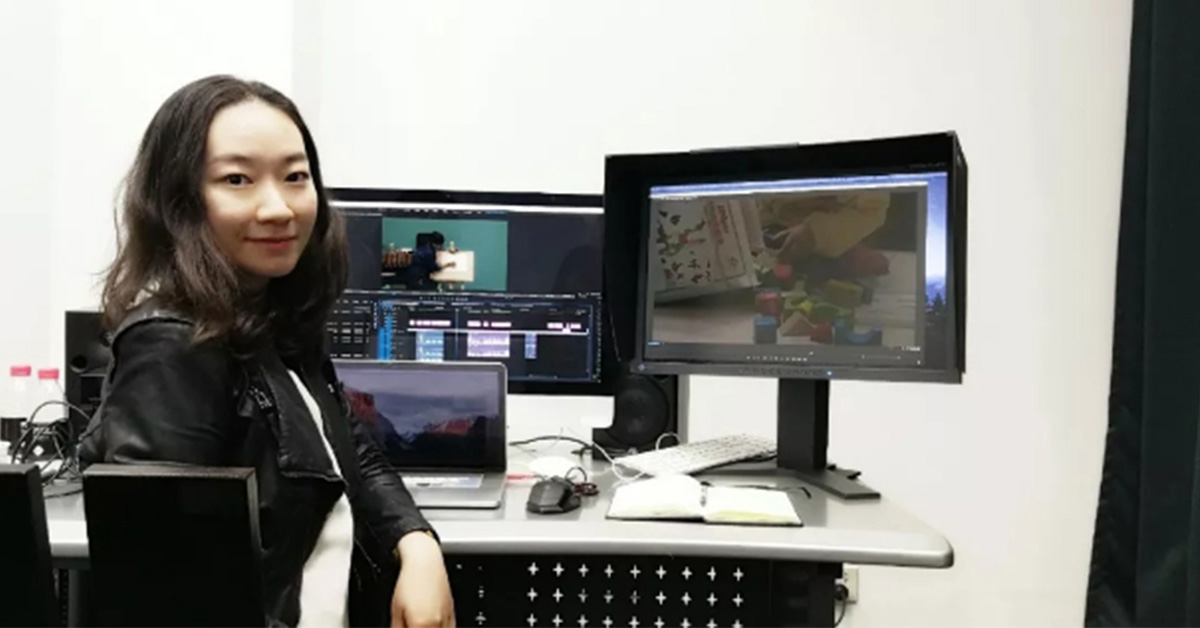
“It’s All About Who You Know” Is Not a Valid Excuse | with Evita Yuepu Zhou


About Episode
Tell me if you’ve either heard or said the following phrase before: “It’s all about who you know.” Unfortunately this has become an excuse for many who think the barrier of entry to success in Hollywood (and many other creative industries) is knowing the right people. And of course only the privileged are a part of those prestigious circles…so you might as well give up, right?
My guest today, Evita Yuepu Zhou, is a film & tv editor who has worked in both documentary and narrative in both the United States and China. More importantly, Evita is the perfect example of why “It’s all about who you know” is not a valid excuse…because the solution to this problem is simply to get to know more people, and Evita could teach a masterclass on how to meet people and build relationships.
I met Evita years ago at a networking event, and the story of how we first met is quite possibly my favorite Hollywood story of the almost twenty years I’ve been in this business. In our conversation Evita and I talk about how she has steadily built an editing career that she’s passionate about despite not going to film school, not speaking English as her first language, not being from the United States, not being a man, and not being [insert 100 more excuses here]. If Evita’s passion, tenacity, and confidence don’t inspire you to get out there and start building relationships (no matter how awkward, difficult, or scared you are of the networking process), then I suggest checking that you still have a pulse.
Episode Highlights
- Evita’s journey from Shanghai to success in L.A.
- Zack’s favorite L.A. Story and how he met Evita for the first time
- The difference in the value of editors in the U.S. vs China
- How Evita’s confidence and specificity in her networking introduction found her the job she wanted
- Learning to be clear about the things you want and need in your career
- Making peace with the fact that you will have to put in work to get on every project for the rest of your career
- When to dump the project you’re working on to pursue the one you need
About Guest
Evita’s documentary credits include Making A Murderer Season 2 (Netflix), Loss Of Only Child (Guangdong TV), and 2019’s Confucian Dream, which premiered at the Hot Docs Canadian International Documentary Festival and won Special Jury Prize at the 54th Karlovy Vary International Film Festival.
Her documentary short Organizing Happiness was China’s official entry in the HIGH 5 Series at the 2018 BRICS Film Festival in Durban, South Africa.
Evita’s narrative works have also screened around the world, including “Human Terrain”–AFI’s Directing Workshop for Women, Shatterbox Short Film series Season3; “The Visit”– Los Angeles Asian Pacific Film Festival, 42nd Asian American International film festival, CAAMFEST; “Ablution”– Mill Valley Film Festival; Dances with Films etc. Her current project 26.2 to Life: The San Quentin Prison Marathon documents a marathon running club inside California’s oldest prison.
Transcript
Zack Arnold: I’m here today with Evita Yuepu Zhou, who is a film and TV editor working in both documentary and narrative, and she originally came from Shanghai and moved to Los Angeles in 2010 And Evita, I really, really, really hope that I didn’t just butcher your name, because it’s been a while since I brushed up on my Mandarin. So, did I do okay?
Evita Yuepu Zhou: Yeah, perfectly
Zack Arnold: Excellent. Well, I’m really, really excited to have you on this call today, and here’s why. As you already know, your story is probably the one that I tell people more than any other, and it’s one of my favorite LA stories that I’ve had in my entire 17 plus years in this business. And I think it’s important to now get this story on the record, because there are so many inspirational moments, but even more importantly, I think there are a lot of really good takeaways and lessons for people to understand what it really takes to make it in this business and build relationships and build a network, and you’re doing everything right, even though you may not realize it, and you’re super humble, and you know you have a lot of humility around it, but every time I watch you progress from one step to the next, I’m like, God, you’re doing everything right. So, I wanted to kind of break down your, your origin story, so to speak, because I can’t even remember how many times I’ve told us. Now, I’ve probably told this on the podcast, on the record, at least five times, and I tell it to other people all the time. So, I want to understand your journey to first get to Los Angeles, going from Shanghai to LA. What, what got you here? What you’re interested in. And then we’re going to find that moment where our paths cross. But first, I want to understand how you got to that moment where you and I met years ago.
Evita Yuepu Zhou: Oh, great. First of all, I want to say hi to all the listeners. Like, I listen to this podcast a lot, so yeah, it’s helped me a lot too. So, first of all, I want to say thank you to that first before I start my own thing.
Zack Arnold: You’re more than welcome, and I very, very much appreciate that.
Evita Yuepu Zhou: Yeah, so okay, so my story, like my undergrad was the major of my undergrad is environmental engineering at Engineering university, so basically I didn’t get the chance to learn anything about film at all, and then about like the third year of my bachelor year, there’s this program for like seven schools in Shanghai, like you can go to other schools to pick the major they provide, which you can do a minor, major, or another bachelor degree, and then at that time I saw Shanghai Theater Academy, which is one of the best film school or theater schools in China. They offered this opportunity to other students, is so that’s how I got into.. I was like, oh, that’s always something I want to do. Of course, I’m going to learn another degree if I can. So, basically, that’s how I jump into like film or theater studies. And then, when I do that, I met a lot of friends over there, and then some little friends came to America to study film. And then, by that time, they bring back the information to me, makes me feel like maybe I can go to America to study film, as well. I mean, before that, I have never something like this, never in my mind ever before. Like, come to America to study film. No, never. I never even thought about working in film, because if you want working in film in China, it’s extremely hard if you don’t have the family background in film business, or it’s just a very difficult path to get on to the business, the marketing, the market was not that big, like in US, so it was extremely hard. I learned that the second major only based because I love this, you know, I love film and everything, so once my friend gave me the information, like I can go to America and study, and it’s kind of affordable, then that’s something put in my mind. So I came to America in 2010 start my film major, ish, I mean, I never been in the film schools, film school, I was studying film studies in Cal State Cal State LA, which is like in communication department, it’s not even in film department. I just learned mostly series about cultural studies and TV studies, film studies, that’s it. And then something brought me to editing at this point is because I want to. Do some internship and I want to earn some like money from the school years, and then pretty much I know how to edit back then when I was in China, and I just found this internship at this commercial studio, and then they are very generous, and I just, they just led me to edit their commercial spots, so that’s how I get into editing, because that’s the only thing I can do. I don’t have a camera, camera is very expensive, I can’t afford that, so I just use whatever I can do to do an internship and to get into film business here, and I will say the time I work in the commercial studio probably is the time making me feel like I can be an editor in the future, because first of all they gave me a lot of space to create, and so I edit really fast, and then whatever I edited, they really like it, and then so that’s kind of something like putting my mind, I was like, oh, maybe I can be an editor, so at that point, since that point, I started to edit other people’s short films with no money or tiny little bit money, and then two and a half years later I graduated. So, as an international student, after you graduate, you need to find a job or whatever sponsorship stuff, and at that point I kind of reached to the bottom of my life. Before I actually met you, I would try to so many places, I gave so many resumes to places I want to be with, and then no reply at all. I don’t know anyone, like, because I didn’t go to film school, so I don’t have the opportunity to know, like, your mentors or your teachers or professors can actually get you into some jobs or recommendations. I have nothing, so I just search online about what do I want to do and what I can do, and have a list of the things or companies I wanted to go, or I can send my resume, and I was searching around, like, is there any panels or meetings or like networking stuff I can go there and to meet people, that’s how I found out the group I met you, and then pretty much by that time it will be the story, the time I’ve met you, that time, yeah,
Zack Arnold: All right, so there’s a lot to unpack here, and I’m really, really looking forward to the point where we can tell the story of the night that you and I met, but we’re not quite there yet, because that’s really where all of this started, and I’m once again going to reiterate myself. I cannot wait to get this on the record, so other people can hear this, because it’s seriously my favorite LA story.
Evita Yuepu Zhou: Yeah,
Zack Arnold: But I don’t want to get there quite yet. There’s a couple of the things that I want to unpack first.
Evita Yuepu Zhou: Oh, yeah, of course.
Zack Arnold: The first of which is I want to understand a little bit more about your family background, not too deep, but I know that family culture is something that is very highly regarded in Asia and in China. So, for somebody to just say, yeah, I don’t want to be an engineer, I think I want to be a film editor instead, and I’m going to go to America, so I’ll see you later, China, that’s not something that you do every day, right? So, talk to me a little bit about the family dynamic and the risk that you were most likely taking to make this change in your life.
Evita Yuepu Zhou: Okay. Great. Yeah, I think this question just brought me some memory back. I don’t even remember it by myself, but when you asked that question, I just remembered it. So, yeah, basically before I went to, like, whatever engineering major, I actually tried to apply to a film major in one of the universities in Shanghai, so because it’s considered as an artist major, so you actually need to have some kind of tests before your final, like you know, the exam, the big exam. I actually applied for Shanghai University for a film major. They require you to take some of the winter class, and then they’re going to give you a written exam, and then you’re going to have an interview exam. So, long story short, both those exams results come came back, and then I was like 0.6 lower than their requirement line, so I didn’t get the chance to apply to that major before my big test in summer, so that’s kind of there’s my parents always knew I love film, like, since I was a little kid, they knew that, but they just, no one in my family has ever been in, in anything like close to that part at all, but because my, I’m so passionate about that, so they knew about it, so they just gave me this chance, about, like, okay, you can try this, but I didn’t match the point, so pretty much by that point I was like, okay, I just need to drop this idea ever, so I just applied for engineering major, and then getting to the environmental engineer school, whatever, and then up until the third year, which I’m talking about, this opportunity came, and my parents was like, it’s. Fine, if you want to learn more stuff, I, we, we support you. That’s fine. They didn’t really think about, you know, the future, whatever. I’m going to do, actually do film, you know, it’s more like if your kid won’t learn more stuff, and it’s because school is not expensive. University is not very expensive in China, so it’s fine. You just learn more at the same time, you have two bachelor degrees. Awesome. So I think it’s about up until I want to come to America, that’s kind of a little difficult time for our family. I remember pretty much in the bigger family, no one really supported me to come over here to no one even support me, the idea of I come to America to study, not even mentioning to study film. So actually I applied, I remember now, like five or six major or schools, I only applied one major, which is about film, which is the one I actually went to. So no one really supported me, and I think only my dad was like kind of say okay, but still it requires me to write like a statement or letter to him to say why I want to learn this, and then what I’m going to do after this, and what is my plan after that, something like that. So it was a little bit difficult back then, a lot of pressures from people like no one really support at all the idea of coming to America to study.
Zack Arnold: The other thing that I want people to understand as well, and I was not aware of this at all until I worked on a feature film that was a Chinese production for a Chinese audience, 98% of it was in Mandarin Chinese. There’s one scene in English, the rest of it was all Mandarin. So I really got immersed into the culture, immersed into the language. It’s been a long time, so I really don’t speak much of the language anymore. And it took me about 10 minutes just to practice saying your name correctly with the right inflections. I can still ask people where the bathroom is, because that’s really, really important, but other than that, I forgot most everything, but I can still ask that. But one of the things that I learned is that the way that people in post production, and specifically editors, are regarded and seen in China is completely different than it is in the US. So, when people in the United States in our industry are thinking, yeah, well, the editors are really kind of treated like, you know, we’re second-class citizens, and we’re the red-headed stepchild of film. Try going to China. So, explain to our audience just a little bit the way that people are seen as editors, because they want people to understand the picture that your parents and your family probably had when you said, “I’m going to America, and I want to learn editing.
Evita Yuepu Zhou: Yeah, yeah, my parents wasn’t even aware of what is editing, actually, to be honest, that time, so they just have very vague ideas about the film industry. I can talk a little bit about editing editors in China, for sure. I mean, recent years is getting better, but still, like in China, editors, or editors for TV shows, they pretty much. there’s. we have a union, but the union won’t really do anything. So, basically, you need to work long hours without any protection or any overtime pay at all. You pretty much just start working and work until whenever it’s done. And for TV show, like last year, I almost got on the TV show, it’s like you need to finish a 24 or 36 episode of TV show in, I would say, within six months, ish, pretty much, including shooting time sometime.
Zack Arnold: Well, and on top of that, where there really isn’t much protection, and the hours are extremely long, and I’m sure the people listening are saying, oh, well, the hours are long here, no, we’re talking like 20 and 22 hour days, and I know that because I was interfacing with a post production crew in Beijing that was doing all the assistant work in the visual effects house. I was getting emails and correspondence from them about 20 of 24 hours a day, and I was just astounded at the amount of time that they were putting in, but I think from a just if we’re not even talking about ours so much, but if we’re talking about the way that an editor is regarded, obviously, if you’re working on really low-budget stuff in the US and in Hollywood, in our industry, yeah, we kind of laugh about the way that editors are treated, but in China, the editor really is kind of a step above the janitor, it’s just the person that’s putting all the pieces together, but they’re not really seen as a creative collaborator, at least in my experience, so maybe you can correct me, but that’s what I kind of learned,
Evita Yuepu Zhou: Right, right, right. I mean, as far.. I mean, I don’t know the whole industry back there, because I haven’t worked a long time over there, so.. but based on my knowledge of about editor, first of all, one more thing, at for time, which is a lot of time, if you work on the show, there’s no Saturday or Sunday, there’s no weekends, so pretty much you work from the first day until, I mean, you can take off days based on whatever you want, because in China there is this position called the Director of Editorial, something like that, so it’s more like a one person in charge. Of a team, and the team will call editors, or as editors, but this person will be called the direct. It’s like DP, but it’s like a director of the editorial,
Zack Arnold: Which, by the way, I actually think we need to be doing in Hollywood, in the US, but that’s a whole another conversation. So, continue.
Evita Yuepu Zhou: Yeah, yeah, so maybe this person can decide which day you guys can take off one day or two day in a month, but basically you start working and there’s no day off, that’s the situation. For as far as the position wise, I mean, for feature film, I think the situation is better, like for like the director of the editorial, they are actually be treated as an editor if they are, if the production is professional, but some of them are like they will not work until the editors under him or her are finishing piecing everything together, pretty much, or some of them don’t really use the machine either, like they will have someone to do that, they would just talk, and then they will have a hand, they will have a pair of hands to do the technical work, which, which is something I never, maybe I’m wrong, I never really heard of here, though. That’s a big difference.
Zack Arnold: It is. It’s funny, because I, I remember when I was working on this Chinese film, and the reason I was working on it, and I don’t even know any of the people that worked on it originally in China, but it had an American director, and this American director was somebody that I had done a lot of television for, and she had directed this Chinese film, and they told her, “No, you’re going to work with the Chinese post-production crew, and she saw the first editor’s assembly and said, “Nope, I’m using my editor, or I’m done, because the first assembly was essentially unwatchable, and she, she brought me into the meeting, along with the producer, and they said, ‘Listen, we need somebody to kind of come in here and clean it up, and you know, make the edits better, make it tighter, do some transitions, add some music, and I watched the assembly with them, and when I got done, I told them, the only way I’m going to work on this is if you, I get to start over, there isn’t one edit in this entire 100 minute assembly that I would use. If you want me to be a part of this, I need to start from scratch. Well, you don’t speak the language, I’ll learn the language, whatever it takes. I think that the material is there. It was very well directed. It was really entertaining, amazing production value, fantastic performances. And essentially, in the world of China, the stars, it was basically Brad Pitt and Jennifer Aniston. I mean, Wang Lee Holm and Zhang Zi, those are huge names in China, correct?
Evita Yuepu Zhou: Yeah,
Zack Arnold: I mean, I remember when I was going on the publicity tour, I felt like I was Justin Timberlake, because I was right behind them, getting mobbed by hundreds and hundreds of these young Chinese girls trying to get them, and like, wow, this is something else. So, anyone in the US would be like, “Who are these people? In China, it was Brad Pitt and Jennifer Aniston. That’s how big the movie was. And I said, “I want to be a part of this. This is an amazing challenge, but I have to start from square one. And as I started to learn more about the process, it was exactly what you had explained. The editor didn’t do any of the editing. He basically sat on the couch, and he told his assistant how to cut it, and what I later found out is because he had carpal tunnel so bad he couldn’t type, because he had been worked so.. and when I looked at his credit list, he was doing like five or six feature films a year.
Evita Yuepu Zhou: Yeah,
Zack Arnold: In the US, you maybe do one film every two years, he had six credits a year,
Evita Yuepu Zhou: Right? So that’s something like, if you are really big editor in China, also there’s something to be honest in China for feature film editors. I’m not sure about recent two years, but before, like, there are not many of them, and so that’s why if you are good and you added big films, then there will be so many films and projects won’t want you to edit, so if you’re a tough editor, most of them will start their own company, and then they will have their own company with all the facilities, everything, they will hire like long-term employees, so they can take on like five or four projects at the same time, and then so maybe this team is working on this assembly right now. The other team is working on that, so that’s how it’s more like a manager.
Zack Arnold: Yeah, it’s a lot more like a factory. It’s just an assembly line of movie after movie after movie, which again weigh that feeling of being really like a key creative player. It’s more we just need you to spit out another movie and another movie and another movie. And when I saw the first cut, I wouldn’t even use the word assembly, I would use the word it was a string out of the film, there was no pacing, there were multiple takes of lines, there was zero music, zero sound effects, it was just basically a giant string out for over 100 minutes, and they were saying this was their first cut, I’m like, well, I can’t just clean this up, I need to start over, so that was kind of my understanding of how the process worked in China versus how it worked here. All of that to say that this is not a podcast about the Chinese way of making films versus the US way of making films. What I’m doing right now is I’m setting the stage, literally setting the stage, because that’s how you and I met was when you stepped on a stage. Yeah, so the stage I’m setting. Is that here’s this young girl from Shanghai who said, I want to be an electrical engineer and take all these different classes in school, and, oh, this film class would be nice. Oh, by the way, I now want to travel to the United States of America and become a film editor, right? So, the, we’re really setting the stage for this is not just somebody else that’s trying to get a job in this industry, this is a very unique situation, right? So, you’ve done all this research, and you ended up at a post-production event, and this was at Lassie Puck, the Los Angeles Creative Pro users group.
Evita Yuepu Zhou: Yeah, yeah.
Zack Arnold: So, that night, let’s tell the best part of the story.
Evita Yuepu Zhou: So, okay, so at that night, that was the first time I went to that meeting ever, so I don’t even know what is this structure. Maybe they have, they have their own like parts, like the tech group, the announcement stuff. I have no idea of that. So it’s in the theater the first time, and I just, I was frustrated about finding a job and figuring out my future, and frustrating about my financial situation, frustrating about my visa situation, because I don’t have much time left, and about my visa is also like I have to do something about film, I can’t just find a random job just to get over it with this time, and I can find something I want it to be in a year or in half a year, I don’t have that kind of time. I have to find something specifically about film. So I was there at that night, the host was talking about, okay, this is our announcement time. It’s a half an hour. Anyone can get up on the stage, tell us, like, if you had a new project, if you want to find a job, if you, whatever you want to say, you can come up and say that, so basically I mean under like a normal situation, I will never do something like that, but because that was such a special time in my life, I was like, whatever, I’m just gonna get up there and say it, because I already have some film projects and film companies I want to join, so I have something in my mind already, so I just get up on a stage, tell the audience where I came from, I can speak both Mandarin and English, and I want to go work for this specific trailer company I want to work for, and also a specific film project I want to work for. I just want to ask for help in the audience if someone knows anyone, because I understand by that point who you know is so important in this business. I would just throw, I was just throwing out my words and my ideas, and I never really expect anything back, but because of I step on the stage, and then in the middle of the rest time you came up to me,
Zack Arnold: Okay, so that’s a good version. I’m going to tell the even better version, which is the one that I saw from my seat in the audience. So not to put you down, that’s a good start. I think my version is even better, because you didn’t get to step outside yourself and see this, and maybe I’m the only one that saw it this way, and it just brushed past everybody else, and nobody noticed the impact of this. I just.. I have such a clear memory of where I was sitting, and I was so basically the way that this works. Just for a little bit of background, I’m assuming a fair amount of people that are listening to this have probably done one of these kind of meetup groups before. But essentially, what they do, like you alluded to, is they say, “Listen, this is going to be the announcement section. They use it as kind of a 30 minute break before the introduction and the keynote speakers, because a lot of times arrive at these events a little bit later because of traffic, because of work schedules. So they say if you want to get up on stage, you want to show people you know a link to your reel, you want to ask for work, you want to talk about whatever, you can say anything you want, and I’ve had been to many of these events in the past, and the other thing that I didn’t even know about setting the stage for the story is that you had never been there before, so that makes the story even better. But a lot of people get on stage and they say, hey guys, my name is John Smith, you know, I’m an editor, I work on this kind of stuff, and if anybody’s looking for some help, I would really appreciate the consideration, reach out afterwards, or you know, I’m working on a short right now, doing this, doing that, so people just kind of get up there, they’re they’re awkward, and everybody is like people in our industry are very socially introverted, so it’s hard to get up on a stage, so I have a lot of things, a lot of good things to say about anybody that has the conviction to stand on stage in front of others and ask for help. However, here’s the difference. This young Chinese girl from Shanghai gets up on stage in front of over 100 what is pretty much men that are middle-aged that have no idea about who you are or your culture, and vice versa, because you hadn’t been here that long, and you got up, you had so much poisoned confidence. You said, “Hi, my name is Evita. I’m fairly new to America. I came from Shanghai. I’m really interested in editing, and here’s the thing: I really want to work in trailer editing. And there’s this company that’s called Mark Woolen and Associates. If there’s anybody in the audience that has any connection to anybody at Mark Woolen and Associates, I would really love to work for that company, and I would. It’s the working trailer, so thank you so much, and I was just like, whoa, who is that? Like, the balls that it took for you to get on stage and do that blew me away, and I just remember thinking, I have got to find her. So, either during the intermission or during the end of the meeting, I don’t remember which one it was.
Evita Yuepu Zhou: It was during the intermission
Zack Arnold: Okay, so it was during the intermission. It’s like, oh my god, I have to say hello to this person. There were two reasons. One, I just really admired the courage that you had to do that, because it’s the first time you’re going to any of these events in Los Angeles. Period. And you’re from a completely different country, a different culture, in front of a whole bunch of people that you really don’t know, and they don’t know you. So that takes so much courage to begin with, but then to go up and say what you did, I was thinking, well, I actually know somebody that edits at Mark Woolen and Associates, right? And the takeaway here, the thing that’s so important for people to understand, and we’re going to go even deeper into this, but the place to start is to help you understand and help everybody listening understand that when you say, “Oh, I can’t catch a break, people don’t respond to my emails. I feel like I’m putting myself out there. I’m going to networking events, or I’m even going up on stage, and nothing’s come from it. It’s not that people don’t want to help you, it’s that people don’t understand how to help you. And when you are so laser sharp specific about how you needed help. You found the one person in the room of over 100 that said, I know exactly how I can help you, and I admire what you did, and I want to help you, and that’s how you and I met.
Evita Yuepu Zhou: Yeah, and also I want a couple of things. Is like I was trying, because when you tell the story, it’s always amazed me, like trying to remember what I was thinking back then. I feel like, because I have two things, like one is I want to work for Marco Wool and Associates, the second one is the Rose Water, the film. So I think one thing in my mind is because I was so you can say it’s desperate, but also because I’m so focused on what I want, so though like I don’t I don’t, I don’t have anything, any, any other stuff in my mind, I just have those two things I really want in my mind. So it’s 100% very focused, so I just say whatever I want specifically, because I knew if I don’t say specifically, I probably will not get anything at that point,
Zack Arnold: And that’s a lesson that you have no idea. So few people understand that I will get emails multiple times a day, whether it’s from aspiring assistant editors, aspiring editors, people in reality, or people in completely different industries that are interested in the work that I’m doing in health, or my website, or my online business, and their requests are so general that I don’t know how to help them, and I’m thinking, well, I kind of want to help you, but I don’t know how, and you’re not being very specific. Or on the flip side, it’s just all about, hey, this is a really somebody would be doing very, very general outreach, saying, “Hi, my name is I’ve attached my resume and a link to my reel for your consideration. If you hear of any opportunities, I would really appreciate you passing me along. And I’m thinking, I have no idea who you are. Why would I first of all consider hiring you, and secondly, why would I vouch for you, which to me actually takes even more courage than hiring somebody, because I have to put my name out there to other people and say that I trust this person, but that’s how most people do outreach, because it’s simple and it’s easy, and you can say, well, I sent out 200 emails, I’ve done my job, but nobody responded. Well, my belief is you should learn how to send one amazing email and start hunting with a sniper rifle instead of a shotgun, and boy, did you have your laser sight set on your sniper rifle, because you knew exactly what you wanted, which has brought the two of us together.
Evita Yuepu Zhou: Yeah, and also because I’m thinking about while you were talking, is also when I say something like that, that means I already did my homework already, because I already been through, I mean, it’s so easy to just tell someone, hey, I’m an editor, I can do this and this, and then this is my resume, this is what I can do. Just let me know if you need any help, but at that point I’m already passing that stage, because I know that’s not enough. You have to, you have to do research, you have to understand this company, the company you want to go with, and research about the projects you want to go with. Who are working on them? What’s their content about why you are the best match for the same? Why you think you can do it better, make the project better, or something like that. So I already did a whole lot of research already, so the only point at that moment is I need someone to connect me, that’s it. It’s I already did my preparation for that already, so that’s a lot of work already. So it’s not only just say something.
Zack Arnold: What I love about all of that is you say it like it’s so obvious, like well, yeah, of course I need to do all of my homework and I need to know the company and I need to understand their. Needs, and how I can fill their needs, and I need to do as much information and get all this research done, and then I just need to get the right person to connect me. You say it like it’s so easy, you have no idea how many people don’t understand that. That’s the other thing that I love about every time you and I reconnect, is there are so many things that you just kind of take for granted that you do that you don’t realize are so unique, which is why I’ve been so excited to reconnect with you every time that we do, and see where your career has gone, because so many people struggle with this, and I’m not sure what it is. I don’t want to kind of make any generalizations, but I think a part of this might have something to do with the culture difference, because I feel like a lot of the people that I meet that are roughly your age or your level of experience that are trying to break in, they feel the sense of, well, I’ve earned these opportunities, so why should I have to do all this extra work? I’m good at what I do. At this point, people should start coming to me. Guess what? People are never going to just come to you. That’s not something that you earn and is just going to happen over and over and over. That’s something that you continually will have to work for for your entire career, but people feel like, well, I did this great project, and I have it on my resume, so people should just be calling me, and they should be emailing me, and they should be knocking on my door. But I don’t know if it’s a cultural thing, if it’s just the way that you were brought up in your family. I don’t know what it is, but you don’t take any of this for granted. There’s no sense of entitlement, and you put in so much work upfront to get exactly the opportunities that you want.
Evita Yuepu Zhou: I don’t know whether it’s a cultural thing, but also maybe also is because I maybe because I never, never went to a film school. I don’t have the opportunities and educations most of the people I knew around me had, because most people I work with, for pretty much, they have all been to film school. I don’t, I don’t really have anyone in my mind I worked for haven’t been to film school, or very rare. So, because I feel I always feel I’m lacking of something, so I always feel I need to work more for something that may be one of the reasons I think,
Zack Arnold: Yeah, and that’s a really good thing to point out, because again, I think it makes people feel like I have a master’s degree from film at USC. This is just going to be easy, and frankly, with the amount of money that you have to pay for a master’s from USC or AFI or any of these other schools, frankly, it should be easy, because it’s ridiculous what they charge you, but it still isn’t. But they assume that it should be, and they’ve just earned it, and they should have the opportunities come to them. But it’s funny, because what I have seen over and over and over throughout my entire career in Hollywood is that the ones that always seem to rise in the ranks and get the promotions and get the next jobs and get the referrals has nothing to do with their background, it has nothing to do with their degree, because frankly, nobody gives a crap about your degree in this industry. They care about, are you good at the job, and are you going to be able to deliver consistently? That’s it. And because you had to work extra hard to overcompensate for what, in your mind, was a lack of education or skill, you have moved ahead so much farther and faster, because you work your butt off.
Evita Yuepu Zhou: Yeah, I would say that’s how I feel before. Like, I feel like if you have the opportunity to, like, go to AFI or USC for film productions, and I feel like I always feel like I need to work, like, like, how do you say 200 300% to get to the point, the students graduate from film school just need to work maybe 150% so that’s how I feel. I don’t know whether that’s true, though. I feel like, because when I see I have friends graduate from film schools, I see how actually easily they can – they’re way more closer to the film industry I than I am, so I feel like I need to work at least double of them to reach to the same level, probably barely same level of them getting a job or getting a project, that’s how I feel for many years, actually. Yeah,
Zack Arnold: Well, talk about some of the things that you’ve been involved with, maybe over the last two or three years, because I think it’s pretty obvious that you’ve met some of the right people and gotten some pretty good opportunities, and it may not be stuff at the top of the marquee at the center Amadome, but as far as the work that you’re trying to do, you’ve been involved in some pretty cool stuff. So, let’s just talk about a few of the opportunities that you’ve had.
Evita Yuepu Zhou: Yeah, yeah, I would say, okay, I think the recent, the big thing I have, let’s say, like back to, like, 2017 I got the opportunity to work for Making Murder as the first assist editor, which also I need to thank you to be the person who introduced me to the person who is the one who connected me to the project, so that’s a really great production. I worked there for like 18 months, and then, and then I went back to China originally for a sci-fi TV show, but something fell off, and then that show didn’t happen, and then I got another friend wanted me to work on her documentary, which is a super, super indie document. January and has been through four different kinds of editors’ hands. The director has been has reached to a point of like a bottleneck, and she doesn’t know where the projects can go, and everyone in the industry documentary industry in China has noticed project and always feel like this project is going to go nowhere. So pretty much I take over this project and edit it from scratch, and then it was a very, very difficult process, but we got into like hot dogs and Calabi-Bieri film festival, and also a film festival in Australia, so a lot of great film festivals about documentaries, and that’s that’s pretty great. Now I’m working on another documentary feature with pretty cool subject.
Zack Arnold: Well, the other thing that I want to talk about a little bit, we don’t need to go too deep into it, and if you don’t want to name any names, you don’t have to, but you’re in a position right now working on a film where you are so specific about what you want to do, that you turn down what everybody else told you was the opportunity of a lifetime, and you’re crazy to say no to it. So, do you want to go into that a little bit? And you don’t have to share anything that’s proprietary or whatever, but I think this is a really important part of this conversation when we’re talking about specificity.
Evita Yuepu Zhou: Okay. Yeah, yeah, yeah. Basically, I’m working on this documentary right now, which it’s, I mean, I can share the name of this project, it’s called 26.2 to Life. It’s a documentary about the marathon program in San Quentin Marathon, so it’s indie project. And then, so, as far as indie project, you know, like sometimes the financial process can be unstable, so two months ago some bad news about financial process, and then pretty much I’m, I don’t have any project, I don’t have any job that at that moment, and then somebody else reached me, so I got the opportunity to work on this A level documentary with like big names in Hollywood, and like a very good position with very stable payment, long term working promises with both a list documentary director and a list celebrity in America.
Zack Arnold: Oh, not an A-list celebrity in America was at least the name that you dropped for me, and we don’t have to say it if you don’t want to, but one of the top three recognizable people on the planet, just to put it that way. Everybody on the planet that has access to a TV or a screen, we know who this person is.
Evita Yuepu Zhou: Yeah, so okay, so that project came up. I was like, oh yeah, great, okay, I’m gonna take it, but then within the same week, my indie project, the financial situation gets a little bit better, so we got another hope, pretty much, but which is still not stable yet, but seems like things will work out, so at that point I was like, I mean, because I already worked on the indie project for two months already, so at that point I was like, oh my god, this is a lifetime choice moment, like, what should I do? Because one part, one side is a glamorous great payment with great people, good jobs, good projects, and the other part is just indie project has a great potential, so what should I do, and then I got a lot of struggles back then, but then eventually I picked a new project, I dropped off the other project, and then pretty much everyone around me knew about the situation, saying I’m kind of crazy. Yeah,
Zack Arnold: Who’s the one person that told you you weren’t nuts?
Evita Yuepu Zhou: Me, you didn’t tell me it was crazy,
Zack Arnold: Me, right? Because what are some of the reasons behind that? You have this opportunity that everybody on the outside is saying, oh my god, you are crazy, why wouldn’t you work on this and just dump this indie project? But why did you decide, and with confidence, that you’re going to turn this one project down and stick with the one that you have now.
Evita Yuepu Zhou: First of all, there are several reasons. First of all, I feel like I already worked on this project for a little while. I have some emotional attached to it already, which I know it sounds – it might sound dumb in this industry, like you don’t have emotional attached to any projects, you shouldn’t. So that’s one reason, and the other reason is I am going to be the main editor for this project, and also I worked with this director before, so I really trust her. I feel like she can trust me, and I can trust her, and based on my past experience, I feel like who you’re working with are really, really important in this industry, because everyone is prepared, already prepared to devoting their creative passion, their time, and everything about themselves. So, I want to work with someone I trust, and they trust me too, as well. So, that’s one thing I also. Like, about that, and the third one is also because I really like the content of the project, so I think that’s pretty much the three main things I want to make me pick this project. Yeah,
Zack Arnold: And when we talked about it, like having the emotional attachment to a project, yes, that can be very, very dangerous in this industry, because very few people get attached to things for too long, and when they do, it often leads to bad things, right? So that really wasn’t the reason that I felt like pushed it in one direction or the other. And then, when it comes to, well, it’s really good content, well, the A-list thing probably could have had amazing content, right? So then it really wasn’t about, well, the content is better than this other thing’s a piece of crap, like it was going to be a really great A-list level project with huge names involved, the big thing that really tipped the scales for you was relationships, and you had built a really great trusting relationship with this collaborator, and there was just a part of you and your identity that said, I cannot just leave this person flapping in the wind because we have such a good relationship, and when you were looking forwards a year or two years, which one was going to be better for you? You realized that the better fit for me as a person and my needs and where I want to go with my career is actually the lower paying indie project.
Evita Yuepu Zhou: Yeah, yeah, I mean it’s.. it was a very tough choice, because at the beginning I feel like I knew what I want, but then later on, when I talk to more people, I feel like I start questioning about myself, like, am I making the right decision? Because you hear a lot of other ideas and suggestions, and you were like, right, why I’m doing this, like, because I don’t want to be stern on something, so I would like to hear more ideas, and then eventually I still keep my own original choice, but I do agree with you about the relations, and also about the trust, which is really important,
Zack Arnold: And the other thing that we talked about too, that I think is really important here, is the fact that you were kind of in this mindset of this is my shot, this is my one opportunity, and if I say no to it, I’m never going to get another shot again, and my response was, well, if you keep doing things at the level of quality that you’re doing them, you’re going to get opportunities like this all the time.
Evita Yuepu Zhou: Yeah,
Zack Arnold: You know, I think I think that people miss that, where they think, “Oh my god, this is it. If this doesn’t happen, what is my life going to look like? And yes, every once in a while there is that life-changing opportunity that you would be absolutely insane to turn down, but this one to me didn’t seem like that, and it also didn’t align with your lifestyle needs. It sounded like this was really going to take over your entire life, and you’re not in a place where that’s something you were really willing to sacrifice, is that right?
Evita Yuepu Zhou: Yeah, yeah.
Zack Arnold: So one of the other things that I wanted to bring up in this conversation that I think is so important to emphasize, and if we go back to the three fundamental steps that I always talk about on the show, when it comes to really building a fulfilling creative career, and all my regular listeners are thinking, “Oh my god, here he goes again with the three steps, but they’re really, really important. And after talking to now over 200 people about their journeys and the steps that they’ve taken to success, or how they’ve written a book, or how they’ve become an Oscar-winning editor, whatever it is, it really comes down to three things. First, is you have to know which ladder you’re climbing, and you need to put it against the right wall, which goes to this whole conversation we’ve had about specificity. Then another thing you have to do is be awesome at your craft, and then thirdly, people have to know that you’re awesome at your craft, and the one that we haven’t really talked about that I want to hit on is the second one, because we have talked so much about the networking side of things, where you came from Shanghai, you come to the United States, and you’re desperate for a job, or you’re going to lose your visa, you know zero people in the industry, you put yourself on stage, that’s the epitome of I want people to know that I’m awesome at what I do, but here’s the other takeaway that I think is so important, I don’t remember what the exact circumstances were, and maybe you can help remind me how some of the pieces got connected, but not that long after you and I met at that event, I don’t remember if it was a few months or even a year, but I needed specifically a Chinese assistant editor because I was working on a concert film that was in Mandarin Chinese for the lead star of this feature that I had done, and there aren’t a whole lot of Chinese assistant editors on my roster specifically that can handle Adobe Premiere and would be able to handle a project like this. So, again, that specificity was, I reached out to you.
Evita Yuepu Zhou: Yes,
Zack Arnold: But here’s the thing that blew me away. What I was asking you to do was really, really difficult. If anybody remembers, that’s been listening to the show for a long time. I posted a screenshot of the timeline that I get of this concert film. It was in Final Cut Pro seven. If I remember correctly, it was 162 video layers. It was the most astoundingly disastrous timeline I’ve ever seen in my whole career, and I basically handed that to you, and not only did I say clean it up, I said let’s put this in Premiere, yeah, right. So it was just the biggest giant cluster, you know what I’ve ever seen in my entire career, and all I did was I said here, can you fix this, and you said yes, and then we. You kind of work through what some of the steps were going to be. How are we going to create this multi-cam workflow? Because we have like six concert performances that have like 14 cameras a piece shooting, and we had to condense it all down to like one seamless music number. And a week goes by, and all of a sudden you send me a timeline and a project, I’m like, “Oh my god, it’s perfect. Right?
Evita Yuepu Zhou: Yeah, I remember. I remember, if I remember correctly, I don’t even know how to use Premiere back then.
Zack Arnold: No, you were very rudimentary, and you essentially said, ‘I’m gonna figure it out.
Evita Yuepu Zhou: Yeah, because I never used it before, and you were telling me it’s like it’s very similar to Final Cut, so I was like, ‘Okay, that sounds good. So
Zack Arnold: This wasn’t like six months ago, this was years ago, when Premiere was just starting to come into the mainstream, and Final Cut Seven was still being used on a regular basis, so this is before it was really ready for prime time, but I knew that it was going to be really good at multicam. There’s no way I was doing it in Avid, because we’re talking about, I think it ended up being give or take for any moment in a song between 50 and 60 angle options, because we were doing these six performances with five to 10 to 15 cameras at any given time, and I knew that Avid wasn’t going to be an option, and Final Cut seven was no longer an option. So I said, well, Premiere has amazing multicam capabilities. I had never done multicam in Premiere, and you hadn’t even used it, but I said, let’s figure this out, because I think the end result is going to be the best, but it wasn’t. And again, this is one of the things that I’m trying to emphasize. It’s not just a cool story, it’s that I didn’t hire you because you had all the technical expertise. I decided to hire you, number one, because you could speak the language, of course, but number two, because I knew that you could figure it out. That’s all that I care about when I hire somebody, not do you have the answers, but are you good at finding them? And that was something that I saw in you, but I also saw in a lot of the work that you had sent me on your Vimeo page that you knew how to cut and how to tell a visual story, so you ended up helping me with some of the creative side of it too.
Evita Yuepu Zhou: Yeah, yeah, yeah, I helped a little bit, and so I remember I felt like, I mean, even though it’s a very difficult project back then for organizing purpose, but I feel like I went through some very difficult thing, and it makes me feel like I’m not a fear of anything, you know, about that part in the future anymore, because I basically was like they didn’t record any sound, I was just using the mouse and just eyeball matching like many camera angles with the sound, so it’s like,
Zack Arnold: Yeah, with no time codes that match some of it d, some of it d. I mean, in my entire career, I’ve never worked with anything that complicated, either before or since, not even remotely anything like that. And you just jumped in and you figured it out. And the reason I bring that up is not because I want to talk, you know, about multi-camera Premiere. I don’t care about any of that stuff. There are plenty of other podcasts that will go into that stuff. That’s not my thing. The reason I bring it up is to go back to the middle of our story. I know that somebody listening is going to say, “Oh, well, that’s great that she got a job on making a murder, but it’s because she knew the right person. Here’s how this actually went in my brain. I had somebody reach out to me that was an editor on the first season of Making a Murderer, and he ended up being one of the associate producers as well. And funny enough, he was my former assistant when I was a trailer editor, and I discovered him in a similar way at a social meetup event, and just saw somebody that was really putting themselves self out there that was really proactive, like, oh, this is somebody that can figure things out and be proactive. So I hired him. Years later, he comes to me, he said, I really, really need a good assistant editor. It has to be somebody that’s really good with all these different formats and archival materials, and somebody they can just kind of jump in and figure it out. And I said, huh, I know exactly the person that I would recommend, so it wasn’t a matter of, gee, I know a bunch of assistant editors, who do I want to help out? It was, oh my god, I know exactly who’s the perfect fit. So, for anybody that wants to listen and say, oh well, sure, she got it because she knew the right person and she got referrals, no, it’s because I knew you could do the job and you were the perfect fit for this specific job, so I referred you, and all of a sudden you reached out later, you had the job, and that was it.
Evita Yuepu Zhou: Yeah, yeah, I mean, it was like it was a big change for me, for sure. And also, when you were talking about that, it also reminds me something about me, how I feel about when I’m working with different projects and different people. It’s like I feel maybe a lot of people think this way, but every time I feel like no matter what kind of project I’m on, no matter how small it is or how big it is, like this is the 100% project I have to put out of my heart in that, so I don’t have the mind of like, oh, this is a small project, so I’m just gonna use like 70% of my heart and energy, I feel like every single shot is important to me, like every single one I will try to do my best. So that’s how I have never dropped any projects, I have never leave any project in the middle, I have never been pushed to. Out of a project, the main knock on the wood, because I feel like when you work longer years, some sometimes you feel you can be felt a little bit tired, or you feel like, oh, I have more projects right now, I don’t even care about this and that, but for me, one of my things is I always be making sure I don’t see myself too important, for like, how to, how should I say this, like, like, even recent years, some sometimes I feel that as well, like, I feel like, okay, I already, I already added, like, let’s say 20 or 30 project already, so I knew a lot about editing already, when some small projects or not important projects, whatever comes to me, I will always tell myself, be humble and don’t overqualify yourself, like, oh, I’m a great editor, or I’m good at this, like it’s always going to be paying 100% attention on every single thing you decide to take, or you decide to edit on, no matter how small project is, it’s probably the 100% project for the person who want to hire you, this their whole baby or anything, so I always gonna treat that as 100% or 200% of my heart, but not treat it like less important, so that’s my kind of value when I work on projects that I feel like maybe not all the directors, but most directors, they will feel how you care about their projects, and they like that, and then they value about that too, so that’s how you can move forward, move like moving step up, because they will remember you, because they, you treat their projects, their babies really good. So I guess that’s also one thing I can share based on my own experience.
Zack Arnold: I am in love with every single thing you just said. Oh my god, I was just sitting there nodding my head over and over and over. I might have to go to the chiropractor for whiplash, because that was so good, and if I were going to distill that down to a bumper sticker, you’re basically saying I’m never too good for the project, right?
Evita Yuepu Zhou: Yeah,
Zack Arnold: That is such a key thing that you bring up, where it’s you’re you in what I love that you also said, is for me this might be a low budget project, and it might not pay that much, and I might not care about it, but the person that the project belongs to, it is everything to them, and that is a piece of the puzzle that so many people miss when they say, “Oh, well, you know, I don’t want to take free work, or “I’m above that, or “How dare they not pay people? You don’t understand their circumstances, and just because they’re not paying doesn’t mean you can’t find other value in this project, either immediately through education or connections, or down the road where it can go, but you have to have that mindset of I’m never too good for the project, which I don’t think that I could say it better than that. I absolutely love what you said, and we’re running out of time, so I can’t jump into anything else, but the final thing that I want to say, and I have mentioned this to you, I think now more than once in the last several times that we’ve caught up, but for anybody that comes up to me that’s having trouble breaking into the industry, finding jobs, keeping jobs, getting where they want to get, they always say the following things: well, it’s all about who you know, and I don’t know anybody, or well, you don’t understand, I’m a woman, or you don’t understand I came from another country, or you don’t understand my family doesn’t support me, or you don’t understand, like I’m, I have a visa application, and I have to get the work, or whatever it is, excuse after excuse after excuse, and all I do is I picture you checking every single one of these boxes, and my response is always, I think you need to meet Evita. You take all the excuses, you kick the crap out of them, you throw them in the garbage, and you say, I’m going to figure it out anyway, and you do. So that’s why I was so excited to get this story on the record. I absolutely love it. Anybody that’s listening that was inspired by this, I want you to reach out, and I want you to hire a Vita today, because she was amazing to work with, but luckily you don’t need to get hired on anything, so that’s not what this is about. But you’re one of the few people on my short list that if there’s ever an opportunity where it’s like, oh, you’re a good fit, it’s I don’t even have to think twice about it.
Evita Yuepu Zhou: Oh, that’s so sweet. Yeah, yeah. I mean, I wish my story can be inspiring to some people out there, because when, when I was, you know, desperate or frustrating, I definitely want to hear similar stories, or at least someone who are also coming from nowhere, you know, like, like just trying to fight. I’m still trying to fight to get into this business, and
Zack Arnold: You’re fighting to move forwards in it, but you’re very clearly in the door, and you’re doing some great work, and you’re meeting the right people, and it’s funny because one of the things that came up that we talked about recently as well is that one of the people in my career coaching and mentorship program is Chung. Chinese, she’s a little bit younger, she’s just breaking into the industry, struggling to get her visa, get her hours, and I said, ‘You should meet Evita, and she’s like, ‘Oh yeah, I already know Evita, like perfect, then you’re done, right? So I thought that was funny. Anyway, we could keep going much, much deeper down the rabbit hole, but unfortunately, I am going to have to cut this short, and I want to be respectful of your time as well, but if there is somebody listening that wanted to learn more about you, or they wanted to see your work, where can I send people?
Evita Yuepu Zhou: I do have a Vimeo link, but I, it’s not very updated, but I will say, like, just by email or Facebook.
Zack Arnold: Okay, so they just need to do a quick search for you on Facebook, or send you an email.
Evita Yuepu Zhou: Yeah, yeah, I’m all open to anyone who wants to like suggestions and ideas, yeah,
Zack Arnold: Excellent.
Evita Yuepu Zhou: Because that’s how you helped me. So I always.. there’s one more thing I want to say, is like the way you.. how you generously helped me, which maybe in your way you think is normal, but also inspire me. How should I treat people, or how should I treat new people in this industry? Yeah,
Zack Arnold: Well, that means a lot to me. I really appreciate you saying that. You didn’t have to, but I appreciate it. That’s not why I do it, but that was cool of you to say. So, I do very much appreciate that. Well, on that note, I want to thank you so much for your time today, and I cannot wait for people to listen to this story.
Evita Yuepu Zhou: Yeah, yeah, great. Thank you.
Transcribed by https://otter.ai
Episode Credits
This episode was edited by Curtis Fritsch, and the show notes were prepared and published by Elyse Rintelman. The original music in the opening and closing of the show is courtesy of Joe Trapanese (who is quite possibly one of the most talented composers on the face of the planet).