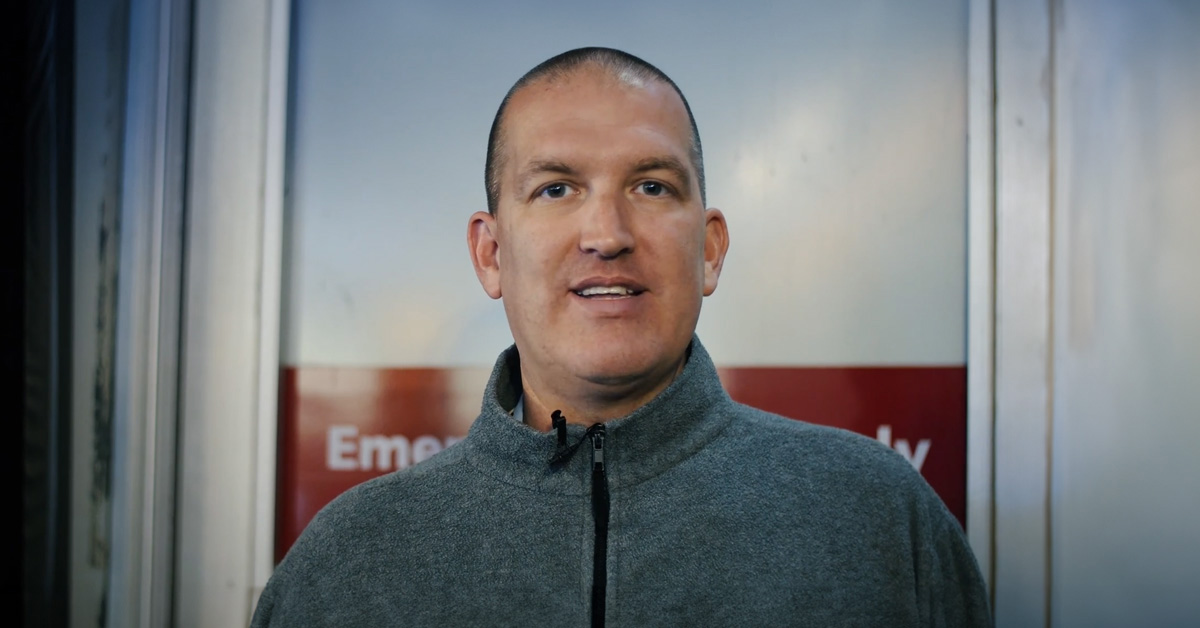
The Journey of 1000km That Began With a Single Step | with Todd Kopriva


About Episode
If you spend all day sitting in front of a computer, then you’ll no doubt relate to Todd Kopriva’s oh-so-familiar story of gaining over 70 pounds from working a sedentary job for over a decade as a software designer for Adobe. But even though the beginning of this story might sound familiar, the rest of it is anything but ordinary.
During his final year before leaving Adobe, Todd had a stark realization about the direction his life was headed and decided he needed to make a major change. So that’s just what he did. He committed to changing his life…literally a single step at a time.
After leaving Adobe Todd spent the next year training for a once-in-a-lifetime journey most of us could only dream of including learning several skills he’d wanted to acquire his whole life: Martial arts training, as well as learning several foreign languages including Portuguese. And this journey also led him to South America to travel several hundred miles walking the famous Camino da Fé. In this episode Todd and I chat about his reasons for leaving a secure job in corporate America to experience life outside the cubicle.
Episode Highlights
- Todd’s realization that he was in middle age, that his time was limited, and that his life needed to change
- The frightening realization that Todd had gained 70 pounds over a decade working a completely sedentary job in software
- The leap of faith required for escaping corporate america
- Learning how to overcome the fear of developing socializing skills (which led Todd to becoming part of a government convoy)
- Todd’s extraordinary hike over the 1,000km long Caminho da Fé in Brazil
- Todd’s encounter with a Brazillian mayor
- Finding small places to implement movement, rather than just reducing your work
- Understanding the basic good and decency of humanity during very turbulent times in our country
- The difference that shifting his mindset had on the final year of working at Adobe before his journey even officially began
Useful Links
About Guest
Todd has recently been spending his time studying languages, training in Tsun Jo kung fu, and otherwise working on making himself healthier and happier. Before that, he worked for 17 years for various software companies, including almost 12 years at Adobe.
Transcript
Zack Arnold: I’m here today with Todd Kopriva, and this is going to be one of those episodes where, if you haven’t set yourself aside in a place where you can listen and not be embarrassed by your jaw completely dropping, you might want to put yourself in that kind of a position because this is going to be one of those episodes where you just say, “Wow, there are so many more things that can be done in life. So, Todd, I’m really, really excited to do this interview today.
Todd Kopriva: Well, thanks. I’m flattered.
Zack Arnold: So, I want to start by reminding people that you are not a ultra marathon super athlete. You are a guy that worked at Adobe on After Effects for more than a decade. So, we can talk all about your trek on the Camino da Fe and walking and journeying over 500 miles on foot. But I think it’s more important for people to understand where you came from, the life you lived, and the moment that convinced you you needed to do this. So let’s start from the beginning.
Todd Kopriva: Sure. So back in the very late ’90s, I started working in software, and as we all know, working in software, like working in post production, is very much about sitting at a desk. Sometimes you sit at a conference table, but it’s just a whole lot of sitting. And I went from being a person who was extremely fit and lean, to being a person who was developing a paunch and who wasn’t by any stretch of the imagination fit, and it was about 10 or so years into this, so a few years ago, when I realized, oh my goodness, I’ve gone from being six foot two, 200 pounds to being six foot two, 270 pounds, maybe even a little bit more than that, and I needed to fix that. So last time that we talked on your podcast, I was talking about how I was making sure that I was moving on a daily basis, or even on an hourly basis, getting some exercise in, that I was starting to use Fitbit and tracking my food intake, and that was that was doing me some considerable amount of good. I managed to to shed quite a lot of fat and get some of my fitness back just by doing those those basic habit things, but there was a sort of plateau that I reached when I was still doing the the desk job where I I wasn’t getting to a level of of fitness that I really wanted to, and I think that that was even affecting my my mental health. So I decided to take a pretty big plunge. I left my job at Adobe a little bit more than a year ago, very largely because I wanted to concentrate on my physical and mental health, my my happiness and well-being for a while. I wanted to do some some training and some studying, and really try to to seize my my life back. So that’s that’s kind of the the prolog to all of this.
Zack Arnold: All right. Well, before we go any further along, there are definitely a couple of spots that I want to dig deeper into. I always just like to you know peel the onion until I get to the middle and there’s nothing left. So, what I’m curious about before we start on this journey from you quit your job and you were doing all kinds of cool stuff like training martial arts, Brazilian jiu-jitsu, learning languages, like all that’s awesome. I don’t want to go there yet because what I’m really interested in is where you say you got you know you started at about 200 pounds six two, which is very lean for somebody that’s six two, and then you gain about 70 pounds. There are a lot of people that work in sedentary industries, whether it’s software, film editing, writing, design, that gain a considerable amount of weight, but there aren’t a lot of them that actually say, “I’m just going to quit. I’m going to focus on my physical and mental health, and I’m going to embark on a journey. So, what I’m curious about is what was the real turning point, the real emotional point where you’re like, “I need to make a major shift.
Todd Kopriva: So, I think, like a lot of people, I was always telling myself that I was going to fix things later. It’ll be tomorrow. It’ll be next week. It’ll be next month. It’ll be on my sabbatical. Whatever my reasoning would be, and I noticed that my kung fu instructor-and I hadn’t really been attending my kung fu class very regularly-but I still considered myself to be a student, even if I wasn’t attending often. But I noticed that my kung fu instructor was getting on in years, and he was moving toward retirement, and he was teaching less often. And I thought, wait, if I wait too long, I won’t be able to focus on the things that I want to focus on later because the resources won’t be there. I’m specifically referring to this one resource of the of this one person. So it was his aging and his moving toward retirement that made me realize that I have a I have a deadline here. So when I told my my boss at Adobe that I was quitting, one of the things that I told him was, you know, I I have to do this now because this guy’s not going to be around forever. Now that wasn’t the reason, but it was the trigger that made me realize: wait, there are time limits in life, and I’m approaching some of them.
Zack Arnold: Well, if you were saying there are time limits, there was that time limit, which is a very clear logical choice. But what are some of the other time limits that you were thinking? Because I’m guessing that being up in weight was definitely one of those things that, in your mind, you were thinking this possibly is creating a time limit sooner than I would like.
Todd Kopriva: Yes, exactly. So I’m 46 now, so I was having these thoughts when I was say 44, and there’s no there’s no getting around. That’s that’s middle age. I’m over a hill, and I’m coming down the other side. And if I wanted to ever really achieve anything that was physically impressive, and I’m really talking about being impressive to myself, I wanted to make myself happy with my physical accomplishments. I needed to do that now because I I wouldn’t be physically capable, even even as a healthy person, of doing some of the things that I wanted to achieve that were more extreme. I I wasn’t so much thinking about my own mortality and how my excess weight and my sedentary lifestyle was affecting those things. Perhaps I should have been, but frankly, it was more sort of a an association that I have with myself as being a physically adventurous person, and I realized that my opportunities for those adventures and accomplishments, those opportunities would be fading if I didn’t get to them fast.
Zack Arnold: All right, so you basically have kind of created a little bit of a ticking clock. You’re thinking I’ve been sitting in these corporate boardrooms and in these cubicles and all these things for over a decade, I’m immensely overweight. And I’m curious, before we go forwards, just super briefly, when you went from 270 to starting to do like the Fitbit, the moving more throughout the day, but you were still working. How much weight did you lose?
Todd Kopriva: I got down to the mid 240s just by monitoring my food intake and by adding a bit more activity, mostly walking into my routine.
Zack Arnold: But still, basically the same daily routine as far as like still going to work, still you know sedentary environment, computers, all that. Correct.
Todd Kopriva: Exactly.
Zack Arnold: Okay. So just by making simple changes, we’re talking about over 10% of your body weight.
Todd Kopriva: Yes.
Zack Arnold: All right. So now we’ve decided that we’re going to go the next step. We’re actually going to cut the cord from corporate life, and we’re going to make some changes because we feel like we’re on the other side of the hill. So explain to me what it was like as soon as you decided that you were going to cut the cord, and then you actually did it. Explain that transitional period.
Todd Kopriva: Okay, so I gave a one-year notice at work. So I, even while I was still at Adobe for approximately a year, I knew that I was leaving, and I knew that I was leaving largely to focus on my physical activity. So that was somewhat freeing, somewhat liberating. I I opened more time in my schedule, even while working for another year, to be more physically active, and that’s something that I I found a little bit surprising how much how much more time I was able to open into my schedule. And upon thinking about that, I realized that one of the things that was keeping me from being as physically active as I should be, is that I was working crazy hours, largely because I was feeling insecure about my job. When you’re feeling insecure, you think that you’re not being perceived as as valuable enough. You perhaps work harder to impress your boss or your coworkers. And once I realized that, well, I’ve already given notice. I’m already on my way out the door, I can just work sane hours, and those sane hours gave me plenty of time to go for a run, go to a kung fu class, and I realized that if I had been feeling more secure in my job, I could have been doing that all along. So that’s, I think, one important takeaway for people that are still working as I I will be again soon. That if you stick to sane work hours because you feel secure in your job and don’t feel like you have to overdo it, you can actually still lead a very physically active life. So that’s that’s just one point I really want to make.
Zack Arnold: Yeah, I think that’s a very important point, and the takeaway for me is that all you changed was your mindset. That was it. You didn’t say, “Listen, you know, I really would like to work less hours of last year. I’d like less responsibility. All you did was simply shift your mindset to change your priorities, which was my priority is no longer burning the midnight. Oil, burning the candle on both ends, getting as much work done as possible. I’m going to put myself first. I’m going to prioritize my health, my well-being. But that was really the only thing that changed, correct?
Todd Kopriva: Exactly.
Zack Arnold: So then let me ask you this, and you don’t have to answer just because there’s a specific answer that I want. But did you find that your productivity and the quality of your work decrease because of this decision.
Todd Kopriva: I don’t think that it did. No.
Zack Arnold: So do you feel like if you had made that mindset shift earlier, that you probably could have been equally as successful and produce just as much work while working less hours?
Todd Kopriva: I do,
Zack Arnold: And that’s the whole key. That and I’m totally going to be jumping on a soapbox for a second and disrupting your entire train of thought, but that’s the point that I keep trying to emphasize over and over and over. Is everybody comes to me now that I’m working with people one on one doing private coaching? They all say the same thing. I I love all this stuff, but I just never have any time. Like you have the time, you just need to prioritize it. Like I have the same amount of time as you. You have the same amount of time as Bill Gates and Elon Musk and Richard Branson, like everybody’s got 24 hours, so it’s what you choose to do with them. And all you did was shift your mindset. You were still producing great work. Obviously, you didn’t get fired in that last year, but you were able to prioritize things that increased your well being, which most likely made it much easier to get your work done because you felt better about yourself,
Todd Kopriva: And I would even go further. One of the things that made me feel insecure in my job was that I believe my my weakest point during my time at Adobe was that I could sometimes be argumentative, assertive, grumpy. I I refer to myself as a curmudgeon partially because there’s the the truth buried in there that I I could be a little bit of a grouch, and I think that I was largely grouchy because I was overworked, I was overstrained, and so by working sane hours and being happier with that grouchiness being diminished, I would have, I think, eliminated the primary problem that I ever had working with people in a corporate environment, and that would have made me feel less insecure about my job, which was the primary motivating factor for doing the extra hours in the first place. So I think that I really could have considerably earlier made that mindset shift and been happier, and have removed my primary impediment to better productivity at work.
Zack Arnold: Yeah, and it really is just this endless vicious cycle. Where I mean, no offense to you whatsoever, but if I were 270-five pounds and stuck in front of a computer and working long hours, I’d be a grouch too. Like, why in the world would I ever want to feel like I have to walk in with a smile on my face? I’d be miserable. But what happens is that you get into that cycle where you’re working long hours, so you don’t eat as well, you don’t sleep as well, so you start to gain weight. And because you gain weight, you need to eat more. And because you’re eating more, you don’t have as much energy. And because you don’t have as much energy, and you’re not sleeping better, and you weigh too much, you have to expend more energy to get the same amount of work done, and you’re grouchy all the time. It’s just this circle that goes over and over and over, and the only thing you had to do to stop that circle from spinning was shift your mindset. Yep. So now we’ve made this mindset shift. You’ve gone through your final year of work, and you’ve decided I’m going to put my health and well-being first. And I loved some of the posts that you were making on social media during that time, because you could you could just see it. You could see it in your words that you were still getting the work done, but it was from a different perspective, and it was really really inspiring. And I’m hoping that there are other people that were inspired by some of those posts as well. And then the day came where you said, “All right, you guys, you know, give me my my cake, and everybody sings, and I get my cards and my hugs, and now I am unemployed. So explain the beginning of this part of your journey.
Todd Kopriva: So I decided that for the the period after I left Adobe, that I was going to be a full time student, and that was going to be split evenly between physical training and mental study. So the the mental study was to be the pursuit of Portuguese and Russian language learning, with the long term idea, rather long term idea, that I might become a professional translator. So I enrolled in the Washington Academy of Languages, and I did a lot of self-study to pursue those goals. The physical training, the physical study, was split between martial arts training and long-distance running. So when I was rather overweight, I was doing a lot of long distance walking, a lot of hiking, but once I got down closer to about 230 pounds, I was at the point where I could get back to running. And I used to be a serious long distance runner when I was in my late teens and early 20s, and it was good to get back to actually running. So I would. Just as a regular day for the past year, get up in the morning, do a couple of hours of language study, walk or run to my kung fu school, do a couple of hours of training there, come back home, do a little bit more language study. If it was a night when I had a course at the Washington Academy of Languages, I would walk to the school and go to class, and walk back home. So I was getting a very large number of steps in every day to and from both the kung fu school and the language school. I was doing a lot of martial arts training, and I was getting a lot of language study in there. So that was a pretty long day. I’d start at six or seven in the morning and finish up at nine at night with plenty of breaks in there because I still wanted to be happy and relaxed. But I was working longer work days at this study and training than I was even when I was doing the the software job. But almost none of it was sitting in a chair, and it was on my own schedule for the most part, and being able to have that physical activity, even when it was just walking to and from the school, was a huge benefit, and I thoroughly enjoyed it.
Zack Arnold: Well, it’s it’s funny that you you kind of alluded to what my next question was going to be, but that was the fact that clearly you didn’t reduce your workload, you actually increased your workload and your responsibilities. The only difference being, it was now responsibility more to yourself than it was to some corporate overlord. But at you know switching from you know a 10 or 12 hour day at Adobe to a 14 hour day, you know in you know Todd School. What was the the mindset shift, or how did you feel at the end of the day, both physically, mentally, emotionally, after a super super long day in Todd School, rather than working for Adobe?
Todd Kopriva: I felt great, and I can sometimes engage in self delusion. So I I would check in with my wife, and she was very clear on the fact that I was obviously much happier and certainly much more pleasant to be around.
Zack Arnold: So before we go any further forwards, I do want to make sure to to ask one logistical question because I already know what a lot of people listening are thinking, and we don’t have to go too too deep into any of your your personal life. But I’m assuming you don’t have kids, correct?
Todd Kopriva: Correct.
Zack Arnold: Okay, so anybody that’s listening that has three kids is thinking, “Oh, I’m never going to be able to do this, and you could. It just makes life a little bit more challenging. But then the other question is, which I think is the more practical one. A lot of people are probably wondering: Is did you really set yourself up financially beforehand to be able to go on this quest.
Todd Kopriva: Yes. So this was a bit of a financial strain because depleting savings always is a strain, and we had enough savings built up so that I could put myself through school like this for approximately approximately a year and a half, and I thought that there was a possibility that by the end of a year and a half, I would have gotten far enough on one of these tracks that I would be able to make some income using the things that I’d been learning and studying. I didn’t think there was a very good chance of that. I thought there was an outside chance. So the the two forks at the end of the road would be at the end of a year and a half either go back to a software job or start down a new career path. And it turns out that the the new career path isn’t available yet because I haven’t progressed quite far enough to be able to work as a professional translator, and I have not progressed far enough to to work as a martial arts instructor, but we had planned these things out beforehand, long before I gave my notice. We had talked through these financial and logistical possibilities,
Zack Arnold: And that’s exactly what I was going to ask next. Because I know that people, and it’s just human nature. I’m not saying anything badly about anybody listening, but it’s just human nature to find excuses and find reasons not to go through discomfort. It’s just the way that our brains are wired. We don’t want to be uncomfortable in saying I’m going to quit a cushy software job that I’ve done for over a decade that I’m good at and live off of savings. That’s uncomfortable. But my the question I was going to have was: Did you just wake up one morning and say, “Hey, we’ve got a bunch of money in the bank. I’m going to take two years off, or was it very much premeditated? And it sounds like it was premeditated long beforehand, which means that you said this is an objective that we are going to achieve for a very specific purpose. Would that be accurate?
Todd Kopriva: Yes, I think that in my ideal world, I would have accumulated more savings and done this period of training and study a little bit later. But those aren’t the circumstances that that we were dealt, and so we did it a little bit earlier than intended. But it was roughly. The plan, just with some some wrinkles in the details.
Zack Arnold: Well, it certainly sounds like it worked out okay for you, even if all the details didn’t work out absolutely perfectly. That’s really kind of the way that life works.
Todd Kopriva: Yep.
Zack Arnold: So we’ve gone through this period where you are no longer at work. You’re moving more. You’re going to kung fu class, and you’re learning languages, and you’re just kind of experiencing life without the you know giant oppression of the corporate overlord, you know to to say it very subtly. From here, explain the next portion of your journey because this is really where it starts to get interesting.
Todd Kopriva: Well, I was treating this year as school, and when you’re putting yourself through school like this, I think it’s only responsible to also give yourself exams. And I constructed a sort of year-end final exam for myself. I decided that I would test my physical fitness, see if I had actually improved as much as I thought I I had, and my language skill together by taking a trip to Brazil and spending about a month hiking a long, somewhat difficult trail and using only Portuguese.
Zack Arnold: Well, saying long and difficult trail to me is like, oh yeah, there’s this you know trail up in Simi Valley, and the elevation gain is I don’t know like 1500 feet. That’s like that’s like six miles. Like that that’s a pretty difficult trail. So let’s let’s define difficult in your terms, shall we?
Todd Kopriva: Okay, and to to answer that, I’ll actually go back a little bit and tell a bit more of the story. So, a couple of years ago, when I was starting to to think about what my next steps in terms of physical training would be, this is after I’d started using the Fitbit, after I’d been logging my food, after I’d been trying to move more. A friend of mine from high school, who I hadn’t talked to in a long time, sent me email asking if I would like to come to Brazil with her to help her on an ultra marathon, and little did I know that she had become one of the world’s best ultra marathon runners. So I agreed to be part of her support staff, a group of four people who would help her as she competed in the world’s hardest ultra marathon. This is an ultra marathon that runs for about 175 miles, 281 kilometers from San Joaquin de Boa Vista to Campos de Jordan in southern Brazil. The path that they use for this ultra marathon is the middle portion of an established pilgrimage trail called the Camino de Fe. That means in Portuguese “path of faith. So for many years, there’s been this religious pilgrimage trail that people will travel for their own reasons, whether it’s to give thanks for something or to ask for a favor from the saints. They’ll do it on foot. Some people do it on bicycle. Some people do it on horse. But that means that there’s this extremely long trail that is meant to be a physical challenge that’s pretty well established. So this ultra marathon takes advantage of that and uses the middle portion for their trail, which is intended to be the hardest ultra marathon in the world. That is a stated goal of this ultra marathon. So when I helped my friend on this trail, I saw it and said, “Wow, this is not only beautiful, but it’s it’s a remarkable physical challenge, and I I just got it in my head that I wanted to take part in that. So when I gave myself the the final exam task of proving my my fitness, I decided that I would do not just the portion in the middle that is used by the ultra marathon, but I would do the entire thing. So it begins in a town called Sertanzinu, which is in the interior of Sao Paulo State, off in a sugarcane country, and it runs 571 kilometers through flat sugarcane country up into the more hilly coffee fields, across a couple of mountain ranges, into Aparacita, which is relatively close to Rio de Janeiro. That’s 571 kilometers, so about 400 miles on the trail, with an elevation gain. I believe my total elevation gain for the entire trip was somewhere around 48,000 feet. So yeah, a lot of up and down, and a lot of the trail is treacherous rock, and a lot of it is soft powdery dirt. Some of it is a disused rail bed, so you’re walking on the railroad ties, which is an incredible calf workout, as it turns out. A little bit of the trail is on highways. Some of it is just through farmers’ fields. It’s a it’s a very very. Terrain and and quite the challenge.
Zack Arnold: Well, going going back to this idea of it being quote unquote difficult, and me thinking, man, I got a tough hike today out in Simi Valley. I’m looking at your final Fitbit stats for the trek, and I can put a I I think an image is necessary in the show notes just for people to really understand this. But it was the date range of July 10th to August 9th. So you know, essentially a month, 29 days, 30 days. You accumulated over a million steps. Your average, your average day was 32,473 steps. You accumulated, like you said, 4,773 floors, and a floor is roughly 10 feet, so about 40-8000 accumulated feet of elevation gain, which doesn’t even calculate the elevation descent. It’s only the ascent, and descent is not that much easier, and in my opinion, is sometimes harder if it’s really steep. And most importantly, 750-five kilometers. So this was a hike,
Todd Kopriva: Indeed. Yeah. The reason that the the total numbers add up to more than the trail is that I didn’t just want to do the trail. That that would be well, maybe not boring, but it wouldn’t give me the opportunity to really see the part of Brazil that I was going through. So I took lots of little side trips. I would wander around the towns that I was passing through. I would take little side trips to see waterfalls. I would go into abandoned train stations and poke around. So I, I was really meandering quite a lot more than just the the trail itself.
Zack Arnold: Well, and one thing that I want to point out that I think is really interesting, and I’m sure you’ll get a chuckle out of it. Is that because you said it was a final exam? You graded yourself, and you basically graded yourself on two levels, which was number one, your use and proficiency of the Portuguese language, but then also on your overall fitness. And I know you’re Type A because you gave yourself a B minus. I mean, you just you went an entire month without speaking English to anybody, unless there was a reason to speak English to somebody that wasn’t Portuguese. You walked 755 kilometers and you gave yourself a B minus. Come on.
Todd Kopriva: Yeah, quite a few people have commented on that, and my primary defense is that I went to Harvey Mudd College, and for people who don’t know? It’s a a small technical college in Southern California, and we pride ourselves at mud at not being victims of great inflation. So we’re used to being graded harshly. So I think I’ve carried that through in my life.
Zack Arnold: Well, I can appreciate that because I myself am very very Type A A A A plus. So I definitely know what that’s like. But you know, B minus, like I don’t know, maybe a B plus. You know, there’s always room for improvement with a B plus, but it still is like I did pretty good. Like anyway, you know, having you know having given you a little bit of a hard time, there’s a couple of things that I really want to dig into deeper with this journey and the why behind the journey, but let’s just kind of start with some of your expectations on day one when you decided I’m going to wake up this morning and I’m going to start this thing, and then how some of those expectations were met, exceeded, not met, and just some of the the personal changes that you went, you know, that you had along the way.
Todd Kopriva: So when I began, I thought that I was going to be a lot faster than I in fact was, and this expectation turned out to be incorrect largely because I hadn’t done enough training with the pack that I would be using for the trip. So I had it in mind that I would be doing almost 50 kilometers a day most days, with some days a bit shorter. And as soon as I did day one with a full pack, and my my pack at the beginning of each day would be about 15 kilograms, and would drop down to 11 because four of those kilograms were water. So that’s over 30 pounds, dropping down to a little over 20 pounds, I hadn’t been practicing with that pack, so I hadn’t realized just how much of the workout was going to be in my shoulders and a little bit even in in my back. So my legs were up to the challenge because I’d been training my legs a lot, but it was my shoulders and back that caused me to have to take rests during the day, so that was one thing that I found a little bit surprising. But it wasn’t really a problem. It just was a an expectation that was a little bit off. Another expectation that was false because I’d only really seen the middle of the trail. I hadn’t realized just how much of the the trail that I was going to be doing at the beginning was going to be a very fine powdery dirt, almost a dust, and the the footing on that was very different than I had been anticipating, and it was more of a strain on my ankles, and so my ankles were also feeling a bit. More of the the work, so in in both of those cases, it didn’t really keep me from progressing, but it slowed me down a little bit, and made me recognize that when training for something, you really need to train as much as possible in exactly the circumstances that you’re going to be performing. Otherwise, you’re going to be surprised.
Zack Arnold: So beyond just kind of the the physical stuff, as far as well, you know, my ankles aren’t quite up to the task, my shoulders, my arms. Like obviously, I kind of underestimated what the physical toll was going to be. There are also some other really really interesting challenges that you came upon as well. One of them being the level of sociability that you are going to need to have on the trip.
Todd Kopriva: Actually, that was something that did meet my expectations. I had deliberately chosen this trip to be a challenge, and I I was forcing myself by doing this trip at all to interact with people on a level that I’m normally not comfortable with. I’m an introvert, and I don’t do particularly well in extended conversations with strangers, especially if I am required to read their emotional state. It’s just something that I’m not very good at. But I know that I’m not very good at it, and I want to get better at it. In taking this trip, I knew that I would need to interact with people on a regular basis. So I was I was really forcing myself to level up there as well. So on a a trail like this, especially a trail that is an established religious pilgrimage trail for a lot of people, there are plenty of people along the way who are willing to help out, they don’t just see you as some stranger walking past on a trail. They see you as a pilgrim. They see you as someone who is doing something that they want to help with. So you get a real benefit with the strangers right there off the bat. People are really anxious and eager to help, but you have to take advantage of that. You have to you have to use that because in a lot of these places there aren’t hotels around, there aren’t even really established inns around. You are in many cases sleeping in someone’s home, so if you want to not sleep outside, you have to approach a stranger and say hello. I’m a pilgrim on this trail. I need a place to sleep tonight, and they’re more than happy to help. But you have to make that engagement, otherwise you’re sleeping on the on the dirt, or
Zack Arnold: You or sleeping in a stable, as you even mentioned one
Todd Kopriva: Night. Actually, that was that was terrific. I was very happy to have that stable. The case that you’re referring to there is I on my map. There was an indication that there was a posada, and a posada is essentially an inn, at a point where I knew I was going to need to stop for the night. But that posada turned out to be closed; no one was around, so I had to walk back to the last place that I had seen, which was about a half kilometer back, and ask the man who was working at this fishing establishment? If he knew of any place where I could sleep, and his response wasn’t to say, “Oh, you’ll need to walk 15 kilometers back that way, or “No, sorry, I can’t help you. His immediate response was to say, “Oh, come with me, and he walks with me back to his stable, and he points to a cot in the corner of the stable and says, “Will that serve you? And I said, “Yes, thank you very much. And he said, “Would you like some dinner? And I said, “Of course, thank you very much. And he proceeded to go and make me dinner and get me clean sheets, so it wasn’t difficult at all to find people willing to help. But for someone like me who finds it difficult to engage with people even in the first place, just making that first initial request to a stranger of “hello, I need help” that can be a challenge. But I had to I had to overcome that challenge sometimes, many times a day, and it was good practice for me. One of the things that I really took away from this trip was that people are helpful, and not just a few people. But this trip made me think that people in nearly all cases, with hardly any exceptions, are helpful, and that made me feel better about the world and better about people than I had been feeling only a couple of months before. I’ve I’ve been a little concerned watching the way that people in our country right now are having some tension that we’re not really talking with each other, we’re not really being as compassionate with each other as we could be, and so to just go to this foreign country where I’m the stranger and find that every time I asked for help, I was immediately granted help, and sometimes even before I got into the asking for help part. When I had barely even said more than hello, people were already saying, “How can I help you? What can I do for you, stranger? That was a very reassuring experience to go through.
Zack Arnold: Well, I think really one of the the biggest takeaways from this part of the story, and before we go down any rabbit holes, we also have to tell how you ended up in a car with the mayor of a city and dignitaries. We’ll get there in a second because that was a great story. But I think that the the big takeaway here is that you recognized that you’re not very social. You’re an introvert. You’re not very good at approaching people, especially asking for help. And this is rampant in the world of creative industries. We chose a creative industry because we want to sit in a dark room and make stuff and not be bothered, right? Like get away, just let me do my thing. That’s where the grumpy editor comes from, or the grouchy After Effects guy. Like it’s because we don’t want to be interrupted or bothered while we’re generating these creative thoughts. We just assume I am an introvert. I am not sociable. I am not good at meeting people and making friends. But I think what you have really exhibited to the extreme is that just like deciding I’m going to get myself in shape by walking and hiking and moving more and doing kung fu and all those things, obviously you got better at because they’re skills that you can acquire. Sociability is a skill that you can acquire. So, if somebody listening is thinking, “Well, you know, I I know that I need to get out there and I need to socialize more and I need to build a network, but like I don’t really want to go to a user group, like you decided you’re not good at socializing, so you went to Brazil and learned Portuguese and hiked in the middle of nowhere for a month so you could get better social skills. It can be done.
Todd Kopriva: Hopefully, people don’t have to go through all those steps.
Zack Arnold: No, they shouldn’t have to. But I think again, it’s it’s what what I’m trying to do is give the parallel of like me saying, “Oh man, the seven mile hike in Simi Valley is going to be tough today. Oh well, this month long million plus steps hike that I’m going to do that’s going to be tough too, but they’re both doable. And as soon as you get that image in your mind of wait, this is something that’s very very doable. Other people like me have succeeded in doing it. Socializing is the same thing. So, like I recently had an article that came out that I didn’t actually write. It was just somebody doing a phone interview with me named Robert Hardy, who does a website called The Filmmaker’s Process, which I’ll put a link to both the article and his site because he does a fantastic job. But was talking about seven steps that you need to network, and networking is a necessary skill if you want to advance in any career, but especially it’s a skill you have to acquire and work on regularly if you’re in an introverted creative career like we are, so I think that I would assume that after a month of going through this trek, you now feel like it’s much easier to approach somebody in a general setting and just say hi. Correct?
Todd Kopriva: I would think so, and it’s not so much that I I think that it’s easier to make the initial engagement. It’s rather that I realize that once I’ve made that initial engagement, the chance of success is very high. So my my motivation to do it is greater because I see oh, this works out almost every time. So the fear is diminished.
Zack Arnold: Well, and I think that the the other thing that I really want to point out, which is much headier and much heavier, but it’s this idea of where things are in the world right now. We’re not going to get into politics because I refuse to let politics get on the show, and I love how I’ve got the the leaf blower and the lawnmower in the background. That’ll be nice. Good luck to my editor getting that out. But speaking of accepting the world that you’re in at the moment, like that’s that’s kind of the reality of the world we live in. But like you said, it’s such a fringe amount. There’s so few people that are actually causing these issues, and you realize once you got out into the real world and eliminated so much of the external distraction, you actually found that at its core, the human species is indeed good, helpful, and kind.
Todd Kopriva: Very much so.
Zack Arnold: So now you got to tell me how all this sociability got you into the the wrong car with the mayor, because this this story is just too good to not tell. It’s a total tangent, but I don’t care.
Todd Kopriva: Okay, so as I as I mentioned, a lot of times the only place to stay is in a family home, and fortunately, this commune de fe has a group called the the Friends of of the Path that put out a little brochure that tells you where some of these family homes are, so that you can contact people. But I didn’t really want to to stay at a family home this first night, I I was nervous about interacting with people. I didn’t really want to go through with that, so I was hoping that somehow, even though my my map and my my documents didn’t show me any hotels nearby, any place where I could just go up to a check-in desk and give them some money, and then they leave me alone after that, I. Thought that there might be one that just wasn’t in the documentation. So when I stopped to get some food at a grocery store in a little town called Dumont, I asked the cashier if she knew of any hotels or inns nearby, someplace where I could sleep, and she said, “Oh, certainly. And she she immediately gets out her mobile phone and calls her sister. And while she’s dialing her sister, she’s telling me, “Oh, my sister has the most lovely inn. And I’m thinking, “Oh no, this is exactly what I didn’t want. I didn’t want a lovely little inn like a bed and breakfast where I have to talk with somebody over meals. Like I just kind of want to be by myself right now. But this woman was intent on being helpful and wasn’t really listening to me anymore. She was already talking to her sister on the phone, and I could tell from her end of the conversation that her sister was kind of busy and didn’t really want to talk to her just then. But you know how sisters can be. She was wearing her down. It turns out that the reason that the innkeeper sister was being a bit resistant on her end was because she was busy, but she finally was worn down. And what pulled up to pick me up was not one innkeeper in a car by herself. It was instead a convoy. It was a convoy that included cars with government plates and security guards, and the mayor of the city of Dumont, and visiting government officials from the state government, and some corporate leaders who were being given a tour of the city because the city was being considered for a major development, the building of a candy factory. So this convoy had been detoured to come pick me up at the insistence of the sister who worked at the grocery store, and so the innkeeper sister, whose name was Patricia, came and told me get in. And I really didn’t know what I was getting into, but I climbed into the middle van in this convoy and continued on a tour of the city with this group of city and state officials and the executives of a candy company. And when their tour of the city was complete, they were taken to the inn where they would be staying for the evening and and having a working dinner, and I was told, okay, here’s your room, and by the way, it was a really nice room. And please don’t come out of your room because we don’t want you to interrupt the people who are doing their business here. And when it’s time for dinner, they’re going to be having a working dinner, so you’ll be eating with us in the kitchen.
Todd Kopriva: So I spent that night in a very lovely room, and I had my dinner in the kitchen with the staff, and we sat around the kitchen table, and we talked about the history of slavery in Brazil and how that compares to the history of slavery in the United States, and the people there were very patient with my stumbling Portuguese, and we had a really deep and subtle conversation about some of the most difficult aspects of our country’s respective histories, and it was one of the most satisfying and. productive, and yeah, happy-making moments that I had on this entire trip. So something that began with me trying to avoid, at any cost, having to talk to people ended up with me doing a lot of talking with people and getting a lot out of it.
Zack Arnold: Yeah, I mean, it certainly sounds like one of the most rewarding experiences and the best stories on your trip came from you doing everything within your human abilities to avoid
Todd Kopriva: Exactly
Zack Arnold: Right. And the I think the moral of the story once again is that for people that are listening and saying, “Oh, I know there’s a meetup group, or “I know there’s a hike out there this weekend. Like, I just-it’s not my thing. Like, I’ve talked about this on my my old podcast, Fitness and Post, and I don’t remember what episode, so I can’t link to it. So, I’m just going to tell the story again for everybody that’s new. I think it’s probably my favorite networking story ever, and part of it is because it makes me look a little good. But that’s not why I’m telling it. That’s not the part that I care about. It’s that there was a meetup group that I went to a couple years ago, and that this meetup group it was it’s Lassie Pugs, the Los Angeles Creative Pro User Group. And one of the great things that they do is during the break they say if you want to come up on stage, introduce yourself, say what you’re doing, see if you want to make any connections, talk about your work, you can do that. Most people don’t do it, but there was this Chinese girl that got on stage, spoke fluent English, but very very thick Chinese accent, and she said, “I’m new to America. I studied in China. I really want to be an editor, but not just that she wanted to be an editor. She said I.” Would like to be a trailer editor, and my favorite trailers are made by a company called Mark Woolen and Associates. So, if there’s anybody in the audience that knows how I can break into a company called Mark Woolen and Associates in Santa Monica, California, I would love to talk to you afterwards. And I was just like, “Who is this? Like that was awesome. I mean, I was so awestruck by that, and I know people that work at Mark Willan and Associates. So her getting up there, being bold and being specific, led to me having a conversation with her. We totally hit it off. She ended up being an assistant editor for me on a bunch of projects, and she’s now an assistant editor on. I can’t say the name of it because she’s under NDA, but it’s going to be the highest profile, number one Netflix show that comes out later this year. All of that because she went to a user group, got on stage despite not even clearly speaking the English language, being from a foreign country, and putting herself out there. And you, against all of your human needs and desires, saying I don’t want to be around people, it led to one of the most valuable and rewarding experiences of your life. Yep. So it can be done. So on that note, I want to be very respectful of your time, but I’m very curious of two things. So I’ve got two more quick questions. The first of which is: after having gone through this whole experience, aside from blisters, calluses, sore muscles, and whatnot. What What do you think is your largest takeaway or the largest transformation that came from this month-long trip? Ah,
Todd Kopriva: Largest transformation from the trip itself. I don’t really know that the trip itself transformed me. I think that the the year that led up to it was the transformation. I think that I have succeeded in turning myself back into a person who is physically active and a person who makes time to study and makes time to advance in the things that make me happy. I’ve I’ve gone from being a person who just does a sedentary job and doesn’t make time for any of these things to being a person who does these things, and the the trip itself was really just to see how far I’d come. I think that the the the year that led up to it has made me confident that when I return to work, which I’ll be doing relatively soon, that I will I will be able to maintain these habits. No, I won’t be able to work out as many hours a day, and I won’t be able to study language as many hours a day. But those things are who I am, and they won’t be swamped by the job. And if I do find that they are swamped by the job, I I know how to fix it.
Zack Arnold: And I think that’s it’s such a key point to bring up that when you say it is who I am, that’s what makes changes stick. That’s what makes habits and routines stick. If you say to yourself, “I’m going to deprive myself of all the food that I like for 90 days, and I’m going to bust my butt and wake up earlier in the morning, and I’m going to do this exercise program, and I’m just going to push, push, push for 90 days, there’s a 92% chance that you’re going to fail. That is statistically proven. And my belief is that it’s just because you’re trying to accomplish something short term, and you’re not adopting these things long term as part of your larger identity. And if you can learn to be more patient, start playing chess instead of playing checkers, and you realize that once I adopt this as part of who I am, these changes it doesn’t take willpower anymore. It actually is harder to not do them because they are who you are. So I guess the the most terrifying question that I have for you after this whole ordeal, which is the scariest part of your journey, in my opinion, is how do you go back to the corporate world?
Todd Kopriva: So right now I’m beginning my my job search, and I’m going back into it actually rather happy. So I liked many many things about my 12 years at Adobe. I liked the people, I liked the customers. You know, I worked on After Effects, which is an application used by people doing very creative work. And so when I was working with customers, I was working with incredibly creative people. But it’s also a very technical field, and so I got to to scratch both my artistic and technical itches just by by working with our customers. So going back to having my day be largely about working with creative and technical people on creative and technical things that still appeals. The only part that is scary to me, really, is that I think that there’s a possibility that I won’t be able to, over the long term, be able to keep up my habits. Of better physical and mental health, but I don’t say that I’m scared because I I’m sure that I won’t. In fact, I’m pretty sure that I will be able to maintain those habits. But I know that there’s a possibility that I won’t, and so I’m a little bit frightened of that. But only a little bit frightened because, as I said, I know how to fix it if the problem arises again. So I’m I’m feeling pretty good about it.
Zack Arnold: Well, I love to hear the optimism, and I think you’re also very honest in assessing kind of the challenges that you have ahead of you, which in my opinion are actually going to be more difficult than a lot of the challenges that you overcame during the last year and during this month-long excursion. Because these the challenges that we all face every single day being stuck in front of computers in the dark, living a sedentary lifestyle. Like this lifestyle is literally killing people. Like I, I’ve learned that I’m just I’m not going to pull punches anymore and sugarcoat it. Like that, what I’ve seen some of my colleagues go through and heard stories about other ones that literally have had massive heart attacks at their desk and been found dead. Like something’s got to be done about this. And I think that just hearing your story, it it may not get people to fly to Brazil and learn Portuguese and you know hike for you know 47,000 miles, but it it could be enough to get them to start taking a walking break in the afternoon. Like anything small makes a difference. So, if there’s anybody listening right now that is Todd five years ago that is obese, overweight, grumpy, may still like your job, but is having a hard time getting through the day. What what’s the one piece of advice you would give them if they just need need to start?
Todd Kopriva: For me, the biggest thing was a certain kind of honesty that comes from tracking. I found that the simple act of tracking my food intake made an enormous difference because when I saw the numbers, there was no getting around the caloric surplus that I was engaging in. So just tracking, and maybe for you it’s not about caloric intake, but it’s about the activity itself. So using something like a Fitbit or some other activity monitor, where you’re actually tracking what you’re doing, so you can see in in numeric terms, oh, here’s how much or how little I’m doing. I think that makes a tremendous difference. Just having numbers in front of you that show how little you’re doing, and then when you start to put forth a little bit of of effort, having numbers that show your improvement, I think that’s a tremendous benefit. When I when I was trying to make some improvements without doing that tracking and monitoring in numeric terms, I was getting nowhere.
Zack Arnold: Yeah, one of the core tenets of my move yourself program is that what you measure, you can improve upon. So if you don’t understand your baseline and where you’re starting, you can’t improve it. And I am a huge advocate that long-term calorie counting is going to lead to nothing but failure and feeling like you’re inadequate, and it’s annoying, and you’re not going to keep up with it, and you’re going to fail. However, I think that short-term calorie counting, tracking your steps, being diligent and meticulous for up to 30 days can be life-changing because it it gives you one of the most powerful things that you can ever get, which is awareness. You become aware of your behaviors, aware of your choices, and once that awareness surfaces to the conscious level of thought, that’s when things start to change. So, long term, put away the food diaries and everything else, and just live your life. But short term, I think it has tremendous benefit, and I’m so glad that you brought it up. Great. So that having been said, if people wanted to read more about your journey, learn more about where you’ve been, where you’re going, I can put a link in the show notes. But just let them know where can people, you know, dive much deeper into the world of Todd.
Todd Kopriva: Let’s see. I think that the the easiest entry would be to go to my blog, which is Popheni. That’s spelled P-O-P-H-E-N-i.com-E and you can read all the the blog articles there. My Twitter handle is Todd underscore Kopriva, T-O-D-D underscore K-O-P-R-I-V-A, and I’ve linked to the the blog from a few of my recent tweets, so you could get there as well.
Zack Arnold: So I got to ask before we go. I know I keep trying to to say we’re going to wrap this up, but Popheni, like why not ToddKopriva.com? What’s up with that?
Todd Kopriva: Oh, there’s an aspect of schizophrenia and some other mental disorders where people perceive patterns that don’t exist. So if if you just play white noise for them, that they find patterns that aren’t actually there, and that’s called apophenia. And if you take away the A, because A often means the opposite, as in apathy versus passion. If you take away the the a, then you end up with a word that means the finding of patterns where you wouldn’t expect there to be patterns. So it’s it’s a sort of silly, made up psychological term for me trying to find patterns in the seemingly random parts of life, which
Zack Arnold: Frankly is the sheer definition of creativity?
Todd Kopriva: Sure. Yeah.
Zack Arnold: I mean that that really is what creativity is all about: is finding patterns and random things that have no connection and making those connections and creating something new out of them. So that that was why I wanted to bring it up because I think it was it’s an important point for everybody listening that does creative work. So that having been said, it’s been an absolute pleasure doing this with you today, hearing more about this journey, and I really, really hope that it inspires others because it’s definitely inspired me as well. So thank you so much for being on the show.
Todd Kopriva: Oh, Thank you.
Episode Credits
This episode was edited by Curtis Fritsch, and the show notes were prepared and published by Jakin Rintelman. Special thanks to Krystle Penhall and Sarah Furie for helping to spread the love!
The original music in the opening and closing of the show is courtesy of Joe Trapanese (who is quite possibly one of the most talented composers on the face of the planet).