Transcript
Zack Arnold: My name is Zack Arnold. I am the creator of the Optimize yourself program. Podcast, and I’m super, super excited about today’s Facebook Live it is going to be one of my favorite conversations ever. I don’t even know that for sure, because we haven’t done it, but I’m already confident that’s going to be the case, because I have with us Uber TV and film director Dennie Gordon. So Dennie, I want you to introduce yourself and say hello.
Dennie Gordon: Hey everybody, great to see you. I’m so excited to be here.
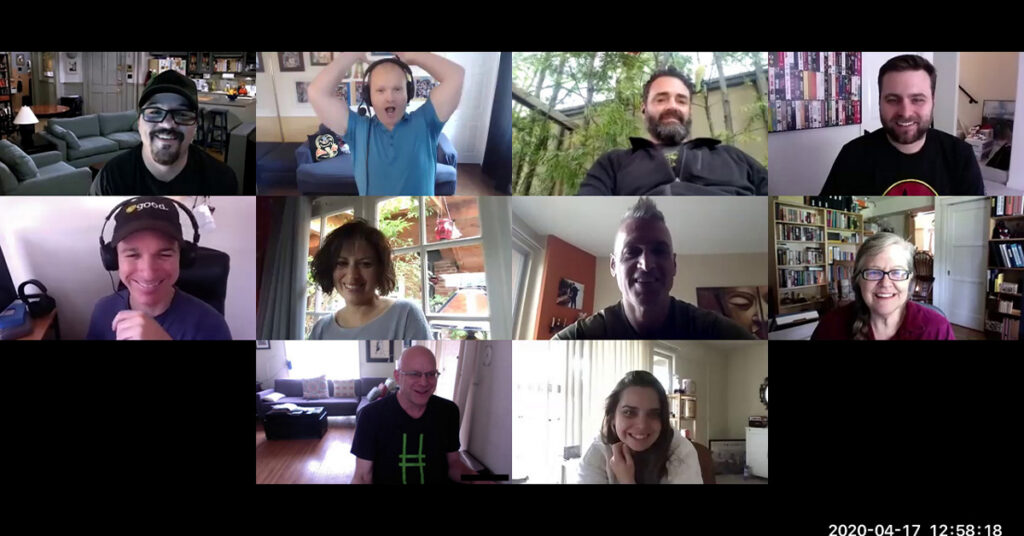
Zack Arnold: I’m super excited about this. I also want to let our audience know that I have my my optimizer coaching and membership community here. They’re going to be in the background with us today. They’re going to be throwing some questions out, and we’ll maybe do some Q and A little bit later. But the idea the topic of conversation today is going to be everything that’s going on in the world and everything that’s going on in our industry. And the big question, Denny, I’m just going to throw the elephant in the room right out there, right in front of us immediately, and I expect a definitive answer. I expect absolute certainty this is going to be on the record. You can’t go back on it. When are the cameras going to start rolling again?
Dennie Gordon: I think the cameras are going to start rolling again when there’s a vaccine. However, I think you know, every studio in town is working on its playbook right now about how and when we get back. There will be instances where we can go back if everybody signs a waiver and doesn’t hold the studio liable if they get sick, where the studio has put in place a full time covid Team health worker, where protocols are in place to make it as safe as set as possible, which are enormous and will be expensive for the studios, but I think for most people, Most people, most stars, most people are not going to want to go back on set until there’s a vaccine.
Zack Arnold: So you realize that’s not going to happen anytime soon. My guess is you saying that it’s freaking a lot of people out right now.
Dennie Gordon: I’m, you know, I’m sad to be the bearer of bad news, but I think you know, all the Cassandras out there right now are saying the same thing that the event horizon for a vaccine is about 36 months. Hopefully that can be, you know, that can be improved. But let’s face it, guys, we in this business. We’re, it’s a contact sport, and I do not have any idea how a camera team can operate. You know, by being six feet away from one another. I don’t know how we do love scenes. I don’t know how hair and makeup and costumes can do their work and remain and keep a safe distance from the actors. I think there’s so many questions about how this can work. There are versions where it can work, and maybe this will be the new normal until, until we get a vaccine, but we’ll do stage work, and we’ll do things at a distance, and it will be a very different creative enterprise than the ones we love and know. But there is a version. There’s an intermediate version, where a set can be deemed relatively safe, but the but the scope of work and a very scaled down production team, it’s possible. It’s possible. A lot of times, what you read in the paper right now is about talk shows coming back, or reporting coming back, or game shows. Yeah, these stage studio events, they can come back. But what I do, which is big international location drama. I don’t see that coming till there’s a vaccine.
Zack Arnold: Well, and I’m glad that you brought that up, because now that we’ve put the elephant out in the room, and we just started with a bang, right? So much fun. I want to go backwards a little bit, and I want to help people better understand what your level of experience is, because you’re obviously not a doctor, but I don’t think that anybody has any of these answers. But like you said, You’ve done a lot of these big location set pieces all over the world. And not only have you traveled all over the world, but you also were working on a feature film in China during the SARS outbreak. So I feel like for any general run of the mill director that’s been on a set, sure they can speak to how sets run. But if there’s anybody that’s actually been through something as close to this as possible, you can speak to that. So just talk in general about all the various locations that you travel to all over the world, and especially what it was that you had to go through when you did this in China. I believe it would have been in what, like 2012 13, something like that.
Dennie Gordon: 11, maybe, yeah, okay, well, the biggest international show that I’ve done, you know, in the last maybe five years, is a show called Jack Ryan. I’ve heard of that, by the way. Okay, good. I did season two. I was executive producer and I directed three of the eight. And we were in three locations in Colombia, Bogota, here are dough and Cartagena. We were in London, we were in New York, we were in Moscow, and we were in, oh, down, you know, San Pedro, kind of San Diego, San Diego. More on the for the, for the warship stuff. So there was tremendous amount of travel. There. You know, of course, that show, Season Three is on indefinite hold because Krasinski would probably be the first to say, I’m not going back until there’s a vaccine. When we were working in China, you know, you know, when I was filming there, and then you, you know, you came over for the premiere. You cut it there. They seem to have many protocols that were strange and alien to us. We were, we were hit by a thermometer gun before going on or off any of the sets or any of the studios. We were, you know, they’ve dealt with this for so much longer than we have. So they had some, you know, they had more protocols in place. Now, in China, they have this very cool system where it’s a color coded system, where you have on your phone, which you are, which you are required to show to gain entrance to public places, you show that you have tested negative, that you do not have it, or there’s another separate code, if you have had it, but You are recovered. And all of this is utilized for for the authorities, to determine, you know, where you can go.
Zack Arnold: Well, it sounds a lot like what we’ve seen in the the recently released documentary contagion. Well, or is that not recent? Maybe not, but it seems to be the documentary of the day so
Dennie Gordon: Well, it isn’t that funny, and I’m sure a lot of your people would be interested to know that Steve Soderbergh, who directed that film, is running the DGA Task Force, the Directors Guild of America task force whose only mission is in view of everything that’s happening in the world. How do we get back to work? This is their big mission. So who better than Steven? Right?
Zack Arnold: Yeah, right. So one of the questions that I have, if we’re looking at this as the obvious answer, we’re not going to be shooting anything until there’s a vaccine. But there’s a whole giant gray area that everybody else has been talking about since day one. Well, what do we do about insurance or what? What if there are ways to do it in smaller crews? And what do we do with the makeup department versus the Crafty department versus the actors versus camera. So let’s say that. And again, nobody has the answers here. But if there’s this giant gray area in between, what are some of these specific conversations that people have been having, either in the DGA, or just general conversations that you have with other people about all the various things that we need to be aware of until it’s as simple as we’ve got a vaccine and you’re either vaccinated or you’re not,
Dennie Gordon: Right? Well, first of all, there’s going to be the insurance thing that you bring up is very is very important, because even now, a lot of the studios are deep into their insurance companies about liabilities and overages they’re already carrying. I was like, ready to go do Jason Momoa show up in Toronto. I signed my Deal Memo. I was about to get on a plane when all this happened. So they have to deal with a lot of people with whom they have contracts from prior to this period and then going forward, how they’re covered. So insurance is a big issue. One way they’re going to get around this is that everybody who steps on set will sign a waiver. Also, everybody will wear masks. Everybody will wear protection. Let’s just talk about all the different departments, the camera department. I don’t know how they do it, but of course, they’ll protect themselves as much as they can. Remote. If focus is something that can be remote, we know we can do it that way. The ACs are going to have, me know, each operator may have to be their own AC so that there’s nobody around the nucleus of the camera. Let’s talk about hair and makeup and wardrobe. They’re going to that is much, much harder. There may be instances where they’re asking talent to do as much as they could do themselves, their costume left in a trailer, makeup left in a trailer. Here’s your here’s your hair. You know, just getting people, it’s going to be do it yourself. I mean, it’s going to be hilarious. It’s going to be like a lot of the commentators that we see on CNN is like, Whoa, baby. I guess you did your own makeup. Yikes. Terrifying. And now and then, of course, you know, the writing part of it and the producing part of it is going to be very much the same, except that meetings will be probably on Zoom, which is, which is a shame, because we thrive on those idea fests. We thrive on that being a place where we can bat ideas back and forth and where you can read people’s behavior. It’s like, I think we should move on. I think people are getting a little annoyed by this topic. You can’t read all the signs, so there’s, it’s cold and it’s difficult. Locations will be probably completely remote, you know, all done by picture with, with probably virtual, maybe virtual cameras to be, you know, to be, help us pick our locations. One thought that a lot of you know stages and studios are thinking about is that you take the whole team and they live together, you put them in a dormitory, like situation, and everybody is in one space together. And then when production wraps, they quarantine for 14 days before they leave that nucleus. Crash service is something, you know, we’ve all talked about that everybody’s going to get an individually wrapped meal, you know. So the. The minimum of people are touching it. Everything’s going to be wrapped. Everything’s going to be, you know, lines are going to be smaller, and I think they’re just going to be working with very much smaller crews. These are just a few of the things I think, you know, you know how we all pile into vans on in production like, you know they’re going to, they’re going to transfer us from one location to the next. So they’re gonna however. You know, that’s gonna change. I think that those will be individual cars.
Zack Arnold: Well, there is a ton to unpack. I mean, to me, the biggest thing I’m the most scared of if there’s no crafty table, what do we do about donuts? I mean, that’s that’s clearly the biggest topic of conversation. We’ll get to that one later. Be too big to take a bite out of right now. But I think the first one that I want to talk about, to talk about is this idea of waivers. Because obviously, insurance is a huge topic of conversation right now, beyond the if we’re talking about the micro of the makeup and hairdressers versus the ACS, that is such a small topic of conversation versus the much larger idea about insurance. And it seems to me that, yeah, we can do waivers. As somebody, for example, that has done multiple Spartan Races and tough Mudders, you’re forced to sign what they jokingly call a death waiver. In the event of all of the following, including your death, we are not held liable whatsoever. You know the risk that you’re taking on, but is that something that’s going to be viable in the world of Hollywood when, in general, you’re not taking on that level of risk. And some people are going to say, I’m not willing to sign that. But then there’s also, also the side of but if we don’t do that, we are waiting for a vaccine. But I really need to go back to work. So let’s talk a little bit more about this idea of liability. And just, you know, who’s really going to take this on at the end of the day?
Dennie Gordon: Well, I think that, you know, I said this to my husband this morning, I might be forced into retirement until the vaccine comes, because I am at a more vulnerable age than people in their in their 40s and 50s, so I need to be more cautious. So I think there’ll be many people that just say, I’m not signing the waiver. I’m going to self protect and I’m going to hold out longer until until my bank account bottoms out. Many of us are going to be forced to make the decision that so many people around the globe have been making every day since this hit, which was, Do I isolate and save my life, or do I feed my family? And I think that a lot of people will be making those very hard decisions about the necessity of going back to work versus how we protect ourselves, for people who are younger, for people who do not have any underlying conditions, you know, we would say, you know, go for it. If you’re willing to sign the waiver, go for it. We will, you know, but I think that that will be a minimum requirement for people going back on set or going back into production, is being willing to sign that waiver.
Zack Arnold: Now maybe I’m being skeptical, maybe I’m being cynical, but there’s a part of me that thinks even a waiver is not going to do it with all the conversations we’ve had over the last few years about Sarah Jones and stunt men, like there’s, there’s so many conversations about safety, and that just seems so tiny compared to where we are now. Not that it isn’t, I’m not minimizing it, but in comparison, it just seems like so far in the past. So even if there are waivers, is this even going to be acceptable, and is that paper going to hold any weight? I mean, I know we don’t know that, but that’s kind of the thoughts that I have right now.
Dennie Gordon: Well, I think so. I mean, it’s a very it’s an extremely gnarly legal document. And you know, one of the things that the DJ and everybody else is discussing is having a full time medical team on staff, you know, a covid, covid team who have medical training, and people are going to have to enforce that six feet rule. And we’re got, we’re all going to forget, because these are, these are new habits. We are not going to remember. We’re gonna, we’re gonna all default to our old way of behaving. So I think that that’s something that, you know, it’s another aspect, it’s another expense that they’re gonna have to add on to production, and they will use it as a way to reduce their liability. But it’s going to, you know, you know how annoying it’s going to be to have somebody come up and tap you on the shoulder and bite said, I can’t go any closer to my actor to give them a note. You know, this is the kind of dictatorship that a covid team would have to be working under
Zack Arnold: Well. And I think that the habit portion of this is such an interesting one to bring up. Because even if you have the waivers and you have the team on staff and everything else knowing you, you get so into your head. You get so passionate, I will forget. Can you imagine you not just leaning into the monitor with the DP and saying, hey, what if we did? Oh, crap, sorry. I wasn’t supposed to breathe in your face like that.
Dennie Gordon: I know, I know,
Zack Arnold: Like there’s no way to not do that.
Dennie Gordon: Part of me just absolutely cannot imagine working working that way. But I think a fair amount of production will be occurring that way. And I think that, listen, we’re the creative community here in this town. If anybody can figure out how to do new, interesting, innovative ways of working during this crisis, it’s us. I really believe that. And, you know, we did drop the big vaccine bomb. You know. Within the first five minutes of our conversation. But the flip side of it is, on a more hopeful note, is our ability to figure this out. So, so yeah, it won’t be easy for me. It won’t be happy for me, and I may, I may just sideline myself until it’s safer to go back and work the normal way I work. You know, I’ll go I’ll go work on some writing. I’ll go develop something. I’m already doing that. But, you know, my first love is being in production and being on set. And I can’t imagine the first call that comes that offers me to go and jump back into work. I can’t imagine I’m going to say, No, I’m probably going to be the dope that signs the waiver.
Zack Arnold: And I can see that knowing you well and seeing the way that you, you function on set. I mean, that’s, that’s your Shangri La, like you just, it’s, it’s the only way that I can equate the work that you do. And I’m not blowing smoke. This is me being completely genuine. It’s like watching a conductor with an orchestra just smoothest, most fluid process. You know, a conductor that will raise their their voice every once in a while, and be very strong. You have a you have a very stern voice, and you get what you want, but you do it in such a respectful manner. But it’s just it’s so cool to watch what you’re able to do on a set. And I can’t imagine all of these things holding you back, but I can also see you being a very intelligent person and saying, the risk just isn’t worth the paycheck or the credit or whatever it is like is there? Is it worth getting a let’s say that you go back to Jack Ryan season three. Let’s just assume there’s a magical world where that happens anytime soon, whatever you would get from those accolades, that paycheck, that experience, is it worth the risk to you personally?
Dennie Gordon: I would say no. I would say no, it’s not worth the risk to me personally. You know, I don’t know how many people on the podcast have personally been affected by people being becoming ill? I had a Michael Carlin with my productions in London. He got covid. You know, reports every day from the hospital. He’s recovered. He was home. But it’s a terrible thing to have, and I think that nobody and it can hit, it can hit any one of us at any age. Now, we used to think we maybe over 65 or 60s was the, you know, was the cut off. I think we now know that everybody can get it. So just for me personally, probably not worth it, probably. But, you know, people need to keep building their careers. People need to keep building their resumes and their skill set. We can’t all afford to just be sidelined. We, you know, we need to bang our drum. And as somebody once said to me very early in my career, you never learn anything when you’re not working, unless you have, you know, Zack podcast.
Zack Arnold: I appreciate that. By the way,
Dennie Gordon: We need to be working. You know, that’s what that’s what we’re hardwired to be doing. We need to be out there, working, learning, bumping around. I told you this before we started rolling, but I just made a horror film, which we made completely with with equipment that we have in the house. I think people will think of all kinds of creative ways to use their skills and stay viable. And I hope they I hope they do, because, listen, Being idle is a terrible it’s a waste of our channel. It’s terrible.
Zack Arnold: Well, speaking of us being a member of the creative community in the creative epicenter of the entertainment industry, either in this country or maybe even globally, to a certain extent, I want to talk about the creative side of this. There’s a whole bunch of other logistical things we could go into, but I think that every, not every, but almost all, the conversations that I’m reading about. It’s all logistical. It’s all the things we’ve talked about, insurance and crews and this and that. But the creative side is a huge one that I feel is lesser spoken about, one that you alluded to very briefly, this idea of all like writers rooms and whatnot, being on Zoom via in person. I don’t know if you saw the article that came out with Kurt Sutter on deadline recently.
Dennie Gordon: I did, yes, very thorough.
Zack Arnold: And I mean, I really think that it’s going to be difficult for us to collaborate at the same level if, again, like you said, it’s via zoom. But on top of that there, I’m gonna actually quote this from an article that came out. I believe it was last week. It was within the last few days, but it was talking about Warner Brothers executives. I don’t know if you saw this specific article and how stories are going to be affected. So I’m just going to read this verbatim. It says, while the Warner Brothers presidents were mostly speaking hypothetically, their call shed light on some unexpected ways in which the coronavirus might change television down to its plots. One such example, there was a suggestion that love scenes might need to be eliminated because actors won’t want to be in close contact, and the same was set of fight scenes that would require stunt doubles to violate the rules of social distancing. So there goes your whole resume. Right? There gone right? Everything that you’ve ever done is either love scenes or fight scenes. So So I saw a follow up comment on Facebook, and I don’t know if it was a public comment or on their private page. So I won’t mention who it was, but it was a high level showrunner, show creator, saying, well, then that just means all of our stories are going to suck.
Dennie Gordon: Well, well, said, I completely agree. And you know, there’s a lot of people in the community go, well, we’ll just, we’ll just make covid stories. We’ll just do stories that reflect exactly where we’re. We are right now, and nobody wants to see that. I mean, you know, maybe it’s a novelty for one night, but most we want this behind us. We want this out of our collective memory. We want to move on from it. And I think you know exactly, exactly what he says. I mean, why do we watch television? Why do we go to films? We want to see human interaction, we want to see love, we want to see conflict, we want to see human drama, and we want to connect to it. And I don’t know how we do that in a social distancing world. I don’t know how we tell those stories. And they’re not stories that I want to see, and I don’t think they’re stories that really anybody wants to see full circle. I think creatively, we have a huge problem.
Zack Arnold: Did you see the Zoom centric parks and recreation that came out?
Dennie Gordon: No, it’s on my to do list. Did you see it?
Zack Arnold: I did see it? Yes. I’m a huge fan of Parks and Rec. Seen the whole series, and I thought it was wonderful, just because it’s like, Oh, something that is addressing what’s going on in the world. You get this warm, fuzzy feeling. And I really don’t think I need to see anything else like that. Again, that was my immediate reaction. 20 minutes of warm and fuzzy love the idea. But let’s not everybody start doing this. Like, yeah,
Dennie Gordon: Over and out. One of,
Zack Arnold: yeah, exactly. So it was helpful. It was great. The timing was perfect, but we can’t do that for the next two years.
Dennie Gordon: No, somebody wants to see it.
Zack Arnold: Yeah, exactly. So the now I want to talk a little bit more, going back to something you said earlier, that has been another huge topic of conversation. And as somebody in post, if we go this route, it’s most likely something I wouldn’t have to worry about. I’m not sure about that, but this idea of living on set as a community, this has been brought to light largely by Tyler Perry, who actually built a set on a formy army barracks where it’s like, you can just have a hotel for production. Do you think that viably, that’s something that they may experiment with and try before there is a full vaccine where they just say, Everybody here has been tested? We know that this is a closed community. Now we can get down to business, because we think that everybody is, quote, unquote, safe.
Dennie Gordon: Such a good question. I for sure Tyler Perry is going to do it. He’s, he’s well positioned to do it. It’s, it’s, it’s fantastic. He built that complex as, by the way, on a former slave plantation. I think that’s so great. But he built that as a convenience for his actors, and now he’s, he’s like the only guy on the planet who’s positioned to make television or film exactly that way. I don’t think, I don’t think series can function that way, unless it’s such a big budget that worked over to take we’re able to take over an entire hotel, an entire facility, it’s going to be very expensive, and some people won’t want to be, you know, traveling without their spouses or their families. So it’s really going to add up. It’s a huge logistical challenge. Not to say it couldn’t be done, but I would say that most likely it’s going to be done on a feature level, on a very big budget feature level, before it’s done in episodic.
Zack Arnold: Yeah. I mean, I can’t imagine if I were to sign on a show for 5678, months, that I would just agree to not be able to leave. You want to talk about the shining on a mass level, like, dear Lord, I just, I it’s one thing. Like, I’ve turned down opportunities where I would just have to travel period, but I can still, on the weekends, travel back and forth, my family would be able to visit me, and I was like, not worth it, like I want to be able to stay home, and I want my kids to stay in their own schools and have their own friends, and those opportunities are not a good fit for me, but now exacerbating it and saying I’m on lockdown for months. I mean, do you really think people will go for that just in exchange for having a job again.
Dennie Gordon: I think there will be people, and they’re probably all going to be single people, and they’re going to be people that don’t have families. But it does. It does. It does. I just had an idea Zack, while we’re while we’re yaking, what a funny idea that would be. And you could lead the insurrection. You say yes, and you go on set, and you ultimately start a mutiny, and you all break out of there and spread the virus all over, because you all just want to see your families. I mean, there is going to people will agree to it and then not agree to it. I mean, I think it’s really dicey and very, very, very tricky to execute and to and to enforce. If someone says, I want to leave, you know, we have civil liberties. We have civil you know, we have civil rights, some people will be happy to break their contract and bust a move.
Zack Arnold: Yeah, well, clearly that that’s up for debate right now in our society, not going to get into the politics of all that. But yeah, I think that it seems to me that the first issue is, I’ve been here for two months. I know I signed up for seven months. Can’t do it anymore. I just want to go off the plantation for the weekend, right? No pun intended, by the way, and for them to come back and say sorry, that means you can’t work anymore, seems like they actually have a legitimate cause to be able to say that, whereas in the past, there’s no way they would be able to say that,
Dennie Gordon: Right?
Zack Arnold: Right? So a big question that has come up, both from the Q and A that we’re doing now, and I that has been coming up in the community as well, is overwhelmingly this question of going back on set and shooting is about the idea of doing it in scripted what conversations have you heard about the world of reality, where it’s both more controlled and less controlled, and you can tell different types of stories with much smaller crews. Are those conversations you’re having at all with the DGA? Or are you mostly in the scripted conversations?
Dennie Gordon: Well, I’m mostly in the scripted conversations, but I think we can safely predict that those kinds of reality concepts will be among the first things to go back. And if they’re smart, they’ll incorporate the camera. People are living there, that everybody’s living there. They’ll incorporate all of that into the reality story, which is weirdly, not that far removed from when I was doing the office. You know, the camera was a character, the documentary crew was right there in the room with us. So they’re they’re cool, fun, creative ways in a reality world to make that stick. I think that’s going to be that one of the first things to come back.
Zack Arnold: So if we’re talking about these graduated levels of whether it’s reality coming back first, these really small crews, maybe it’s very reduced indie crews that are not union, it seems to me that, yes, in general, when we go back to normal, it’s really not going to happen until we have a vaccine that’s tested. But if we’re talking about these, these graduations, like, there are, you know, people in Australia and Czechoslovakia, and they’re all people that are already shooting New Zealand, for example. So do you think that there’s a kind of a gray area where we think some cameras and some productions will start to roll, if you were to pick a general timeline, at least in the US? Do you think that’s in a week, in a month, September, December,
Dennie Gordon: Just going back to what you just said, because I’m reading the same press that you’re reading, New Zealand, Czechoslovakia, Iceland, Korea, these were all countries that had this in much better hand and had a much better handle On this earlier than we did. You know, we completely blew it in this country. So I would say in the week, sure we can get invited, hopefully we get invited to go overseas and work on these productions. But in the United States, where I think it’s likely, based on all the intelligence, that there’s going to be another wave in the fall, I think it’s very hard to put a timeline on it. It’s really hard, very difficult, to say exactly when. I mean, all I can say is, I hope it’s fricking soon, as soon as possible. But I think, you know, the countries you mentioned, they’re really not equal to the United States in terms of preparedness. You know, we so completely blew it. We wasted two months in this country, whereas all the other countries were so far out in front of it that I think they can resume production safely.
Zack Arnold: Well, I think another thing that this brings up, and I’m always very clear with my guests and my community, I keep it as apolitical as possible, so I’m not going to, I don’t want to talk go any deeper into the quality of the response, or this party versus that party, but on a factual level, I think everybody can agree that there is no level of consistency between the messages that we’re getting from local versus state versus federal. So the thing that seems really unclear to me is maybe they start shooting in Atlanta in a week, and maybe they start shooting in Chicago in a month. Or maybe, like, for as somebody that travels literally all over the world, how do you navigate production when one place is saying, we’re not shooting until a vaccine, it’s unsafe, and then across state lines, they’re like, we’re already making television. What are you guys doing over there? Like, how do you even begin to navigate that issue?
Dennie Gordon: It’s a nightmare. It’s a nightmare. And I, you know, I certainly, as we’re sitting right now, I’m listening. I’m not listening to the federal on the federal level. I’m listening to my mayor, I’m listening to Garcetti, and I’m listening to Gavin Newsom. I’m listening to our mayor and our Governor and and I’m trusting them to tell us when we can safely, you know, go back and live and be, you know, get out of our lockdown. I think that they’re going to be in Georgia. They can say, Yeah, look, we’re back at it. Tra, la, la. I think that, I think that, you know, they really run. We it’s too soon to tell, but I think they’re, they’re, it’s possible that they’re going to be overwhelmed by a number of by, you know, by new clusters, if they’re not careful.
Zack Arnold: So another question that has been coming up a lot, and again, don’t know if this is an area that you can dive into at all, if these conversations have had been had at the DGA or other levels, but obviously it’s going to be more expensive. It is going to be harder to make anything even remotely at the level that it was before. It probably won’t even be comparable with the insurance and the medical teams and whatever. But then, on the flip side of it being more money, there’s a lot of discussions about we need to figure out how to do this with a lot less people. And there are going to be so many people that want to work everybody’s probably. Will be going to be willing to do it for less money. So how do I talk about this disparity between the increased cost versus there are certain like minimums to how many people can be in this union crew or that union crew? But at the end of the day, we’re going to have to thin those out, and we’re going to need to pay people less and have less people if we want to go back to work at all. What have you heard, as far as this conversation,
Dennie Gordon: I haven’t actually heard anything about that, you know? I mean, we I think we can all agree that it’s going to be more expensive. But I also think the trillion dollar companies like Apple and Amazon can eat it. And I think what I don’t want to see is our workforce eating it. And I don’t want to see our workforce, like low balling, I feel like we are, you know, the our minimums and what we deserve for, what we’re paid are so clearly set by our guilds and unions. And I don’t want to see people undercutting that. I suppose they will. But I, you know, I would, I would caution people to not undercut and I would caution people to stand firm. They want what we do. We are good at what we do, and we are veterans. And I feel like, you know, they have to pay us what our unions and guilds require,
Zack Arnold: Which I think is going to be incredibly difficult, because I think it’s going to end up becoming a meat market, and they’re going to take advantage of that. And by the way, I think I’m going to quote you put a big, giant quote at the top of this post. The big guys like Apple and Amazon, can eat it all capital letters with your name under it, with caps linked my
Dennie Gordon: Two biggest clients, please don’t
Zack Arnold: Yeah, of course. No, no. So the next area that I want to take this, I think, is going to be the much more interesting topic of conversation for the community that I have here. What are we going to do about post? Like so far, all we’ve talked about is production, and clearly, our livelihoods depend on cameras rolling. We may not be on set, but we need the raw footage so we can put it together and we can tell stories, but working under the assumption that at some level they’re going to start rolling cameras again, what do you think is going to happen to post.
Dennie Gordon: I think, and you would be best to answer that too. I feel like post can continue. You know, we are already so well situated in our post production departments to be able to work remotely, to be able to look at a cut online, to be able to, you know, look at our dailies digitally. I feel like, I feel like post can continue. I actually feel that at both ends of the spectrum, in in, you know, in the writing and production prep portion of it and the post portion of it, I feel like either, you know, either the front end or the back end are well positioned to carry on. The tricky part is, those of us in the center in production, in the trenches, that’s that’s the key question. I actually feel that the two other ends of the spectrum can carry on beautifully, if only we can carry on.
Zack Arnold: So as somebody that I’ve worked with, I don’t want to say many times, we’ve certainly collaborated enough over the last nine or 10 years, I can speak at an educated level about your knowledge of posts, your knowledge of the storytelling process. And I’ve worked with a lot of television directors that just kind of don’t get how TV works. They’re more they facilitate what’s going on on set. They make sure that everything’s covered. They make sure the actors are comfortable. You’re not that director. You want to be intimately involved with all of it, all the way Intel, pictures locked. I don’t know what it was like, specifically on Jack Ryan as the director EP, I’m guessing most of your time was probably focused on just making sure everybody survived production. Crazy show. I was like, I was watching season two. I’m like, picturing you on set, like during some of those rallies. I’m like, How in the world did you even shoot this? But I also know you like to be really involved with posts, so in this future world of you eventually being able to shoot something, do you see a hindrance to your ability to be intimately involved with post if you never once were in the room with an editor with other writers, if it were TV and you were collaborating, jumping from one episode to the next, do you feel like you can still tell the same quality of stories if you never meet any of these people in person ever.
Dennie Gordon: I feel like I can, and I’ve been forced to do it. It’s not my favorite thing to do. I try to start that relationship early. Anyway. You know that from the from the first for them, from the first moment that I’m shooting. I mean, my dream is always to have the editor on set. That’s my dream. I mean, you know, we, I think we have had the chance to do that a little bit, and it’s just, it’s sublime, but I think that it’s more of an adjustment for me, but it’s an adjustment I can do, and it’s an adjustment that I have had to do. It’s not my favorite way of working. But, you know, I still feel like, uh, I can, I can achieve the results that I’m dreaming of. It’s just I want that relationship to, you know, start to breathe as soon as it can during the shooting process.
Zack Arnold: So speaking of that being your dream as a director, let’s say that as a director. EP, going back to this hypothetical scenario of in some alternate universe. Jack Ryan, season three starts up. Would you be in a position where you would say, you know, what, if we’re going to make this happen, all of us are going to be living together, we’re going to be sequestered. That has to include the post team. Do you feel like that would have to be part of the people living in the barracks? Or would you say, production people live here. We’re going to be on quarantine for months at a time, but all the post people go about your merry way, and we’re going to work remotely. Do you think there’s enough of a disparity that you would want them to be a part of that community?
Dennie Gordon: No, I think that. I think that posts can continue to work remotely, and we’ve already been doing this in so many ways. You know, we’re not, we don’t require our post team to be with us. It’s lovely if they can be, but it’s not required. And I don’t think, I don’t think, I think the work is still possible. So I think, you know, I envy all of those of you in post, because I think there’s no reason you can’t be back to work sooner rather than later. I think you’ve all learned to work beautifully and remotely and digitally, and you’re already very well positioned to carry on that way.
Zack Arnold: So another question that’s been coming up a couple of times, and I’ve also seen in the literature here and there, it’s a world that I’m not really too connected to, and maybe this is a world that you may or may not be connected to now as well, with the DGA. But there’s a lot more conversations about PILOTs. And what does pilot season look like, and is there a world where we just do the straight to season orders, because now, with everything that’s going on, the pilot might just be too much of a risk, because we look at all the pilots that completely implode, it like I’ve had multiple people on this call alone that were on, like, day four, day six, day nine, of working on a pilot and Nope, it’s gone. Some of them just outright canceled. I’ve talked to other people, showrunners, that have said, Yeah, we were in the middle of a writer’s room, and all of a sudden, you know, everything just kind of blew up. And like, do we think that maybe the structure of how we just do the business side of things is going to change?
Dennie Gordon: I do, and I think that the studios are actually using this time as a way of just really evaluating and on a very granular level, what they are making, and it’s an opportunity for house cleaning, which may or may not ultimately hurt a lot of us in the business. But as they, as they, as the agencies, are pairing down, as the agencies are furloughing people, I think the studios will use it as an opportunity to furlough projects that they were uncertain of, and I think it’s a way to get rid of people who have overall deals and just say, you know, force majeure, see ya. I think in terms of pilot production, I think we’re going to see a huge reduction in it. I don’t know that they’ll go back and pick up the pieces on things that they had in motion, unless they have a very strong feeling that it’s a winner. I think if the things that they’re really uncertain about, they’re gonna, they’re gonna clear it off their plate. It’s, I think it’s a sad fact, but I think that every you know, there’s, everything’s gonna be, everything’s going to be diminished. And I think that there will be, there’ll be less production, less pilots made. Maybe people will stop making pilots until this is over, because I don’t know how they do it. I don’t know how they I guarantee you that every pilot that’s in production can’t be made with social distancing,
Zack Arnold: Which go brings us back to our original conversation. Well, does everybody stand six feet apart, and how boring is that story? And no fighting and no intimacy like you know, just kind of brings us back to full circle, where it’s like, what do we even make the stories about? But the last thing we want our stories talking about global pandemics, which is ironic, because all anybody watched when this first came out was contagion and outbreak. But I think because it’s pre what’s going on now it just it has kind of like, this, this interesting, cool factor, this, this omniscient like, oh my god, I can’t believe that. You know, it’s so similar to that, but now I don’t want to see a new contagion. It’s like, it’s right there. I don’t need to watch it on my screen. I just go to the grocery store, right?
Dennie Gordon: We’re living it.
Zack Arnold: Yeah, exactly. We’re living it. So talking about this idea of diminished production, I think one of the most frustrating things about this for so many people is, if we were to look at the headlines for maybe, I don’t know, maybe not the beginning of March, but the end of February, all it was, everybody saying, never been more TV series and more production in the history of this business. There’s so much abundance, so many scripted series, so many networks, so much streaming. What happens now that we have all these people that moved into this area of the industry. As you know, top name directors, top name actors, editors, everybody, all these crafts people that used to say 1015, 20 years ago, ah, it’s just TV. I’m a feature person. They’re now saying TV is actually kind of a lot better, and I want to be there. What do you think is going to happen to TV if we can’t have the 530 plus number of streaming scripted shows that are being made right before and all this happened. What do we think is going to happen to just television in general?
Dennie Gordon: The crazy thing is that, of course, all the streaming services are experiencing, I think in some instances, even a 50% rise in use the. Desire for content and the desire for new content, that’s not going to go away. So the studios are all going to be weighing whether, I mean how, and whether they can go back into production, because they need to be in production. They need to be creating new content. The appetite is that is bigger now than ever, versus the how they do it safely. I mean, this is, this is this is the conundrum. Because I think, I mean, maybe we don’t need 500 shows, but I think there were viewers for 500 shows. I mean, that’s the crazy thing. This is, this is our collective viewing opportunity now, is what we can stream. I think that, you know, they run the risk of not being I mean, they’re desperate to get back in production. Everybody wants to be getting their shows out. Everybody wants to get new material out.
Zack Arnold: So at this point, I want to switch gears a little bit, and I just want to seek your advice. Or dare I use the words that I teach all of my members never to use, pick your brain. Ah, you’re you’re a very bright person, very innovative. And at this point, I think a lot of people are realizing they’re going to have to make some form of pivot. They’re going to have to innovate, maybe as a technician that was doing X or Y or Z, I can’t do this for a while. Not sure I’m ever going to be able to do it again. What do I do? We’ve talked a lot in past calls about are there other ways that we can provide value, other avenues that we can pursue? And I’m assuming you’ve had some of these conversations as well, where you’re not just a hired gun. You don’t just come in and say, Hey guys, I know where to put the cameraman, and I know how to get you coverage, and I can talk to my actors like you’re you’re highly creative and you’re highly collaborative, and you have a just a multi faceted skill set. So I’m curious what, what forms of innovation or brainstorms Have you come up with if you’ve maybe not made the decision, but considered I might be in retirement for two years until there’s a vaccine, you’re not going to sit at home and watch Netflix for the next two years. I know you very well. So what are some of the other ideas that you’ve come up with to be innovative and use, perhaps other skills to generate income or even just keep yourself busy, like, what are some of the other ideas that you’ve had?
Dennie Gordon: Well, I did make this horror short. I think I did. I tell you about that, that I talked about, so I did make this horror short. And you know, we can, we can continue to think along those lines. I’ve also, because I work in commercials, I’ve been approached by my company, and those of us that direct commercials were starting to talk about how we do the commercials by directing remotely, and also how we do commercials by using our own facility, in other words, our own homes as a studio, and I have been asked to send pictures of my home and my yard, and I’ve been asked to send equipment lists, what do I have in my garage to be to determine you know what I have right here, right now. But let me tell you, having made this horror film which starred me. I never missed actors more in my life. It was like, Can we get some real talent in here, please. But I think that everybody has an iPhone. Everybody you know, can edit on their computers. We, you know, every I think that it’s going to come down to, as it always does in our business, who’s got the best idea, and how can that good idea be executed? And how do we get that idea out there? All the things we normally are struggling with, in some cases, made easier for us, because we get in our cars and drive to the studio. But if we’re going to work at home, or we’re going to work with we’re going to work remotely, or we’re going to work with the smaller amounts of people, and we can provide our own studio right here in our own homes. No, that’s, that’s, that’s a way to go, that’s a possible way to go, and it’s a way that I’m discussing with some people.
Zack Arnold: Well, I just, I find this conversation hilarious with you specifically, because I can see somebody calling you up and saying, Hey, what resources do you have at your disposal? Maybe in your house to be able to put something together, and you’re like, well, in the kitchen, got an award winning director of photography, and you’re your husband, and then in your son, who does all kinds of amazing documentary projects in his own directing and commercials, it’s like you’ve got a variable mini studio just in talent alone. And then you go, I mean, I don’t know what equipment you have in your house, but I would imagine that that Jeff has got, like, a whole slew of things. So it seems to me that, minus the actors, you do have an entire mini studio within your walls,
Dennie Gordon: We are ready, and we even have a drone. So, you know, we open and close our little horror short with these beautiful drone shots. Yeah, but I mean, the thing is, we’re so limited in terms of what we can do until we could get at, you know, until we could get some real talent and real actors. So I would say, I really, I really look forward to maybe being able to do work right here, right now. But I, you know, you begin to realize all the things you cherish we learned. We learned this and making our short like, Man, I wish. I wish I had a continuity. Girl, because we made a big, glaring error living in our hot set, you know, like, oh, the bathroom door was supposed to be closed, and it wasn’t you really, you really learn how to cherish the great jobs that all these crafts people do and why they make you able to do the good work that you do. I never missed my team more than ever, as I did on this project,
Zack Arnold: And that’s one of the many things that I love about you, is that you actually recognize the collaborative process, and you’re able to see that it’s not just about you, and you’re able to pull the best out of everybody. And it’s like we’ve talked about, like you can also have a very stern fist, and you’re very clear about what you want, but it’s always with compassion and empathy and collaboration. So this is an idea I talk about in my community a lot, but you belong firmly. If you’re not the president of the club, you’re certainly a member. You’re a member of the the best idea wins club, right? I know you, and if the janitor walked in and had a better idea than you, you’re like, Keith, listen him and do it. I don’t care, right? So I love that. So speaking of the idea, of ideas. I actually want to throw this out to my group, because I got a really good question. So I’m going to bring this out to the group for a second. And Debbie, you had a question that you sent me, versus via the Q and A via the chat. But rather than me regurgitating it, why don’t you ask then,
Debby: Hi, thanks. Zack Yeah, my question was just around what he was talking about. The best idea. How do you given that maybe you have several good ideas, or even you mentioned just doing your horror short, how did you decide that that was the best idea? How did you decide you know where? How do you decide where to put your efforts and which idea is the best
Dennie Gordon: Well, for the horror film, it was very specific. The guy who was producing it was reaching out to directors all over the globe, and they knew that, they knew that the genre was horror, so that narrowed it down right off the bat. And that, and that the horror story had to exist, you know, here, within the four walls, or just outside in my yard, it had to be a socially distanced horror film, which started to suggest a storyline to me, which is, you know, the storyline basically, is the nightmare never ends. You know, you keep waking up and thinking, Oh, this is all over, but it’s never over. That’s kind of where we are psychologically right now. So that all just came to me, and then, you know, I think we all just have to experiment with our ideas and feel safe experimenting with them, because, you know, there’s going to be no I don’t know how they’re going to actually position this film, but I hope they make it bloody clear that we all did it with what we had at home and only with who was in our house, because it’s, it’s limiting, but it’s still possible to do interesting things. We We just sent a rough cut to some friends and people were, you know, really, they took the ride. They liked it. Of course, everybody had notes and thoughts. Some of them are really good. But, you know, it’s only 10 minutes, and you know, we’re excited about it. But I bet you, everybody on this call has an idea of something cool they can make right in their own home. And wouldn’t it be great if we could all see it, if we kind of created a forum for it. For me, it was just the simple fact that the phone rang and a guy I’d never met before, but who knew of me, called and said, Do you want to do this? And it was just like, Thank you. You bet. What else am I doing? What a great idea, and I think that we can all give each other permission to go make something you know we’re not going to get it when it’s not going to be the usual channel, we’re not going to get a call from our agent, we’re not going to get an offer. We’re going to just be using, you know, what we have right in front of us. And the purity of that actually is pretty fantastic.
Zack Arnold: So this brings up, brings up kind of where I wanted to go next, which was this idea that we’ve talked about multiple times on past calls, and I’ve been writing about is, what are other ways that we can provide value to people in general? And a big topic of conversation has been teaching a specific skill, providing mentorship or whatnot. So this is a completely self serving question. I’m just going to put that out there now, but with all of the extra time you have, do you see an avenue where, in addition to creating, you know, whether you’re doing pre production and going back to writing or directing, do you see a world for yourself where you would be interested in providing some form of mentorship and guidance?
Dennie Gordon: Absolutely, it’s so fun. I never have had time to do this before, and it’s so fun to be a part of this conversation right now. And it’s just so fun to be able to share some of the things that you know I’ve been through. So short answer, yes, absolutely yes.
Zack Arnold: Excellent. All right. Well, then I have a member of the call that I’m going to immediately put on the spot, and I can see that the smile is breaking, and he already knows exactly who it is, as we were talking about before we started. Officially, it’s Patrick Norman, just so people have a little bit of context. Patrick has been in my coaching and mentorship program for God eons. I mean, I don’t even remember. It’s been, it’s been a while. He’s basically like a brother from another mother. He’s got so many similarities to my career path, my ambitions, just a little bit. You know, earlier in his career than I was. So Patrick actually very much reminds. Reminds me of me when you met me in a very, very similar place in his career. And as we talked about, as he and I were figuring out who to reach out to, who to learn from, one of the differences with his path versus mine, and I’ll let him take the mic in a second, is that he’s very much interested in the directing path, whereas that’s a path that I’ve never been interested in, at least in scripted obviously, I’ve dabbled in the documentary world and would love to do another doc, but I’ve always thought to myself, if I were going to pursue the path of directing and scripted, you realize I would become your shadow. I don’t mean like shadowing up. I mean I would literally live next to you 24 hours a day. You’re the person I want to learn from, and he and I have had that conversation more than once. So I’m now going to put you on the spot, Patrick, you have an opportunity to ask an amazing director some questions about the directorial process and specifically how you can foster that now. So if you could ask Dennie Gordon one question, what would it be?
Patrick: Well, thanks for the setup. Zack and Hey, Dennie, first question that comes to mind now is, how can I shadow you with a mask on? How does that work in socialism?
Dennie Gordon: I know well, a quick answer for that is that that’s gonna have to be, you know, from a, you know, on a digital, you know, level anyway. But you know what I found recently, and it’s really a shame, but a lot of people, a lot of stages, even in a healthy time, were not allowing me to bring anybody on to shadow me. They were closed sets, which is, I think maybe more coming, more from the actors than the producers. But you know, let’s hope that that changes. And I would welcome you anytime we know we could figure out an end run to that somehow, some way, but just in terms of shadowing, one quick thing, I would say to you. People ask me this all the time, and I try to be as welcoming as I can, but I also feel that Shadowing is not as great a use of your time as in, you going to make your project? You know, I don’t know how much you actually really learn from sitting next to me. You know, if you got stuck, I’d rather you sent me an email and I send you a quick answer. But I’m, you know, I would just say, in terms of getting to the next level, directors should direct. Directors should go and make their own thing.
Zack Arnold: So, Patrick, how do you do that right now? Because I know that you’ve got, you’ve got some free time on your hands. So how do we do that? How do we make that happen?
Patrick: Question for me or for Danny, no, this
Zack Arnold: is a question for you. Patrick, I’m totally putting you on the hot seat. You should be used to this. This should be a surprise.
Patrick: Yeah, you know. So I’m sort of stuck in limo because, as we were talking about before, Zack, when all the covid stuff started happening, I was a week away from premiering my most recent documentary at a festival that was shut down like all the other novels. So I found myself like with this movie about to sort of birth in the world, and now sort of holding back and, you know, pausing that until we’re allowed to congregate in theaters again. And you know, of course, like everyone else, I’m trying to go, Okay, well, I’ll sort of keep the wheels running on the eventual premiere of that film, but with all the downtime, I want to, you know, focus as much as I can to be creative, just for my own sanity. But also, like you said, directors have to direct. And so my sort of career trajectory began with narrative stuff in film school, but then I made a documentary, and that took me down a 10 year adventure in documentary filmmaking, which was wonderful and unexpected, but entirely not what I wanted to focus my career on. So for me, I just my most recent documentary. I decided to be my line in the sand. Once I finished that, I would just hard pivot to directing the kind of shows and films and projects that are scripted that I really want to start pursuing. So I suppose for me, it’s a matter of going all right, well, let’s start really developing those ideas so that whenever, you know we’re at a point where we can start filming again, I’ll have something ready to go. That’s just where I’m at. Now,
Dennie Gordon: That’s genius. That’s the perfect place to be. Be developing your ideas. Be thinking about what’s next. And you know, I started out in the theater, and I remember always my great professors and directors would say to me, when the curtain comes up, be ready. And you know, this curtain will come up, this covid curtain. And if you have a couple of projects that you’re excited about, that you’ve developed and taken to the next level, that you have a treatment, or maybe even a Bible for what would happen here, here and here? I mean, good on you. I mean, you’re already well positioned to be back in line to make your own project.
Zack Arnold: Well, that, that is the perfect segue for what will probably be the final question, because I do want to be very respectful of your time, because I know you have so many other things to do and so many other places to go. Denny, right, so you’re traveling the world, so so many places to be. Yeah, exactly. But the big question that I have that goes along this lines of, be ready. That’s been my mantra, maybe not since day one of this. But anybody on this call knows that I just jumped right into the trenches and I said, How do we prepare for when the floodgates open again? Right? So what I’m curious about this? I don’t know the answer to this one, and I would love your outside perspective. What does mentorship and networking look like in the time of coronavirus? Because I think at first people just felt weird, reaching out to somebody they don’t know and connecting with them. But now that we’ve kind of settled into the fact that, yep, things are weird, things are crazy. It is for all of us. So what? What what do I do with my time? What do you think it looks like to start connecting with people, seeking their advice and building relationships when we’re all kind of stuck in our little boxes?
Dennie Gordon: One of the things that I’m noticing is that there are people that I’m working with in on the development level that are completely ignoring this and are just full steam ahead. And then there’s the flip side of it to people who are actually offended that in this crisis, we’re thinking about ourselves and thinking about our careers and our work. And I find that people are really polarized. They’re really one or the other, like full steam ahead. No problem here. And why are you calling me about that? Don’t you have no idea what’s going on inside your phone. Inside your front door. Stop it. So I think that we should all be physical, you know, psychologically prepared for that polarity that’s really out there. Some people really welcome the idea to roll up their sleeves and get busy and talk. I’m so happy for the distraction. And I would say, err on the side of that. Presume that people want to talk to you, presume that people want to connect with you, presume that people are looking for a great new idea, and maybe preface the conversation with an acknowledgement by saying, Look, I understand this is a crazy time, but here’s, here’s an idea I have so that you can acknowledge that. Yeah, we’re kind of in the shitter right now, but there will be a future where we can all be doing work. And here’s my idea,
Zack Arnold: Yeah, because I really think that preparation is the key. But you also have to be very careful about whether or not you’re preparing to reach out to people, or you’re actually reaching out to them, because, like you said, you could get the reaction of, Oh, finally, somebody emailed me, somebody to talk to. Can we talk on zoom all day long? I’ll tell you everything about my career. Other side is, how dare you ask me for advice? Right? Couldn’t. Couldn’t have picked the worst time. And I, I really don’t know what the answer is. But like you said, I think that you err on the side of people are looking to connect right now, I know that I get, I’ve gotten so much more outreach and emails that are people reaching out to me, and my first instinct is I want to be more receptive. I want to be more helpful, because I’m empathetic to the fact that we’re all stuck in the situation. But there are others that just nope, nope. Don’t want to talk to anybody, right? So it’s hard to figure out what the answer is, but the advice that I’ve been giving is that, at the very minimum, you can be doing the research. You can be gathering all the names. You can be very knowledgeable. And then when we start to feel the tide turn, and it is acceptable to reach out and build those connections, then you don’t say, Oh, well, spent the last four months watching Tiger King. So I guess I should start doing my research now, right?
Dennie Gordon: Yes, I would say, I would say, Use this time. I mean, I think when this is all over, people will be able to define themselves by how they used this time. And as you say, whether Are you sitting on your sofa or are you looking deep inside your brain, are you talking to your own imagination? Are you developing ideas? And further to that, I would say that when you do reach out to someone like me, and you want advice, be specific. Be ready. Have developed your idea far enough that you can show me something. You can ask me a question. Don’t be don’t be nefarious and vague about it. You know, be be very specific. Be clear. Have your idea as far advanced as it possibly can be, and then you’ll get great reactions.
Zack Arnold: So you’re saying I probably shouldn’t send you an email saying, big fan of yours looking to become a director, have attached my resume for your consideration. Would love it if you could pass it along to other people if the opportunity arises. You’re saying that’s not a good idea.
Dennie Gordon: Somehow that doesn’t work.
Zack Arnold: It doesn’t Are you sure? Because that seems to be how everybody does it?
Dennie Gordon: Ah. What always astonishes me is when someone sends me a little piece of work. You know, here’s my five minute film. Not sure what my next step might be. I mean, that’s fantastic. Show me who you are, show me what you can do.
Zack Arnold: I love it. Well, that’s terrific. Well, I don’t want to take up any more of your time, but before we lose the community here, I’m going to bring it back to the group. Do we have any final questions from what I like to call the peanut gallery? Any final questions from the peanut gallery for Dennie while we have this amazing resource on the call with us today? Oh, we’ve got Mr. Itai over here. What, sir, is your question?
Itai Levin: So some of the conversations that have been taking place about getting back to production, talking about splitting production into pods and all that, and teams that don’t interact with each other at all, and obviously that on the one end would affect the speed of production, meaning you have to take more time to get some. Fans done. But on the other hand, you have the whole dialog period fan where it’s like, oh, the cool is going to have to live on set and then quarantine for 14 days before they go back to their families, which would suggest, you know, maybe episodic production, if it comes back at all, is going to be shorter than it has been before all of this. So it’s kind of like, how do you mitigate those two situations, new situations in as far as, like, getting back to production, because you splitting into into production parts? Well, for example, production design doesn’t interact with actual production team on set, right? So that, to me, would suggest fans would actually take longer than they took before when they could interact more.
Dennie Gordon: Yes,
Itai Levin: on the other end, if you’re expecting the cool to be on set, like 24/7 for the length of the production, that suggests to me that productions would actually be shorter in time, because there’s only so much. So
Dennie Gordon: Yes, I understand the question. I mean, I think that. I think both things are going to be true. I think both things will be occurring because there’s such a tremendous appetite to get back to work. I think the teams that are able to be living together, you know, let’s call it the Tyler Perry model, that will be very efficient and very quick, and that will be that will feel like normal production. The normal lines of communication will exist outside of that realm, in the other the other end of the spectrum, where we’re all distancing and trying. We are going to have to use our words in ways that we don’t usually do. We’re going to have to figure out how to be the best communicators we can possibly be, which I think a lot of times in production, we take shorthand. You know, it’s like, we just, oh, here’s a picture. We have to figure out new ways of being clever at communicating, and it will take longer, and it will be more expensive. And the great, the great fear, of course, is that there will be misunderstandings. And as we know in production, that’s expensive, you know, it’s like this final tap thing, when the thing comes down, is that 11 inches or, yeah, well, no, no, I meant 11 feet. You know, those kinds of things will occur all the time.
Zack Arnold: But you’re saying that, of course, none of that happens now. It’s only going to happen after coronavirus, correct? Because there’s never misunderstanding. It’s miscommunication.
Dennie Gordon: Oh, it’s like, it’s like the air we breathe, misunderstandings.
Zack Arnold: So I guess is a quick follow up to what Itai was asking. Do you think that? Because, like, he was saying that we’re going to be separating all these crews, things are clearly going to take a lot longer. They’re already talking about call times being an hour two hours earlier, like because there was all this time in the world to make stuff before really short days, really easy lifestyle. You know, things already sucked before this. Do you think that because of that and some of the things that Itai brought up, do you think we’re mostly going to end up going towards just making features and not doing episodic TV for a long time, just because it’s going to be so hard to sustain that level of production?
Dennie Gordon: No, I think that the minute that we figure out a way to do it safely in television, we’ll be back at it. I think the Golden Age is going to look a little less golden. But I think that that we’re all desperate to get new material, and we’re all desperate to get back to work. And I think that these protocols are going to come into place, you know, so that, so that there will be certain productions that are going to be able to go back as soon as possible. I don’t think it’s all going to shift to film. I think the tell, I think it’s all going to coexist. It’s all going to continue to happen, and the appetite is only bigger.
Zack Arnold: Got it all right? So before I let you go, I just want to double check one more time make sure nobody in the community. Oh, we’ve got one more hand up. So what have you got for us? Aaron,
Aaron: so on that, I was just interested in your opinion on what the studio system or the independent independent film world be apt to make those mid range movies and $2 million $1 million movies more so than they have been lately.
Dennie Gordon: You know, that’s such an interesting question, and I think that that is very possible. You know, those movies are generally only being made with private finance and private funding anyway. So I think we might see that there’s a resurgence of that that’s such an interesting question, and smaller, more contained. Let’s shoot this whole movie in this little, tiny town in upstate New York. I think, wouldn’t it be great if there was a resurgence of the small, little indie movie because of this? It would be great.
Zack Arnold: That’s the world that I wanted to get into in the beginning. When I first got into this business, it was the Paramount classics and the Focus Features and the fox search lights and all the stuff that’s just been decimated and has just been destroyed by these giant tent poles. But it’s going to be a while before we can make another Avengers movie. I mean, that’s that’s going to be pretty, pretty challenging. So I think that maybe this could be the resurgence of the the. Feature. Who knows?
Dennie Gordon: Great. So I
Zack Arnold: have one very last quick follow up question that I’ve gotten from somebody in the community, and they want to know where they can see your short when it releases.
Dennie Gordon: Oh, I don’t know yet, but I will send you the data. I have to deliver it a week from today.
Zack Arnold: Are you cutting it yourself? By the way,
Dennie Gordon: Harrison’s coming, working all together. It’ll be, it’ll be delivered a week from today. Then they’re going to be putting all the films together. We have some interconnecting story lines, so I don’t know when it will be kind of but the film itself is called isolate.
Zack Arnold: Isolate, wow. I love it. Very fitting.
Dennie Gordon: I will send you all the details.
Zack Arnold: I love it. Well, Dennie, I cannot thank you enough. As I said off the record before we started, my Lord, is it good to see your face again in chat? It has been way too long since you and I talked. So great to see you. I’m going to bring it back to the community one more time. I cannot thank all you guys for being here in your little, tiny squares. Makes a big difference to me. Makes a big difference to the people that are listening, that are following. We are all in this together. So, Denny, this has been an absolute pleasure, and I’m just going to thank you one more time for for being here and taking the time out of your day, because, like, like I said, I know you have so much traveling and so many other places to be right now.
Dennie Gordon: It’s been so fun, and good luck to everybody out there. Hang in there. Bye, darling.
Transcribed by https://otter.ai