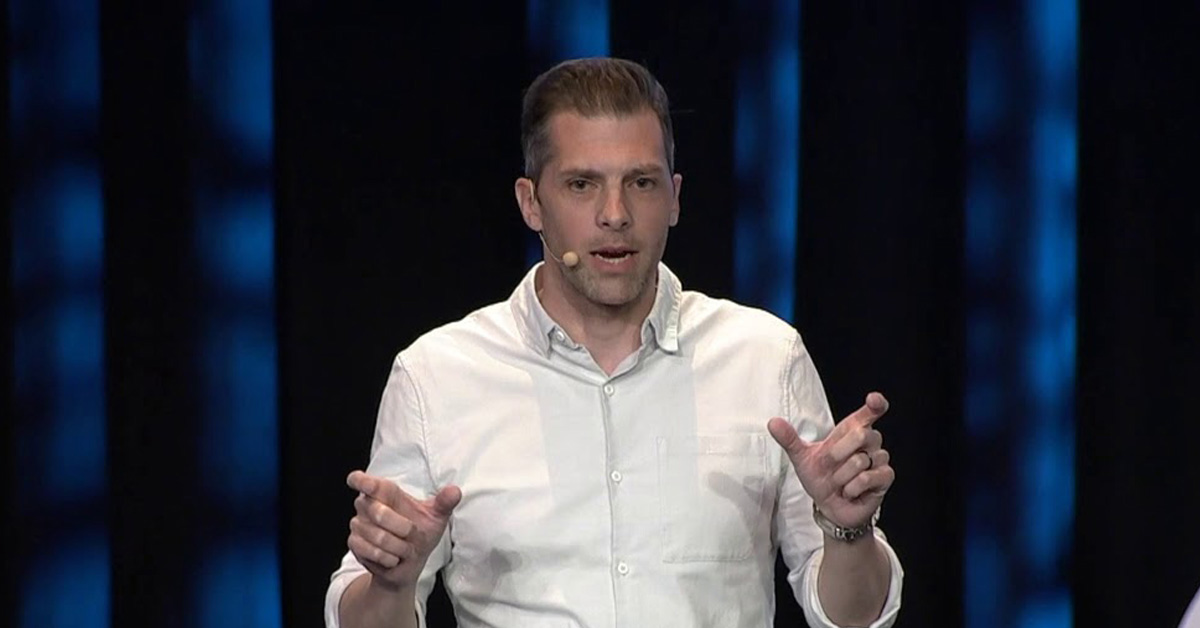
Feeling Lost? It’s Time to ‘Find Your Why’ | with David Mead


About Episode
“Why.”
It’s an incredibly simple word that carries tremendous power when used correctly. But unfortunately ‘why’ is a question we are often afraid to ask of others because we don’t want it to look like we don’t know something. And more importantly, ‘why’ is a question we rarely ask ourselves because we either don’t know the answer…or we’re afraid of it.
The chances are extremely high you can clearly explain WHAT you do for a living.
“I’m a reality editor that works on competition shows.”
“I’m a production coordinator for a local television station.”
“I’m an online entrepreneur that teaches other entrepreneurs how to organize their business finances.”
If you spend a little time thinking about it or referencing your own portfolio or resume, there’s also a good chance that you can clearly identify HOW you do your job.
“I communicate clearly and effectively.”
“I harness the raw emotion in every story I tell.”
“I bring everything I have to every client I work with.”
But now it’s time to ask yourself….can you clearly identify WHY you do what you do?
While it might seem trivial, not having a clear understanding of why you do the work you do every single day can have a significant impact on the quality of your work, the energy and attitude you bring to your job every single day, and it can have a negative impact on your health as well.
When the bullets are flying, deadlines are looming, and stress levels are at DEFCON 1 across your entire team, if you don’t enjoy your work or understand why it’s important work to you, it’s easy to get sucked into the black hole of overwhelm, depression, and burnout.
In today’s episode I chat with David Mead, co-author of the book ‘Find Your Why’ with Simon Sinek, which is a practical hands-on guide to help anyone find their deeper why and apply it to their work, their relationships, and their entire lives. David and I chat about the importance of defining your why, and then we walk through a very practical exercise helping me define my own why at a much deeper level than I already have in the past.
If you’re struggling to find a deeper meaning behind your work or your relationships, this episode is a must-listen.
And if you find this exercise helpful and you want to start building an action plan that will help you achieve the most important goals in your life that align with your deeper why, ‘finding your why’ is just one of the many exercises I teach in my FOCUS Yourself program.
Episode Highlights
- People don’t buy WHAT you do, they buy WHY you do it
- The concept of the Golden Circle and learning to articulate the “how”, “why”, and “what” you do
- Recognizing when you are headed for burnout
- “I’ve got to make money somehow” is not a strong or fulfilling enough “why”
- Why discovering the deeper meaning in your work is essential for health and creativity
- Living out your deepest and best self is not dependent on your job or paycheck
- If you don’t know your deeper “why” then the “what” will never be truly satisfying
- How to properly interrogate your “why” by honing in on the driving themes of the stories your tell about your life
Useful Links
About Guest
David Mead is the co-author of Find Your Why, a practical guide on how to discover the Why for any individual, team or organization. He’s also a guide of the online Why Discovery Course. David’s ‘Why’ is to propel people forward so they can make their mark on the world.
Specializing in organizational culture and leadership, David shifts perceptions about the reasons why organizations really exist, what leadership is and how human biology plays into it all. David started by developing content to help Simon Sinek (author of ‘Start With Why) share his powerful ideas and in 2012 he began speaking and facilitating workshops to help shift people’s perceptions about leadership and culture.
Transcript
Zack Arnold: I’m here today with David Mead, who is quote unquote the igniter on the Start with Y team. He’s also the co-author of the book Find Your Why. David, I’m super, super excited to have you on the show today.
David Mead: Thanks, Zack. Nice to be here.
Zack Arnold: So, like I was saying a little bit before we started officially recording, I geek out on systems, on setting goals, on frameworks, and I know that one of your specialties is simplifying these difficult to understand concepts into very, very simple, easy to follow steps for people. That’s the kind of thing that I specialize in as well, so we’re just going to be two nerds talking all about setting goals today.
David Mead: Fair enough. Sounds good.
Zack Arnold: To give people a little bit of background, there was this concept started by a man named Simon Sinek, called Finding or Starting with Why, and before we dig into some of the nuts and bolts and frameworks and figuring out how to actually figure out what our why is. I would like to, quote unquote, start with why and help my audience understand the concept of the Golden Circle, just to give them a little bit of foundation before we move forward. So, can you explain to me a little bit about what the Golden Circle is?
David Mead: Sure. So, the, I mean, the bigger context behind it, and the sort of the reason that this all came up is that you know this was all born from Simon’s own personal experience and most of us and most people around the world we go to work we do the jobs that we do we do whatever keeps us busy throughout the day and we find ourselves doing it because we have to not because we want to and we sort of get stuck in this rut of you know, just making a paycheck or climbing the corporate ladder, or whatever it is that we’re trying to do to get ahead, and these, you know, the goals that we set are usually around, you know, our career path, or the projects that we’re doing, or the sort of the tangible things that we can see, and sometimes we forget how important it is to have meaning and purpose in what we do, and that’s really where we find fulfillment and lasting happiness in the work that we do. So, Simon basically articulated this simple concept called the Golden Circle, which is just a simple bullseye. If you just imagine it in your mind, the very center of the bullseye, there’s is the why, and then the middle ring is how, and then the outer ring is the what, and the premise is that every one of every organization, even our own careers, operate on these three levels, and then everybody knows what they do. This is the product you sell, the service you offer, the title that you hold, or the role that you play. Some know how they do what they do, which means how are you different or special? How do you set yourself apart? What are your core values, your guiding principles? You know, how do you run your business or do the work that you do? But very few individuals, very few organizations understand, or more importantly, can really clearly articulate why they do what they do. And by why we mean what is your purpose, what is your just cause, what is your belief like what’s the what’s the difference that you’re that you make in the lives of other people, and usually what most of us do is we focus on the what and the how. We’re really good at talking about what we do, we’re pretty good at talking about how we might be different or special or better than somebody else, but that’s usually where we stop. But the inspired leaders, the inspired organizations do it backwards, they start with their why, their purpose, their cause, their belief. They talk about, you know, the difference that they’re trying to make in the world, and it inspires people to, you know, come and join them in their cause, or to work with them, or to buy from them, or whatever it is, because that’s where we feel something, that’s where we have something that is meaningful, and that’s fulfilling for us.
Zack Arnold: Well, if I’m somebody that’s an individual, let’s say that, like me, I do creative work, I’m a film editor. I have a lot of other people that follow this program and this podcast that are also working either in Hollywood or other similar creative industries, and they might not work for a company permanently, or even for years, where you jump from job to job to job. Job, and you’re basically a smaller cog in a much larger machine, so my assumption is, well, my why is because I’ve got to make a living, I’ve got to earn money, right? That’s it’s, I’m assuming it’s that simple.
David Mead: Well, that’s sort of the, you know, if you look at, you know, we all, most of us have heard of Maslow’s hierarchy of needs, right, and how, you know, the bottom you have sort of the survival stuff, and at the top you have the meaning and the purpose stuff. So, when you first ask somebody, you know, like, why do you work or why do you do what you do, usually the first answer that comes out of their mouths is, well, I got to pay the bills, I got to, you know, I want to live a particular lifestyle, I got to, you know, I got to provide for myself or for my family. Those are, you know, that’s that’s fine, but that’s there’s, we deserve more than that, and there’s an opportunity to look at our work in a little bit different ways. So, while those things are absolutely necessary, and I’m not suggesting that we sort of gloss over those things because those are important, how would it be, or what would it look like if we could also find real meaning and fulfillment in our work, and we actually love to do what we do, and we got to make a living doing it. So it’s just a different way to look at our careers, rather than just being a means to an end. It’s how do we turn this into our life’s work? How do we show up as the best version of ourselves, so that you know, no matter what it is that we decide to do, whether we’re in, you know, whether it’s a particular, you know, different projects that we work on, whether we completely decide to change to a completely different field somewhere down the road, like it doesn’t necessarily matter. Our why transcends all of that. It is who we are at our natural best, and it’s not tied to the particular job that we have or the particular paycheck that we make.
Zack Arnold: Yeah, and I think that that’s a really, really good way to put it, where you have to understand it’s much, much deeper reason inside of you, that’s kind of the core reason that you do what you do, and it’s like the program that’s deep inside your brain, where, like, like Simon talks about, and I’m going to put a link to his TED talk that explains this in great detail, because a couple people have watched it, somewhere in the neighborhood of like 39 million people have watched this TED talk, so I highly recommend anybody listening to this go listen to that later, and the link will be in the show notes. But it’s this gut feeling that you get about why you’re doing something, and nobody ever gets a gut feeling about I have to pay the bills. There’s this deeper reason, and where I also want to apply this concept, not just in career or building a team or finding the right job, but just also in trying to achieve a difficult goal in general, because I work mostly with individuals, and when they come to me saying I want to lose weight, or I want to take the next step in my career, or I’m just, you know, a disorganized mess, and I need help becoming more productive, everybody’s always focusing on the what, what’s the best app, or what exercise program, or who should I be networking with, whatever it is. And I always tell them that if you’re going after a really difficult goal, if you don’t first define your why, you’re never going to make it through the what, because it’s drudgery, and you’re going to lose motivation, and your willpower is going to wane, and discipline just flat out sucks, so you have to find a deeper why. So, can you explain how having a deeper why, whether it’s trying to achieve a goal with an organization or just achieve your own personal goal, can be a much deeper and more lasting driver than just the details?
David Mead: Sure, so there’s a, there’s a lot of science behind this, and I’ll keep it simple, but human beings are achievement machines. Like, we want to get stuff done, we want to achieve our goals, we want to make steps forward, we want to make progress. We are rewarded when we do those things, so to motivate us to want to do it again, or to do more, and to reach for the next goal, or for the next, you know, bonus, or whatever it is that we’re after. What is the problem with that, though, is that when we are only after those short-term things, if it’s, you know, I want to do this thing by next week and I achieve that, or I want to, you know, lose five pounds and I do that, those things are fleeting, and when we achieve those things, it feels good, but it doesn’t necessarily last very long, those that feeling wears off, and having a why, or being really inspired by something that we can never really check off the list, it’s something that drives us and inspires us and motivates us every single day to do what we do, that that is what really brings us lasting fulfillment. Now, of course, along the way, it’s nice to have those short term goals that we can hit, or those short term milestones that we can see. Yes, we’re making progress, but if we don’t have that, that, that bigger driver, that bigger inspiration, that sort of, you know, that lighthouse way off in the distance, we can be doing all kinds of these short term things, but if we don’t know where we’re going, who knows, we might be headed in circles, and we don’t know, we’re just, we’re making a lot of progress, it seems like, but if we don’t know where we’re headed with those things, then ultimately it doesn’t, doesn’t really matter.
Zack Arnold: Yeah, one of the tangents that I see to this now that you’re kind of mentioning the lighthouse, I’ve done an interview in the past with Joe Desenna, I don’t know if you’re familiar with him or not, but he’s the he’s the guy that founded the Spartan race, which is the most. Most popular form of obstacle course racing, which my audience knows that I’m absolutely obsessed with, and I’m also currently training for American Ninja Warrior, but what he talks about is this idea of finding your true north, so if you’re an explorer back in the days before GPS and navigation systems, and you’re in a brand new world, you use the North Star, because it never changes, and it’s always there to guide you, and you can use that as your compass, and I feel like when you find your why, that’s your true north, not the productivity app, not the goal of losing 10 pounds. The true north is what guides you, no matter which direction you might be going, and it never changes its position.
David Mead: Yeah, you’re absolutely right, and one of the things that you mentioned a minute ago, which is interesting too, is so often we sort of bifurcate or we sort of separate personal life and work life, right? And we think those are two different things, and really our why is who we are at our best, no matter where we are. So the idea is that we should be able to show up at our best at home, around friends, community, family, whoever it is, in the on the individual side, we should be able to show up as that exact same person in the work that we do, same person, two different scenarios, but we should be able to show up leading with our why, or with that again, the contribution, the impact, the difference that we want to make in the lives of the people around us, we should be able to do that, no matter what scenario we find ourselves in,
Zack Arnold: So now that we understand why the why is so important, and I realize that, you know, very wordy with a nice little pun in there, but now that we, we realize that this is so important, and we realize it’s not just about the what, it’s not about the apps or the systems or the strategies or the workout. How do I actually figure out what my why is? It sounds kind of intimidating.
David Mead: It’s a, it’s a process, and the biggest thing to understand about the why is that it’s not something aspirational. A lot of times, when we’re talking about hitting goals, or, you know, thinking about the future, we think about who we want to become, or what we want to achieve that we don’t have yet, the why is not that nothing, nothing wrong with aspirations, of course, they have their place, but when we’re talking about the why, the why is something that actually comes from our past, it’s already within us, it’s already there, it’s just a, it’s a discovery process, it’s something that we discover rather than create, and so rather than sitting down and thinking about, you know, who do I want to become. It’s who am I when I’m at my best, and how do I basically replicate that. So, the way that we find the why is we go back in time, and we essentially look at all the experiences, the life events, the stories, the times in our lives when we have felt at our best, when we have felt the most meaning in our lives, and we felt most fulfilled by the things that we were doing, the times where that had really the biggest impact, and a lot of times those are not necessarily all the best or the quote unquote happiest experiences. A lot of times those can be the lowest of the lows. They’re things that we wouldn’t necessarily ever want to go through again, but we wouldn’t trade them for anything, because of what we learned, or what we gained from those experiences, or what those things taught us, what we took with us from those things, and so we’re really looking for at whatever extreme they happen to be, quote unquote, positive or quote unquote negative, I hate calling them that, because it just depends on how you look at it, but looking at the most impactful specific times in our lives, and telling about those experiences, those stories in a lot, in as much detail as we can, really focusing on how we felt, what what did we learn, what were the emotions that came along with those experiences, and when we tell a few of those stories, you know, at least three, but we can get to four or 567, as many as you want to tell. There’s a very distinct pattern that begins to emerge among these stories that could be completely different in their context. So, one could come from early childhood, one can come from college, one could be work, one could be personal life. It doesn’t really matter where they come from, but we find that when we show up at our best, when we feel the most fulfilled, when we are, when we feel that we’re making the biggest difference, or when we’ve had those impactful experiences, there are certain things that are common among all of those stories, and the interesting thing is, it’s really, really tough for us individually to pick those out ourselves, and so when we do the Y discovery process with an individual, we, if we could force people, we would, but we can’t, so we highly recommend or encourage them to find a partner, somebody to work with, sort of that outside perspective, because it’s really interesting, whenever you work with that partner, after these stories are told, it’s pretty easy for that partner to pick up on these recurring patterns or themes, or it can be very, very difficult for the person who’s going through the process themselves. So, after that storytelling process, essentially we synthesize those main themes or patterns that seem to come up in most, if not all, of the stories. And from that data we sort of narrow that stuff down into what are the from those themes as we call them, what are the one or two that are the biggest, the ones that seem to encapsulate the rest, the ones that just seem to jump off the page, the ones that we’re most drawn to or inspired by, and then from those we form a very short and simple why statement, which has really two basic components, which is a contribution and an impact, and the idea behind that is our why is essentially the contribution that we make, it’s the thing that we do, and a lot of times it’s the thing that we sort of unconsciously do, because we just naturally do it when we’re at our best, but this is, and I’ll give you an example of a why statement of my why statement here in a minute, but the contribution piece is something that we, we show up and we actually can contribute. This is something active that we do. The second piece of the why statement is the impact, which is the piece that when we show up and we make the contribution that we make, what, what do we cause to happen. What is the result of making that contribution, and so those two elements really put together that that why statement. So I’ll pause there for a second. If you have any questions about the process, we can answer those, and then I’ll give you an example of what my why statement is, just to give you some context.
Zack Arnold: Sure. Well, the one thing that I want to make clear before going any further, for anybody that’s worked with me before, that’s in one of my programs or has even just listened to the podcast or read my articles, I want to differentiate between what you’re talking about and the process of finding your why with work that I do, because when I work with somebody to find their why, it’s for a specific goal, so if somebody says we’ll just use the super simple example of I want to lose 20 pounds, right, so it’s not really because they want to lose the weight, it’s not because even they want to look better, or whatever it is, it could be something as deep as because I want to have the energy to, you know, play on the floor with my kids and be present as a father, right? So that’s a deeper why, and I’ll teach them the process of, and I’m sure you’re familiar with this, the process of stacking your whys, or whatever. Everybody has a different name for it, but it’s kind of like peeling the layers of an onion, where you continually ask yourself, why is that important? Why is that thing important to get to a much deeper meaning for why a specific goal is something you want to work towards. What you and I are talking about today is even deeper. It is the core why that drives all of the other whys and all of the goals that you want to achieve. So, I just want to make sure for those that have worked with me or are working with me, they’re like, “Well, wait, this doesn’t sound like the process that we go through. It’s because I help people focus on why achieving a goal is important. You’re talking about what is the reason or why you behave the way that you do in every single type of circumstance, correct.
David Mead: Yeah, absolutely right. So, you bring up a couple of great points, which is, and this is one of the things that we talk about in the book, Find Your Why as well, in a little different context, but it applies to this to what you’re talking about here too, which is what we call nested whys. So, there are different whys, more for short-term situations or particular circumstances that we can, you know, that we can focus on, that will help us to get to that, that short-term goal, or that that particular thing that we’re working on, and that’s great, and another way that we sort, but they all are in service to, or align with, sort of that bigger overarching why that that is over everything that we do another way that we talk about it sometimes is you have you know why with a small w and y with a capital w and so some of these for the specific goal or the specific project or the specific thing that we’re working on would be the small w and then what we’re talking about here is sort of this overarching thing that everything that we do falls under which is the Y with the capital W, if that makes sense.
Zack Arnold: It does, and I love the idea of the small W and the capital W. I’m totally going to reference that, and of course tell everybody where it came from and send them to the book into the program, but that is like the perfect way to break it down into the simplest terms, where what I teach people is the lowercase y to help them achieve that specific goal. Today we’re talking about the big giant capital W for the big why that drives everything. So I’m very, very glad that we cleared that up, and you said it much more succinctly than I did. So I appreciate that. So what I want to do now, and which I know we don’t have the time to go through this process, the way that you really, really should, but rather than just talk about larger theoretical concepts, or the process, or the steps, I actually want to go through a mini session to just help people understand what the process sounds like to find your deeper why, using me as an example.
David Mead: Okay, let’s do it.
Zack Arnold: So, what I’m.. and I know that the it requires talking about several different stories and really diving into your past, and like you said, it’s not about discovering, it’s not about figuring out who you want to be in the future, it’s about discovering who you already are and uncovering that. So, I’ve kind of gone through this process somewhat by myself, haven’t done it with a partner yet, and I’m definitely going to do that, because I think the. Is a vital part of whether it’s trying to grow a business or trying to grow your career or trying to build a personal relationship and grow a family, it all is driven by this deeper why. And if I were to go through and break down general themes throughout my life, if I were just going to kind of condense this into a few minutes, I would say that there’s this theme and these multiple stories of being bullied throughout most of my younger life, or feeling like I have to protect other people that are being, you know, put down, or that are kind of being marginalized, and helping them overcome those barriers. So that would kind of be the first level of, oh, there’s a lot of stories that I remember of this happening, but what I love about your process is you then say, well, you need to find something really, really specific. So, what I want to do is tell what I think is probably one of the most defining moments of my life, and I want you to help me break it down, so people can understand this process and do it for themselves. Does that sound like that’s something that’s doable in the next 20-ish minutes?
David Mead: Sure, let’s give it a shot.
Zack Arnold: Great. Okay, so this, what I would consider the most defining moment or defining story of my life was my first day of my senior year of college at the University of Michigan. I was in a high-level advanced film production course, because I was in the film production program. I’ve become a video editor now, but at the time I was shooting short films and running around with cameras and doing all kinds of other stuff, and about 10 minutes into the class, a kid rolled in in a wheelchair, and everybody just kind of looked around with disbelief, because this was a hands-on film production course, where your entire grade for the whole semester was defined by one short film, and you work with the same group from day one, so it’s there might be a classroom of 25 kids, you’re only going to get to know four or five of them, because you have the same group the entire semester. And I started hearing the whispers, and the whispers were, oh my god, I hope I don’t get that kid in my group, probably can’t do anything, like just all these whispers and stares of who does he think he is coming into this class, keep him away from me, and that triggered something in me that to this day I still don’t completely understand, but my initial gut reaction, like you talk about, is that gut feeling, not using rational thought, was somebody’s got to bring this kid into their group, I think it’s going to be me. So when we started partnering up, I approached him and I said, “Listen, I don’t know anything about your capabilities, I don’t know your interests, but listen, we’re going to figure it out. We would love to have you in our group. And that person was Christopher Rush. And anybody that’s listened to me knows all about Christopher Rush. He was the first quadriplegic to become a licensed scuba diver, and I made a full-length documentary about his life, and he also developed the five step go far framework, which is the framework for all of the programs that I teach and help people to achieve their goals. So that was the most defining moment of my life, and has changed the trajectory of everything that I’ve done since then. So, how do I break down that specific story into finding a deeper why.
David Mead: Sure, so you know, really, in order to figure out what the themes are that would, that would lead to your why, we’d have to hear several stories. But let’s break this one down. We’ll see what, how much time we get, and if we get time, we’ll dive into another one. I’d like you to really put yourself back in that that day as much as you can, and really focus on the emotions that you were feeling. You told me the logistical stuff, you told me, you know, kind of what the class setup was. You had these, this group work you knew you had to do. You know, this kid that was in the wheelchair, I mean, you just kind of gave me some of the logistical stuff. Tell me if you can remember specifically what were you feeling at the time where you began to hear these whispers, and you thought, “I got to do something. Like, what was going through your mind.
Zack Arnold: I think it was a mixture of two different emotions. One of them was just blind rage and anger, because it was coming from the quote unquote cool kids that just thought that they were the best in the whole program, and God forbid they have to have somebody in there that they have to deal with that has a wheelchair. So that was part of it was just this blind rage at the quote unquote cool kids that were picking on people that were not as cool or as good as them, but then I think the other emotion that comes to mind is empathy, not sympathy, but empathy, and I think that that partly comes from the fact that growing up I was always kind of the scrawny nerdy kid that got picked on and got bullied, and I felt like I was watching somebody else in a different way go through that same process. So, it was a mixture of anger and empathy.
David Mead: So, I’m picking up on a few things here, and again, just to sort of give you a little bit of insight to the process. I’m listening for some of the words that you’re using, and I want to dig into a little bit more of what’s behind those, so like blind rage and anger, that’s some pretty serious stuff. What’s what’s behind that? Because if you felt that in that particular moment, what led to that? I mean, that doesn’t come up just in the moment. I wouldn’t think. I would imagine it came from other experiences or other things that triggered you to feel that. Um, talk more about what that, that, what’s behind that blind rage.
Zack Arnold: I think, again, like I had mentioned a little bit, it comes from being treated that way myself for so much of my younger life. When I think about what has really defined me and where I’ve gotten, and a lot of the resilience that I’ve developed, it’s because I was treated so poorly and bullied for so many years of my life, and it’s when I think back to my education, I feel like that was the greatest part of my education growing up, was not the classes or the tests, it was the fact that I overcame that and learned how to deal with that type of adversity, so I think a lot of that was just feeling that anger that I felt when people treated me that way. I think another part of it would be that I grew up in a household where basically my father’s entire mission was to help. He was a high school principal and a teacher, and he always went out of his way to take people that were less privileged or that were impoverished, or whatever the obstacle might be in their life, he would pull them out, and he would basically give everything of himself to get them to the place where they were, you know, whether they needed a place to stay, where he would literally have kids living in our house with us that didn’t have a home. So I saw that as a pattern growing up, and I think that’s where the, the empathy comes in, but I think that the rage just comes from having been treated that way myself for so many years.
David Mead: Would you say that the, that empathy is the, that feeling of empathy that you had, is it the opposite of the blind rage, or were they, are they somehow different?
Zack Arnold: No, they feel very different. They’re like polar opposites, and it’s weird to describe both of them at the same time, but it was just this, this immediate need to feel that I needed to protect somebody that could possibly be feeling the same type of anger that I might have felt in that situation.
David Mead: Sure, I guess what I meant was, are they complete polar opposites? Did you feel the empathy because of the rage? Like, do those go kind of hand in hand because they are polar opposites, and you, you felt that, and at this, so at the same time you felt like doing the complete opposite of that because of how you had been treated yourself.
Zack Arnold: Sure, yeah, I think that makes perfect sense.
David Mead: Okay, want to just dive in a little bit to some of the stuff that your, that your father did. What are some of the, the attributes or the characteristics of your father when he was doing those things for those, for those other students that, that really stick out to you? What words would you use to describe those attributes that he had?
Zack Arnold: He was always somebody that would put himself before others. He still does to this day. Now he’s not a principal anymore, but now he’s a reading specialist, and he teaches children that have the most difficult form of dyslexia and autism and learning disabilities, and he specializes in taking the most difficult cases, because nobody else can. So I would say that the pattern would be just the sense of, well, if nobody else can help this person, then I guess it’s my duty to help them and figure out how to do it when no one else can, and stepping in being that, whether it’s a protector or uplifter, or I can’t really think of any other good adjectives at the moment, but that I would say that that’s the, that’s the overarching pattern,
David Mead: So going back to just to this experience with Christopher, what was the.. do you remember what the reaction was from him when you invited him to be part of your group?
Zack Arnold: I mean, he was elated, and I think that this was a reaction that I don’t think this was unheard of to him, because as I learned more about him, he really learned how to break the ice with people that were uncomfortable with those with disabilities or those in a wheelchair, people that didn’t understand what was going on with him, and he learned how to break that ice, so it wasn’t just this overwhelming sense of, oh my god, nobody’s offered this to me before, but there were certainly this openness, and this, it was, it’s kind of like the this idea of it takes one to know one, he’s like, oh yeah, no, I can tell you’re definitely, you know, you’re somebody that, that, that understands what it’s like to work with somebody with, with a disability. And he was very, very happy and very welcoming, but it wasn’t just the sense of, oh my god, nobody’s ever done this before, that helps.
David Mead: So, what do you feel like in that moment? What do you feel like you were able to do for Christopher. What difference do you feel like you made?
Zack Arnold: I feel like I gave him an opportunity to really use his capabilities to the fullest, where other people most likely have not given him that opportunity, and he’s been limited based on the perception of others.
David Mead: Okay, cool. So, just for the.. we could dig into this a little bit more, but just for the sake of time, let’s dissect this a little bit, and I’ll just.. I’ll give you an.. it’s a little bit of insight on some of the notes that I.. that I pulled out of here. So, again, and this is where it’s interesting to have that outside perspective, because, like I said, I list. Listen for certain words, I listen for meaning behind the words, I listen for how many times certain words come up, so the word protect came up at least three times, if not more. So I don’t know if you, if you recognize that, but there’s definitely a theme in this particular story of providing protection for people, and it’s not the type of protection of protecting them from something, necessarily. It’s almost to me, comes up, comes across as a protection, more of like you’re you’re watching out for them to ensure that they have the opportunity, that is another theme that came up to for people to use their abilities to the fullest. So that’s obviously something he did for Christopher. Without digging, we didn’t have a chance to dig too far into what your dad was doing for those other students, but you know, just simply by telling me that now he’s working with these, these kids who have such a hard time reading, he’s giving them the opportunity to use their abilities to the fullest. I mean, it’s that’s the interesting thing about the why is often what we are most naturally able to give to others is the thing that we admire most in others, or that we receive most ourselves. So there’s kind of a give and take element to this as well. So would have been really interesting to dig a little bit more into your dad and what you admire about him, but some of the things that you said were he put others before himself, there was definitely this idea of empathy that came up again. So, these themes of protection, empathy, helping, you know, giving people the opportunity to use their abilities to the fullest, putting others before self, you know, watching out for the good of others are definitely themes that I pulled out of that story, so the interesting thing is, and I’m curious to hear your feedback on it, but when you hear me play these things back to you, did you did you recognize all of these themes coming out, or were any of these things sort of an aha for you that you hadn’t thought about while telling the story?
Zack Arnold: No, I wouldn’t say that any of them are an aha. I mean, the, the name of my program is Optimize Yourself, so I clearly, I think that you’ve, you have found a theme here, but what, what I think you’ve done, which is really interesting, and done this completely on the fly, and was not something I expected, but you really helped crystallize and clarify what I’ve been trying to get to the root of forever, which is why am I so passionate, almost to the detriment of myself, to build this program and do all these things? Like, what is it that’s driving me to wake up at 530 in the morning when I could sleep in, but instead train for events, or write articles, or record podcasts, like I am now. I’ve been trying to figure out what is that driving machine that I just feel like is constantly spinning inside me, and I think you’ve helped crystallize what that is in very clear, concise words, whereas for me I haven’t quite been able to figure out what that is,
David Mead: And you know it’s interesting too, because I, you know, we hadn’t met before today, but just, you know, hearing a little bit about your, your past, and I think looking at what you’re, what it is that you’re doing now, you know, this is years ago in college, I don’t know how many years ago, but maybe not too many, but you know, if you go through just with the simple patterns that we’ve identified here, if you were to identify some of the other stories that that really stick out from your past, my guess is that a lot of these things would come up in those stories as well, especially if you think about a little bit more about your dad, what you really appreciate about him, some of the other stories that you were involved in, perhaps of seeing him, you know, do some of these things that you think, man, when I grow up, that’s that’s the kind of thing I want to do too. The pattern thing is really, really interesting, and that’s really where the Y comes from. The other interesting thing that you just said is that you do this sometimes, you know, to the.. I can’t remember exactly the words that you use, but like to the detriment of almost too much, right? And our why.. what one thing we have to be careful of with our why is that, while it’s our greatest strength, if we overdo it, it can also be our greatest weakness. So, my why, for example, again, going back to this idea of contribution and impact, my why is to propel people forward, so they can make their mark on the world. So, anything that I can do, whether it be for my kids, or for clients, or for my team at work, whoever it is, if I can just help them be a little bit better than they were the day before, if I can help them make that one step towards something that they want to get accomplished, like that is what fills me up. When that becomes a detriment to me, is when I try to force that on people who aren’t ready for it, or who aren’t asking for it. Right, so if I want nothing more than for my kids and for my wife to progress and to grow and to move forward, and sometimes, man, they just like they’re not, they just don’t want to do it, and so I will push, and I will push, and I will push, and I will propel, and propel, and propel, because that’s what I love to do, and that’s what fills me up, and when I do it in a way that is, you know, or do it for a person, or try to do it for a person who’s not ready for it in that moment, it actually becomes a weak. This, and it actually can harm relationships, and it can, you know, ruin the work that I’m trying to do. So, we have to find that balance, and we have to make sure that we’re, we’re doing these things in the most productive way that we can. If that makes sense.
Zack Arnold: Well, to my knowledge, I was not a twin brother, and we were not separated at birth. But if I did find out, in fact, you are my twin brother, I would not be surprised at this point. I could have sworn that was me on the other end of the microphone, where part of the reason that, or probably one of the biggest reasons I’ve developed this program was because it was to the detriment of myself for years and years and years, and I couldn’t understand why I kept burning myself into the ground, and it was when I discovered, oh, I am doing this to the detriment of myself and my passion, and I would say my obsessive passion for trying to be best at something, whether it’s myself or now helping others be the best at something, that was to my own detriment, and it’s still to this day to my father’s detriment, where I am now his health coach, helping him understand how his behaviors are driving him to the points that they do, whereas, like with me, as my audience is very well aware, I’m very open with them and vulnerable about the fact that I’ve dealt with suicidal depression and massive anxiety and social anxiety, and I was diagnosed with adult onset ADD, and all of these things kind of came at me as an adult when I started working in Los Angeles in this creative field, and it took me over a decade to finally figure out what all the behaviors were, but now I’m really starting to understand the source of those behaviors and why I was behaving that way. So, what I’ve been trying to do is not just give people the tools and say, well, this is how I improve my diet, or this is how I move more throughout my work day to stay creative. It’s here’s why these things are important to you, and how to tap into that, but again, I still have to be very careful of that line between it being my greatest strength or being my greatest detriment and leading to being my greatest weakness. I’m very, very glad that you pointed that out, because a lot of times our greatest strength is our greatest weakness.
David Mead: Yep, yep, you’re right.
Zack Arnold: So, what I want to do first of all, I want to be very respectful of your time, and I know that we have a limited amount left. So, I want to make sure that my audience understands that this is a process. You’re not going to discover this in 1520, or 30 minutes. This was a very, very small microcosm, just to help people understand what the process looks like, because, like, I mentioned, I do teach the why stacks and figuring out what’s that deeper why to reach a specific goal, but if you want to discover why you do everything that you do, you’re not going to do it in 20 minutes, although I got pretty lucky, and I got pretty close.
David Mead: Yeah, I think you know to that point, sorry, just real quick, I think you know certain people are at different places along this path, right, and a lot of people that have been thinking about this stuff, even if they haven’t necessarily gone through a process or an exercise, if we’ve thought about this and we’ve been conscious of it, you know, these ideas will come a little bit more easily, and we’ll be able to maybe get to that, that at least a draft of the why statement a little bit more quickly, or at least be able to identify those themes pretty pretty quickly for other people who this is brand new to them, and they’ve always just sort of been stuck in the rut, and now this is a different way of thinking, it’s going to take a while, and so you know, I think you know, as you say, this is a process, please, please, please, if you’re going to go through this, be patient with yourself. Don’t try to rush it. This is not.. there’s no shortcut to this. It just.. it takes time, and you know, just even from my own experience, I originally discovered my why about eight years ago, and it has.. you know, the words have morphed and changed a little bit over time, and the feeling has always been the same, but that’s part of the process too. Is as we become more conscious of it, as we live it, as we begin to do it on a daily basis, we’ll find the words or the phrases or the things that really just feel really authentic to us. But one thing to remember is it’s not about the words, it’s about how you feel about it. So you don’t have to have the words perfect in order for you to actually start living it. You’re when you are at your best, you’re already doing it anyway. All the discovery process does is just to help you put words around it. So don’t get wrapped around the axle on having the words be perfect, as long as you, you get the feeling from it, and it feels right, it is right.
Zack Arnold: Yeah, I couldn’t agree with that more. And did one super quick thing. I just want to add on for people that are thinking, well, this all just sounds kind of like very, very weird personal development stuff, and why do I need to know a why statement? And I think where can be so incredibly useful to people that are at a place where they really are not familiar with this type of process at all. It’s going to help you choose the right jobs where you’re happier, it’s going to help you find the right people you can have more lasting, meaningful friendships with. It’s going to help you find a mate that you are more compatible with, if you haven’t found one already. And it really kind of drives everything. So, if they’re thinking, well, this sounds like the cool exercise, maybe, but like, how do I practice. Use it, that’s how you can use it in a practical setting. It changes the way you decide and say yes or no to just about every opportunity that’s ever presented or comes your way. So, when people wonder, well, how did you get all these jobs that seem to be just the perfect fit? It’s like, well, because I said no to a ton of them that weren’t the perfect fit, and if they say, well, how did you know it was the perfect fit, it’s because I know why I’m doing things, who the types of people are that I want to work with, based on their why. So that’s in my mind a very practical reason to use this.
David Mead: Sure, and another thing that really makes makes it practical is, and we get into this and find your why in the book, obviously, but it’s it’s having a balance of all three of the components of the golden circle. The why is just a piece, there’s the how and the what, right? And people are, you know, obviously they know what they do, they’re already good at that, and the how and the why sometimes are a little bit tougher to put our hands on, but the what really makes the why tangible is our house. And during the storytelling, like we just in this one story that you told, we had several themes that came up, only one or two of those are going to end up in your, in your why statement. If we were to put that together, the rest of those things are the, the behaviors, the way that you behave, or the way that you see others behave that you admire. Those are sort of your guiding principles, your values, how you act on a daily basis, that allows you to bring your why to life, so you know when people say, well, how do you make this actionable? I actually point them to their house. If you’re in a situation where you know that you will be able to behave in the ways that are your basically your guiding principles in action, you’re going, it’s going to be a good fit. You will do well, you will thrive, you will be fulfilled, because you are, you are operating in a way that is at your best, so just a simple example, right? One of my has is to see the big picture, to see the picture on the puzzle box, as I put it. If I get hired for a job and somebody says, David, we want you to come in and we want you to produce a training curriculum for our middle managers. This is really where we see most of the problem in our, in our company, and we want you to focus and do a specific training curriculum just for them. I’m going to have a really hard, hard time with that, and a red flag is going to go up that says, hey, you need to see the picture on the puzzle box, you need to see the entire context of what’s going on, you need to see what’s happening above those middle managers, you need to see what’s happening below the middle managers, and if I can’t get access to that information, I know that I will not be able to show up at my best, because I can’t see the picture on the puzzle box. Does that make sense? So those hows are really the thing that allow us to put that why into action and to know how we need to behave in order to bring our why to life.
Zack Arnold: Well, I think that all of that makes perfect sense, and luckily, there’s a brain dead easy paint by numbers way that people can find their why. So, before we conclude, why don’t you let people know how they can find you your book, so they can go through this entire process themselves.
David Mead: Absolutely, the book is called Find Your Why, and it is sold wherever books are sold. There’s also an audio version, although for this particular, this particular type of exercise, I would definitely recommend the reading part. There is an electronic version, though, you can get on Kindle as well. But any other information that you need, you will find at Start With why.com
Zack Arnold: Well, this has been fantastic, just for me personally, being totally selfish. Today’s session was absolutely fantastic, and I really, really hope that for those listening, as well, they’ve been inspired to take a little time to do the deep work to figure out why they’re doing the work that they want to do, or establishing the relationships that they want to establish. Finding your why can really be the driver towards everything. So, I cannot thank you enough for taking your time and spending it with me today.
David Mead: You’re welcome. Thanks for having me on, Zack.
Transcribed by https://otter.ai
Episode Credits
This episode was edited by Curtis Fritsch, and the show notes were prepared and published by Jakin Rintelman. Special thanks to Krystle Penhall and Sarah Furie for helping to spread the love!
The original music in the opening and closing of the show is courtesy of Joe Trapanese (who is quite possibly one of the most talented composers on the face of the planet).