
How to Optimize Your Finances As a Freelancer or Small Business Owner | with Sylvia Inks


About Episode
If you work a demanding creative job and you love doing creative work like I do, then you can most likely identify with how much I hate dealing with money, finances, bills, and paperwork. While I understand all of them are “necessary evils” to running a business and being successful, on an emotional level I feel like when I’m reconciling transactions, creating invoices, or organizing paperwork to do my taxes, I’m simply wasting my time because I’m not creating.
Any time when I’m not “making cool stuff” is time I’m wasting.
Luckily I no longer have to manage mounds of unfiled paperwork, paying bills, or reconciling transaction thanks largely in part to crossing paths with my guest today Sylvia Inks. She’s the founder of SMI Financial Coaching where she’s a business and financial coach who helps entrepreneurs and small business owners learn the financial skills necessary to succeed.
Even though you may have never thought about it this way before, even if you just jump from one freelance job to the next, YOU are a small business. So this episode is especially helpful for those who work with multiple clients even if you don’t technically have a “business” with your own employees.
Sylvia and I dive into all of the necessary steps to organize your finances so you spend less time wading through paperwork and more time creating things you love.
If after this interview you are inspired to get your financial life organized, Sylvia has created an amazing guide where you can follow along one simple step at a time to organize your business finances and make your life easier. Click to download her ‘Ultimate Guide to Organizing Your Business Finances.’
Episode Highlights
- Shifting your focus from being freelance to viewing yourself as a small business
- Preventing the “week of pain” before taxes are due
- Finding the expenses that you didn’t know you could write off
- Making your finances as simple as possible with helpful software
- Taking control of your finances, not just to save money, but to find money you didn’t think you had
- Getting into the mindset that time spent organizing your finances is not a waste of time
- Using Shoeboxed to digitize your important paperwork
- The distinctions between an accountant and a CPA
Useful Links
About Guest
Sylvia Inks is a business and financial coach, who helps small business owners become confident by learning the business and financial skills to succeed in business, allowing them to spend more time and money on their family (and themselves).
Transcript
Zack Arnold: I’m here today with Sylvia Inks, who is the owner of SMI Financial Coaching, as well as. Is the author of the book Small Business Finance for the Busy Entrepreneur: Blueprint for Building a Solid Profitable Business. Sylvia, I’m super, super excited to have you on the show today.
Sylvia Inks: Thank you, Zack. I am looking forward to it.
Zack Arnold: All right, so the first reason that you are here is because on the homepage of your website, in a giant banner, it says Optimize Your Finances, so clearly you and I are going to be a good match.
Sylvia Inks: Yes, we are.
Zack Arnold: And secondly, you and I actually know each other in person. We’ve met at past business events, and we’ve had a relationship back and forth online in the business and entrepreneurial community. So I know for a fact already that you’re just as OCD as I am about details and organization, so this is going to be really, really fun today for anybody that loves this stuff, and if you don’t, it’s going to be really boring. But the reason that I wanted to have you on the show today is that you know all about systems, and my audience, and especially people that work with me in person know that I love systems, because systems make your life easier. They sound boring, and yes, they take a little bit of work to set up, but the investment of your time that you get back when you build really simple systems in your life is completely worth it. And if you’re somebody that does creative work that, like I do, and this show is both for people that are entrepreneurs, and you specifically serve entrepreneurs and business owners, but in my industry, and in a lot of other creative industries, you are your own business owner and entrepreneur, even if you work for other companies, because you’re constantly jumping from one place to the next to the next, you might be 1099 you might be W-2, for people that are like, I don’t even know what that means. We’ll cover that, but what I want people to understand is that in order to truly be creative and find focus in your life, some things just have to be put on the back burner. And if you love being creative and you love writing, or you love editing, or whatever your creative passion is, you have to be willing to accept that life is going to get a little bit messy. The problem is that sometimes the mess can get so overwhelming that it inhibits your ability to stay focused and be creative, and that’s a problem I’ve had for years, where for me the finances, the bookkeeping, paying the bills, like all that was like, oh yeah, no, no, I’ll get to that, I’ll get to that, and then a year would go by, and my accountant would say, “You ready to go? And I’m like, “No, I’m gonna need like a week to get all this stuff organized, and I would set aside an entire week of my life that I call my week of pain to get all this put together, and one of the things that you had said to me a long time ago, you said, “Think about how much money you’re losing by giving up an entire week of building stuff for your business, I was like, oh my god, that makes such sense, and it was creating stress in my life too. So, since you and I have talked, and I’ve also taken a couple other online courses and read books about automating your finances and making sure you have the right systems, my life has completely changed, and I spend like no time on my money, but it’s still doing all the work that it needs to do. Bills are getting paid. It’s really, really kind of awesome. So, what I want to do is just pick your brain for my audience to help them build systems into their life, so they can spend less time worrying about their finances, and they can spend more time being creative.
Sylvia Inks: Great question. So, where do you start? Honestly, you mentioned your week of pain, I remember we, I laugh about that, because we actually had a phone call about that last year, I believe. So, I tell everyone literally, take the tax form, take the form that your CPA is going to be filling out for your business, and literally look at all the line items that your CPA is going to basically report to the IRS if you have any deductions, any expenses in those categories, and I tell everyone to literally just create folders, virtual folders in their cloud to basically store all the receipts in those individual folders, that way there’s no, there’s no guesswork, there’s no thinking, like literally the IRS has already given you all the exact details, what they want,
Zack Arnold: So then you’re talking about kind of like basic business deductions, like any kind of, like for example, for me, if I’m a contract editor at other places, I don’t have a lot of expenses per se. Now, if we’re talking about my business and the website, that’s a very different thing, but for now I’m looking more at kind of the freelancer or the creative, and I’m thinking, well, I don’t really have any expenses. I just worked for this company, but that was one of the discoveries I had. Whoa, there are actually a lot of expenses that I have that I can be writing off that I’m tracking, and I’m losing a lot of money in return. So, even before we talk about how to organize or automate this stuff, what are some of the things that I should be thinking that I should keep track of this, because it’s actually going to make me money by doing so,
Sylvia Inks: Yeah, absolutely. I think you talked about the, you know, 1099 and everything, so that’s definitely an area that if you’re hiring any independent contractors to do anything for your business, so whether it’s a website designer, whether it’s a graphic designer, whether it’s a virtual assistant, making sure that you are sending them a w9 the. Before you actually even start business with them, so that you can 1099 them.
Zack Arnold: Now, how about what if what if I’m the 1099
Sylvia Inks: So, if you’re the 1099 you want to make sure that whatever that person has documented and said that they paid you an income that that matches your what you’ve invoiced them, because you don’t want them, let’s say somebody to 1099 and say that they paid you $1,000 and in your record you only charge them 950 right? So then that means that’s $50 in income that person has reported to the IRS that you received when you didn’t.
Zack Arnold: Sure, that makes sense. But then, how about my expenses, because that was one of the bigger revelations that I had as an independent contractor, is that when I was the 1099 employee for a bunch of other businesses, and when you’re a film editor or a writer, like you can have 10 or 15 different employers in a year, some people have even more, and I didn’t realize there were so many expenses I could be writing off as a 1099 employee.
Sylvia Inks: Yep, so are you familiar with the Schedule C form?
Zack Arnold: I know a little bit about it, but I don’t know a lot about it, and I’m hoping I’m assuming that most of my audience may not as well. So I really want to help me and them understand how to maximize all their deductions and get more money out of the expenses they have.
Sylvia Inks: Gotcha. Perfect. Okay, so if you are running your business as a sole proprietor or an LLC, you want to be referring to what’s called a Schedule C form 1040 I can send you a link for our show notes, but literally in the section of expenses there is numbers eight through 27 where it literally lists every single item that you can deduct, and so it takes 90% of the guesswork out. There’s, you know, advertising, there’s, you know, legal professional expenses, there’s you know, supplies, there’s travel, meals, and entertainment. So literally list every single item for you. And then I also share with my clients that, you know, a few examples of other expenses. There’s other, there’s a other category the IRS allows you to do, and this is where every business owner really needs a CPA to figure out what’s considered reasonable for their business, because something that might be reasonable for your business that to deduct might not be reasonable for me to deduct. So that’s where a CPA does come into play for some of these other expenses. Then there’s leeway there to determine what determines as other, but you know, for example, for me, for other, you know, I have my computer expenses, my cell phone expenses, there’s just other categories where your CPA would be able to deduct certain things, as long as you have an upfront conversation and make sure that that’s something that you can deduct,
Zack Arnold: Yeah, and that’s one caveat that I want to make sure is very, very clear for this audience as we go through this interview, and we’re talking about 1090 nines or Schedule C’s or Schedule k1 or all this other stuff. For the love of God, just get an accountant. Like, I don’t do any of my own accounting work. I haven’t for probably 15 years, and I can even put a link to the accountant that I use, who has saved my life more than once. The idea is getting prepared for an accountant, making their life easier, because if you go to them with literally a shoe box full of receipts, that’s going to cost you a lot of money to get that processed, and you may not end up getting any of the money back that you would have if you just got it organized yourself. So, first of all, we’re not talking about doing your own brain surgery, you hire the brain surgeon to do that for you, but there’s a lot of cool prep work and later on automation that we can talk about that’s going to help you do that, and I like that you brought up the idea that there are certain expenses that apply to some people and not others, and this was a really cool revelation that I found out from my accountant, as he said, “Well, you know, you’re a film editor, and you work in entertainment. I said, “Yeah. He’s like, “Well, that means that you can deduct all of your iTunes expenses, your cable bill, like that’s considered quote unquote research. And it is, so there are a lot of little hidden fees, and all these other things that you’re thinking, “Well, I, this is just part of, you know, me having to learn more about my craft, or whatever it is, but those are actual business expenses that, when they are considered deductions, you’re going to get a portion of that expense back. So that’s why it’s so important to know that there’s actual real money out there that you might be missing, including if you do any work from home, which is now a really, really common thing for a lot of people in my industry, especially for writers, directors, like there are so few people in creative industries that actually just live in an office and get a W-2 check nowadays. I’ve been deducting a percentage of the square footage of my house as my expenses, so for example, the home office that I have is maybe 10% of my entire house. I actually did the measurements once, because I am that OCD, but it’s roughly 10% so that means 10% of my gas bill, 10% of my electric bill, 10% of my rent, and like you said, you can do portions of your phone bill, all these other utilities, and that adds up to hundreds and hundreds of dollars a month.
Sylvia Inks: Yes, and don’t forget about weed, I can deduct. As well, on my weed, like my weed control guy, as well as my pest control inspections.
Zack Arnold: Well, I’m glad you, I’m glad you finished that sentence, because when you kind of pause and look, I can deduct my weed, and I’m like, wait a second, you can deduct weed, but that’s a whole different conversation for another type of podcast.
Sylvia Inks: Realize that, yes, the company was called Weed Man, and that’s why I was like pausing, I was like that, probably doesn’t make sense to everybody else, but yes, my, my weed company and pest control company,
Zack Arnold: Yeah, exactly, so I’m glad that we clarified that, but I think that’s that’s kind of one of the first steps is understanding, oh, as an independent contractor or as a business owner, but you know, first of all, if we’re starting on the smaller end of being a business owner, meaning you’re a one person business, you’re a 1099 employee, even though you don’t want to call yourself a business, you are a business, and you have to treat yourself as such as, and get organized, and first step, like you said, just keep track of your basic expenses, because there is money that you’re leaving on the table if those aren’t organized and deducted, and I love the idea of you going through and creating these different folders, and so what you’re saying is you’re taking like virtual receipts, like emails or whatever it is, and you’re just like dragging them into folders, is that the process?
Sylvia Inks: Yes, absolutely. So originally I’ve seen people that store receipts by the month, thinking like, oh, let me just store every receipt by, you know, the month, so January through December, but really I’ve talked to a couple of CPAs, and they said that if you get audited, what they’re, what the IRS is probably most likely going to do is audit an entire category, so things like meals and entertainment, or you know, office supplies, so it actually makes more sense to create folders for the different types of expenses that you’re going to be deducting.
Zack Arnold: Well, and this brings me to one of the largest pain points of my financial life, which I did not solve until about a year ago, when I solved it because of your book, was the giant stacks of paper, physical paper, and I can’t just take those and drag and drop them into folders on my desktop, I would have these huge stacks, and when I say huge, I’m talking hundreds and hundreds of pages, and it was maybe a foot high. I just wouldn’t process them, because in my brain, as a creative, I’m thinking any time spent organizing receipts, putting stuff in piles, scanning documents, categorizing, that’s taking away from my ability to make something, to edit something, to write something, whatever that process is, for the people that are listening, for me, I just couldn’t do it. I couldn’t bring myself to do it. It was so painful, I couldn’t focus on it, because in my mind it was a waste of time. I know that it’s not, but that’s the way that my mind would convince myself to procrastinate until I built systems, and now I don’t have piles of paper anymore, and if I do, there may be 15 or 20 sheets total, but I discovered this thing called Shoeboxed, thanks to you. So, let’s talk a little bit about how to eliminate the pain point of having so many unorganized, unclassified documents that are physical that you can’t just drag and drop into folders.
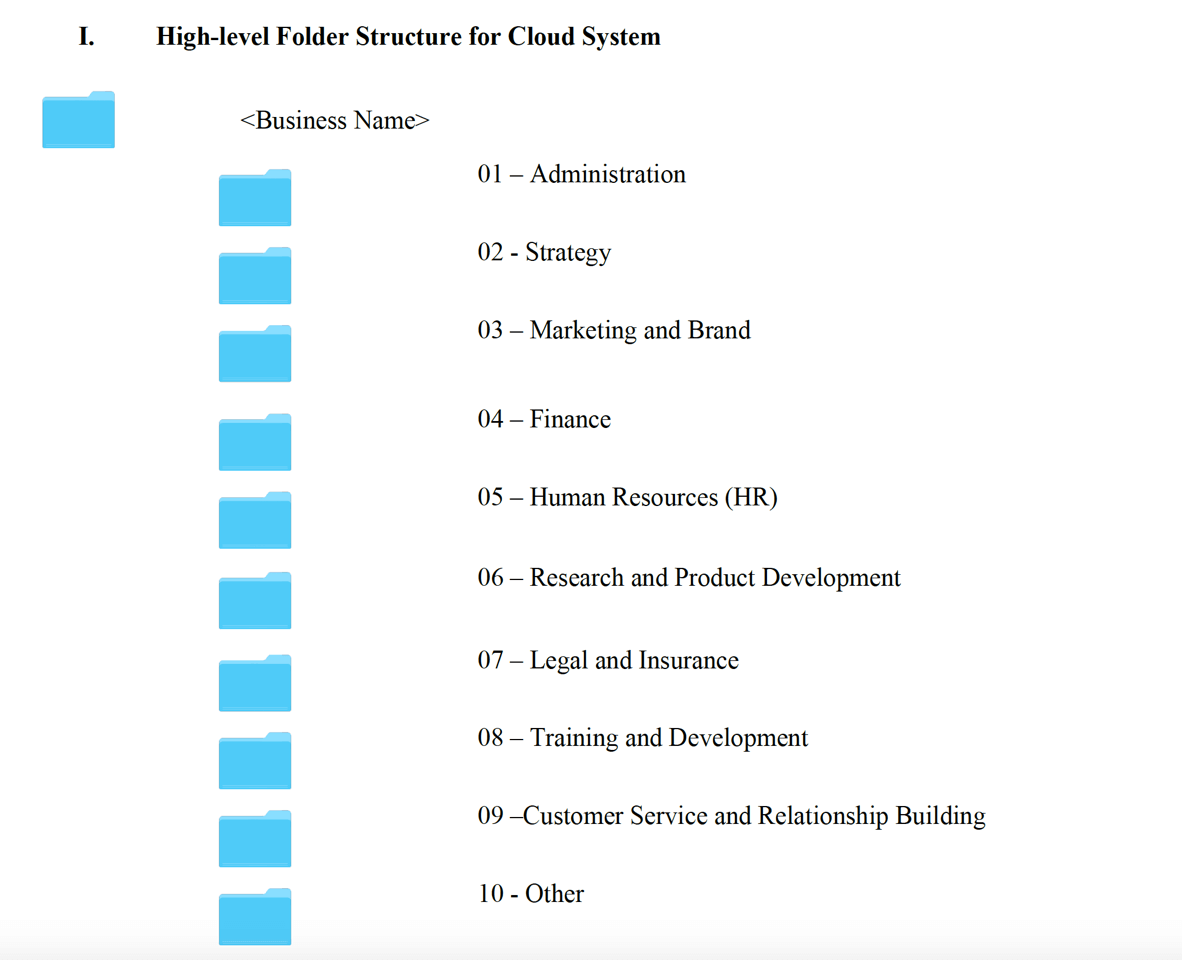
Sylvia Inks: Yep, absolutely. So, yes, there’s a company called Shoe Box. It’s actually based in Durham, North Carolina. I’m here in North Carolina, so they will take your files, so they will literally scan physical paper or and receipts, like you mentioned, and store them in the cloud and get those organized for you. What I actually recommend a lot of my clients, I, and also mentioned in my book, is I actually create a high-level structure, folder structure for my business in general, and I organize it by department, so like different areas of my small business. For example, my first folder is like admin, so anything that’s like templates, things that I’m constantly, you know, email templates or anything script that I’m constantly doing, all goes in this admin folder. I’ve got a folder for finance, so one of my folders is finance, so that’s where I store all my receipts. You know, we talked about, you know, research, so I actually have a folder called like R and D, so anything that I’m doing for my business. So, if you think about your business kind of like, as you know, multiple departments and store your paper that way, that makes it a lot easier, especially as your business grows and you hire people. You know, one of the first people that most small business owners end up hiring, you know, maybe a personal assistant or a virtual assistant. So then having like an admin folder that’s already created and just giving that person access is, you know, super simple if you already created a folder for all admin purposes, and that person goes straight to that folder.
Zack Arnold: Yeah, no, I absolutely love that idea. And I’m wondering, and I know that I’m asking you totally on the spot, but would you be willing to provide either a screenshot or just something that shows your entire top level folder structure, and obviously none of your actual documents, but just so people can see, here is how somebody that knows what they’re doing organizes their top level folders to keep themselves organized in their business.
Sylvia Inks: Yeah, absolutely. Zack, for you and your audience, I will definitely send that over. So it is. I’ve got it’s super simple. I do for your business, I do 10 high level folders, because what I find is most when you make. Too many folders, then also you’re making decisions, you’re hemming and hawing of which folder does it need to go into. So I try to make it super simple.
Zack Arnold: Yeah, and those decisions don’t seem like a big deal, but that can be the difference between I’m going to spend an hour today doing this or I’m going to spend an hour on Facebook because I can’t figure out which folders to put my files in. Literally, that’s the way the procrastination works. So the easier that you can make the process, and the less you have to think about it, and the more it just becomes muscle memory, the more likely you are to do it, which is why I love this lot. It’s not 100% automated, there’s a little bit of work to do, but when it comes to shoe box, just so people understand the brilliance of this, especially if you’re super disorganized the way that I was when it came to paperwork, business, and finances. All you have to do is, whenever you get a physical piece of paper and it’s something that you want to keep, I just put it in a pile, and then over the course of a month, I accumulate between 25 and 50 sheets of paper, largely because everything is paperless, and that’s kind of a caveat to all of this is that I’ve gone paperless on everything that’s humanly possible to go paperless on, and when I have physical paper, all I do is I take those papers, I put them in a manila envelope, I print out a bar code that goes on top of that stack, I send it in the mail to this company, and a week later all of my documents are scanned, they are categorized, they are tagged based on what, where they might belong, what classification, as far as the type of expense it is, if it’s an invoice, whatever it is, and I’m probably never going to need that information again, but if I do, it’s there and I can find it, and the paper is gone, they just shred it, so it’s also a lot more secure, because if you’re thinking, well, I don’t want to do that. Like, that’s why would I send my paperwork to somebody else? It’s actually more secure than it is just throwing your paperwork away in the trash.
Sylvia Inks: Absolutely. And you know what, you, we’ve mentioned shoebox quite a bit, so definitely I will send you a link, so that any of your listeners can get a special discount with homes.
Zack Arnold: That’s awesome. The here’s the other thing about Shoebox, and this might be my favorite thing about it, and every time I show this to somebody, when I have lunch with them, they’re like, “Oh, that’s the coolest thing ever. But Shoebox has an app, so if I go to lunch with somebody and I get the receipt, and it’s a business lunch, because, of course, we would only deduct our business lunches, but when I get the receipt, I just put the person’s name right on the receipt, I write it with a pen, I take a picture with my phone on the Shoebox app, and then I can get rid of the receipt. It’s gone, because it’s in Shoebox, it’s categorized. I know who the person is, and it automatically goes in the meals and entertainment category, and I never have to think about it again. It’s not like a month later I’m looking through a stack of receipts saying, oh man, where who did I have this meal with, and what did we talk about, and was this even a business lunch? Like, all that is gone, which again further eliminates the need to procrastinate.
Sylvia Inks: Yes, and here’s another point. A great thing that you’re doing that, because sometimes have you ever noticed that some of the ink on those receipts have already faded, especially if you’re looking, you know, three, four weeks after the fact.
Zack Arnold: Yeah, and that’s that’s happened to me, where I’ve been looking for a receipt, and six months later I’m like, “Oh, I think, oh no, I think this is it, but there’s nothing on it.
Sylvia Inks: Yes, so that those are receipts that are printed on thermal paper. So, anything on thermal paper, the ink will fade, usually four weeks. I mean, I’ve seen some of them as quickly as two weeks have already faded. So, I will share that my CPA said that if you deduct expenses and all sudden you get audited and you try to show your receipts and they’ve faded, that won’t quite hold up in an audit.
Zack Arnold: Yeah, I have a feeling the IRS just doesn’t give a crap.
Sylvia Inks: Nope, they don’t. Then they are going to tell you to back out those expenses, and when you do back out those expenses, that means that you actually owe taxes on that money that you try to deduct, and then you owe interest and penalties for that.
Zack Arnold: All right. Well, we’ve started to get some semblance of organization around basic expenses. So, if I go out and I buy a graphics card from my computer, all right, well, I know that that’s an expense for my business. I’m 1099 I’m a film editor, or whatever it is that I do, graphic designer, I know that’s an expense. I’m going to make sure that the receipt is in the proper folder. So now I’ve got some basic semblance of organization around my expenses, but now what should I focus on next?
Sylvia Inks: So when you’ve got, once you’ve got all the expenses organized, what you need to be able to do is to document what your profit and loss was for the year and I know sometimes for those who don’t like numbers it sounds super super scary but honestly I’m going to boil it down to the IRS wants to know what what was income that you brought in so what’s your sales and then what are you going to try to deduct as your eligible business expenses so your expenses and then then that basically your sales minus your expenses is your profit or your loss for the year,
Zack Arnold: And then from there that’s where you hand it over to somebody else, like trying to figure out all that information and get it all correct in like tax forms. Again, I’m advocating 173% you must use a CPA. Don’t try to do this stuff yourself.
Sylvia Inks: Yes, absolutely, and you know. I’m glad you mentioned you said the CPA, so there there is a difference between an accountant and a CPA. Don’t know if everybody kind of realizes that.
Zack Arnold: I’m not even sure I know the difference, so yes, definitely talk about that.
Sylvia Inks: Okay, so an accountant is, you know, someone that obviously can do your taxes, and a CPA stands for a Certified Public Accountant. So the difference is the CPA can actually represent you on behalf of you about your taxes. So, if the IRS comes knocking on the door and wants to audit you, you can. If you hired the CPA originally to do your taxes, then they can just go represent you and speak on your behalf, which I find to be well worth paying a CPA. And usually, the CPA and an accountant, their fees don’t vary that drastically, so my, my biggest recommendation is always to look for a CPA, not just a regular accountant.
Zack Arnold: Yeah, but I just go on TurboTax, and they’ve got the little pretty questions, and I just click on the buttons, and why in the world would I spend hundreds of dollars on a CPA when TurboTax does all the work for me?
Sylvia Inks: You know, it’s interesting, so the TurboTax, it is helpful for folks that have pretty straightforward taxes, so someone who’s not doing any deductions, but anybody that’s a business owner, I still recommend definitely hiring CPA, because tax rules change every year, like I did some research when I did my book, Zack, and CPAs have to certify and have to do like basically annual recertification and training every year to stay on top of the tax changes and tax laws, so you just rather have somebody that’s already, you know, that’s their thing, is to stay on top of all the new laws and be able to proactively ask you questions, and you know, make sure that you are doing what you can, or to deduct for your business, and make, you know, make as much money and keep as much money as you can in your pocket.
Zack Arnold: Yeah, and I can say unequivocally that for the.. and I believe it’s been probably maybe 15 years, 14 or 15 years, that I’ve had a CPA. There has not been one year that the cost that I’ve paid for the CPA has exceeded the amount that he saved me. So every single year I’ve ended up profiting from having a CPA do my taxes because they found more than enough in savings and additional amount I would either get in a refund or in reducing the amount that I have to pay that whatever that amount is is always more than what I end up paying him so I’m actually making money by using a CPA and now it has to be a good CPA, but using a good, qualified CPA has made me money every single year without a single year that not being the case.
Sylvia Inks: That’s fantastic, and I would love to echo what you just said. You know, not all CPAs are the same, so definitely interview CPAs, make sure that the CPA actually is familiar with your type of business, that’s also helpful, and then also has, you know, small business owners, as you know, are familiar with doing small business owners taxes, because I know some folks who will go to CPAs that sort of do small business owners and sole proprietorship, it’s not really their main focus, and they find that they’ve lost, you know, a lot of deductions or we’re getting incorrect advice.
Zack Arnold: Yeah, and it’s really important to interview a CPA. Just don’t just assume that, oh, wait, well, you have the qualification, so you’re right for me. It’s no different than a lawyer, it’s no different than a doctor. Like, they specialize in certain things, so ask them, like, what are the most common types of clients that you have? And I know that the most common type of client that my CPA has are people like me that are balancing W-2 work with 1099 work, which, for those that don’t know, W-2 is basically I’m full-time for company for an extended period of time, so when I do a TV show that’s for anywhere between four to eight months at a time, that’s W-2, I get a paycheck every single week, my taxes are automatically taken out, that’s like having a quote unquote regular job, but then I have 1099 which is freelance income for other companies, and then I also have a corporation, and I don’t want to go too deep into that, unless we have the time, but I also have a corporation to manage the business, but if you have 1w form that you get at the end of the year, and that’s it, use TurboTax, don’t spend the money on a CPA. You take five minutes, you enter the 10 different fields, and you’re done. But, like you said, if you have expenses, if you’re balancing w2 1099 all these different things, it’s brain surgery, and you shouldn’t be doing your own brain surgery. And the next area that I want to go, that’s in the similar realm that we’re already talking about, that I know it’s a huge, huge pet peeve of yours that you talk about in your book extensively. Is if we’re organizing expenses, we’ve already made the assumption that people are tracking and paying for their expenses between their business and their personal life, but what if they’re not?
Sylvia Inks: Yes, it’s huge. I’ve seen small business owners who literally run, you know, their entire business and their personal finances from one checking account, one credit card, and every year in December the husband will print out everything and have the wife, you know, who’s the business owner, hi take a highlighter and literally physically highlight every single thing that she thinks and remembers is a business expense and honest. I mean, when you do that, I mean, one, it’s kind of going back to your point of like the week of pain, right? You know, a year’s worth of expenses, that’s really hard to go back and remember every single thing that was a business expense. So, here, you know, two things that can happen, right? So, one, you mark something as a business expense, and it really was personal, so that’s when you get in big trouble with the IRS, because then you claim a deduction, it really isn’t, so then if you get audited and they find that it was actually personal, then you end up having to pay taxes and penalties for deducting that incorrectly in the first place, and then two, if you mark something as per you think something was personal but really was business, then really that’s just money that you just lost, right? Because then you’re not deducting that for your business, so you know definitely people that commingle and mix their personal and business finances together. One, you’re just not going to have a the clarity how much money you’re bringing in and spending on the business. And then I’ve had business owners tell me that they thought their business was doing really well, and then come to find out they were had spent more money on the business than they were bringing in, so they are actually tapping into their personal funds and causing marital issues.
Zack Arnold: Yeah, that’s the last thing that we want to happen, is for this to cause marital issues, because there’s certainly no question that making a mess of your business and affecting your personal life can definitely have an impact. I’m not speaking from experience at all, that’s never happened to me. Oh God, I’m being very sarcastic. Trust, I know I all of the lessons that I teach people on the show and the website, or whatnot, they’re all lessons that I’ve learned the hard way. None of this is, oh, I’ve discovered this great tip, and I’m already perfect, but I’m going to show you how to be perfect too. It’s like, nope, I’ve made all the stupid mistakes for you, so you can learn how to do it the right way instead of doing it the wrong way for a decade, like I did.
Sylvia Inks: Yes, what’s the best teacher is experience, right? So,
Zack Arnold: Yeah, and I’ve had a really, really good teacher, because I have made a lot of the wrong decisions, especially when it comes around how to organize a business and how to not separate the business from personal, and I’m now doing everything the right way, but it took me a long time to figure that out, but it’s partly because I didn’t really have a Sherpa that was standing by my side saying, oh, do this and that and that, it was like, oh, this sounds like a good idea, I’ll just do it this way, until I made massive mistakes, and you know, I get on the phone with the CPA, and you can just, he’s a super, super nice guy, but he’d be like, you know, so do you have a sense of this or that? I’m like, um, no, no, yeah, and he’d be like, oh, okay, well, then just send me your books or whatever it is, and I’ll clean it up and figure it out, but then that’s every single amount of, you know, time it takes for him to do that stuff cost me more money, yeah. So that was where I really kind of started to learn that I need to need to get this stuff together, and I need to figure it out, and now I feel like I really have this system figured out, and it’s working for me in the background. I spent so little time on organizing any of my finances, because so much of it is automated. So we talked about this idea of keeping the expenses separate between business and personal, once you’ve done that, making sure that you have things in separate folders and they’re organized, making sure that you can do at least a basic profit and loss statement, so you know this is how much money I’ve brought in, either as a business or as a freelancer, a sole proprietor, this is how much I’m bringing in versus this how much my expenses are, but now the next thing that I want to talk about that I think, is really, really important, and was a major change in the way that I manage my money, and this is both from a personal standpoint and a business standpoint, was understanding where all of my cash is going when I get it, so making sure that all cash and income becomes accounted for in some way, and I know that this is something that you talk about as well, where you plan for every dollar that you earn.
Sylvia Inks: Yep, absolutely. So, one, you know, having the budget right, so making sure that you know where you’re going to be spending your money, and then two, like you talk about the cash being brought in. I hope everyone is has an invoicing system, so that they can see where you know that they’re able to track the invoices they’re sending clients, and then the money that’s coming in. I know a lot of people kind of will try to start off and not want to spend money on an invoicing system. For example, I had one somebody that listened to one of my seminars recently, and she shared that she was creating invoices just from, you know, Word document, and she was having a hard time getting people to pay her, and you know, she just had a lot of outstanding invoices, and she couldn’t understand why, and you know, with an invoicing system, they, it makes it all automatic, it lets you see who’s got outstanding invoices, it sends reminders, it can even send late fees, so it was something that I shared with her, I said, you know, as long as you can automate it, then you have a way to be able to track where your cash, you know what cash you brought in, and you know who’s still outstanding and who to follow up with.
Zack Arnold: Well, an invoicing used to be something that was much more complicated, but now you can pretty much do everything either from a website or an app, and I know that for me, I can. I don’t even do bookkeeping or invoicing anymore. I got to the point where I said it is so much more important. And that I put every ounce of energy that I have into writing or creating things or doing my job or being with my family, I said it’s worth it to spend the money to have a bookkeeper, so they do it now, but before that, like I can do invoicing through my free business checking account online, or I could do it through QuickBooks, like it’s not like you need these multi $1,000 automated systems and multiple employees, like, so talk about some of the really simple ways that you know an independent contractor that might only be invoicing 1015 people a year. What are some really simple ways they can automate that without a lot of expense?
Sylvia Inks: Yeah, it’s perfect. So, you, I heard you just mentioned QuickBooks. So, I actually tell a lot of freelancers and small business owners, if you don’t manage inventory, QuickBooks is probably a little over-engineered and probably a little bit more complicated than most small business owners need. For example, I had one client who said that he’d been paying QuickBooks for two, three years and it was so complicated that he just never wanted to open it. So, it doesn’t make sense to use a tool that everybody else is using if you’re not willing to, or you know, to use it. There’s two other tools that I find that are a lot simpler, one being Fresh Books, that’s one that I personally use for my business. So, super simple, easy to set up. You can create an invoice, and, like I said, you can just set up your pricing, set up clients that you want to send to, and it just keeps a report and tells you who’s paid and who hasn’t paid. There’s two other tools, actually, zero is another one that is pretty relatively easy to set up. Xero spelled x e r o. And then one of my colleagues also created an invoicing system called Do D U E. So, again, those are super simple, easy to use invoicing tools, and again, with using an invoicing tool, you can actually see there’s a timestamp on being able to see when that person opened the email, so open the email and look, view the invoices, so you can’t, there’s no guesswork of whether or not they received it or not.
Zack Arnold: Yeah, I can make sure to put links to all those in the show notes, and people can go and look to their heart’s content about this one right for me, is that one right for me, but I think the more fundamental question that people need to ask, because I’m sure people are thinking, oh, that just sounds like a lot of work, and I really don’t need to learn, and even if it’s only 10 bucks a month, or 15 bucks a month, whatever the service is, even if it’s free, it’s just not that big of a deal, but what you need to always think about when it comes to building these habits or these systems, and you don’t want to put in the work up front, think about the result down the road. If you don’t do it, that’s always the process that I go through. So, if I’m thinking, well, I don’t really want to send out an invoice. All right, great. Let’s think three months later, when all of a sudden you realize you’re expecting a check for $10,000 from this company that you did a month’s worth of editing for, the check hasn’t come in, and you’re like, wait, why do I not have $10,000 that I expected. All right, now I have to dig into my emails and look at my account. Okay, so it was this company that I worked for three months ago, and did I send? Okay, so I did send them like this word document invoice, but let me see if they responded, and that could take hours, and I’m thinking about in the future, three months down the road, this check hasn’t come in. Do I want to waste three hours of my day trying to find where this came from, or do I just want to spend an hour right now, build an automated system, pay five or 10 bucks a month, and be done with it? To me, the choice is very, very clear.
Sylvia Inks: Absolutely, and like I said, so, so, like you mentioned, there’s people that haven’t paid you, you can, it’s automated, where you can set up late fees, so I know that for some folks, when they see, oh, there’s a $25 late fee, if you, you know, don’t pay this on time, that motivates people to actually pay that bill when they see it. So,
Zack Arnold: Yeah, exactly. So, I think that that’s another important step for people to think about, is that, like, for example, going back earlier in the show, when we talked about shoebox, shoe box isn’t free, it’s not something they just do out of the goodness of their heart, I think it costs about 100 bucks a year, so it’s roughly what, $8 a month. And again, if you’re thinking, well, I don’t want to add another $8 monthly charge to my bank account, think to yourself, when you’re in the moment, this is how I do it, whenever I don’t want to spend money on something, and I think, all right, if I’m in the moment, if I forgot a stack of 400 papers in front of me, what I pay somebody $8 right now, so I could go out and play with my kids on a Saturday afternoon, and not do this, no brainer. I will pay somebody $8 to come to my house and scan these documents, so I don’t have to do it. So, again, put yourself in that future position of, do I really, really want to be doing that thing, and if I don’t, well, then this cost is going to be worth it. So, it’s not so much about the cost, it’s about the value that it provides in return. And there is no amount of money that can replace your time. Time is your most valuable asset. So, if you can outsource these things, you can automate them. That’s the way to get your finances in order, unless you enjoy financial stuff. But my assumption is that if you’re listening to the show and you do creative work, you’re probably like to be, and you hate this kind of stuff because it takes away from your creativity, so that’s kind of an aside in me getting on my soapbox for a second, but I think that that was a really big realization for me. So the place that I want to go to next, now that we’ve kind of broken down some of the basics of, we’re organizing our receipts and our expenses. And now we know where our money comes from, and we have invoices that to me seems like that’s kind of the bare bones essentials, if you’re either a small business owner or you’re a freelancer, is to get all those things organized. For me, the next step is I want to minimize every single minute where I actually have to physically sit down and pay something, so what I’ve done is I built an entire automated system, and this is, you know, largely influenced by our mutual friend Ramit Sethi, who is a personal finance wizard. I mean, he’s just.. it’s ridiculous the amount of knowledge that he has around personal finance, and I went from the point where it used to be like I said, it was the day of pain. It was, and I think that I inherited this from my father, because I would remember, like, every month or so, he would just take an entire Saturday, sit at the dining room table, and there was just papers everywhere, and I was like, oh, that’s just the way that you do it. So I did it that way for years, but then I thought, all right, well, what if I do online bill pay? Okay, well, that’s a little bit easier. I don’t have to physically write checks and put them in the mail and pay for stamps, so I was physically doing bill pay, but I was still manually doing it. And then I thought, well, what if I just automated all of my bills and I never have to pay a bill again? So that was the next step that I took, was automating all of my bills, but then the even larger step was automating, and this goes back to the conversation we just had about making sure you plan for where every dollar goes that you earn. I know what my income is going to be when I’m on a regular job, and every single cent of that is going automatically being transferred to different accounts to make sure that I know what my budget is, even though I don’t have to keep a budget. So, let’s talk a little bit more about how I can minimize my time managing just my personal finances. It could be business finances as well, but just managing the physical time that I have to organize stuff and making sure that it’s all automated and going in the right place.
Sylvia Inks: Yep, perfect. So, for personal finances or business, like you mentioned, everybody needs to have a general understanding of all their business expenses for the month, and that’s kind of your baseline. And so, like you mentioned, as long as you know what your baseline is and make sure that you’re there’s enough money in your account at all times to cover those expenses, that’s where you know the safety of having the automated bills come in, you know, I have clients that will tell me, well, I don’t want to have automated bills because I don’t know if there’s going to be enough money at that time of the month when it drafts, and so I always tell people, as long as you know how much money that you need to have in your account at all times, that that takes that worry and that guessing game out, right? So I always tell everybody to do that, and then also for any of the yearly expenses, I always recommend everybody to have like a separate kind of savings account, so that you’re kind of moving money over to this other account that stores basically all your the money that you need to pay for any expenses that are paid yearly, because what I find a lot of people will forget is that, you know, for those usually bills, also. There’s 300 400 $500 that that they need to pay, and also they’re trying, they’re scrambling, trying to figure out where, where to pay that.
Zack Arnold: Yes, so I think that you brought up two excellent points that I think are just the absolute foundation of automating your finances. Number one, you have to know what I call your magic number. What is the magic number every month that has to be in my account on a specific day, and that’s where that’s really getting into the details, but if, for example, I’ve automated all of my bills to be paid on either the first of the month or the 15th of the month, that’s it, outside of Netflix and Hulu, which do not allow you to change your date, and don’t get me started about that, because that just drives me OCD crazy, but other than Netflix and Hulu, which is like 20 bucks a month, so it’s not that big of a deal, but other than those two, every single bill that I have gets paid either the first or the 15th, so all I have to do is I look at my bank account at like the 28th of the month, I’m like, all right, do I have x amount of dollars in my bank account? I do, great, all my bills are going to be paid for the next two weeks, alright, it’s the 13th of the month. Do I have x number of dollars in my account? Yes, I do. Great, now my bills are paid for the rest of the month. That’s it. That’s my financial work for the entire month, is taking two minutes, looking on my phone, making sure I have enough in an account, and if I hit the magic number, then I know all of my bills are going to be paid. And the second thing that you mentioned that I think is so important is having sub accounts, because I used to think, well, I have a checking account, so I’m set right now. I think I have, let’s see, 12345, I have, I think, between 10 and 15 different accounts, all of which are free, by the way. None of them have monthly fees, but they’re for very specific purposes, whether it’s for saving for, you know, my kids’ upcoming birthday parties, or for my business, like you said, which is huge, saving for expenses that are yearly, because it’s one thing to say, well, I’m going to hit my magic number, but oh crap, I’ve got $3,000 worth of yearly subscriptions that are all going to hit in the next two months, where does that come from? So, let’s talk a little bit more about how you can really geek. Out and start building the right sub accounts,
Sylvia Inks: Perfect. So I know you have more than the minimum that I normally recommend, but I always tell people, for both personal and small business, to have at least three accounts on each side. So one for the business, having one checking account as your operating expenses, so like you mentioned, just the monthly expenses that you have to pay, the second one for taxes. This is a huge one that a lot of small business owners forget. So, when you’re paying your quarterly taxes or your yearly taxes, you need to make sure that you have the money set aside to pay the IRS. So, I know small business owners who, it’s all sitting in one pot, and all sudden, when taxes come due, they don’t have the 15 20,000 to pay, pay the IRS, so having the second one for taxes, the third one for small business owners. I always tell people is again that savings account, so anything from yearly expenses to emergency funds for yourself as a small business owner for emergencies, as well as investments, so if there’s things like a new equipment, Zack, that you would need, right, like every everybody has like some some new thing that they’re probably going to need to invest for their business to take it to that next level. So planning that in advance and start saving aside in that savings account will help you achieve those goals.
Zack Arnold: Yeah, I mean, I’ve got just a whole host of these now, all of which talk to each other, all of which are linked, and again, this took time. This wasn’t a matter of, oh yeah, I went online for 30 minutes and set up all these accounts and set up all the automations, and yeah, just it was easy, like it wasn’t. This took me actual time. I had to learn what the theory was behind what accounts I needed, where they needed to be. Then I actually needed to physically set them up. Then I needed to call the different companies and say, “Hey, do you mind if I change my billing cycle from this day to the first or this date of the 15th? And I also made sure that the withdrawals on the first and the 15th are roughly the same, so it’s not like on the first of the month I have, you know, $8,000 taken out, and then on the 15th I have $100 taken out. They’re pretty much 5050 so I know that that magic number is the same, so that made it super simple, but again, the mindset was I’m not playing checkers, I’m not saying, well, I want this to be easy now, I’m saying I want this to be easy for the next 15 years, so it took me a while to set this up, but what I’m actually doing as we speak, I’m going to log in to my actual accounts, and I’m going to walk through what some of the automated accounts are that I have, because having these is like I said made a huge difference. I don’t have to sit here and itemize my expenses every month and figure out what went where, like I have these magic numbers, so I know that whatever is left over in, and I actually have two checking accounts. So the way that it works is I have a fixed expenses account, and that’s only the bills that are coming out the first and the 15th, so I never spend with that, other than the bills, but then I have what I call a variable checking account, and the money that’s left over in there, based on when my paycheck comes in, that’s how much I have to spend on whatever I want, it doesn’t matter what it is, if there’s money in that account, I know that I can spend it, but wait a second, what if I want to have an emergency fund, or I want to save for a vacation? All that’s already been accounted for. So, if I go through the automated accounts that I have, I have one for an emergency fund, like you said, and that covers roughly six months of expenses if either I or my wife were to lose our jobs. I have one where we’re saving to buy a new car right now. I have one that’s for my kids’ birthdays. I have one for paying for the holidays, because that was one that killed me every year. Was December would roll around, it’s like, oh man, we gotta buy all these presents, and I’ve gotta, you know, make this and ship that, and it was coming out of, like, my quote unquote personal budget, and I hadn’t budgeted for it in advance, but now I just have a certain amount that goes into an account every month in a sub savings account. When the holidays come around, I just empty that account, but my budget hasn’t changed. And then I also have savings for vacations, and then I have another one that’s when I have money left over in either of my checking accounts on the first, that’s left over, that can be anything that it wants to be, so I just have like leftover fund money, and there’s usually like right now I have $77 in there, so it’s not too extravagant, but by breaking all of these things down this way, when I know that my, the one spending account that I do have, if there’s money in there, it doesn’t matter what it goes towards, because everything else is already taken care of.
Sylvia Inks: Yep, absolutely. You know, it’s funny. I want to just point out that, you know, people can get multiple accounts, but definitely double check and make sure that there’s not any maintenance fees or like minimal requirements in order to have those accounts. I know a lot of folks will set up accounts and then not realize that there’s a 20 $25 monthly fee, unless they keep like a $10,000 balance in that account. So, make sure, as you’re coming up with these different accounts, that you are setting up the right ones with the right banks, because not every bank is created equal as well. So, making sure that you are searching for the right ones and creating accounts with based off the balance that you play. To keep it
Zack Arnold: Exactly, and that’s part of the work upfront, that’s part of playing the chess game rather than the checkers game, is I spent a month just researching what bank was going to make the most sense for what I wanted to do before I actually did anything, before any automation, before any, you know, changing when dates things were going to be taken out, I just changed banks because I wanted to make sure that I could have unlimited sub savings accounts, unlimited checking accounts, and there’d be zero fees, and if I have a zero balance in every single one of these accounts, I don’t have to pay a cent in perpetuity. So it works perfectly for the system, and if I just decide, you know what, I need another account today, I go online, I apply for it, 30 seconds later I’ve got a brand new account with no fees. To me, it’s basically like unlimited OCD extravaganza with managing my finances. I can do whatever I want, and it’s free, and I love it. So, the one last thing that I wanted to mention here, and I know that we have to, we have to get you going, but I wanted to mention this really quickly, because I know this is something that you talk about as well, is that if you want to get even a little bit more advanced and get more rewards back. What I have done with my business is every single business expense I actually pay through an American Express credit card, and then I pay that balance in full every single month because I get rewards. So, and I know this is something that you talk about as well. So, can we go just very, very briefly into this idea of actually using other accounts if you’re responsible with them.
Sylvia Inks: Yes, absolutely. So, you know, I know that there are some financial experts out there that don’t believe in credit cards. I think that as long as we, like we talked about creating that budget up front and making sure that you are bringing in income to cover your expenses, I think credit cards are a great way to, you know, earn some extra cash, whether it’s or airline miles, whatever it is, as long as you’re paying those balance in full every month. So, there’s definitely ones to look out for. There’s, you know, ones that will give you cash back, just straight cash back. There’s some that will give you extra, you know, travel perks. So, there’s, you know, definitely find the one that makes the most sense for you and your family and in your business.
Zack Arnold: Yeah, for me it’s all about travel perks, because if I decide that I want to go somewhere for a vacation or even for business, I generally don’t budget for those, because I don’t – they’re not really predictable, because I don’t do a lot of travel, but for me to just say, “Oh, I would just want to go here, “Oh, yeah, I’ve got enough points, bam, free, just because I’ve set up an automated system, but the key for anybody listening, you have to pay it in full each month. So, if you have your account side by side and you say, well, I know that my income this month is going to be $2,000 and I have $1,500 on my credit card, great, as long as it’s paid off and it’s automated and paid the, you know, the monthly due date, then you’re great, and you’re basically earning all these rewards for free. So, that having been said, I feel like we’ve barely, barely gotten started, and I could dive into the weeds for another two hours with you, but I know that you’ve got other obligations, and I have to be very, very respectful of your time. So, I wanted to thank you so much for being on the show today. But before we go, it is imperative that people know how to find you, because you specialize in helping very disorganized creatives, just like me, get organized. So, how can people find you?
Sylvia Inks: Yes, absolutely. So, people can find me on my website, it’s SMI Financial coaching.com I know you’re gonna have this on the website, and my book URL is Small Business Finance book.com So, Zack can provide that in the notes as well. Facebook, I’m SMI Financial Coaching. Twitter, I’m at SMI Financial, and you can find me. You know, my book again has a lot of these tips. I know we just cracked the surface here, but a lot of the.. if you want organization, if you want recommendations, action items, you know, my book is very detailed in that to get you started,
Zack Arnold: Yeah, and your book is written so eloquently for people that really don’t know where to start, like so many of the financial books out there, you read, you’re like, “I don’t know half this stuff you’re talking about, just talk to me like I’m a human being and I don’t get it. That’s what your book does, is I felt like you completely understood where I was, what I knew, and what I didn’t know, and you helped me navigate the process, so it really is written for people that don’t have a deep background in this stuff, and just helps them get organized. So, I just.. I can’t stress that enough. How important this is for people that are independent contractors or small business owners, and you understand them very, very well. So, that having been said, I really, really appreciate you coming on the show means a lot to me, and I hope that I can send a lot of people your way.
Sylvia Inks: Awesome. Thank you, Zack. I really appreciate it. Had fun today.
Transcribed by https://otter.ai
Episode Credits
This episode was edited by Curtis Fritsch, and the show notes were prepared and published by Jakin Rintelman. Special thanks to Krystle Penhall and Sarah Furie for helping to spread the love!
The original music in the opening and closing of the show is courtesy of Joe Trapanese (who is quite possibly one of the most talented composers on the face of the planet).