


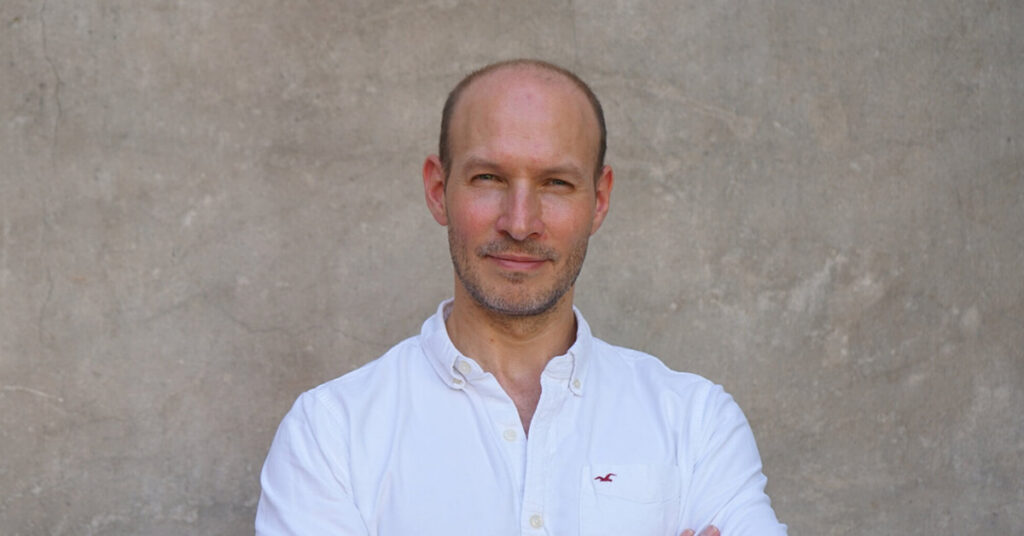
“Algorithmic Imitation” Will Never Replace You (Unless You Let It) | with Maxim Jago
Maxim Jago shares an optimistic view on AI in creativity, emphasizing co-creation, human skills, and how to adapt and thrive.
Let's create things that matter. Together.
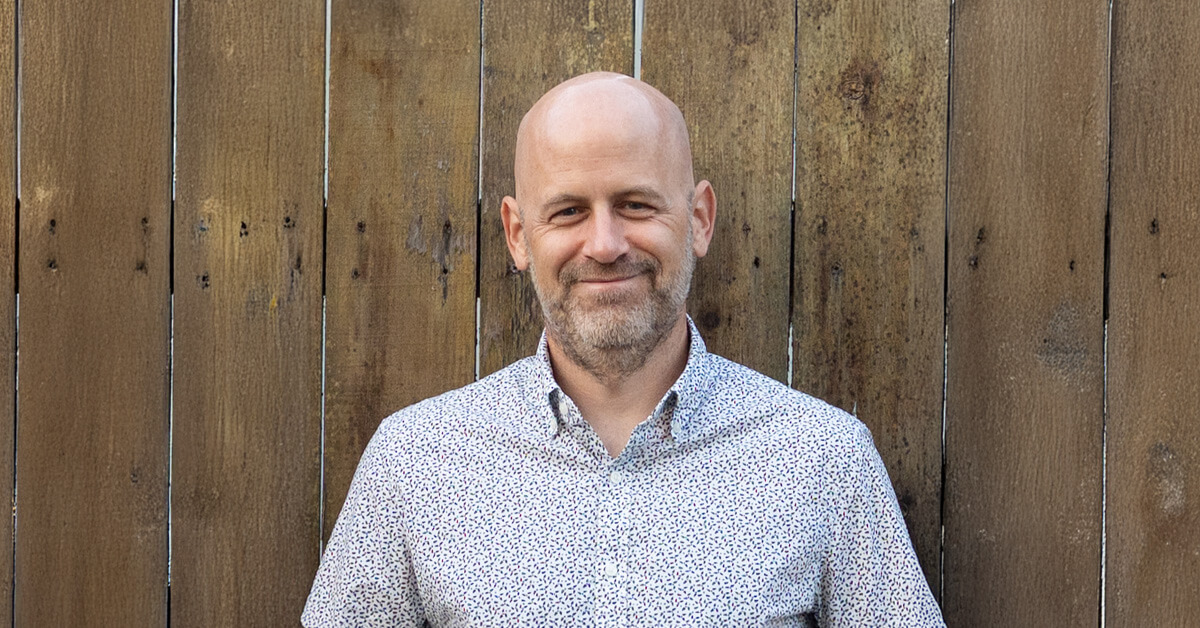
If AI can generate visuals, what’s left for VFX artists to do?
In this episode, I talk with Sean Cushing, co-founder of Cantina Creative, who’s on the front lines of how AI is reshaping visual effects. We dive into the real-world impact on workflows, studio expectations, and copyright concerns. This conversation cuts through the noise to reveal where the true opportunities are—and why human taste, judgment, and collaboration matter more than ever.
Sean Cushing is the co-founder of Cantina Creative, a high-end visual effects and design company located in Los Angeles.
Cushing is also a board member of the non-profit organization, Climate Cents, which organizes crowdfunding campaigns to rebuild natural ecosystems, sequester carbon, and support Los Angeles County communities with climate adaptation, education, and sustainable development.
In 1999, Cushing entered the entertainment sector when he joined Reel Efx, a special effects company. Prior to Reel Efx, Cushing applied his skills in product design and computer aided modeling to help create fountain structures around the world (including the now famous Bellagio feature) for renowned architectural firm WET Design.
Cushing graduated with a degree in Mechanical Engineering from Stanford University.
Zack Arnold: Sean, I wanted to first of all, thank you so much for taking the time to be a part of this summit. And before we get started, just a little caveat for you and my knowledge of visual effects, or lack thereof. For me as an editor in the world of post-production, this is the extent to which I bring to the visual effects table: a banner on the lower third that says, “Insert VFX here.” Something tells me you’ve seen one of my banners or similar in the past.
Sean Cushing: Exactly. The black frame with white text. Yeah, exactly.
Zack Arnold: Anytime that I’m working with a team where the expectation is they want the editors to know how to do their own phone comps and layered comps, that is not my world. I’m really good with the people that are talking to each other. Anything else, the banner goes here. One of the reasons that I wanted to bring you into this conversation today is, rather than having all of these siloed conversations, I really believe that this future that we’re now living in, we can’t do it in silos anymore. So I think it’s really important to bring diverse perspectives from multiple areas of the industry. So that’s the very long way of me saying once again, thank you so much for bringing your expertise for all of us today.
Sean Cushing: My pleasure. I definitely feel the same about the collaboration between editorial and visual effects. It kind of makes or breaks movies to some extent. If you work closely together, you get a lot better result.
Zack Arnold: So I want to start by just setting the table a little bit. Can you get a little bit deeper into what you do as a visual effects artist and a creative director? You’re a part of a really interesting, diverse portfolio of skills and interests.
Sean Cushing: Sure. Well, first to clarify, at Cantina Creative, the creative director is Stephen Lawes, my partner in founding Cantina. I’m kind of an EP, producer, editor, jack of all trades, master of none.
Zack Arnold: Which is oftentimes better than a master of one, might I add. That’s actually a recurring theme of this entire summit.
Sean Cushing: For sure. I’m a mediocre After Effects artist, Photoshop artist, and well, sometimes creative direct kind of smaller, weird shows that we get. But essentially, Cantina is known for high-end graphics design and futuristic tech. We do a lot of work on Marvel movies, Avatar, Fast and Furious, Hunger Games. So we’ve been lucky to work on a lot of really big franchises and provide some design expertise. And then we also do visual effects, matte paintings, and CG elements. We don’t do creatures or characters.
We’ve joined the Territory Group with Territory Studios, who also specialize in high-end design and graphics. In general, we just try to be creative, and people come to us often with very little direction other than “make it cool.” So we’re very comfortable with coming up with solutions to generate something that’s interesting and that fits the story. We try to be as open and flexible as we can, and we definitely employ the generalist model. Obviously, people have specialties, but we make our designers comp, we make our compers design, and we try to have people be versed in 3D or 2D as much as possible, so that we can share knowledge and shots. We can just be a small but really creative and effective team.
Zack Arnold: I want to definitely dig into multiple facets of this, one of them being this idea of people coming to us without much direction. We’re going to put a pin in that because we’re going to talk a lot more about the future of creativity and AI. Also, the idea of building a team of jack-of-all-trades. We actually want to start though, and this could make the interview very, very short, but as I understand it, when you’ve been asked, “How are you guys using AI in your workflows, at least for films?” your answer has been what?
Sean Cushing: Well, we can’t.
Zack Arnold: Alright, well then, so this has been a great interview. Thanks so much for coming today. I think this is a really interesting point that right now the studios are saying you’re not allowed to use AI. So tell me more about that.
Sean Cushing: You’d have to speak for themselves, but my guess, based on what I’ve read, is that it’s due to copyright law, and that the studios, if it’s generative AI, they cannot own the copyright for whatever that element is that you generate. So it’s very explicit that you cannot use any sort of generative AI for final pixel. I do know that people are using it for concepting and generating quick ideas to show really early in the process, but there’s none of that can translate into a final image. Until the copyright issue gets resolved, I’m not sure you will see it in streamers or studio content.
I think people are doing some beautiful and really interesting work outside the studio system and might be able to carve a path by doing it purely through AI. I know the people that are focusing on AI-based studios are documenting the human input through the process to try to establish a copyrightable claim, which gets really complicated. But I think you can make a case that if humans are making decisions throughout the whole chain of the creative process, you deserve a copyright. But then they start breaking it out to each element. If the character, for example, is designed with AI with no human intervention, that character can’t be copyrighted. But if the character is in a scene where humans have established that they’ve created this scene, then that scene or that short can be copyrighted, but the character cannot. So then someone could grab that character and go make their own short with it, and you can’t do anything about it, which is what spooks the streamers and the studios. So a lot of uncertainty about the law is a big reason why we don’t really implement it.
Zack Arnold: I certainly don’t expect you to have an answer for this, but have there been any conversations that you’ve been privy to where there’s some sense of, “We’re hoping to start bringing generative AI to final pixels in a year, or in five years,” or “It’s never going to happen”? Have you heard any of these kinds of conversations?
Sean Cushing: Oh, I don’t know from a legal perspective. I know there are some big court cases that still need to be resolved. From a technological point of view, you could get a final pixel today with GenAI. It’s not a technical issue; it’s more of a legal one. I assume, total guess, you know, two to three years, there’d be some clarity on that, just because it’s such a pivotal component of how people are working, and the GenAI tools are only going to get better, so it becomes somewhat inevitable. I think you’ve got to be prepared for that to some extent. You’re not in control of it, but I think you can’t be caught off guard. I think you have to learn and try to be up to speed with the technologies, which is really difficult because there are so many different options. I don’t have an answer for that either because I’m overwhelmed trying to learn many different tools at once.
Zack Arnold: The reason that I wanted to bring it up is that there are so many people that are getting in their heads, there’s all the fear-mongering, and “I’m going to be replaced tomorrow.” Number one, when it comes to these copyright cases with AI, I’ve also seen similar things where when I was wrapping up the series finale of Cobra Kai last summer, it was like, “Nobody touch anything AI.” But on the other side of it, the other reason that I’m not worried about the immediate urgency of an editor or a visual effects artist being replaced by next Monday is because the speed at which we adopt technologies and build workflows is mind-bogglingly slow. An example being that I wrapped the series finale of Cobra Kai in late 2024 editing on Avid Media Composer 2018. That alone is one of the reasons that I’m not afraid about the immediate future, but I’m afraid about the near future.
One of the areas that I’ve been using as an analogy about the difference between specialization and generalization has been visual effects. The example I’ve been using, and I want you to correct me if I’m wrong, is that if the only thing you do for a living is be a rotoscoper, you’ve got to figure out another line of work, as rotoscopers are going to disappear. If you’re only a matte painter, all of these very highly specialized, repeatable tasks are going to go away. But those that are the more generalized storytellers or that know how to combine multiple skill sets, those, to me, are the ones that are going to survive and thrive. Am I totally off?
Sean Cushing: No, I think that’s a philosophy that I subscribe to. I’m sure there are people smarter than me that would say no, but I think animation is going to be completely transformed by AI, some really complicated and labor-intensive tasks. I can see why people are upset about the potential for job displacement, but it’s also going to create another job. I think that’s the technology curve almost every time: jobs get lost and jobs get created. It’s just what’s the net result.
I think the people who are very open and adaptable and can grab a tool here… I think you’re going to see smaller groups of people being incredibly productive when it would have taken maybe five or ten times more labor to get that same task done. You still need someone doing it, you still need to learn it, you still need to understand it to make a good product. I think there’s going to be a lot of really mediocre outputs, which I think you’re already seeing, but I do think the productivity per person is going to go up. I think that’s definitely going to be the case for visual effects. I think specialization, even like water and fire—I mean, some of the things I’ve seen are mind-blowing. It doesn’t mean that it’s going to work perfectly in a shot, but they’re already capable of doing it, and those were very lucrative niches historically in visual effects that might not be as needed.
Zack Arnold: I tend to focus a lot less on what’s changing and I like to focus on what stays the same because we are so hyper-focused on all the things that are changing. But there are certain fundamental things that I believe never change, and those are the human skills that I think we need to double down on. So specific to visual effects, what would be the more human, creative skills that you see that are going to make somebody valuable in your world in the future of AI?
Sean Cushing: I think just understanding how images come together and get composited will always be useful in terms of how light interacts with objects, basic color temperature, and lighting direction. If you put a CG element into a scene, it’s hard to make a perfect image in AI, at least in my experience so far. You get 80% of the way there, and then you need a couple of different elements to refine or tweak or paint out something that’s a flaw. You need to be able to figure out how to paint that out or how to light it or what are the different elements in the scene that will allow that element to be put into it and be seamless.
Ultimately, it kind of comes down to taste. I think that’s what human beings are responding to. When you see a Christopher Nolan movie or a Greta Gerwig movie, you’re going because you appreciate their taste and what is quality. I think that is hard to teach, but just learning and studying and experiencing how to make an image or create a story and have a point of view on whether this is good or bad.
Zack Arnold: I’m so glad you brought that up. We get so hung up on the hard skills, on the tools, on the software. Ultimately, I believe that we as creatives get paid for the quality of our decisions and our choices. I’m going to make a different choice about using this piece of music in this montage. You’re going to make a different choice about how the light should hit this way or the texture should look this way—all kinds of crazy shit that I don’t understand whatsoever but looks really good.
The devil’s advocate would be, “Well, why is there even any comping anymore? All I have to do is put in a prompt and say, ‘I want this creature to be under the water, and I want a glint of light on its left shoulder.’” That, to me, is the world that people are so afraid of. I want to talk about how important collaboration is during the creative process and iteration so that when you say, “Well, why do I need to know how to comp?” I think it’s really important for people to understand the layers and nuance to not just taste but process, and how it’s really going to be hard to just put in a prompt and get the output that you want.
Sean Cushing: That is the experience that I’ve had using AI. It’s incredibly difficult to get a specific thing that you’re looking for. For example, I’m producing a movie where we did a lookbook, and the director made 10,000 images with AI, and we used 12.
Zack Arnold: I’m assuming he made the images with AI; you didn’t have a storyboard artist.
Sean Cushing: Made them with AI, and they’re beautiful and compelling, but he literally made 10,000. If you don’t composite, that is what you’re left doing. You just keep pulling the slot machine lever and hope that you get something from text that is usable. If you can composite or have visual effects skills, you can then take an element from one shot that has something cool with the character and then the background of another shot and marry them together. That’s what I’m advocating. I think that’s why visual effects is really important in this phase that we’re in right now.
I think really skilled visual effects artists can take these elements and put them into something that’s much better than just a prompt output. It shows human agency, human choice. If you don’t do any of it, you’re just leaving it to the AI to make all these decisions for you. I feel like people want to see something chosen by a creator. I think we’re going to see enough really bad AI outputs to kind of turn people off of that for good. I think people want to see the point of view. I think it’s much more efficient and much more creative to be able to composite the different elements together.
Zack Arnold: For anybody that’s gone through this prompting process, anybody that’s had a conversation with AI and said, “Give me this thing,” you realize, “Oh, this isn’t bad, but I want to change this or tweak this,” and then versions two through 20 are mind-bogglingly awful. It’s so frustrating. This is another reason that I’m not worried about AI outright replacing us.
Something that I wrote about as soon as ChatGPT came out was that AI will kill the careers of the mediocre. If you do passable, okay work, those are the people that I think need to be the most afraid. But coming back to what you said about the quality of your taste and your decisions, whether it’s visual effects, editing, or ChatGPT, and you say, “Write me a blog post,” at best, right now, all we’re doing is choosing the good parts and editing the bad parts. Knowing what the bad parts are is a really important part of the creative process, which to me is never going to change. What does this look like in your world? What are the areas where you think this is going to be eliminated completely versus this is the future of collaboration in the world of visual effects and AI?
Sean Cushing: I definitely think, in a positive way, there are a lot of inefficiencies in the film production pipeline. It’s just kind of a weird business. If you can generate an AI image that gets closer to what the director wants, that’s really efficient. So I think you’re hopefully going to see a lot of people getting into productions more confidently with a vision that is more in line with what they want. I think if you really analyze movies, it’s a lot of versions of “the director does not want that” that they have to fight through to get to what they’re looking for. If you can cut that back, I think you’re going to gain a lot.
I think a lot of visual effects are potentially going to get impacted. Really complicated things we talked about earlier might not be as time-consuming and labor-intensive, so I don’t think it’s a growth area for the business necessarily. I think people are going to have to pivot to becoming good at AI and utilizing it. I don’t think you can really fight it because I don’t think the studios are going to care whether you use it or not once the copyright thing gets sorted out. So I think you have to just continually refine your skills, tool-agnostic to some extent. What helps you be more creative? Are you able to write a tool that can leverage AI to make something really cool and creative and is controllable? That’s a holy grail that everyone’s missing: the control component of a camera or position or where the fire blows toward. I think those tools can either be done by these big companies or you can write one yourself with open-source tools.
Zack Arnold: I want to come back to the pin that I put in earlier about this idea of the director and creative direction. The biggest reason I’m not concerned about AI taking over is what I call “the note underneath the note.” If directors and creative executives and producers knew what they wanted, maybe I’d be a little bit concerned. But directors are asking for things when they don’t really know what they want. You can’t sit a director down with Google Veo or whatever the tool is and say, “I don’t need these visual effects artists anymore.” Even if it gave them what they wanted, I still think they need us. What’s your argument there?
Sean Cushing: I’m not sure people quite realize when you make a big movie, how many decisions are getting made throughout the day—thousands. Texture, color, shape, position, lighting, you name it. Each department is tackling hundreds of issues and questions, and some of those go all the way up to the director, some of them not, but the decisions are getting made to keep the project moving forward. While I think you will be more productive with AI, it’s really intimidating to try to make something yourself.
I think you also get a lot of good feedback from other people on what’s good and what works. A painter can get away with their own art. I think filmmaking, inherently, is a collaborative process where you’re getting a lot of ideas from other people. Actors, especially, are bringing something unique, and I’m not sure you can replace that. When you do, it becomes maybe a different art form. You almost become like a film painter, where you did it all yourself, and maybe that becomes its own genre. But I do think the collaboration, the challenging of ideas—all of those things generally yield a better product. I think it’s really hard to have all the ideas.
Zack Arnold: To go even further, let’s use the mountain analogy. The director says, “I want a mountain.” You come in and say, “Well, what if we were to add a cave in the mountain, or maybe it’s a volcano instead?” Then the editor comes in and is like, “Why do we need a mountain at all?” It’s all these conversations that are happening back and forth that I would argue make filmmaking the ultimate collaborative art form. Can you literally make a film by yourself with an iPhone? Yes. But very rarely is that solo act something that really takes off.
This is where I find the creator space really interesting because it is a lot of people that are using all the tools that are now ubiquitous. That’s one of the areas where I think we, as I’ve been called more than once, “legacy Hollywood,” have real value. Our storytelling skills combining with those that are the ubiquitous jack-of-all-trades. I know that you’ve talked about the new business models and new opportunities that will be out there because of AI. So let’s transition a little bit away from the industry-specific stuff.
Sean Cushing: I can make one more point on that, though. Not to name a specific movie, but there’s one in mind that’s a humongous franchise with a very famous director. On that show, he has the best creature designer in the industry, the best transportation designer, the best weapons designer. This movie is the manifestation of 20 incredibly talented people, and that director is not coming up with the solutions; he’s given them a blueprint, but they are coming up with the coolest version of that thing that they’re a specialist in. I’m not sure you’re getting that on a creator-based piece of content on YouTube. I just don’t think you’re getting that level of artistry from across a broad spectrum of people doing very specific things.
Zack Arnold: So that I can’t argue with if we’re talking about the craft. But if you look at the number of people that have seen Mission: Impossible and you compare it to a random Mr. Beast video, it’s math in two different universes. And that’s again, where I think that there’s a really interesting opportunity for us to bring together all of that very high-level expertise and actually connect it with the industry that’s eating Hollywood’s lunch and is getting tens, if not hundreds, of millions of people to watch random content, whereas we’re just like, “Remember us? We’re still over here. We make really good movies and TV.” Nobody’s watching it anymore. I’m really trying to bring these worlds together because I think we can help each other. I know that you’ve talked about this idea of how AI can create these new business models and communities.
Sean Cushing: Yeah. I wish I had the answers for the distribution part. The studios do marketing incredibly well. They’re convincing people to spend money and leave their houses to go somewhere to watch something. That’s hard now. This weekend with Inside Out 2 and Mission: Impossible was incredibly successful. So I think the challenge is going to be, even if you’ve made the Citizen Kane of an AI movie, how are you even going to get people to look at it? Is it through talent that you had as part of it? Because I think talent is a huge component still.
If you just made it by yourself, it’s really hard to cut through the amount of content that’s getting made. I think there is a big element of gatekeeping that’s getting even worse in Hollywood because they’re making less stuff, so new voices are having a hard time emerging. I’m hoping that AI and YouTube will be a way. I saw numbers the other day, and it’s demoralizing in terms of how many independent, low-budget to medium-budget movies are being made. So I’m hoping AI allows voices to emerge of really cool directorial and creative talent. The distribution channel angle, though, is still unresolved.
I’m hoping that some cool new channels emerge for people to be able to put up content and get views. Maybe you don’t get as many people as you get on Mr. Beast, but you’re getting tens or hundreds of thousands who are visiting and enjoying the content. I would also like to see business models emerging that give creators more leverage in terms of owning the content that they’ve made. I think in the last decade with streaming, creators have given up a lot, I think too much, and it’s not fair. I’m hoping that these tools allow creators to keep their copyright, keep their IP, share it, but they should maintain ownership and profit over the life of that IP.
Zack Arnold: If we were coming at this from the creator lens, let’s say that we have somebody that’s either already in the creator space or is an aspiring creator, and they want to start learning the skills and the general toolset to say, “I know that I’m not going to make the next Avatar, but I want to create my own little world on YouTube or some other self-guided distribution platform.” What are the general skills, workflows, and toolsets that would allow them to either be a largely self-sufficient creator or build a small team?
Sean Cushing: Good question. If it was me, going back to my younger years, I would try to form a collective. It’s hard to be really great at cameras, talent, cutting scenes with dialogue, visual effects. You still are making choices about each and every one of those things. I would advocate that these smaller groups of people are going to make some really powerful movies, but it’s just hard to do it all by yourself, and it’s just going to take forever.
The more skills you can share, maybe someone becomes great at doing the camera work, maybe someone is great at doing the sound editing. I think these small groups of people working together, I envy them in some regard, because you’re going to be able to make some incredible things you never would have been able to do before. You can make content that would have been prohibitively expensive. You can do a movie about Mars the same as it would be to just go shoot an independent movie at your local 7-Eleven. You might as well go for something fantastic and outlandish because you can. I would go for the stories that are not being told because they’re too expensive.
Zack Arnold: Not only do I love that approach, but I want to go even a little bit deeper into this. The argument that I’ve been hearing is, “But what about all the jobs it’s going to displace?” When we say AI is going to replace us, AI doesn’t replace us; it’s the management that chooses to use AI to replace us. I do want to be very conscious of, “Could I pay a human being to do this thing?” But there are so many other things that it’s not a matter of, “Do I pay somebody or do I save money and do it myself?” It’s, “This would not be possible within my capabilities and my budgets without using these tools.” It’s not a matter of, “If you make an indie 10-minute sci-fi short, you’re displacing all the crew you would have hired,” because I never would have been able to afford it in the first place.
I wanted to talk a little bit more about how we responsibly use these tools to create new things and new roles while we’re still being conscious of not just replacing people for the sake of productivity. What kind of jobs might emerge in the future?
Sean Cushing: This is a doozy of a question.
Zack Arnold: Pandora’s box, baby.
Sean Cushing: I don’t want people to lose their jobs, but at the same time, if you’ve invented the wheel and you’re the guy carrying the rocks on your back, the guy with the wheel is going to win the day. At a certain point, you’re trying to hold back progress, and historically, that has not gone over well. It’s just like going from oil to clean energy; at a certain point, we just need to move in that direction. And yes, someone’s going to lose their job, but there’s going to be all these other jobs that are created. But that requires people to be trained, that requires people to learn. It’s difficult when you’ve been in the industry for decades and are incredibly good at your job, but your job isn’t going to exist necessarily in the future.
I think you have to look at stuff with your eyes wide open, not what you want to have happen, but what is going to happen. I feel like it is inevitable that these tools are going to get better and better. I don’t know if I have an answer for what these jobs are going to be. When you look at what are the jobs in 2035, there are jobs I’ve never even heard of, like “dream manager” and “memory holder” and all these totally bizarre titles that we can’t even fathom.
I think it opens up a creative class that never existed before. I think the grip and the stunt coordinator and the person in charge of wardrobe can go make their movie, the movie they’ve always wanted to make. That never would have happened before. I think the creative class widens greatly, if that’s what people embrace. The traditional production jobs are going to be very much impacted in a negative way, but if you’re able to embrace being creative, and maybe don’t make as much money, but you’re able to have your voice be heard and seen, that’s enough. Or maybe you learn and lean into some other aspect of AI production that you like. It’s a really weird time in Los Angeles, for sure.
Zack Arnold: That’s an understatement.
Sean Cushing: There’s very little production, so people are forced with really difficult decisions of what to do with their career. I just think it’s going to require some big swings from people, and they might not all win, but I think it opens up creative opportunities that they maybe never had as maybe the silver lining.
Zack Arnold: There’s no question there’s going to be a lot of failures in everybody’s future. The fastest path to success is how fast you are willing to fail. The reason that I’m able to progress at the speed that I am is, how fast can I fail? How fast can I learn this and do the bad version and iterate and grow? The way that we were taught is, you’ve got school, and it’s okay to learn and fail there. Then you get a year or two after you graduate, but after that, you better know your shit. You can’t screw up anymore. And I feel one of the most fundamental skills that few, especially those that have already established successful careers, are comfortable with is failure. We’re not comfortable with failure because we’ve succeeded for 10, 15, 20 years. Now we’re freshmen in the school of life all over again. We have to embrace that learning mindset.
Sean Cushing: I agree. Yuval Harari, the author and historian, says you should get used to the idea of having like three or four careers now, and I think that’s totally true. I’m trying to diversify myself and not get lost in the idea that you’re going to do one thing. I think you’re probably going to end up being something completely different at the end of your career than you were when you started.
Zack Arnold: When I was in college from 1998 to 2002, imagine if I had said, “I think what I want to do is build a career as a social media marketing manager.” “What the hell is social media, and why does it need a marketing manager?” I feel like that’s where we are now on a much, much larger scale. One of the most important things that will carry me through this is, number one, all of the storytelling skills that I learned in college, all of the communication and collaboration skills that I learned over the years, and also embracing the generalist mindset.
I talked to the Vice Dean of the Wharton Business School, and I quote, he said, “Less than 5% of people will maintain one specialized career. Everybody will become a generalist.” We have to embrace that mindset of back to pre-Industrial Revolution. I’m the teacher, I’m also the farmer, I also run the general store. I think that’s what we’re all going back to. I’m curious with you, even at the place that you’re at with your career, you’re running this company, and you’re saying, “I’m going to need two or three different career paths.” So what are you pursuing right now in addition to what you’re doing with visual effects?
Sean Cushing: Well, I’m trying to start a whiskey company.
Zack Arnold: I love it. Good. This is exactly what I wanted to talk about. You’re doing something totally different.
Sean Cushing: Yeah, Stephen, my partner at Cantina, and I are starting a whiskey company on the side. It could totally fail, never done it, don’t know anything about it, but we kind of fell into an opportunity. And then there’s maybe an experiential physical space that I’m exploring as well. I’m just trying to be open if there’s an opportunity that emerges. I’m going to learn about marketing, direct-to-consumer sales—things I know nothing about. But I’m just very committed to just learning. And then obviously, generative AI and trying to stay as abreast as I can on those tools and generate imagery and videos and continue to try to make content. That’s always been an important part of what Stephen and I have been doing, and that won’t die either, even if no one’s going to watch it ever.
Zack Arnold: I love that mentality. I want to finish up going a little bit deeper into this dichotomy. You’re a jack-of-all-trades and not a specialist. But then you look at, “I want to start a whiskey company.” Many would argue that you’re starting over. My argument is that nobody’s starting over. What are you bringing from your existing world that makes you say, “I think I can start a whiskey company”?
Sean Cushing: Well, we initially got brought on to design the bottle and the brand, and so Stephen and I do that every day for film and TV. The design and the process of figuring out the brand and the look and the style were very comfortable for us. So that part was fun, and we really enjoy the final result. And then, I have run a business, so I understand the cash flow and the needs for operating costs and keeping a business afloat. But when it comes to marketing or whiskey sales, I know nothing, and so I’m trying to stay open and not have the answers and learn from people who have done it.
I do think that business is also shifting in a different way than it was traditionally. There are new ways to go at it online and on social media, so it feels like you don’t have to be a 30-year veteran in order to pull it off. But yes, we leveraged our design, so the website and everything that we do with the branding always feels natural for how we operate day-to-day in visual effects.
Zack Arnold: This is an area where I spend an extensive amount of time with my students. We just put some Venn diagrams together. What are the skills that you bring—hard skills, soft skills, life experience? Start to put all these things together, and you notice that there’s going to be an intersection, and ultimately that becomes your asymmetric advantage. I don’t believe that anybody is starting over in any realm whatsoever if they’ve got any level of professional experience. Being successful at anything teaches you how success works. But yeah, there’s going to be a lot to learn and a lot of things that we can fail at. As soon as you accept that the only thing you can count on is uncertainty, and this myth of a secure or stable path has been pulled back—there never was one—but now that we all know that, now we at least know the game and we know the rules.
Last place that I want to leave us. Everybody here doesn’t really know what the future holds. They’re really concerned. Is there anything that you want to leave all of us with that you feel we haven’t covered that could be helpful?
Sean Cushing: I would just continue to try to grow every day. I know it might sound trite, but go to a museum, travel, go see movies, go to a concert. Just experience life, and every experience that you have throughout the day is going to inform some choice that you make in the future. I just don’t think you can embrace life enough. As much uncertainty as there is, you still can go to the Hollywood Bowl and see an incredible concert. You can go to LACMA for free. You can go to Griffith Park and hike. There are so many things you can go and experience and learn and grow, that when the time does come, you’re not starting from scratch. You’re like, “Oh, I saw a concert that had this cool thing that would be perfect for this.” That happens to me all the time. The more you really embrace just experiencing life, the better these transitions and these challenges become because you feel like, “Oh, I can handle this,” or “I have a point of view on it.” So don’t just sit in your room on your phone.
Zack Arnold: I cannot imagine a better place to leave this with than the advice, “Get off your phone and go out and experience life.” The answers you seek are not on your computer; they’re out there. That is just the purest form of creativity.
Sean Cushing: Your computer is feeding you ideas, and so I think you owe it to the equation to be bringing your point of view, your choices. If you’re just taking what they give you, then you’re not making any of those.
Zack Arnold: And I think that’s what’s so unique about us as humans, and why I don’t believe we can be replaced. It’s our unique experience and perspective of life that creates the creative decisions that lead to “I want the texture to be this or the light to be this,” because ultimately, it’s how I want this to feel. And I want to transfer that emotion from my side of the screen to your side of the screen. That’s why, although there’s going to be a lot of tumultuous uncertainty, I am not worried about the future for us as creatives.
Sean, I just wanted to thank you so much. I personally have learned so much from this conversation. For anybody that is interested in learning more about you, what you do, what your company does, is there a simple place that we can send people?
Sean Cushing: Yeah, go to cantinacreative.com. And then we just launched an Adobe After Effects compositing school, which you can find on either the Adobe site or through our YouTube channel. We want people to be able to composite. We felt that there wasn’t a good course for After Effects users, so we made it, and hopefully, people get a lot out of it.
Zack Arnold: Yeah, I love that mentality. “This thing doesn’t exist yet, so I guess I’m going to have to be the one that makes it.” That, to me, is the future of where we can be relevant and valuable. Wonderful conversation today. Can’t thank you enough for your time, Sean.
Sean Cushing: Alright, thanks. I hope you got something from it.
Edited by: Curtis Fritsch
Produced by: Debby Germino
Published by: Vim Pangantihon
Music by: Thomas Cepeda
Maxim Jago shares an optimistic view on AI in creativity, emphasizing co-creation, human skills, and how to adapt and thrive.